
ADVERTISEMENT.
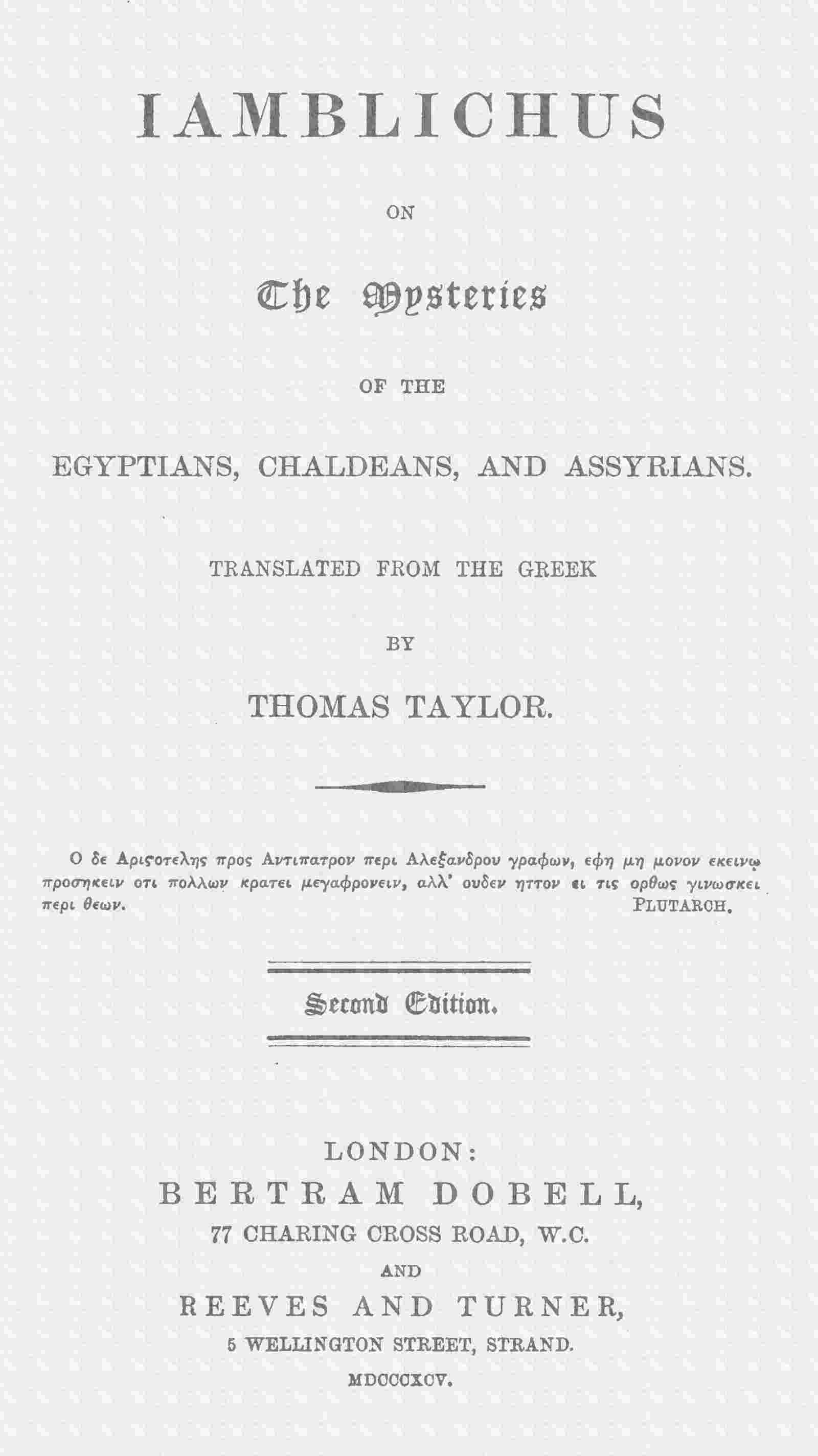
The various translations and original works of Thomas Taylor, though still in request by the more zealous students of ancient philosophy and occult science, have now become so scarce and expensive that it is only within the power of comparatively wealthy collectors to obtain them. This is a matter for regret, inasmuch as it cannot be affirmed that his writings have been, or are likely to be superseded, or that they are without value. They can hardly be neglected without loss by those who desire to understand the systems of philosophy which satisfied the spiritual needs of the antique world. It is not possible, even for the most fervent believer in modern “progress,” to dismiss the speculations of the ancient philosophers as antiquated notions which have had their day and no longer possess interest or value. The names of Socrates, Plato, and Aristotle can never grow dim with age, nor is it possible to conceive a time when men shall cease to study and reverence them. As the disciple, the translator, and the expounder of these and of other sages of antiquity, Thomas Taylor deserves to be held in honour and remembrance, and it would be a misfortune if his labours remained unknown because of the scarcity of his books. It is for this reason that the present reprint has been undertaken; and it is hoped that it will meet with such a measure of success as may encourage the republication of various other works by the same author. It has been printed in handsome style and published at a moderate price in order that it may be regarded as a desirable addition to the scholar’s library, while yet it will not tax severely the means of the not too wealthy student. For the rest it is only necessary to say that this reprint is, in size, number of pages, type, and general get-up, an almost exact facsimile of the original edition, which was first printed in 1821. No alterations or additions have been made in or to the original text, as it is thought that those who care for Taylor’s writings will prefer to have them in their integrity. Should it be found possible, however, to continue the series it is intended to prefix to a future volume an essay on Taylor, which will contain a biography of him, and a critical estimate of his writings.
May, 1895.