
It will be seen from a glance at the accompanying plan that the northernmost claim, the Ramon, is situated at a little distance from the rest of the group, and it is here that the principal buildings and concentration works are located. Two lodes have been proved on this property. No development work had been done on the Ramon at the time of my last visit, nearly the whole of the labour having been concentrated on the Antigua Pilar concession, which carries eight proved reefs, and is undoubtedly the most valuable claim of the entire group. The developments on this, and on the adjoining Jaime lease, have demonstrated that both these claims are of very great value, and the manager declares in his report that with proper management “they will yield incalculable profit.”
The Antigua Pilar claim has been exploited in a masterly manner, and the results reflect the greatest credit upon the management. All the work proceeds under the unremitting personal supervision of the manager, and his very full and luminous reports reveal his intimate knowledge of every detail. “It is a pleasure,” he said to me, “to work such a mine. Every week brings its work, and the work brings its recompense in the consistently and thoroughly satisfactory nature of the progress made. The property has never, as mothers say of good children, given me an uneasy moment, and I am only too delighted to show visitors over it.” As we proceed, he explains to me his theory of the property and of its prospects. The Antigua Pilar he believes to be the centre of a network of reefs, and the eight lodes he has already proved are only a few that he expects to discover as the work progresses. “It is a large property,” he says, “and it must be developed by degrees. I have proved to my entire satisfaction that the lodes in the Ramon and the Jaime leases will pay handsomely when we get to work on them. I have also traced two of the Antigua Pilar reefs into the Gloria lease, and six others are also making in that direction. This naturally led me to make a special study of the lodes in Antigua Pilar, and I am convinced that in formation and structure the reefs are the same in all. Everything pointed to satisfactory results, and, indeed, the results have exceeded our expectations.”
In the manager’s office I was permitted to examine the figures and measurements on which he had based his estimates of the value of the mine, and they are calculated on so moderate a scale that he is convinced the net profits will be much greater. To give an idea of the value and sizes of the lodes on the property, I may mention that by cubing the lodes of Nos. 2, 3, and 4 on Antigua Pilar alone, and calculating the yield of copper at the very low return of 5 per cent. per ton, he estimates the value of the ore at £155,532. By the present methods of exploitation, the daily output of ore will shortly be twenty tons per day; and this ore, with proper plant for concentration, could be brought up to 33 per cent. of copper, worth £16 10s. per ton. The carbonates of copper which the ore carries could, by proper treatment, be made to yield from sixty per cent. to eighty per cent. of copper suitable for smelting. But there is an alternative scheme for the complete exploitation of the property, by which 100 tons of copper ore, of a value of £550, could be raised and treated per diem. This plan would, of course, involve a larger outlay, but it has been forwarded to London for the consideration of the directors. Such figures and prospects justify the manager in his high opinion of the mine, which is shared by the miners and the local shareholders.
When I was at Escurial I visited two other groups of properties in the neighbourhood which had been acquired by British capitalists. The successful developments in the Escurial property proper—especially on the Jaime and Antigua Pilar leases—attracted a good deal of attention to the district, which subsequent prospecting work shows to have been thoroughly warranted. One of these groups comprises the Recompensa, the Pepitanga, and the San Antonio leases, which have a combined area of 437 acres. The local theory is that the nature of the country and the constitution of the lodes is the same throughout the district, and the work done on these mines bears out that belief. The lodes and veins are numerous, varying in thickness from seven inches to three feet; and the ores have yielded, as the result of assays, from eleven per cent. to thirty per cent. of copper. Seven lodes, which are distinct and well defined, have been followed for a distance of over 6,000 feet through the property, and five separate workings have been undertaken to test the value of the mineral deposits. As the workings are 750 feet above sea level, at which depths the lodes usually improve, the quantity of ore in the property must consequently be very considerable. The ore also yields both silver and gold, but it is not possible to estimate the profit likely to be made from this source. Only one assay has been made from this ore, but it disclosed the existence of nearly thirteen ozs. of silver and over nine dwts. of gold. The other group that is now the property of English capitalists, consists of five concessions, called the Clarisa, the Morena, Natividad, Mitry, and the Mercedes, having a total area of 2,111 acres.
The Huercal Copper Cobalt Mines.
A railway journey of 20 hours’ duration, over three railroad systems, transports the visitor from Madrid to the little mining town of Huercal (pronounced Whercal) Overa. We leave the capital by the express train for Alicante, and travel via Alcázar and Albacete to Chinchilla, which is reached at some unearthly hour in the middle of the night. From Chinchilla the line runs through the beautiful province of Murcia to Lorca, where we change onto a small English railroad which takes us to Huercal. We had left Madrid in our winter overcoats and rugs; when we stepped out into the soft sunshine of Almeria we could have dispensed with our under coats and waistcoats. We are in the land of the spring roses and early oranges, and the nipping and eager air of the capital is forgotten. Our visit is regarded by the community with general interest, for the townsfolk look to El Monte Minado, as the copper mines are known locally, to make the fortunes of Huercal-Overa. Many of the leading people here are shareholders in the mines, and all the labour employed on the property is drawn from the town. There is not a child in the neighbourhood who is unacquainted with the personality of the Spanish representative of the English proprietors, who acts as our cicerone, and the word goes round that he is come to town. The mine captain, and several prominent people of the district, are at the station to meet us; and in the sitting-room that has been reserved for our use in the comfortable hotel we find the table laid, not for dinner, but
with an array of valuable specimens taken from the mine. Here is copper in practically every form—green carbonate of copper (malachite), blue carbonate of copper (azurite), red oxide of copper (cuprite), copper pyrites (yellow sulphuret of copper), and native copper. Added to this, the abundant association of cobalt—cobalt steel-gray, and pinkish purple, like the hue of peach-blossom in colour—and of bright emerald green tinted nickel, give the specimens an extremely beautiful appearance. The Monte Minado property comprises a copper hill not unlike the celebrated Mount Morgan in conformation, and has an area of 111½ acres. There are indications that point to Phœnician industry in the Huercal Mine, but the traces of later workmanship demonstrate conclusively that the Romans were the last of the Ancients who exploited this copper mountain on a large scale. It was the Romans who obliterated so carefully all traces of their handiwork, and filled up with rubbish the openings of their levels and other workings.
The composition of the mountain, being of volcanic creation, it is a crumbling conglomerate mass; and unless the galleries are substantially timbered, the chances of their falling in present an instant danger to the miners. The men who are employed in the work of clearing the ancient galleries and putting in new levels have had many narrow escapes from falling earth. The Spanish mining regulations impose a very high rate of compensation in the case of accidents which occur in the mines; and as a doctor, whose duty it is to report on all casualties to the Department of Mines at Madrid, is attached to every working property, mine owners are exceptionally careful for the safety of their employées. On one occasion, when the Spanish representative of the present proprietary was being conducted by the manager through some new workings, a huge piece of the country rock fell upon his guide. His head was very luckily protected by one of the hard pot hats which the underground hands always wear; and although this helmet was badly dented, it probably saved the wearer’s life. The visitor was naturally much concerned, but the manager accepted the mishap with smiling philosophy. “You see,” he remarked, “I am not meant to be an expense to the owners, just yet.”
The labour of fortifying all the drives, as the work advanced, rendered exploitation both slow and expensive, while not entirely eliminating the element of danger from the operations. It was at one time intended to cut the lode by driving an adit into the mountain at a level of 150 feet below the ancient workings; but as it was discovered that this adit would have had to be shored up and cemented like an electric railway tube, the proposal was abandoned as impracticable. Since then, the difficulty has been successfully overcome by the adoption of another policy.
The present leaseholders opened their negotiations for the purchase of the Huercal Mines on the strength of the mammoth dumps which from a number of assays made by different firms gave results varying from 5·71 per cent. to 10·40 per cent. of copper, 2·19 per cent. of nickel, and 3·13 per cent. of cobalt. It was argued that even if the mines were worked out, the dumps alone, if scientifically treated with modern machinery, would return a handsome profit. But very little exploration work was required to convince the Englishmen that so far from the property being exhausted of its mineral treasures, the bulk of the mineral had been little more than pecked at; and a more comprehensive system of development disclosed the fact that in El Monte Minado they had acquired a copper-cobalt mine of extraordinary richness. The consistent and surprising richness of the dumps in carbonates and copper pyrites made it abundantly clear that if the Romans, with their primitive methods and appliances, had regarded this ore as unprofitable for treatment, they must have found still more valuable deposits to engage their attention. There could be no other excuse for regarding five per cent. copper ore as débris. For the first time since the Roman miners left their Bonanza, the old workings were now cleared and the mystery was solved. These ancient galleries, as will be seen from the illustrations, were not driven on any systematic plan, but simply followed the lodes blindly through all their twists and curves. The idea of going boldly through the mountain and sweeping all before them does not appear to have been considered practicable by the Romans; and, doubtless, the danger of excavating in the soft country rock on a large scale had also been taken into their calculations. As the workings were freed from the rubbish that choked every drive and level, further traces of cobalt and nickel were encountered, and copper in its many beautiful forms became more abundant, and of richer quality. In the Napoleon gallery the ore was assayed to yield from 17·17 per cent. to 78·69 per cent. of copper, and at the extreme end of it was found to be in the face of a three-foot lode, in which native copper was also discovered.
As I follow Señor José Perez, the mine manager, through the old Napoleon and Esperanza galleries, it is impossible to resist the contagious enthusiasm with which he describes and exhibits the property. Certainly there is excuse on every side for their eulogiums. The copper in the lodes is very plentiful, while in the hanging-wall of the lodes important veins of pink and black cobalt are frequently to be found, and at all points where work had been done abundance of ore has been exposed. I was shown a large caverture, the roof of which is supported by a single column of ore, which had been left for that purpose by the Roman excavators. The miners who were clearing the drives at first took this circular chamber to be a break in the lode; but it is really a cavern in the walls, and roof of which nearly every variety of copper ore is to be seen. The spectacle is strikingly beautiful, and to the geologist it presents a feature of unusual interest. I have examined many caverns in mines, but this particular example, which has been christened “The Cathedral,” far exceeds in natural beauty anything of the kind that I have ever seen.
A considerable amount of useful development had been accomplished by clearings and surface cuttings on both sides of the mountain, and these have been of the greatest importance in the adoption of the latest scheme for working the mine. In one clearing the outcrop had been stripped over about 1,100 feet, and by this means the copper and cobalt lode had been exposed for a distance of 70 feet, and similar work had been done on the opposite side of the hill. As the result of much anxious consideration and many discussions it was decided to undertake the opening up of the mines on a scale which, it is safe to presume, the Romans never dreamed of, viz., by removing the top of the hill to a depth of thirty feet, as one scalps an egg. The ancient workings, situated at a depth of 180 feet from the summit, having been located, and their dimensions ascertained, the over-burden, which had been found to be only 30 feet in thickness, will be removed, and from that point down to 180 feet, where the ancient galleries are situated, is a mass of copper, cobalt, and nickel ores that will be worked by the open-cutting process. A trench has been cut from the “Bárris” clearing connecting with the “Marin” clearing on the other side of the mountain, and four lines of rails have been constructed to work the ores, which are loaded up into the trucks and conveyed to the sides of the hill. No timbering is necessary, shafts and drives are done away with, and all risks to life are eliminated. The soft nature of the country rock renders the work, which in quartz would be an impossibility without the aid of dynamite, a simple pick-and-shovel business, and by this means the mountain is being gutted at the price of labour and cartage.
The Rio Rimal Copper Mines.
The Rio Rimal Mines, in the province of Gerona, are situated close to the quaint old-world village of San Lorenzo, which stands, surrounded by its mediæval fortifications, at the foot of a high mountain. Far above it an ancient watch-tower still looks out over the wide expanse of plain and valley. It is broken and weather-beaten, but is otherwise as it was left by the old Moorish warriors who built it. Within a mile or two, on the east and west, are the comparatively modern fortified places of Figueras and Rosas. In the municipality of San Lorenzo, at the beginning of the last century, was a huge Government Arsenal and Smelting Works, where the metals won from the neighbouring mountains were cast into cannon, and made into shot and shell. Among the hills are still to be seen the remains of busy mining camps where hundreds of men were once engaged in working the mineral deposits. Before Napoleon’s all-conquering marshals marched across the frontier the Spanish Government blew up the arsenal, destroyed the smelting works, and concealed the entrance to the more important workings. Nothing remains to-day but a few melancholy ruins to show the extent of the former operations.
The Government factories were never re-constructed. The proximity to the border, and the exposed nature of the country, combined with the experience of the then recent events, rendered the situation too insecure for the purpose, and the arsenals of San Lorenzo were re-built on more powerfully-protected spots at Ferrol and Carthagena.
Even the massive stone bridge over the river Muga, which was blown up to impede the passage of the French troops, has never been rebuilt. The interesting point about all this is the fact that somewhere, close at hand in the hills, must exist the mineral deposits which fed the factories before the Peninsula War. The tunnels and workings have been very effectually concealed—by no means a difficult matter. A few barrels of gunpowder would have brought down hundreds of tons of rock and débris over the mouth of the shafts and galleries, and left no trace of human handiwork. But that these mines are still there, and waiting only to be re-discovered, is an indisputable fact.
The operations of the Spanish owners on the Rio Rimal property commenced, as modern engineering science counselled, near the bottom of the hill, and they put in their galleries and levels to tap at lower depth the richest portion of the reserves of copper. But work had only been in progress for about years when the Carlist war broke out. For seven years operations had to be suspended, and during the whole of that period the mine was abandoned. When the owners again turned their attention to the property, it was to find that many parts of their galleries had caved in, and the mine had become flooded. After a considerable interval, the worst parts of the galleries were repaired. The water was pumped out, the level and inclined shaft were cleared, and work was resumed. The price of copper in 1874 at Swansea was very low, and the method of inclined shaft workings being very costly, all hope of continuing to work the property at a profit was extinguished. For thirty years nothing was done at the mine. In 1898 an endeavour was made by the present owners to obtain possession of the mines, but it was not until January, 1902, that work was resumed on the property.
It was then decided that the most profitable course to be adopted was to concentrate all labour upon the work of repairing and unwatering the second level, and of driving a further level some ninety or 100 feet lower down the mountain side. This work was at once put in hand, and the north-west gallery was driven a distance of 185 feet on the line of the lode, cutting entirely through the same for the whole distance. In many places the lode is mineralised for a width of fifteen inches, the ore assaying thirty-three per cent. copper. In driving this gallery some splendid copper was obtained. Work on the level has in the meantime been progressing steadily, although the workmen experienced great difficulty on account of the hardness of the rock. At the beginning of this drive a very hard conglomerate was encountered, which resisted all tools. For a time the formation defied dynamite, and small progress was made until the sandstone ground was reached. Thereafter work became easier, and consequently more rapid.
The Buena Presa property, which adjoins the Rio Rimal Mine on the north, was subsequently acquired, thus increasing the original area by 141 acres. The Rio Rimal lode traverses the adjoining concession for a distance of about 2,100 feet. It is a strongly-defined masterly lode, and has every appearance of producing large quantities of mineral when developed. Judging from the outcrops, it resembles the Rio Rimal lode in every respect; and although no systematic work has been done upon it, the probability is that it will be found to be of equal value.
The Coruna Copper Mines.
The Coruna Copper Company’s property, which covers an area of 2,540 acres—a tract of country more than six times as large as Hyde Park—is situated in the mining district of Santiago, and is connected with the railway, which is about eight miles distant, by a first-class road. The country in which the concession is situated, consists of a series of low rolling hills, and the character of the ore, so far as it has yet been explored by the prospecting operations, is very similar to that produced by the Rio Tinto and Tharsis Mines. It is a low grade copper ore, carrying on the average twenty-three per cent. of sulphur, and from two to three per cent. of copper. No attempt was made by the late owners to determine by a systematic series of borings the extent over which the mineral actually exists, or the depth and character of the ore; but the prospecting work already carried out by the English company, and the natural outcrops found at many points on the concession, place it, in the estimation of some mining experts, quite beyond doubt that the mass of mineral is one of the largest known, extending in one direction for over two miles, apparently without a break. This preliminary work has clearly proved the whole of the north-west quarter of the concession; and taking the outcrops into account, one-half of the whole ground is assumed to contain mineral. Three shafts and nine trenches are being sunk, and numerous outcrops have also been located on the concession. The original estimate of the quantity of mineral was 50,000,000 cubic metres, equal in round figures to 250,000,000 tons. The most recent assays indicate a mean of three per cent. copper in the ore. The prospecting work has in every instance proved the accuracy of original estimates as to the value of the property, as well as the correctness of the opinion, that a very large output could be obtained with practically none of the unproductive development work required in most mining enterprises. It was recommended that mining operations should be chiefly “open-cut,” and of the simplest character, the exceptionally favourable conditions under which the ore exists rendering operations an extremely easy and inexpensive matter. The property is being opened up on these lines, and it is considered there will be no difficulty in supplying the concentrating works with 1,000, 2,000, or even 3,000 tons per day, all obtained from open cutting.
Tin.—The Mines of Beariz.
Fortunately for the present proprietary of the Beariz Mines, the late owners possessed considerable technical knowledge; and if the property was not worked extensively by them, the work was prosecuted on right lines. They overhauled the Roman shafts and put in new galleries; and at a time when the standard price of metallic tin was £153 a ton the mine returned the owners a handsome profit. Some years ago, when the mines were reopened and actively exploited, a large number of hands were engaged; and although the ore had to be carted by road to Vigo, large profits were made. Gradually the price of tin dropped, and the profits shrank until operations could only be conducted at a loss. Then work was suspended. Since 1878 the Beariz Mines have remained idle, save for the persistence of the “Tributors,” who have continued to make a livelihood by washing alluvials.
The three leases that comprise the Beariz group are entitled the “Esperanza,” the “Federico,” and the “Elena,” and together they have an area of 450 English acres of tin-bearing ground. Since the mines were closed down, the railway has been constructed from the port of Vigo to within twenty miles of the property, and the roads between Beariz and the railroad are well made and in excellent repair. Señor S. J. Bárris, who was requested to inspect the properties and report upon them by the intending purchasers, spent several weeks at Beariz ascertaining the dimension of the lodes, estimating the extent and value of the alluvial, and making assays. He traced four distinct lodes on the “Federico” property, three on the “Esperanza,” and two on the “Elena,” and his tests proved that the whole of these nine lodes carried rich oxide of tin (cassiterite), averaging thirty per cent. of the mineral. “I am well aware,” he wrote, in communicating the results of his examination, “that the average will appear to be very high, but I would point out that this is a very exceptional property; in fact, I have inspected almost all the known tin properties in Spain, and I can say with confidence that, taking into consideration the numerous lodes and the very rich alluvial deposits, these Beariz Tin Mines are one of the richest, if not the richest, mining properties I have ever seen.”
Worked as a quartz mine, as it was worked by the Ancients, the owners possess in Beariz an asset of proved value, but the property is rendered the more valuable by the fact that the lodes represent only one portion of its assets. For, in addition to the quartz lodes, the greater portion of the 450 acres is composed of tin-bearing ground, almost every yard of which will pay to work. On one side of the hill a large number of boulders are present in the alluvial, which reduces its value; but the major portion of the area is exceptionally free from unbeatable material, and consists entirely of tiniferous deposits. Tin is found in the decomposed granite, which is so soft that it can be worked by pick and shovels. The upper alluvial is about five feet in thickness; but the depth of the granitic formation, which is very rich in tin, has not yet been ascertained. It was for this reason that Señor Alfred Lasala, the leading mining engineer of Orense, reported that it is almost impossible to cubicate the quantity of tin ore in these concessions; but he added in his report that “in every shaft and every trench, cutting, or outcrop, from the highest point down to the bed of the river Beariz, which runs at a great depth below the workings, the tin ore is found in remarkable abundance.” Señor Lasala describes the formation of the Beariz tin deposit as tiniferous granite, concentrated in great masses of tin mineral, which is intersected by cross lodes of tiniferous, quartz veins, or stringers, containing the metal in great quantity. Two samples of earth, that had been washed to remove the mica, tourmaline, and other principal elements of crystalline formation that are present in the ore, assayed 62 per cent. and 81 per cent. of tin respectively; and Señor Bárris estimates that every ton of tin ore, after being properly concentrated, will assay from 62 to 65 per cent. black tin.
The upper alluvials contain a smaller percentage of tin than is found in the lower strata, a fact which is explained by the laws of specific gravity, and by the attention that has been devoted to the surface ground in times past. The granitic formation, which is practically virgin ground, is computed to be hundreds of feet in depth, and there is enough of it on the Beariz property to employ all the energies of the company for fifty years to come. The whole of this formation is traversed by innumerable veins of quartz, containing from 15 to 20 per cent. of tin, which will add enormously to the value of the output.
The Spanish Tin Corporation’s Mines.
The Spanish Tin Corporation, which was formed towards the end of 1901, became the purchasers of 1,361 acres of tin-bearing land in the Arnoya district of the province of Orense. The Government’s annual publication of Spanish mining statistics for the year 1900 gives the production of tin ore for the entire province at 240 tons, and adds, “So far, only one mine has been producing tin in the province, the ‘Roberto,’ which in nine month produced 240 tons.” The extent of the concessions, the richness of the immense tin-bearing alluvial deposits, and the exceptionally favourable conditions under which they can be worked, makes the property exceedingly valuable. The whole surface of the concessions is more or less covered with alluvial soil, with an average thickness of fully 3¼ feet of tin-bearing ground; and if one-half be deducted for boulders, surface soil and waste ground, the amount of block tin is computed at 30,368,365 lbs., and the value at nearly one million pounds sterling. Practically, it is said, the whole of this vast quantity of tin can be recovered by simple hydraulic working. In addition to the alluvial tin-bearing ground there has also to be taken into consideration the tin contained in the masses of decomposed granite lodes which traverse the property, and is estimated to contain 60,936,730 lbs. of black tin, of a value of nearly two million pounds.
The Pontevedra Tin Mines.
The revival of the mining industry has spread even to the province of Salamanca, where, according to the Government report, not a single mine had been worked during the year 1900. A reference is made, however, to visits of mining experts to the districts of Valsalabroso, but nothing is reported as to the result of their inspections. One result, however, was the acquisition of three properties known as San Antonio, Adela and San Pablo, having a total area of 437 acres of tin-bearing ground, on behalf of English capitalists. Three well-defined lodes have been discovered, and the leases have been specially pegged out to contain these lodes for a length of 2,500 metres, or about 2,700 yards. Apart from these lodes, it is stated that the whole of the ground is sufficiently rich to allow of the alluvial being profitably worked. Various tests have been made which endorse this view by giving a return of nineteen pounds of alluvial tin per cubic yard. The company, which has been formed in London to work the property, has decided to exploit the alluvial, while development work is being prosecuted on the lodes. Special tin-washing machines have been sent to the Pontevedra Mines, and they are now at work and producing tin. Labour is cheap and plentiful, and transport facilities are very favourable to economic working, while another important feature is supplied in the close proximity of a stream, which gives an abundant supply of water for all mining purposes.
The Paramo Gold Mines.
I visited at Paramo, in the province of Léon, an alluvial gold-mining property, which appeared to possess all the natural advantages for economical and highly profitable working. This concession consists of an immense bank of alluvial, over 300 feet in height, and a great plateau, which has been proved to carry gold wherever tested. The richness of this plain was evidently fully appreciated in ancient times, and the remains of gigantic operations can be clearly traced. Water had been brought in from a great distance by canals; and at the western extremity of the plain, where it ends suddenly in steep bluffs, two
great valleys have been sluiced away. The water channels employed for this purpose are still visible, and are now used as country roads. Millions of tons of earth must have been washed here, and with satisfactory results, even with the imperfect appliances then in use, or otherwise work on such a gigantic scale would never have been carried out. On the lower ground, very extensive sluicing operations had also been carried on in ancient times, and a water-race has been brought from some three miles away. This water-race could be repaired at little cost, and sluicing be begun here on a large scale with a very small expenditure compared with what is usually necessary in such operations. Along the river, on both sides, are level stretches of alluvial, formed by the eating away of the higher ground by winter floods, and these deposits carry gold from the grass-roots down.
The Kingston Gold Mines.
The Kingston Gold Mines have acquired four important concessions in the municipality of Puente de Domingo, Florez, in the province of Léon. These properties are well situated on the banks of the river Sil and its tributaries, and are very accessible, being close to the railway station of Ponferada. The alluvial deposits cover almost the whole of the area of the concession. The average of the assays made of the alluvial deposits give five dwts. of gold per cubic yard; but the engineers state that, taking the average at only one and a-half dwts. per cubic yard, these properties ought to give a large return per annum.
The Moraleja Gold-bearing Alluvial Concession.
This is another company that has been formed for the purpose of working alluvial gold mines in Spain, and there are good indications that their enterprise will be crowned with success. The two properties known as Barbantes and Acha, comprising 208 acres in the province of Orense, have already been tested, with the most satisfactory results. The engineers have based their calculations on the uniform depths of the deposits of fifteen feet, but in most places they are far deeper, and it is reported that nearly the whole of the ground will pay well to work. The tests have given an average return of five dwts. of gold per cubic yard; but the facilities for working and handling the ore are so favourable that if only a quarter of that estimate is realised, the profits of the company will be enormous.
The Lugo Goldfields.
The Lugo Goldfields, Limited, has acquired three groups of properties in the province of Lugo (Galicia). These concessions, which are situated on the main road to Madrid, and twenty-six miles from Lugo, consist of 525 acres of quartz country and alluvial property seventy-five acres in extent, which contain strong evidences that the Romans, during their occupation of the Peninsula, washed from it large quantities of alluvial gold. On the first group, broad gold-bearing quartz reefs, which increase in width from six feet to twenty-four feet as depth is reached, have been traced for many miles on each side of the property; and on the second group the reefs are highly mineralised, and contain gold, silver, copper, and lead. The reefs are situated in hills rising from 350 feet to 450 feet above the river-bed, which will enable the ore to be run out of the galleries by means of trucks on rails, and so save, for some considerable time at least, the initial outlay and annual expenditure entailed by the erection and maintenance of pumping and haulage machinery. In taking the samples of stone for assay, good, bad, and indifferent stone was included, and the calculations as to the value of the ore was based on a minimum extraction of five dwts. of gold per ton. The assays gave returns varying from three dwts. two grs. up to sixteen dwts. eight grs., and the ore has been tested to be eminently adapted for concentration. Water, labour, and timber present no difficulties, and the working of the mines should be carried on at a low cost. It is estimated that the expense of mining the ore, delivering the concentrates in Swansea, and paying the charges for treatment there, will amount to 10s. per ton of ore crude, which means that two and a-half dwts. of pure ore will pay all expenses.
Silver-Lead.
The Santa Maria Mining Company, Limited, Silver-Lead Mines (Badajoz,
Spain).
Among the most important of the silver-lead properties in Spain, mention has been made to the group in the province of Badajoz that has been floated in London under the title of the Santa Maria Mining Company, Limited. This property, which originally consisted of four leases, having an area of 138 acres, has been since increased to 166 acres, by the acquisition of the Santa Florentina lease at Mestanza, Puertollano, in the neighbouring province of Ciudad-Real. So far as the position of the Santa Maria property is concerned, it could not easily be bettered. It is only six miles distant from the railway system, with which it is connected by two good roads, and is situated quite near to the Rothschilds’ Smelting Works at Peñarroya. Timber is procurable at a cheap rate from Cuenca and Portugal; there is an abundance of water obtainable for all mining purposes; while labour, which is obtained from two villages in the vicinity, is cheap, plentiful, and efficient.
The history of the Santa Maria group presents, as do so many other mines in Spain, an object lesson in mismanagement and wilful disregard for the future of the property. It was first opened in 1845 by a Portuguese Company, and it is abundantly proved from the reports of their consulting engineer, and from the condition in which the mines was left, that the work could not have been conducted in a more haphazard and destructive fashion. No attention was given to exploration or development work; and, doubtless, acting under peremptory orders, all labour was concentrated on the extraction of the rich available ore. The shaft, instead of being perpendicular, was sunk at a vertical angle, and was so badly timbered that it was always in a dangerous condition. The galleries, being left without sufficient supports, frequently collapsed, and work was conducted at imminent risk of life to the miners. The official figures showing the quantity of ore won by the adoption of these methods are not available, but the great heaps of débris which have accumulated show that the amount was something very considerable; and it was not until 1889, when the policy of ore-grabbing could no longer be safely proceeded with until money had been spent in repairing the shaft and the workings, that the mine was abandoned and became flooded up to the first level.
During this time the Santa Maria lode was worked by its faulty shaft down to the seventh level, but the dressing of the ore was so defective that the dumps are found to contain nearly five per cent. of galena. From this refuse the present management have been obtaining from ten to twelve tons of “dressed” ore per month, giving fifty-five per cent. of lead and 600 grammes of silver per ton.
When Señor Villanova purchased the property in 1889 he took from the first level of the Santa Maria shaft about 100 tons of ore, which gave a return of seventy-five per cent. of lead and 850 grammes of silver per ton; and, then, in order to avoid the expense of unwatering the mine and repairing the shaft, he decided to confine his operations to the San Juan shaft, upon which little work had been done. The winding engine was accordingly removed and re-erected at this shaft, which was sunk to a depth of about 540 feet. Six levels were driven, in each of which the lode was found to be mineralised throughout. Señor Villanova continued to work the mine on the principle of making it entirely self-supporting. No exploration or dead-work was undertaken, and when a fault was encountered in the eastern levels the pursuit of the vein was abandoned. This fault has since been cut through in all the levels, and the lode has in every case been found to continue on the other side. The property was starved for working capital, no cross-cutting was allowed on account of the outlay it would involve, and the stoping was only carried on where the mineral was rich. Yet even under these conditions Señor Villanova extracted from this shaft alone over 3,000 tons of ore, which yielded him substantial profits.
When the present company took over the mine they were advised that both the Santa Maria and the San Juan lodes could be better and more economically worked by means of the Santa Maria shaft, and they decided to have this shaft unwatered and put into thorough repair down to the bottom level. The shaft had to be enlarged and galleries cleared, and all the workings retimbered. These operations, although vigorously prosecuted, took longer than was anticipated.
Twelve years of neglect had reduced this part of the mine to such a condition that the task of clearing the congested galleries was not only difficult but highly dangerous. The timber with which the workings were fortified was so rotten that the removal of the rubble brought down the woodwork with it. The old supports had consequently to be replaced by new timber as the work progressed; and as the galleries were constructed on a small scale, the want of space rendered it impossible to employ a large number of hands. At the same time all the buildings and the masonry work on the property, which had also fallen into decay, were repaired or rebuilt; the old engine-house at the San Juan shaft was replaced by a substantial building, tram-lines and trucks were purchased, the roads were overhauled and repaired, and the property was completely equipped and put into thorough working order. Yet in spite of all this dead work, the exploitation of Santa Maria has never been a severe charge upon the company, for the return of ore per month from the San Juan lode was sufficient to defray all the expenses incurred in development, and to return a profit on the mine. During the early part of last year the Peñarroya works were being rebuilt and enlarged, and the ore had to be sold at Carthagena; but since the reopening of the works the whole of the output has been purchased locally, and a considerable saving has been effected thereby.
Coal.
It has been already stated that the production of coal in Spain is quite insignificant in comparison with the extent of the coal-bearing beds (which are estimated to cover an area of about 3,500 square miles, of which nearly a third belongs to Oviedo); but the new find of coal (lignite) and cement stone in the province of Lerida should, and undoubtedly will, draw attention to this profitable industry. The Almatret Mines, which have an area of 820 acres, are situated on the river Elbro, near Fayon, on the main railway from Madrid to Barcelona. In each of the eight seams, which are distinctly visible on the property, the lignite is much decomposed, and the outcrops contain a great deal of gypsum. This has effloresced, and the seams present a very different appearance from that of lignite. On cutting into the beds, however, the infiltrations of the gypsum soon disappears. The workings, which are very limited, had been carried out without any system, and much of the lignite had been lost in winning. The quality of the lignite is very satisfactory. It keeps well, and burns with a long flame. Owing to the exceptional conditions under which these deposits can be worked—the seams lying horizontally, and being entirely free from water or deleterious gases—no shafts are required, and the ventilation is a very simple matter. The question of transport is stated to be the chief element of a successful exploitation of these mines, and it will be necessary to construct a light railway to reduce the cost of the present system. The probable profit on the lignite, according to expert’s reports, will depend on the ruling price of coal in Spain: this is determined by that of Cardiff coal and the rate of freight. The calcareous layers are, in several places, comprised of highly aluminius and siliceous limestone, forming a natural cement stone. One of the beds of this material has been exploited in former years for the manufacture of a cement which was somewhat largely used in Lerida for house construction, &c. A cement of this quality is highly suited for constructive work, such as floors, staircases, water tanks, &c., for which very large quantities are used in Spain. It is not, of course, equal to a true Portland cement; but when the various layers of cement stone have been examined and analysed, several of them will be found to approximate very closely to the composition required for giving the true Portland cement. The quantity of cement stones which exist on the property is enormous. In fact, it may be said to be practically inexhaustible.
I have referred in detail to these Almatret Mines because they demonstrate the truth of the contention that the coal districts of Spain are not, as has been erroneously accepted, confined to the province of Oviedo; although, up to the present, little mining has been done outside the Asturian coal basin. Even here the rate of progress is lamentably slow. Lack of capital, which has hitherto retarded the increase of mechanical facilities and railway construction, is now being overcome, and it is confidently expected that a material advance is imminent. Every class of coal is obtainable in this district; and the seams, which vary from two and a-half feet to over six feet in thickness, are being worked by galleries in the mountain sides. In only one instance is the pit system in practice; and the whole of the coal below the level of the base of the mountain is virgin ground, which will ultimately be exploited by deep workings. But it is highly improbable that this profitable industry will be undertaken by the present owners, who, for want of the necessary capital, will, in a large number of cases, suspend operations when they have exhausted the coal from their lower galleries. Valuable concessions will then come into the market at “knock-out” prices; and if British capitalists desire to be associated with the highly-promising enterprise, they will have to seize the opportunity before the French and Belgian investors step in. For, despite their comparative failure in the past, the French capitalists are more keenly alive than their English rivals to the enormous possibilities of Spanish mining, and Spanish money is now coming forward as an earnest of the rejuvenated spirit of enterprise which careful observers have already noted in the spirit of the country.
In the foregoing pages I have outlined, in the barest fashion, the history of the mining industry of Spain from its genesis, and I have cited instances of modern development with the object of proving that in Spain of to-day we have at once one of the most backward and most promising mineral countries in Europe, if not in the world. I have not attempted to exhaust the list of mines that are in full operation at the present time, but have contented myself with giving some particulars about representative properties—properties which, for the most part, have come under my own immediate notice, and several of which I have visited more than once. My experience compels me to the conclusion that Spanish mining offers more and better opportunities for the investment of British capital than that of any other country with which I am acquainted, and I treasure the hope that a closer union will be welded between England and Spain by the common bond of a mutual interest in her mineral development.
E. Goodman & Son, Phœnix Printing Works, Taunton.
INDEX.
A, B, C, D, E, F, G, H, I, J, K, L, M, N, O, P, R, S, T, V, W, Z
Aben Cencid, 128
African Spain, 86
Avila, 114
Albaycin, The, 136
Alcázar (Toledo), 100
Alfonso VI., 102
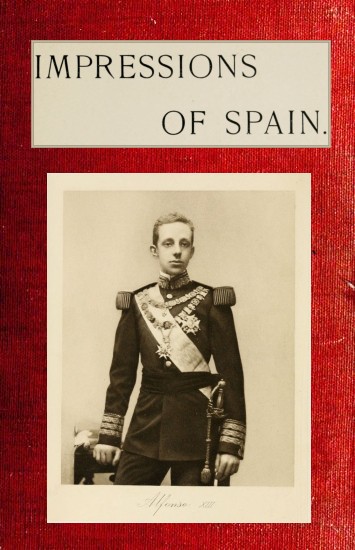
Alfonso XIII., 254, et seq.
Alhambra, The, 122, et seq.
Alicante, 84, et seq.
Alluvial Gold Washing in Spain, 300, et seq.
Alonso II., 203
Alonso el Sabio, 93
Alonso V., 210
Almadén, 119
Alva Garcia, 115
American in Spain, The, 12
Arab Mining Enterprise, 281
Aragonese, 219
Aranjuez, Palace of, 49
Armeria Real (Madrid), 30
Bailen, 93
Barcelona, 50, et seq.
Barcelona, Labour Riots in, 58
Basque Provincia, The, 180, et seq.
Beariz and its Tin Mines, 294, 330, et seq.
Beggars in Spain, 155
Bicycle in Spain, The, 87
Bilbao, 189, et seq.
Bombita-chico, 234
Borrow, George, 7
Bull-Fighting, 38, 220, et seq.
Burgos, 108, et seq.
Cadiz, 164, et seq.
Cadmus, 269
Carthagena, 88
Carthaginian Miners in Spain, 270
Castellon, 77
Castiles, The, 108, et seq.
Catalans, The, 53, et seq.
Cervantes, 116
Charles the Fifth, 124
Children in Spain, 87, 156
Christ in Burgos Cathedral, The, 110
Cid, The, 102, 111
Coal and Cement Mines of Spain, The, 300, 341
Cobham, Lord, 204
Colon Cape (Barcelona), 29
Colonial Possessions, Loss of, 3
Columbus Memorial (Barcelona), 67
Contreras Rafael, 128
Cooking in Spain, 34
Córdova, 103, et seq.
Coruña, 199, et seq.
Coruña Copper Mines, The, 329
Crime in Spain, 175
Cuba, 3
Cuenca, 119
Cuidad-Real, 116
Dances, 39, et seq.
De Amicis E., 25, 106, 127, 253
Decline of Carthaginian Influence, 275
Didorus, 271
Don Carlos, 189
Don Pedro, 210
Don Quixote, 103
Drake, Sir Francis, 204
Elche, 86, 88
English in Spain, The, 11
Escorial, The, 43, et seq.
Escurial Copper Mines, 293, 307, et seq.
Espadeno, 77
Esparto Grass, 85
Ferdinand and Isabella, 116, 134
Ferdinand VI., 218
Festival of San Isidro del Campo, 41
Ford, Richard, 101, 159, 163
Francisco Herrera, 218
Frascuelo, 234
Fuentes, 236
Galicia, 195, et seq.
Gallenga, 71
Gijon, 208
Gold-bearing Alluvials of Spain, 300, et seq.
Goya, 241
Granada, 122, 134, et seq.
Guardia Civil, 60
Guerrita, 239
Gypsies, 136
Herrera, Juan de, 43
Hiendelæncina Silver Mine, The, 296
Hotel de Paris (Madrid), 26, 34
Huércal Copper-cobalt Mines, 293, 319, et seq.
Huecar, The, 119
Huerta of Alicante, The, 85
Imperial Cafe (Madrid), 29
Infanta Isabel, 262
Iron Industry, 287
Irun, 185
Jaén, 94
John of Gaunt, 199
Juan the Second, 116
Jucar, The, 119
Kingston Gold Mines, The, 336
La Correspondencia, 38
La Granja, 112
La Mancha, 93
La Princesa de Asturias, 263
La Union, 91
León, 209, 212, et seq.
Libro de Oro, 47
Liebert Wolters, 289
Lomas, John, 95, 150
Lorenzana, Cardinal, 102
Lorenzo, Bishop, 204
Louis de Débonnaire, 77
Lugo, 207
Lugo Goldfields, The, 337
Madrid, 10, et seq.
Madrileño, El, 21
Madrid, Climate of, 14
Malaga, 171, et seq.
Maria Christina, 254, 258, 263
Mazantini, 235
Medina Az-zahra, 107
Mendicancy in Spain, 155
Mining Enterprise in the Middle Ages, 286
Mining in Spain, 271, et seq.
Miño River, 204, 207
Monserrat, 70, et seq.
Moraleja Gold-bearing Alluvial Concession, The, 336
Muleteers, 161, et seq.
Murcia, 83, et seq.
Murcians, The, 92
Murillo, Bartolomé Esteban, 152, 167, 246
Murviedro (Sanguntum), 77
Nava Cerrada, 113
Newspapers in Madrid, 38
Northern Spain, In, 195, et seq.
Nuevalos, 218
Officialism in Spain, 6, 160
Ordoño I., 210
Ordoño II., 211
Orense, 204
Orense and the Tin Industry, 294
Oriedo, 208
Oviedo, 196
Palacio Real, (Madrid), 14
Pantano de Tibi, 85
Páramo Alluvial Gold Fields, 305, 335
Pasajes de San Juan, 183
Pasco de Gracia, 64
Pelota, 183
Philip II., 2, 43
Philip the Fifth, 112
Phœnicians in Galicia, 199
Phœnician Miners in Spain, 270
Picture Gallery, The (Madrid), 30, 241, et seq.
Pontevedra, 203
Pontevedra Tin Mines, The, 333
Posting, 161, et seq.
Puchero, 37
Puerta del Diablo, 114
Puerta del Sol, 22, et seq.
Rafael Contreras, 128
Ramon of Burgundy, 115
Railway Travelling, 157, et seq.
Rambla, The, 63
Recompensa Copper Mines, 318
Rio Rimal Copper Mines, 326, et seq.
Rio Tinto Mines, 288, et seq.
Roman Conquest of Spain, 277, 279, et seq.
Roman Gold-washing Operations, 300
Ronda, 175, et seq.
Roque Barcia, 91
Royal Palace (Madrid), 33
Sagasta, 264
St. Ferdinand, 93, 94
St. James the Apostle, 203
St. Lawrence, 44
Salamanca, 209, 213
Sanguntum (Murviedro), 77
San Isidro del Campo, Festival of, 41
San Sebastian, 185
Santa Lucia, 91
Santa Maria Silver-lead Mines, 299, 338
Santiago, 200, et seq.
Segovia, 113, et seq.
Sereno, El, 203
Seville, 141, et seq.
Sevillians, The, 142
Sierra Nevada, 103
Silver-Lead Mining in Spain, 297 et seq.
Silver Mines of Spain, The, 296
Singing in Spain, 69
Slaves as Miners, 271, 279
Soko, El, 96
Somorrosto Range, 193
Southern Andalusia, In, 164, et seq.
Spain (Her Position To-day), 8
Spain’s Mineral Resources, 283
Spaniards as Miners, 312
Spaniards, The, 6, et seq.
Spanish-American War, 6, 56
Spanish Courtesy, 59
Spanish Mining, 271, et seq.
Spanish Mining Regulations, 319
Spanish Tin Corporation’s Mines, The, 333
Spanish Pride, 3
Spanish Provincialism, 53
Spanish Wines, 75
Sport, 38, 183
Tagus, The, 101
Tarragona, 73
Temperance Question, The, 25
Tharsis Mines, 291
Theatres, 40
Theodimah, 84
Theophile Gautier, 105, 127
Tin Mines of Spain, The, 295
Toledo, 95, et seq.
Toledo, Juan Bautista de, 43
Tortosa, 76
Trading Spirit, The, 54
Truimfo Mine, The, 297
Valencia, 81, et seq.
Velo, The, 21
Ventura Rodriguex, 218
Velasquez, 242
Vigo, 204
Webster, Rev. Wentworth, 2
Wörmann, 98
Zahira, 107
Zaragoza, 217, et seq.