| The cock-of-the-rock at home Frontispiece |
| FACING PAGE |
| Buenaventura |
4 |
| Cattle grazing in the Cauca Valley |
14 |
| Port of Guanchito |
14 |
| Cerro Munchique |
30 |
| A deserted Indian hut on the Cerro Munchique |
30 |
| The Caldas fast on a sand-bar in the Cauca River |
44 |
| Bamboo rafts on the Cauca River |
44 |
| The town of Salento |
50 |
| The lake on the paramo of Santa Isabel |
58 |
| Snow on the paramo of Ruiz |
58 |
| Native of Juntas de Tamaná with trail-haunting blacksnake |
68 |
| The author with natives of Juntas de Tamaná |
68 |
| Nóvita, the largest town in the Chocó |
72 |
| Threshing wheat |
78 |
| Indian hut in the Valle de las Papas |
78 |
| The village of Santa Barbara |
86 |
| A corner of San Augustin |
86 |
| A mountain stream, such as the Rio Naranjos, where the cock-of-the-rock spends its existence |
88 |
| Tree-fern, typical of the Andean forests |
98 |
| The high, flat-topped panorama of the Andes |
102 |
| The town of Valdivia |
108 |
| The Cauca River at Puerto Valdivia |
108 |
| A naturalists’ camp in the forest |
116 |
| A native hunter with a red howling monkey |
116 |
| The porters en route to the Paramillo |
124 |
| Cuña Indians at Dabeiba |
124 |
| Our camp on the Paramillo |
126 |
| Dabeiba on the Rio Sucio |
130 |
| The village of Maipures |
156 |
| The Hilo de Oro at the end of the voyage |
156 |
| A rubber-camp on the Upper Orinoco |
170 |
| Unloading for the portage, Raudal del Muerto |
172 |
| The Cerro Duida |
172 |
| Wismar on the Demerara River |
182 |
| Tumatumari on the Potaro River |
182 |
| Camp on the Rio Negro in the Gran Chaco of the Paraguay |
200 |
| Selling oranges in the market at Asuncion |
200 |
| A street in Buenos Aires |
204 |
| Porto Gallileo on the Rio Pilcomayo |
204 |
| Fort of Coimbra on the Rio Paraguay |
206 |
| S. S. Nyoac on the Paraguay River |
214 |
| Corumbá |
214 |
| Colonel Roosevelt in the Brazilian chapadão |
226 |
| A camp in the chapadão |
226 |
| The Falls of Salto Bello of the Rio Papagayo |
230 |
| Camp on the Rio da Duvida |
242 |
| A rubber-camp on the Rio Gy-Paraná |
254 |
| A rubber-camp on the Lower Gy-Paraná |
254 |
| Country around Arequipa, showing Mount Misti |
268 |
| The expedition en route via hand-car, Changollo to Arce |
268 |
| An Indian hut in the Yungas of Cochabamba |
288 |
| The expedition in the Cuchicancha Pass |
292 |
| Vampire-bat from Todos Santos |
300 |
| Tamanduá ant-eater |
300 |
| Yuracarés chewing yucca-roots for making casire |
306 |
| Yuracaré women and children |
306 |
| The great Puya, a species of pine growing in the Bolivian Andes at an elevation of 13,000 feet |
324 |
| The plaza at Mizque |
326 |
| Vermejo on the Santa Cruz trail |
338 |
| Quechua habitation on the upland desert |
346 |
| Rio Cachimayo at Peras Pampa, Sucre |
352 |
| Bridge across the Rio Pilcomayo |
352 |
| Quechua Indians wearing the costume used during the reign of the Incas, five hundred years ago |
358 |
| Ploughing at Rosario de Lerma |
374 |
| Tilcara, showing the stream and valley and the snow-capped Andes in the distance |
374 |
| The lagoon in the Chaco, Embarcacion |
380 |
| Paramo above Tafí |
380 |
| The great crested tinamou |
402 |
| A burrowing owl |
402 |
| Skinning a boa |
404 |
| Boa sunning itself at the entrance to a vizcacha burrow |
404 |
| Oculto, or Tucotuco, a rare rodent with mole-like habits |
406 |
| Gray fox, abundant in the semiarid regions |
406 |
| Long-tailed vizcacha of the high Andes |
410 |
| Short-tailed vizcacha of the Argentine lowlands |
410 |
| Rice-fields at the foot of the Andes Mountains, Sarmientos |
416 |
| MAPS |
| Sketch map of the south-central part of the Amazon drainage system |
241 |
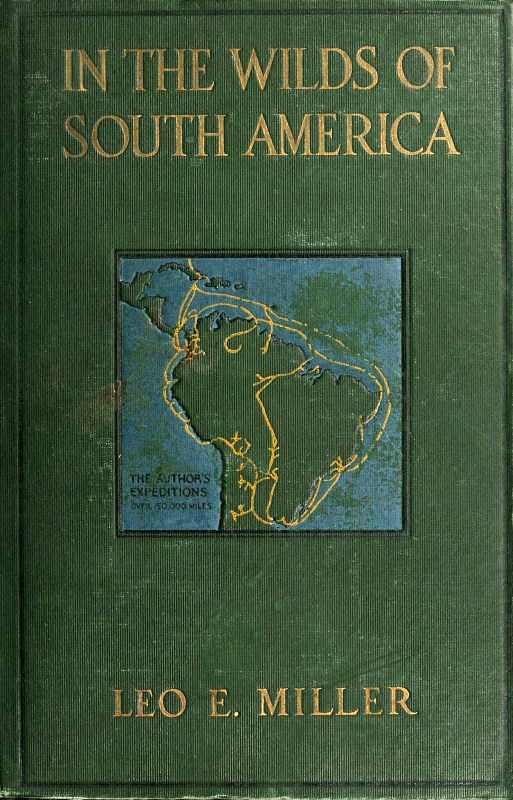
| Routes taken by the author in his South American explorations At end of the volume |