
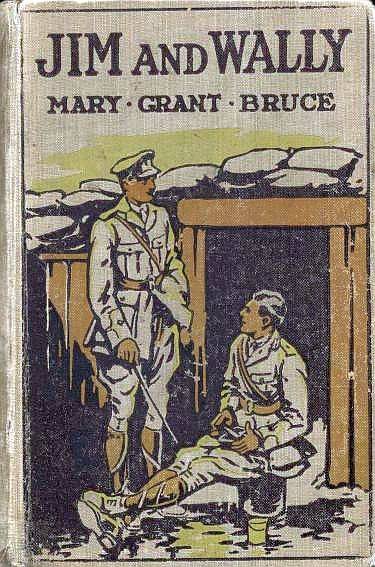
CHAPTER V
INTO DONEGAL
“A homely-looking folk they are, these people of my kin;
Their hands are hard as horse-shoes, but their hearts come through the skin.
Old Michael Clancy said to me (his age is eighty-seven),
‘There’s no place like Australia—barring Ireland and Heaven!’ ”
V. J. Daley.
‟WE ought to be nearly there,” said Jim.
“ ‘Ought’ seems to be the last argument that counts on this railway line,” his father answered. “What grounds have you for your fond belief?”
“It’s not time-tables,” his son admitted. “They wore out long ago; I scrapped them when they got to the stage when reading them only led to despair. Partly I’m hoping that the guard wasn’t merely trying to keep up my spirits when he told me we’d get to Killard at three o’clock if Jamesy Doyle wasn’t late with his milk-cans at Ballymoe; only he added that ’twas the bad little ass Jamesy had, and if it lay down in the cart how would the poor man be in time?”
“And will they wait for Jamesy and his cans?” queried Wally.
“Most certainly, I should think. Passengers are just odd happenings, to the guard; but Jamesy is married to a woman that’s the cousin of his wife’s aunt, and the guard evidently has a strong family sense. This train exists as much to carry Jamesy’s cans as anything else. However, there’s Ballymoe, and the gentleman on the platform looks as if he might be Jamesy. And there’s the ass in the cart outside, standing up. I expect it’s all right.”
The little train drew slowly into the wayside station, and the guard, descending, wrung the hand of the somnolent gentleman enthroned upon the milk-cans. Together they proceeded to load them into the van, but being overcome by argument in the middle of the operation, relinquished work, sat down on the cans, and gave themselves up to the delights of conversation. The Linton family got out, and walked along the platform. They had been travelling from early morning into the wilds of Donegal, and, since leaving the main line for a succession of local trains, had grown well accustomed to these sociable delays. Presently the engine-driver and his fireman left their engine and joined the discussion on the milk-cans. Norah strolled to the road and scratched the ass gently, a proceeding accepted by the ass without resentment, but without enthusiasm. Time went by.
The gathering on the platform dissolved itself after a while, the first move being made by Mr. Jamesy Doyle, who remarked that his wife’d be tearing the hair off of him, and she waiting for him for dinner.
“She’ll not wait long on ye; I know that one!” said the guard.
“She will, then; sure, haven’t I it bought in the little cart yonder?” said Jamesy, with the calmness of certainty. He assisted to place the remainder of his property in the van, and the guard, addressing Norah with enormous politeness, mentioned that when she was quite ready the train would go on. “Let you not be hurrying yourself—sure we’re that late already as makes no difference,” he added, pleasantly. They climbed in, and the little train clanged and rattled on its way.
At the next station two energetic men in tweed suits descended hurriedly from the one first-class smoking-carriage and demanded their bicycles, which had been put in an empty truck—the train being of the type known as a “mixed goods.” Thereafter arose sounds of wrath and vituperation.
“Something’s up; I’m going to see,” said Wally.
They all went to see. The two cyclists, visions of helpless rage, confronted a scene of desolation. The truck, being opened, disclosed upon the floor a mingled heap of scrap-iron and twisted metal, which had once been two fair bicycles: in the midst of which, firmly caught among the battered spokes, a couple of fat wethers stood and bleated a woe almost equal to that of the cyclists. A dozen more sheep, most of them bearing traces of conflict with the defunct machines, in the shape of scarred legs, pressed about the doorway, while the guard, distraught to incoherence, endeavoured to restrain them from escaping while attempting to justify himself before the outraged owners. Totally unsuccessful in the second endeavour, he was only partially fortunate in the first: a black-faced sheep, bearing a mudguard wedged upon his horns, made a dash for freedom and fled wildly down the platform, apparently maddened by his unfamiliar adornment.
“And I after putting them in at one end of the truck!” lamented the guard—“and them bikes standing against the other end! Wasn’t there room for them all—how would I know they’d mix up on me! Get back there, bad luck to ye, ye vilyun!”—to another black-faced aspirant for liberty.
Helpers, divided in their sympathies, but with the preponderance of feeling on the side of the guard, appeared mysteriously from an apparently empty landscape and disentangled the sheep from the ruins. The engine-driver, cutting the Gordian knot of debate, discovered that the time-table demanded that the train should proceed forthwith; and the cyclists were left foaming over a twisted heap on the platform, threatening immediate telegrams to headquarters, and, if necessary, murder. As the train slid away from the sound of their lamentations, the fugitive sheep could be descried standing on a bank, his black visage melancholy beneath the mudguard.
At the next station, the guard, with a chastened face, appeared at the window.
“Killard, sir,” he stated. “And Patsy Burke, he have the outside car and an ass-cart for ye.”
Mr. Linton and his party obeyed the summons gladly. They found themselves on a grass-grown platform, boasting very rudimentary station-buildings. Beyond, a road ran east and west, bordered by high banks, while on either side were small fields and wide, flat stretches of bog. A long, thin man advanced to meet them. No one else had left the train, and he accepted them, without introduction, as his responsibility.
“The car is below in the road,” he said. “The little horse, he have an objection to the train; he’d lep a ditch sooner than face it. I’ll throw the luggage on the ass-cart, sir, before I take you up.”
The guard, still subdued in spirit, was diligently hauling out boxes from his van. A suit-case and the rod-box, failing to appear, were made the objects of fevered search, despaired of, promised by the next train, and finally discovered in an empty third class carriage, all within the space of five minutes. The ass-cart, drawn by a dispirited donkey without energy to disapprove of trains, was backed on to the platform, and the luggage piled upon it in a tottery heap, secured—more or less—by an assortment of knotted string and old rope. Then the guard and engine-driver, both of whom had assisted enthusiastically, bade an affectionate farewell, and the train disappeared slowly, while the Australians followed Patsy Burke meekly to the outside car.
Dublin had already introduced them to the jaunting-car of Ireland, and they had fallen instant victims to the fascination of that most irresponsible vehicle. English tourists are wont to regard it with fear and trembling until familiar with its ways: to hold on desperately, to sit stiffly, and, very frequently, to fall off when rounding corners. That the Linton party did none of these things was not due to any superior intelligence on their parts, but merely to the fact that the back-to-back position on the open-air cars of the Melbourne tramways proved an excellent introduction to the Irish vehicle—insomuch that the force of habit was so strong in Wally that the Melbourne gripman’s habitual ejaculation, “Hold tight round the curve!” sprang unbidden to his lips every time the jarveys took a corner on one wheel. The Dublin jarveys had liked the cheery Australians, who paid well and frankly averred that there was never any conveyance like the jingling cars with their merry little bells, and their good horses; and the jarveys of Dublin are a critical race, with quick tongues and quicker wits. They had confided to them their woes, which centred round the introduction of motor-cars and the complete indifference of pedestrians to the rule of the road—an indifference universal throughout Ireland, where the unseasoned traveller is perpetually a-shiver with dread at threatened street tragedies, perpetually averted by good luck that amounts to a miracle.
“I never seen the equal of these people,” one of their drivers had said, emitting a roar like a bull of Bashan, which barely saved an elderly woman from what looked like deliberate suicide under his horse’s hoofs. “Yerra, ma’am, is it owning the road you are?”—to the lady, who pursued her leisurely way with the calmness born of many such episodes. “Young or old, ’tis all the same; they do be strolling the streets for all the world as if they was picking mushrooms, and taking no notice of you till you’d be knocking them down—and then they do be annoyed! There’s only one way, and that is to let a roar out of you at them—and then the look they give you is worse than a curse!”
“I suppose you get into trouble if you kill more than six a day,” Wally had said.
The jarvey grinned.
“Trouble, is it? Sure, some of them makes a trade of it; there’s them old wasters in this town that’d ask nothing better than that you’d knock ’em down—not to kill them, but to knock a small piece off them, the way you’d have to support them afterwards. There’s one man I but tipped with the end of a shaft, and he strolling at his aise in a crowd. Crawling at a slow walk I was; and what did he do but rowl on the ground before me, letting on that he was kilt. There was none of the polis about, so I left him rowling and calling murder!”
“Did you hear any more of him?”
“I did. Didn’t he come to me that evening and say he had his witnesses ready, and he’d be making a polis-court matter of it if I didn’t give him five pounds? ‘I do be making twenty-eight shillings a week,’ says he, ‘in me health,’ says he, and now ’tis the way I cannot lift me hand to me head,’ he says. Him, that never earned five shillings in a week in his life, and not that, if he could steal it! I towld him to bring his polis-court and his dirty witnesses, and that if he did, I’d pay the five pounds for the pleasure I’d have in belting the life out of him.”
“And did he bring it?”
“He did not. I seen him a week after that, and he cleaning steps. ‘I’m glad to see you looking so well and hearty, me poor man!’ says I to him; and he thrun a look at me fit to kill. Sure I knew that one’d be more anxious to keep out of the way of the polis than to be dandhering about them with his cases!”
The Dublin cars had been smart affairs, spick-and-span with bright paint and clean upholstering, every buckle on their harness polished brightly. Their rubber tyres strove to soften the asperities of cobbled streets. But the car to which Patsy Burke led the Australians was of a different aspect: small and forbidding, with straight up-and-down seats whereon reposed cushions from which the stuffing had chiefly escaped, the insignificant remnant remaining in hard knobs in the corners. The original wood peeped out through faint streaks of the original paint, while here and there patches of deal and hoop-iron lent variety to the exterior. Many different sets had contributed towards the composition of the harness, wherein nothing matched except in age and decrepitude. A tattered urchin stood at the head of the little horse which had an objection to trains. The horse was asleep.
“If I were asked,” murmured Norah, surveying him, “I would say he had an objection to moving at all.”
“He looks as if he would like to lean up against a tree and dream,” said Wally, “and good gracious! is he going to drag the lot of us!”
“Why wouldn’t he?” asked Mr. Burke, with some asperity. “Git along with ye to the ass, John Conolly,”—to the boy—“and lend a hand to the big thrunk when the road does be rough, or it will fall off on ye. Will ye get up, miss?”
“Is it far?” asked Norah, regarding the somnolent horse with troubled eyes.
“ ’Tis five Irish miles, miss.”
“But can he take us all? There’s—there’s so much of us,” said Norah, her glance roving over her tall menfolk, and dwelling finally on Mr. Burke, who was not less tall.
“Him!” said Mr. Burke. “But isn’t the luggage on the ass-cart? Sure it’ll only be a luxury for him—many’s the time I’ve known that one with seven or eight behind him, going to a funeral, and he that full of courage, I’d me own throubles to keep him from bolting? Let ye get up, and ’tis little he’ll be making of ye.”
They got up, unhappily, and Mr. Burke hopped into the driver’s seat—which is occupied only in time of stress, the jarvey greatly preferring to drive from the side. He said, “G’wan, now!” to the little horse, and that animal awoke and took the road gallantly, while a cracked bell on his collar rattled a discordant accompaniment to his hoof-beats.
They jogged on between the high banks. The scent of the whitethorn that made snow upon their crests flooded the air, and mingled with deep wafts of odour from clumps of furze lying golden in the fields. There were other flowers starring the hedges; honeysuckle, waving long arms of sweetness, and, nestling closely in the grass-grown banks, clusters of wild violets, starry celandines and even a few late primroses. There were many houses in sight; little whitewashed cabins scattered over the hills, approached by narrow boreens or tiny lanes, so narrow that it seemed that even an ass-cart could scarcely manage to squeeze in between their towering banks.
“Did you ever see such little paddocks—fields, I ought to say?” uttered Wally. “And the great fat banks and hedges between them! Why, they must cover as much ground as there is in many of the fields!”
“We’d put wire-fences, in Australia,” said Mr. Linton, laughing. “It’s queer, when you come to think of it: we’re supposed to have land to spare, but we put the narrowest fences that can be made; and here, there isn’t enough to go round, and they cover up ever so much of it with their banks.”
“Oh, but aren’t you glad they don’t make wire-fences!” Norah broke out. “They’re so hideous: and these hedges are just exquisite.”
“Not being a landholder, I am, indeed,” said her father. “The idea of this landscape given up to wire-fences is depressing—long may they stick to their banks! And their shelter must be valuable in this country; they don’t seem to have many trees.” His eye ran over the bare little fields. “Don’t you grow trees, in Donegal?” he asked of the back of Mr. Burke.
That gentleman, feeling himself addressed, swung round.
“There do be plenty in the woods and in gentlemen’s grounds, sir. I never seen any in the fields. They do say there was any amount in the ould ancient days, or how would the bogs be there? Forests, no less; and quare beasts in them. I’ve seen ould heads of deer with horns that wide you’d never get them up a boreen. There were no fields and no fences in those days, and people lived by hunting—great hunting those big deer would give them, to be sure. If you’d kill a rabbit nowadays it’d be as much as you’d do to ate it before the polis had you!”
“If killing rabbits is what you care for, you might come to Australia,” said Jim, laughing. “You would certainly be welcome there. Only after a little while, you wouldn’t eat any.”
“There was a lad I knew in Derry went out to them parts,” said Mr. Burke, “and he sent home letters with such tales of his doings you wouldn’t believe them. He said there were beasts that hopped on their tails faster than a horse ’ud gallop, and rabbits that had the face ate off the country. Like a carpet on the floor, he says. But sure he was always the boy that’d spin you a yarn.”
“It was a true yarn, anyhow,” Jim remarked.
“Do ye tell me, now?” The long face of Patsy Burke was respectful, but incredulous, “And another thing he said, that a man couldn’t believe: that the genthry’d go out and poison foxes!”
“They would,” said Mr. Linton. “Gladly.”
“But——” Words failed Mr. Burke. He gaped at his passengers. The horse dropped to a walk, unheeded.
“Poison them, or shoot them, or get rid of them in any way possible,” said Jim, enjoying the mounting agony of Mr. Burke. “We can’t do much hunting, you see, when we live on big places, with the nearest neighbour perhaps twenty miles off; and often the hills are so steep and rough, and so thick with fallen timber, that horses and hounds would want wings to hunt through them. But a man may have thousands of sheep on hills like that.”
“Do ye tell me? Thousands, is it?”
“Rather. And the foxes breed like rabbits in those hills, and there’s nothing they like so well as young lambs. You can go out in the morning and find forty or fifty dead lambs—the cruel brutes of foxes just eat their noses and go on to the next. When you see that number of little lambs killed, in that fashion, you’re ready to start poisoning foxes.”
“Ye would so,” said Mr. Burke, explosively. “And no one interferes with ye?”
“Why, you get paid for it,” Jim said. To which Mr. Burke replied by a gasp of “God help us!” and relieved his feelings by lashing the horse with a shout of “G’wan, now!” The horse broke into a surprised canter, and they rocked down a little hill. At its foot a wide expanse of bog stretched westward, looking like a great grassy plain. Here and there, near the road, men were working at cutting turf, armed with the loy or narrow, sharp spade, which takes out a sod of turf, the size of a brick, to be stacked to dry in the sun. A great corner had already been cut away, and lay bleak and desolate. Above its level the wall of turf rose three or four feet, a dark-brown glutinous-looking mass, smoothly marked with the scars of the loy. There were deep pools of water here and there: the brown bog-water that scares the English tourists who finds it in a bedroom jug in a hotel, and gives foundation for future scathing comments on the dirty ways of Ireland: the fact being that if its exquisite velvet-softness could be taken to London, most of the Bond Street complexion specialists would go out of business for lack of customers.
“So that’s turf,” commented Wally, looking curiously at the rough stacks of sods, which the sun was drying to a lighter colour than the deep brown of the bog-face. “It doesn’t look the sort of stuff you’d make fires of—wherein I expect I show my hideous ignorance.”
Mr. Burke had begun with a snort at the first part of this remark, but checked it in its birth at the frank avowal of the conclusion.
“Wait till ye see it burn, sir,” he said. “Ye’d not want a better fire, barring ye could get a bit of bog-wood to mix with it. Then ye’d not get its aiqual if ye were walking the world all your life.”
“Are those pools deep?” Norah asked, looking at the still brown water, fringed with reeds and sedges.
“Some of ’em’s no depth at all; and there’s some that deep that no man knows the bottom of ’em. They’d take anyone and swallow him entirely, the way he’d never be heard of again; and they do say the bog keeps ’em fresh as if they’d just fallen in, only I dunno would it be true: I never seen anybody that had come out. It’s one of the old stories that do be going in the country.”
“When we talk about a bog, we mean something that looks—well, boggy,” Norah said. “I never thought an Irish bog looked so pretty; all grass and rushes, like a big plain. Why do they call it a bog?”
“You’d know if you got into it,” said Mr. Burke, bearing patiently with the ignorance of the foreigner. “There’s parts of it firm enough to gallop a horse over; but you’d want to know where you were going, it’s that treacherous—it’d let you down as deep as your waist in a second, and it looking safe as a street. Some of the mosses that do be growing on it ’ud warn you: there’s one or two kinds that only grow where it’s deep and quaking. As for pretty—it’s airly yet for flowers; but you’d see it like a garden, in the autumn, with meadowsweet and loosestrife and canavan, that they call the bog-cotton, like snow lying on it. There’s no end to the quare things that do be growing in a bog.”
They passed ass-carts, built up with basket work to form creels, piled high with turf,—generally in the charge of a barefooted urchin, dark-eyed and graceful in his rags, who would fling a cheery “Good-day” at the car rattling by, touching his cap to “the genthry.”
“ ’Tis a great year for saving turf,” Mr. Burke told them. “There’s no knowing what the war’ll be doing with prices; they say the poor people’ll be hard put to it to go on living at all. So everyone’s getting turf; sure, it’s easier to be hungry if you’re warm. I dunno, at all, why would they make a war: didn’t we have enough and too much to pay for tea and tobacco as it was without the ould Kaiser poking in his nose?” Thus adjusting satisfactorily the responsibility for his financial troubles, Mr. Burke addressed the horse angrily, and drove on in silence.
They came to a little river, brawling merrily under a bridge of grey stone. A turn in the road brought trees in view, fringing a lough that lay tranquil in the sunlight; a placid sheet of blue water broken here and there by tiny islands. Towards the end that was nearest, the trees were thickly planted. Between them they caught glimpses of an old stone house nestling in a wilderness of a garden that ran down almost to the edge of the lough.
Patsy Burke swung the little horse in through a gateway, the iron gates of which stood invitingly open. They jogged up a winding avenue, overhung with lofty beech-trees. It ended suddenly in front of the house. Through a wide doorway they could see a dim hall, where a bewildering collection of old guns and blunderbusses was ranged over a massive mahogany table, the legs of which ended in claw-feet that would have drawn a connoisseur like a magnet. Honeysuckle and roses climbed together up the old walls, framing the doorway in blossom.
“Are ye there, ma’am?” bawled Patsy.
A pleasant-faced woman came through the hall quickly.
“I’d have given up expecting you, if that old train was ever in time,” she said, giving a hand to Norah as that damsel hopped from the car. “Aren’t you all tired out, and you travelling since early morning? Come in then—there’s hot water waiting in your rooms, and tea will be ready in ten minutes. Is the luggage coming, Patsy?”
“It is, ma’am,” responded Mr. Burke. “Lasteways, if that image of a John Conolly doesn’t play any of his thricks with the ass.”
“Perhaps, now, you’d be better going back to meet him when you have the horse stabled,” suggested his mistress. “I wouldn’t have the luggage delayed.”
“Ah, sure, it will be all right,” said Mr. Burke, hastily, “John Conolly’s not that bad; he’ll get it here sometime, but where’d be the use of hurrying the ass? Well, I’ll throw a look down the road when I’m after putting the car by, ma’am.”
“And that makes sure of me poor Brownie getting a good grooming,” murmured the landlady, ushering her guests into the house as the car jogged stablewards. “Patsy’s not that fond of a walk that he’d scamp his job to be travelling the road after John Conolly. Are you there, Bridget?”
“I am, ma’am,” said a pretty girl, appearing from the back of the hall with such swiftness as to compel the belief that she had been surreptitiously observing the new-comers.
“Take the gentlemen to their rooms,” commanded the landlady. “Will you come with me, Miss Linton?”
Norah followed her up the broad staircase. A wide corridor led through mouldering archways, whence passages branched off to right and left. The walls bore signs of decorations of a bygone day, now faint and faded with age. The landlady threw open the door of a large room, with two windows looking over the lough. A huge bed occupied an alcove: bare acreages of floor intervened between isolated pieces of furniture, with rugs lying, like islands, on the stained boards.
“I took up the carpet—’twas old and there were holes in it you’d fall through,” said the landlady. “But I could put you in a smaller room if you’d rather have a carpet.”
“I like this,” Norah said, looking round the clean bareness of the room. “But can’t I have the windows open?”
“You’ll have to fight Bridget over them,” replied the landlady, flinging both windows wide. “I opened them twice this morning, but she shut them again; and the second time she was so anxious about all the deaths you’d be dying with the dint of the cold blast sweeping in, that I let them stay.”
“I didn’t think there was any cold blast,” Norah said laughing.
“There wasn’t; but Bridget thinks that any air that comes in through an open window is a blast, even if it’s the middle of summer. Have you everything you want, Miss Linton? I’m sure you’ll all be famished for your tea, and I’ll run and see to it.”
“I think this is a jolly place,” Norah said, as they gathered, ten minutes later, round a table that might certainly have groaned under its load of good things, had it not been made of exceedingly solid old mahogany. “It’s not a bit like a boarding-house, is it? There’s such a home-y feel about it.”
“There’s a home-y look about this table,” Jim averred. “I haven’t seen anything like it since we left Billabong.”
There were crusty loaves of Irish soda-bread, which is better than anything else except the home-made bread of Australia, heaps of brown, crisp scones, buttered hot-cakes, and glass dishes with ruby-coloured jams. A bowl of cream was in the middle, and a dish of rich dark honey in the comb—not like the anæmic honey one buys in London, which is made by fat and lazy bees out of dishes of sugar and water, and tastes like it. The Irish bees had worked over miles of heathery moorland, and their honey held something of the heather’s fresh sweetness.
“Think of the trenches—and bully beef!” ejaculated Wally. “I say, what’s this?”
He had uncovered a smoking plateful of a queer flat substance, on which attention was immediately focussed.
“Does one eat it?” Norah queried.
“Blessed if I know,” Jim answered. “It looks a bit queer.”
Light suddenly illumined Mr. Linton.
“Bless us, that’s potato-cake!” he exclaimed. “I haven’t tasted it for many a year, and it’s one of the best things going. It ought to be eaten so hot that it burns the mouth, so I advise you not to lose time.’ He helped himself, declaring that no considerations of etiquette were to stand in the way of the proper temperature of a potato-cake, and the others somewhat doubtfully followed his example. In a very short time the plate was empty.
“That’s a recipe I’ll take back to Brownie!” was Norah’s significant comment. “Do you think Mrs. Moroney would let me have a lesson on it in the kitchen?”
“Mrs. Moroney seems inclined to eat from one’s hand,” said Mr. Linton. “She’s desperately anxious for us to be comfortable. You know, we were told in London that she had only begun this business since the war—her husband is at the front—so time hasn’t soured her as it sours most landladies. We’re lucky in catching her in the fluid state: later on she’ll solidify into the adamantine condition that is truly landladylike.”
“Meanwhile, she’s rather an old duck,” said Wally. “Hallo, who’s that?”
A small rosy face, crowned with a tangle of yellow curls, was peeping round the doorway. Finding itself observed, it hastily disappeared. Norah snatched a sponge-cake and went in swift pursuit, returning, a moment later, with a very small boy clad in a blue shirt and ridiculously diminutive knickerbockers, who greeted the company with a friendly smile somewhat complicated by a large mouthful of cake.
“Well, you’re a cheerful person,” Jim said. “What’s your name?”
“Timsy,” said the new-comer. “And I’m eight.”
“I call that genius,” said Wally. “He knew you’d ask him that next, so he saved you the trouble. Do you live here, Timsy?”
The small boy nodded vigorously.
“Me daddy’s gorn,” he volunteered.
“Where?”
“Fightin’ the Gair-mins. They’s bad—they’s after hurtin’ him in the laig.”
“Did they?” said Wally, sympathetically. “Poor daddy! Is he better?”
“He is. He’s goin’ to shoot me some.”
“Is he, now? Will he bring them home?”
“I dunno will he. I asked the postman, an’ he said daddy couldn’t post ’em.”
“That wasn’t nice of the postman,” said Jim. “What would you do with them if you got them?”
“Frow fings at ’em,” said Timsy, valiantly.
“Good man!” said Jim. “We’ll have you in the trenches before the war’s over, I expect. Another cake, old chap?”
Timsy accepted the cake graciously, digging his white teeth into it with appreciation.
“I’m after having me tea,” he confided. “An’ Bridget said there wasn’t any cake. But there’s lots.” His eye swept the table.
“There is, indeed,” said Jim, guiltily. “Just you have as much as you feel like.”
“Are you a soldier?” demanded Timsy, his eyes on Jim’s uniform.
The boy nodded.
“Like me daddy?”
“Not as good, I expect,” said Jim.
“Me daddy’s the finest soldier ever went out of Ireland—old Nanny told me he was. And she said if once he met that old Kaiser he’d be sorry he ever got borned. An’ he would, too, if me daddy cot him. An he’s a sergeant, ’cause he’s got free stripes on his arm. Why hasn’t you got any?”
“I don’t know as much as your daddy,” said Jim, probably with perfect truth. “When I get bigger they may give me some.”
“You’re bigger than me daddy, now,” said Timsy, surveying him. “Only you haven’t got any whiskers. I ’spect you have to have whiskers before you get free stripes.”
“I expect so,” Jim agreed. “I’ll grow some the first minute I get time. What have you done with your legs, Timsy?”
“Scratched ’em, I ’spect,” said Timsy, indifferently, casting a fleeting glance at his bare brown legs, which bore many marks of warfare. “They’s bwambles in the wood. Why is your buttons dif-runt to me daddy’s?”
“What are your daddy’s like?”
Timsy fished laboriously in the pocket of his shirt.
“I got one here,” he said. “It came uncottoned, an’ fell off, an’ daddy said I could have it. Look—it’s nicer than yours.”
“Of course it is—isn’t your daddy a sergeant?” said Jim, gravely. Timsy looked up sharply, and was seized with compunction.
“Don’t you mind,” he said, hastily putting away his cherished button, lest dangling it before the eyes of his new friend should excite vain longings in his soul. He slipped a grimy little paw into Jim’s. “ ’Twill not be long at all before they make a sergeant of you. Can you hurry up an’ grow whiskers?”
“I’ll do my best,” returned Jim, laughing. “You’re a good old sportsman, Timsy. Have another cake.”
Timsy’s head was bent over the dish in the tremendous effort of selection, when a slight commotion was heard in the hall.
“I was without in the scullery,” said a high-pitched voice, “and I after giving him his tea. ‘Let you sit quiet there till I have a minute to put a decent appearance on you,’ says I. ‘ ’Tis not in them ould rags you’d be having the genthry see you,’ I says. With that I wint back, an’ the kitchen was as bare as the palm of me hand. I’ve called him till me throat’s cracking——”
“Is that you, Timsy?” whispered Norah. The dancing eyes of the culprit were sufficient answer.
“Blessed Hour!” said the voice of Mrs. Moroney, torn between relief and wrath. Her good-natured face hung in the doorway, presently followed by her ample form. “Is it you, then, Timsy Moroney, disgracing me and annoying the gentleman! Why would you have him on your knee, sir, and he the ragamuffin of the world? I’d not have you troubled with him.”
“He’s not troubling me at all, Mrs. Moroney,” Jim assured her. “He’s an awfully friendly little chap. Does it matter if he has cakes?”
The question savoured of shutting the stable-door after the stealing of the steed. Timsy ate his cake hurriedly, lest disaster await him in the answer.
“There’s nothing he doesn’t eat,” said his mother resignedly. “But I’d not let him annoy you, sir.”
“There was no cake in the kitchen!” said Timsy, fixing reproachful eyes on his parent. “How would I have me tea, an’ no cake?”
“Cock you up with cake!” returned Mrs. Moroney, spiritedly. “Well able to go without it you are, for once in a while.” She relented before her son’s appealing gaze. “Come away, then, and let Bridget wash you: sure, she’s screaming all over the place after you.”
Timsy hesitated, regarding Jim with affection.
“Can I come back some time?” he demanded.
“Of course you can,” said Jim.
The small boy climbed down slowly.
“I’m destroyed with washin’,” he complained. “ ’Tis only at dinner-time she had me all soaped. An’ I hate shoes . . .” The voice of his lamentations died away as his mother swept him from the room.
“Nice kid,” said Jim, getting up. “Let’s go out and reconnoitre.”
The shadows were lengthening across the strip of tree-fringed grass leading to the gate. Near the house, the garden was a wilderness of colour and fragrance. Roses and sweet-peas, stocks and asters, nasturtiums and clematis, in a bewildering tangle, jostled each other in the untidy beds and on the old stone walls. Here and there was a mouldering summer-house, its entrance almost blocked with hanging creepers, while in shady nooks in the winding walks were seats with an appearance of old age that suggested prudence in sitting down.
Presently they came upon a path leading abruptly down-hill to the lough. They followed it, passing out of the garden into a little field where small black Kerry cattle looked inquisitively at them, and through a rickety gate on to the shore, where grey pebbles made a rough beach. A disconsolate donkey, attached to a windlass, walked round and round in a weary circle, pumping water up to the house—a spectacle which promptly set Norah to hunting for a thistle for him, which the donkey received coldly.
“It would take more than a thistle to sweeten that job,” said Wally. “Come and look at the boat.”
Mr. Patsy Burke was rather feverishly busy with the boat—it had apparently occurred to him that since the new-comers would assuredly want her it might be as well to make certain that she was sound. She was not sound—to rectify which obvious condition Mr. Burke laboured mightily.
“She’s seen better days,” remarked Mr. Linton, looking at the ancient vessel with critical eyes. Already she had been extensively patched: her paint was merely a memory, and she bore “a general flavour of mild decay.” The oars, which lay near, had also been mended many times. They did not match: a fact which the Australians were to discover later.
“Ah, sure, she’s a good boat,” said Mr. Burke. “ ’Tis only the thrifle of a leak she have in her. You wouldn’t ask an aisier or a kinder boat to pull than that one—begob, she’s the best boat to be found on any lough hereabouts.” This assertion also was to be verified by time. “In the ould times, when the family was here, many’s the day I’ve seen her, full of red cushions and fine ladies, and she tearing up the lough like a racehorse!” The poetic nature of Mr. Burke’s memories moved him to a sigh.
“Who was the family?” queried Mr. Linton.
“The O’Donnells, to be sure,” answered Mr. Burke, his long face expressing faint surprise at ignorance so vast. “They owned all this country, from the ould ancient times—but there’s none of them left now. Me gran’father, and his gran’father before him, was tenants under them. I’m told they were kings, one time. But there’s nothing left of any of the ould stock now—all their houses is sold, or falling to pieces, an’ they at the ends of the earth, seeking their fortune.”
“The house is very old, isn’t it?” Norah asked.
“ ’Tis ould, and ’tis falling to decay—it ’ud take a power of money to put it right. Ah, the good days is gone from Ireland—what with the land war and the famine, all the money was swept from her.” Mr. Burke stopped abruptly. He pulled his battered felt hat over his eyes and hammered vigorously at the old boat.
They went up through the fragrant garden, now heavy with evening shadows. Above them the gaunt old house towered, bosomed in its trees, dim with the night mist from the lough. Lights were beginning to twinkle from the windows, and the faint acrid smell of turf fires stole upon the still air. To Norah’s fancy the silent garden was peopled with shadowy forms—tall gallants and exquisite ladies of a bygone day, and little children who ran, laughing, along paths that had no tangle of neglected growth. It was theirs; the dream visions made her feel an interloper as she crossed the threshold into the lit hall.
CHAPTER VI
OF LITTLE BROWN TROUT
“Loughareema! Loughareema!
Lies so high among the heather,
A little lough, a dark lough,
The wather’s black an’ deep:
Ould herons go a-fishing there,
An’ sea-gulls all together
Float roun’ the one green island
On the fairy lough asleep.”
Moira O’Neil.
A WEEK went by with the mysterious swiftness of holiday weeks, especially in Ireland. No one quite knew what became of the long June days; they dawned in light mists that lay on the surface of Lough Aniller, reddened with the sunrise, only to vanish as the sun mounted; they widened to warm brightness, with clear blue skies flecked with the tiniest cloudlets; and sank to long, delicious twilights, with just enough chill in the air to make light coats necessary. No one was inclined for strenuous exertion. Jim and Wally, under orders to take life very easily for the present, were content to lie about in the fragrant grass, to go for short walks along the borders of the lough, or to let Patsy Burke row them slowly up its placid waters, where scarcely a ripple marked the rising of a trout. To Norah and her father it was sufficient happiness to watch their boys gradually winning back strength. Each day that went by and brought no recurrence of throat-trouble was something achieved; and the long, golden days smoothed the weary lines from the boyish faces, and brought something of the old tan into their cheeks. There was no doubt that as a sanatorium Donegal merited all that had been claimed of her.
They were the only guests in the old stone house. Later on, Mrs. Moroney told them, people were coming from Dublin and Belfast: but the war had temporarily killed the tourist traffic from England, and Irish fishing was having a much-needed rest.
“But for the fowl I have, indeed, I’d be hard put to it,” said Mrs. Moroney. She reared innumerable ducks and chickens, and carried on a thriving trade, sending them ready dressed to England—aided by a parcels post system which, unlike that of Australia, does not appear to regard the senders and receivers of parcels as wealthy eccentrics, to be heavily charged, but otherwise unworthy of consideration. At all times Mrs. Moroney was to be found plucking and dressing her wares—keeping, nevertheless, an eagle eye upon her household, and always ready to take interest in the doings of her guests. Good nature beamed from her countenance, and chicken-fluff always ornamented her hair.
Timsy had constituted himself Jim’s shadow, and courier-in-chief to the party. He knew all the country with a boy’s knowledge, had an acquaintance with the ways of trout which seemed miraculous in one of his years, and cherished a feud of long standing with John Conolly, whose treatment of the little ass did not come up to the standard instilled into Timsy by the sergeant, now in France. All these matters he placed at the absolute disposal of Jim. The rest of the party he treated politely: they were well enough. But the big boy in khaki was somehow different, and Timsy gave him all his warm little heart.
It was a shock to him that Jim and Wally appeared in rough tweeds on the morning after their arrival.
“Where’s you uny-forms?” demanded Timsy, hopping on one foot on the mossy path, rather like an impertinent sparrow.
“Upstairs,” Jim said, solemnly.
“Why for don’t you put ’em on?”
“Didn’t want to.”
Timsy surveyed him with a pained air.
“Me daddy says uny-form had a right to be wore all the time,” he said. “He didn’t have no uvver clothes when he came home.”
Jim relented at the small, worried face.
“Tell you how it is, old man,” he said. “The old Germans laid us out; and we’re going to get better as quick as we can, to go and lick them.”
“Yes?” said Timsy, digging his heel into the earth, in bloodthirsty ecstasy. “That’s what me daddy’s after doing.”
“Of course he is. Well, we’ll get better quicker if we haven’t got to wear heavy uniforms all the time, don’t you see? So we asked leave; and a big general said we could put on other clothes. He was a very big general, so it’s all right, isn’t it?”
“Was he very big?”
“Enormous,” said Jim, gravely.
“If he was very ’normous, I ’spect it’s all right,” Timsy said, relinquishing his point with reluctance. “Only I likes you best in uny-forms.” His eye suddenly lit with new hope. “Do you think you’d wear ’em on Sunday, an’ you goin’ to church?”
“I would,” Jim said. “There, it’s a bargain, Timsy.” So Timsy accepted the tweed knickerbockers as necessary evils, and peace reigned.
As for the trout, they had remained in peace. Patsy Burke had given the Australians a few lessons in throwing a fly, a gentle art to which they did not take very kindly, though they proved apt enough pupils. But the trout were not rising, and they found it dull. Their previous experience had been either the primitive method of a stick, a string, and a worm, in the creeks at home, or a deep-sea hand-line with a substantial bait and a heavy sinker. They liked these peaceful ways, and to them the incessant business of casting seemed, in the Australian phrase, “too much like hard work.” They endeavoured, however, to keep this view from the scandalized Mr. Burke, whose scorn at the mere mention of a hand-line was almost painful to witness.
In defence of their apathy, it must be admitted that the sport was poor. The weather had been unfavourable, and the brown trout declined to rise; but even in the best of years Lough Aniller, the big lough by the house, was not a good fishing lake. A few rises came to them, which they missed: and they had the poor satisfaction of beholding Mr. Burke land a specimen which weighed not quite a quarter of a pound. It did not seem, to untutored eyes quite worth the candle.
“ ’Tis a poor lake, anyways,” Mr. Burke said. They were paddling home in the setting sun, the water full of bright reflections. “I dunno why the trout wouldn’t be in it: it’s the biggest hereabouts, but they don’t seem wishful for it at all. There’s Lough Nacurra and Lough Anoor—they’re little enough, but you’d get finer fishing in them in a day than in a week of Lough Aniller.”
“Why don’t we go there?” spoke Wally, lazily.
“There’s no reason in the world why you shouldn’t. Sure, they’re no distance, and the fishing belongs to the house; there’ll not be a rod on them, barring your own.”
“What do they mean, Patsy?” Norah asked. Mr. Burke was her instructor in the Irish language, and she thirsted for translations of each unknown word.
“Lough Anoor’s the lough of the gold, miss, and Lough Nacurra’s the lough of the Champions. I dunno why they have those names on them; there’s a lot of ould stories goin’. Whatever reason anybody was to give, no one could say it was wrong.”
“Well, Lough Aniller means the lough of the Eagle, you said, Patsy, but there don’t seem any eagles about.”
“Thrue for ye,” agreed Mr. Burke; “they do not. But I wouldn’t wonder if there was any amount of them here in the ould ancient times.” He scanned the placid waters with disfavour. “There’s one thing they couldn’t call it, and that’s Nabrack—the lough of the Trout!”
“They certainly couldn’t—whoever ‘they’ may be,” said Wally, laughing. “There are just about as many trout in this lough as there are in the front garden, I believe. Who’ll come to one of the others to-morrow?—I’ll have to learn their names before I say them in public. I vote for the one that belongs to the Champions!”
“Lough Nacurra—ye might do worse,” said Patsy. “ ’Tis a good little lough, and there’s a small little island in it, that ’ud be a good place for you to be taking your dinners. The boat’s no great thing at all—but she’s better than the one on Lough Anoor.”
“What!” exclaimed Mr. Linton. “Is she worse than this one?” The boat on Lough Aniller had not struck the party as an up-to-date craft.
“She is,” said Mr. Burke. “But there’s no distance to be pulling her: sure, the lough’s not big enough to go any ways far. If ’twas Lough Anoor, now, there’d be no good in me comin’ with you, for five couldn’t sit in her. Four’ll be all she’ll hold.”
“Is she safe?” asked Mr. Linton.
“Is it safe? Sure, you wouldn’t sink that one, not if you danced in her,” said Patsy.
They had drifted almost to the end of the lough. Above them the high road crossed the stone bridge. The whir of a motor hummed across it, and, looking up, they saw a grey runabout car, driven by a man of whose face little could be seen, since goggles hid his eyes and his cap was pulled low. Patsy touched his cap hastily as the car vanished in its own dust.
“ ’Tis the young masther,” he said; and added, as if in further explanation, “Sir John, I mean—Sir John O’Neill.”
“Does he live here?” Norah asked.
“He do, miss. But a lot of his time he’s somewhere else—London or foreign parts.”
“I thought every landowner about here had gone to the war,” Mr. Linton said.
“Begob, Sir John ’ud give the two eyes out of his head to be gone, too,” said Patsy, shortly. “But they won’t take him. ’Tis—’tis weakly he is. He have the spirit of ten men in him; them ould German’s ’ud find their hands full, and they to be tackling him in a tight place. Well, well—some people don’t get much luck.” He stopped short, and rowed violently for some time.
“Do you get many salmon here?” Jim asked, idly. It was evident that Mr. Burke did not wish to pursue the subject of Sir John O’Neill.
“In the river—but only a few,” replied the boatman. “ ’Twouldn’t be worth your while getting a licence, sir. Sure it’s them ’ud give you a different idea of fishing. I got one in Lough Illion, in Kerry, one time when I was staying in them parts. That was the fish! He tuk me four and a half hours to kill.”
“Whew—w!” said Jim, respectfully. “He must have been a big fellow.”
“Well, he was not that big at all; but he tuk the fly as if he meant it, and down he went to the bottom like a shtone. An’ there he lay, and I going round and round him in the boat, trying any ways to shift him, and he sulking in the weeds. Banging my rod I was, and pelting at him all the bits of rock I had in the boat, and I couldn’t shtir him. I was famished out, for it was pegging hailshtones and sleet. At last he come up; and then he thought better of it, when he saw the sky above him, and he was going down again, and I let a dhrive at him with the gaff, and got him just near the tail—great luck I had with him, to be sure.”
“It was about time you did have some luck,” Jim remarked.
“There’s not many of them ’ud sulk like that,” said Patsy. “Generally they’d be tiring themselves with the runs they’s take at the first. And if they thrun a lep or two—’tis the lep takes most out of them: it breaks their courage. There’s nothing like a salmon, to my way of thinking, though there’s a lot of the gentry do be sticking to the little brown trout. Will ye be for Lough Nacurra in the morning, sir?”
“We will—if you’ll promise us fish,” Jim responded.
“It ’ud be a bold man to promise anything this weather,” said Patsy, looking with disfavour at the clear sky and the placid lough. “Still-an’-all, ’tis a good lough; if they’re rising anywhere it’ll be on Nacurra.”
Morning came with a haze lying on the blue hills, and a fitful breeze: the best fishing day yet, Patsy pronounced it, as he shouldered a gigantic luncheon-basket and led the way down the avenue and along the dusty high road. They struck across the bog presently, following a path that led through a tangle of the sweet bog-myrtle; and, in a little harbour of smooth grey stones at the western end of Lough Nacurra, came upon their boat, half-concealed among the rushes fringing the water’s edge. The lough was a long narrow sheet of water, widening a little at the far end, where a thickly-wooded island showed dimly through the haze.
“Have you been storing water in the boat?” Jim inquired, gravely, surveying the ancient craft among the rushes. Its bottom timbers bore evidence of long soaking.
“Tis a thrifle of dampness she have in her,” admitted Mr. Burke, stepping in carefully and getting to work with a baling-tin. “I’m after sending John Conolly up only this morning to bale her out, but he’s the champion at scamping a job. Ah, she’ll dry out beautifully in the sun, sir, once I have her emptied. There now—let you get in gently, sir.”
“I will,” said Mr. Linton, placing his feet with extreme caution, and coming to rest thankfully in the stern. “I don’t want to begin the day with a ducking, and those bottom boards look as if they would crumble under my weight. Take care, Wally—this is a craft to be treated with respect.”
“Have you drowned many in this one?” queried Jim.
Mr. Burke emitted a deep chuckle.
“Yerra, you will have your joke, sir!” he said, making hasty repairs to a rowlock that chiefly consisted of rusty wire, of which more than one strand had broken away. “There’s many a good fish killed in worse boats than this. A lick of paint, now, and you wouldn’t know her.”
“I wouldn’t call her a boat at all,” retorted Jim, disposing his long legs so as to avoid, as far as possible, the steadily increasing dampness in the bottom. “She’s a hoary antique, and she ought to be in a museum; but if you say she’ll stay afloat, Patsy, we’re game. Lend me that baling-tin while you’re rowing, and I’ll try to discourage the lough from entering.”
Mr. Linton declined to fish, remarking that he preferred to be ready to swim when necessary, and would meanwhile officiate as baler as soon as Jim was ready to get to work with his rod. Patsy pulled out gently, until they were clear of rushes. A light wind rippled the water, sending tiny wavelets lapping against the sides of the boat; overhead, clouds drifted across a soft blue sky and now and then blotted out the sun. The hills sloping down to the lough on three sides were half shrouded in haze.
“ ’Tis a perfect fishing-day,” Patsy pronounced, shipping his oars and letting the boat drift gently. “If there was a little more wind itself ye’d soon have a tremenjious basket of fish.”
Patsy’s predictions were by this time well known to the Australians. He suffered, as Wally said, from enthusiasms, and all his geese were swans; so that his cheerful forecast raised no throb of hope in their hearts. He had been as cheerful on other mornings, when they had fished in vain.
“I don’t quite see the fascination of it,” Wally commented, after ten minutes of steady whipping the water. “It’s so continuous; and you get nothing for it.”
“Give me a good sinker and a plump slab of clam for a bait—and the schnapper on the bite,” Jim responded. “I don’t believe these trout know how to bite at all.”
“You don’t say bite—it’s ‘rise,’ ” said Norah, gloomily.
“Why?”
“I don’t know. Perhaps because they don’t bite. They certainly don’t.”
“They do not,” Wally agreed. “Perhaps they rise and saunter past this queer collection of sham insects that we dangle on the face of the waters: and if you have luck you hook them as they go by. Only we don’t have luck.”
They fished on, sadly, casting with a precision that won commendation from Mr. Burke, and to which long practice with a stock whip had probably contributed. Nothing occurred, except the end of the lough: whereupon Patsy resumed the oars, rowed to the end whence they had started, and began up drift again.
“Do people do this all day—for weeks?” Norah demanded.
“Yerra, they do, miss.”
“Well, what do they do it for?” Norah said, desperately. “I don’t see any fun at all. I’m going to take the oars presently, Patsy, and you can have my rod.”
“If ever I put hard-earned pay into contraptions like this again!” Jim uttered, gazing despondently on the dainty ten feet green-heart rods, new and workmanlike with their fresh tackle. “They looked just top-hole in the shop, and they do still; but that’s all there is about them. I vote we go and scramble over a heathery mountain or two, and stop whipping this old lough.”
“Hear, hear!” said Wally. “Let’s get Patsy to put us ashore at the lower end, and we’ll leave the trout to some one else. I’m blessed if I fish again until we get back to the creek at Billabong—with a worm and a sinker, and a nice little cork bobbing on the top of the water. No science, but you get fish. These old Irish trout—my aunt!”
His reel whirred suddenly under his hand, and his rod bent double. There was a swirl in the water. The line ran out sharply, and something that was living gold in the sunlight leaped, flashed for an instant, and was gone again. Patsy uttered a howl.
“Leave him run, sir!—give and take! Reel in when the strain is off him. Aisy now, sir!”
“Off him!” gasped Wally. “Why, he pulls like a working bullock! Won’t the rod break?”
“It will not,” said Patsy. “Drop the point, sir, if he leps. Yerra, sure that’s a fine grand trout ye have—did ye see the great splashing rise he made to ye? Howld him, sir—he’ll get off on ye if ye slacken too much. Wind in when ye get a chanst, and bring him nice and aisy to the boat—I have the net ready.”
“Bring him to the boat!—it’s himself that’s doing all the bringing!” uttered Wally. “Tell me if I’m messing it up, Patsy.”
“Begob, you’re doing fine!” said Patsy—“ye’re playing him beautiful. Give and take, and his head’ll come up presently—don’t be afraid if he do run from ye. Oh, murder, there’s the little mistress got one too!”
Norah’s reel sang suddenly, and a fish went off astern. The owner of the rod made a wild effort to play him sitting down, and then stood up, her rod describing erratic circles while Mr. Linton grasped her skirt in a desperate effort to steady her.
“I’m all right, daddy!” she gasped. “Oh, such a beauty—I know he weighs a ton!”
“Let him go, miss!” shouted Patsy, rendered desperate by the hopelessness of coaching two novices at once. “Give him his head—he’ll come back to ye. There y’are, sir—did ye see his head come up?—wind him in! No, not you, miss—let him have his run: sure that one won’t be tired this long while, by the looks of him. Oh, murder, sir, is he gone from you?”—as the trout made a fresh dash for freedom and fled under the boat. “No,—howld on to the vilyun an’ he’ll be back. Kape a nice, steady strain on him, miss—give and take.” He hovered over the side, feverishly grasping the handle of the landing-net. “Ye have him bet, sir—here he comes. Nice and aisy does it—don’t hurry him—kape your point up. Back a little—ah, I have him!”
The net slipped under Wally’s fish deftly. Simultaneously, Norah’s trout executed a wild leap, and Norah reeled him, quite involuntarily, near the boat. Patsy, responding gallantly to her cry for help, dropped the first trout hastily, and turned just in time to net the second, by sheer good luck. The excitement of the moment overcame him, and Norah’s fish, falling upon Wally’s, entangled both casts and lines by a few frantic leaps, before Patsy could collect himself sufficiently to pounce upon them. The boat rocked with enthusiasm. Jim had prudently reeled in, to be out of the way of possible happenings, and stood, beaming, while the victorious anglers looked at each other with parted lips and shining eyes, and Mr. Burke wailed and triumphed alternately.
“Wirra, but them lines is destroyed on us! Oh, the grand fish, entirely!—would ye get as good now, sir, with your sinkers and your big lump of bait! An’ you played ’em fine, both of ye! Lave off flopping, will ye, and let me get a howlt of the fly—begob, he have it ate, no less!” Norah’s trout was put out of its misery by a quick blow on a thwart, and the fly rescued. “There you are, miss, and he well over a pound if he’s an ounce!”
“Oh, daddy, isn’t he a beauty!”
“He is, indeed,” Mr. Linton said, looking at the golden-brown fish, with his splendid spots. “I never saw a handsomer fellow. Is yours as good Wally?”
“Betther, I believe,” boomed Patsy, a vision of triumph. “They might be mates—but Mr. Wally’s is bigger. Have ye the little spring-balance, sir? Ye’d ought to weigh them.”
“I have it,” Wally said. “Eighteen ounces, Nor,—and mine’s a pound and a half. Well-l!” He drew a long breath. “If ever I say a word against my little rod again!”
“Oh, wasn’t it glorious!” Norah uttered. “Will those lines ever come clear, Patsy?”
“Yerra, they will. Have patience, miss, and I’ll get them undone in no time. Cast away now, Mr. Jim—and heaven send he do not land his on the top of this tangle!” added Mr. Burke, in pious hope.
“Hurry up, Jim—it’s the best fun since we went bombing!” said Wally. “Gives you a feeling like nothing on earth, and the little rod’s just a live thing in your hands. Glory! there’s one at you—ah, the brute!” as a big trout rose at Jim’s fly, missed, and went down, giving a full view of his beautiful speckled side.
“Cast over him again, Mr. Jim—that one’ll come back,” Patsy whispered. “Gently—ah, that’s the lovely throw!” The flies settled gently on the water, but the trout failed to respond. “Thry him again, sir—that’s it; dhraw them back quiet, now. Begob, he have him—howld him, sir! Hark at the little wheel singing: isn’t that the fine run he made! Wind him in—don’t check him sudden.” Mr. Burke babbled on happily until the third big trout lay gasping in the landing-net.
“Didn’t I tell you there’d be trout in Lough Nacurra?” he demanded. “Oh, the beauties! them’s the grand fish, entirely, no matter where you’d be fishing. Let ye cast out again, sir. Aisy, Miss Norah, let be—sure I’ll have it for ye quicker than ye would yourself. There’s the terrible tangle now; ye’d not get it in a knot like that, not if ye tried for a week. And is it in Australia you’d get them like that, with a stick and a sinker and a lump of bait? and play them too, same as ye did them there? Well, well, that must be the fine country!”
Mr. Linton laughed.
“Oh there’s plenty of good trout-fishing in Australia, Patsy, and plenty of people who use the proper tackle. But it doesn’t happen to be in our part of the country.”
“Ye’ll not beat Irish trout, anywheres in the world,” said Mr. Burke, shortly. “Them new countries is all very well in their way, but give me the ould places I’m after knowing all my life.” He drew a long breath. “There—I have them untwisted at last: and more by token, here we are at the end of the lough.” He fixed Wally with an inquiring gaze. “It was here you wanted to be landed, sir, wasn’t it? Will I take down the rod and put you ashore?”
Wally grinned in appreciation.
“It’s your game, Patsy,” he admitted, cheerfully. “I take it all back. If you’ll just hand me that rod again, you won’t get me off this lough before dark!”