
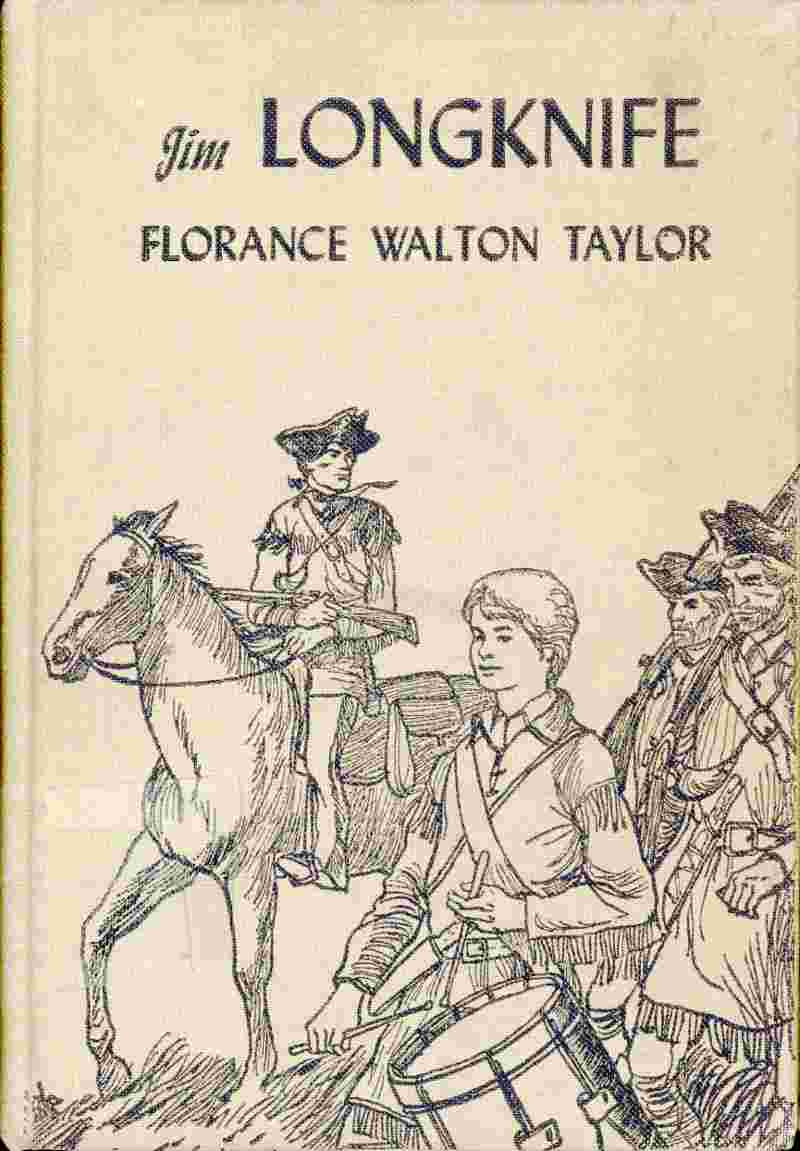
Jim was almost a head taller than Willie. He looked down at the younger boy and smiled. “You will? I thought you were about twelve.”
“I may be short, but I can do lots of things that men can’t do,” Willie replied.
“Oh, I’m sure of that,” Jim agreed.
Father Gibault was delighted with the amount of honey and wax that the boys brought back, and gave half the honey to Jim for Colonel Clark and his men. When Willie told him Jim would like to work alongside of him, Father Gibault said he would put in a good word for him to Monsieur Cerré.
A few days later Jim went with Willie to the fur depot to see Monsieur Cerré. The merchant put him to work with Willie, sorting and counting the pelts which Indians and French voyageurs had brought into Kaskaskia during the fall and winter.
Jim and Willie became the best of friends, spending many long evenings together either at Willie’s house or at Colonel Clark’s headquarters. Jim taught him to play his drum; Willie was such an apt pupil and so filled with rhythm that he soon played as well as Jim. In return Willie taught Jim all the gay lilting French songs he knew.
Jim enjoyed living in Kaskaskia; if his parents had been with him, he would have willingly spent the rest of his life among the French. They were a gay light-hearted people, always ready to stop work and have fun.
The men played cards endlessly on the outdoor galleries until winter winds drove them indoors. There were many church festivals to attend, dances for the boys to watch and always excellent food. At Christmas time there were many gay parties given for the French citizens and Clark’s soldiers.
On New Year’s Day of 1779 came the best day of all. The whole village turned out in its finest clothes to call at the homes of well-to-do folk.
And what a colorful procession they made; the men wore silken hose and bright silver shoe buckles, their richly trimmed coats open to show their fancy, embroidered waistcoats; the women dressed in feathered finery imported from France by way of New Orleans and the Mississippi River. Ordinary French settlers wore buckskin trousers and long colored cotton shirts belted in by colored bead sashes tied behind, and topped by the familiar blue capots. Now and then there appeared in the crowd a soldier in an ancient French uniform, or a voyageur in his leather ruffled shirt and brightly colored cap with bobbing tassel.
Jim found life good in Kaskaskia until one afternoon in late January. On the twenty-ninth day of the month Jim came home from work and met a well-dressed gentleman just leaving Colonel Clark’s headquarters. Jim wondered who this man was.
As Jim walked into the house, George Rogers Clark was pacing the floor and running his hand nervously through his shock of red hair. He didn’t even see Jim come in, but continued to pace back and forth. Jim took off his coat and hung it in the closet. Then he came back into the large living room.
“Is something wrong, Colonel?”
Clark stopped and turned toward Jim. “Hello, Jim. I didn’t hear you come in. Yes, I’ve just received some bad news.”
“From the gentleman who was leaving as I came into the house?”
“Oh, did you see him? That was Francis Vigo, a Spanish merchant from St. Louis. I had asked him to see about Captain Helm’s supplies, since he was going on a merchandising trip to Vincennes.”
“Yes, sir.” Jim waited, seeing Colonel Clark was quite upset.
“I’ve had no word from Captain Helm for a long time,” Clark continued. “And that’s not like Helm, so I was a bit uneasy. Vigo told me that he himself was captured and taken to Fort Sackville. There he was confronted by Lieutenant Governor Hamilton. You see, Jim, Hamilton captured Fort Sackville on the seventeenth of December and Captain Helm is now his prisoner. The British are again in control of Fort Sackville and Vincennes.”
Jim gasped. “Do you mean Hamilton from Detroit?”
“The very same. He took all of Vigo’s merchandise from him and wouldn’t release him until Vigo promised not to return to Kaskaskia on his way home to St. Louis.” Clark smiled wryly. “Vigo kept his promise too. He went home to St. Louis, then came over here immediately to tell me about Helm.”
Jim looked puzzled. “What does it mean for us now that Hamilton is in Vincennes?”
“Vigo told me Hamilton plans to attack Kaskaskia as soon as the weather permits, some time in the spring. He’s supposed to have an army of eight hundred men, counting the Indians and his prisoners.”
“Eight hundred!” Jim gasped. There weren’t eight hundred people in the two towns of Kaskaskia and Cahokia.
Colonel Clark resumed his pacing back and forth as though he had forgotten Jim. After a time he stopped suddenly. “Attack at once, Jim. That’s what we’ll do.” He brought his fist down hard in the palm of his hand. “It’s our only chance. We’ll attack Hamilton now when he thinks it’s impossible. But we’ll make it.”
Jim’s blue eyes sparkled reflecting Clark’s confidence. “Yes, sir. What can I do to help you now?”
“Run to Father Gibault’s and ask him if he will come to my headquarters at once. Then see if you can find Captain Charleville and tell him to report to me immediately. But do not tell them or anyone else what I have just told you. Do not even mention Vigo’s visit.”
“No, sir, I won’t.”
Colonel Clark then called one of his officers who had been asleep upstairs. “You,” he nodded toward the man as soon as he appeared, “ride to Cahokia tonight. Tell Captain McCarty to bring his company back from Cahokia immediately.”
“Yes, sir,” replied the officer.
Jim dashed out of the house toward Father Gibault’s, while Clark’s officer mounted his horse and set off at a gallop for Cahokia.
Father Gibault and Captain Charleville returned to headquarters with Jim almost immediately. George Rogers Clark told them the bad news of Vincennes and what he had in mind to do.
Father Gibault looked grave for a few minutes and then said, “Colonel Clark, I’m not a military man, but I think your plan of attack is good. God willing, you will make it.”
Captain Charleville sat forward in his chair. “Colonel Clark, there aren’t many of your Virginia volunteers here now, but I’m sure I can raise a company among the villagers.”
Colonel Clark nodded. “We’ll have to have volunteers, Charleville. I don’t have more than eighty men, including the men under Captain McCarty at Cahokia. I’ve sent for him to return with them. We can’t do anything more until morning, gentlemen. Thank you for responding so quickly.”
“I’ll have a full company raised before sunset tomorrow, sir,” Captain Charleville promised.
Chapter IX
THROUGH THE DROWNED LANDS
The next morning Father Gibault rang the church bell, signaling all people to assemble at the church. Immediately the villagers came streaming out of their houses or stores. Colonel Clark and Jim waited outside for them to appear. Jim had brought his drum, and played it loudly to attract their attention.
Willie Watson came running to the church; when he saw Jim, he pushed through the crowd to him.
“What’s all the excitement, Jim? What’s happened?” Willie asked breathlessly.
Jim didn’t lose a drumbeat as he replied, “Wait and find out, Willie. Colonel Clark is going to talk to the people.”
As soon as everyone was quiet, Father Gibault told them that Colonel Clark had an important message for them. Then Colonel Clark told them that even now Hamilton was in command of Vincennes and was planning to attack Kaskaskia as soon as the weather permitted.
Before the citizens could recover from this shock, Clark had outlined his plan of an immediate march on Vincennes and a surprise attack on Fort Sackville. He said he would need volunteers to help build a supply boat he would send ahead for his army.
“I’ll help. I’ll help,” came the cry of the men from every quarter.
“And we’ll help, too,” the women cried. “We’ll make flags for your army. You’ll need banners to carry.”
Colonel Clark smiled and nodded. “Those of you who will help with the boat and supplies, step over on this side. And you who will volunteer to go to Vincennes, sign up with Captain Charleville.”
The men quickly made their choices, and Jim began to play his drum again to interest the men in joining Captain Charleville’s company.
“Jim,” asked Willie, who had stood quietly up to now, “are you going to Vincennes?”
“Of course, Willie. I haven’t asked Colonel Clark, but he’ll be needing a drummer, I know.”
“If you’re going, I am, too,” Willie said, excitement making his voice shrill. “I think my mother has a rifle which belonged to my father. I can take it with me.”
Jim looked doubtfully at Willie. “Can you fire a rifle?”
Willie shook his head. “No, but I can learn.”
Jim grinned. “It takes a lot of practice, Willie, but I’ve an idea. If you’ll let me have your father’s rifle, I’ll let you take my drum. You can play it well, and I’ve had experience with rifles. My father taught me to use one.”
Willie smiled. “Will you, Jim? Sure—you can have the rifle.”
“I don’t think we’d better say anything to Colonel Clark until it’s time to go,” Jim cautioned. “He might think of an excuse to keep us from going with him.”
“All right, Jim. Mum’s the word, but I’ll manage to get the rifle.”
By nightfall Captain Charleville had raised his company of Kaskaskia volunteers. The women were so enthusiastic about the undertaking that they worked furiously for the next two days, making flags of various colors and designs. When they were presented to Colonel Clark, he didn’t know what he would do with so many flags. But he thanked the ladies gravely and packed their gift with the army supplies.
On the third of February Captain McCarty arrived from Cahokia with his volunteers. That same day the men finished work on the riverboat, which Clark had named the Willing. They had made it into a warship equipped with armament of two four-pounders and four swivels. It required a crew of forty men to man, and Clark put Captain John Rogers in charge of it.
He ordered Rogers to go down the Kaskaskia and Mississippi Rivers to the Ohio and ascend the Ohio and Wabash Rivers; then he was to take his station thirty miles below Vincennes and wait there for further orders. The next day Captain Rogers and his crew set out on the warship with supplies, stores and ammunition.
At three o’clock in the afternoon of February fifth, Clark’s army was ready to march. Jim had had to talk long and hard to get Clark’s permission to go with the troops; he had made no mention of Willie. But Willie stood beside Jim, carrying his father’s rifle, which protruded above his head.
As the army, one hundred-thirty men strong, stood waiting, Father Gibault made a little talk to the men and gave them his blessing and absolution. All the women and men not able to go with Clark were on hand to bid the troops good-bye and wish them Godspeed.
George Rogers Clark rode in front on a magnificent stallion, followed by his officers, also mounted. Jim Long-Knife Hudson, wearing an ill-fitting buckskin suit and beating his drum, stepped out proudly. Willie Watson dropped back to the rear of the second company, fearing Colonel Clark would see him and send him home because of his age and size.
The rest of the men, clad in worn buckskin trousers and hunting shirts, swung out jauntily, their heads held high. Some carried rifles and some tomahawks, since there weren’t enough rifles for everyone. A motley array—Clark’s pioneer army, and at the same time a magnificent column of spirited soldiers.
The whole of the flat Illinois country between Kaskaskia and Vincennes was freezing water and half-frozen mud. Two hundred and forty miles lay between the army and Vincennes, but the men bravely started out. By nightfall, however, they had covered only three miles. It was rainy and drizzly, so they spent an uncomfortable night without tents or shelter of any kind. The next day they remained in camp.
That night Colonel Clark spied Willie Watson for the first time. “Willie!” he cried, “what are you doing here?”
Willie trembled but stood his ground. “I’m marching with you to take Fort Sackville, sir,” he replied.
Clark shook his head. “You’re too young, Willie, for this trip. If I had seen you earlier, you would have remained at home.”
Willie grinned mischievously. “Yes, sir. I’ve taken pains to stay out of your sight, sir. I was afraid you wouldn’t let me come along. And I’m fourteen years old, as old as Jim Hudson. I brought my father’s rifle too.”
Clark smiled and then shook his head. “I admire your spirit, Willie. Can you fire your rifle?”
Willie shook his head slowly. “No, sir, I can’t. But Jim is going to take my rifle and I’ll play his drum.”
Colonel Clark looked grave. “Since it’s too late to send you home, Willie, I guess you’ll just have to stay.”
Willie smiled. “Oh, sir, thank you. I’ll make it. You won’t regret my coming, sir.”
The next day the soldiers marched for nine hours, then pitched camp in a square on the driest ground they could find, putting their baggage in the center.
As they continued through succeeding days they marched sometimes through water up to their armpits. They had to hold rifles and powder high above their heads to keep them dry.
In desperation Clark and his officers dismounted and piled the baggage on their horses. The animals struggled along through the water with the men.
If any men happened to see any wild game, Colonel Clark gave them time to shoot it. Now and then they bagged a deer and on the twelfth of February they sighted a herd of buffalo.
“Here, Willie,” Jim called, “take my drum and give me your rifle. Maybe I can get a buffalo.”
Willie handed over the rifle, as Jim noticed with satisfaction it was exactly like his father’s. He dashed out with two soldiers to shoot one of the buffalos. He went as close as he dared to the herd, took careful aim and fired. His buffalo dropped immediately as did several others which the men shot. In a few minutes they had dragged the buffaloes over toward the fires.
“Good boy, Jim,” Willie said, clapping him on the back excitedly. “We’ll eat plenty tonight.”
Clark’s army did eat a good meal and had entertainment afterward. Willie and Jim sang many of the songs they had learned together, and took turns playing the drum. Willie also danced a strange mixture of French and Indian dances until he was exhausted.
That evening the two boys helped boost the morale of Clark’s army more than anyone else save the colonel himself. Colonel Clark was quick to give them credit. “We could never have made it this far, boys,” he said, “without your music and dancing.”
The boys were exhausted from their performance; Jim was too tired to say a word. But Willie grinned at Colonel Clark and said, “I told you, sir, you wouldn’t regret letting me come with you.”
During their first six days this remarkable army marched over one hundred and seventy-four miles, averaging twenty-eight miles a day. The hardest part of the trip, however, lay before them——the sixty-three miles to Vincennes. They would have four rivers to cross—two branches of the Little Wabash, the Embarrass and the Great Wabash, all of them now swollen by floods.
When the army reached the two Little Wabash branches, normally three miles apart, the men were stunned to see a sheet of water almost five miles across, with no dry banks or channels for either branch in sight. The shallowest place was about three feet deep; what the greatest depth was, no man knew.
Colonel Clark ordered his soldiers to halt while he considered what to do. For a few minutes he gazed at the great expanse of water, then ordered some of the men to build a pirogue. This took only a day to build. Then he ordered a few others to explore these drowned lands and if possible, find a dry camping spot on the far bank of the second branch. Once they found a trail, they marked it with blazes on all trees above the waterline.
But how to get the loaded pack horses across both branches of the river? The horses could wade to the first channel easily enough, but when in deep water they would have to swim, and they could not swim with their heavy packs. Once again Colonel Clark solved his new problem. He had his men build a scaffold in a shallow spot beyond the second river bank.
When this was finished, the men unloaded the horses and moved the baggage over to the scaffold in their pirogue. Then they swam the horses through both channels, reloading the animals at the scaffold. They also ferried any ill, weak soldiers across both river branches.
As Colonel Clark himself plunged into the water, he expected the rest of his army to follow him along the tree-blazed route. But the men hung back, complaining they were already cold and wet enough without wading another five miles.
Suddenly Willie Watson, seeing Colonel Clark floundering through the water alone, seized Jim’s drum and started into the water, beating the drum as hard as he could. “Come on, you,” he called, beating a terrific roll. Jim plunged in right behind Willie, holding his rifle high above his head.
Soon the water was up to Willie’s armpits. He pushed the drum down and sat on it, floating along and paddling the water with his drumsticks. “Come on, you fellows,” he called. “Somebody give me a push.”
A French sergeant, almost six and a half feet tall, charged into the water, scooped up Willie and his drum, put him on his shoulders and shouted, “Advance!”
Willie’s courageous antics turned the trick for Colonel Clark. While Willie played and sang at the top of his lungs, the rest of the soldiers waded into the water and did not turn back, though in some places the water came up to their chins. But no dry spot could be found, so they had to spend the night in shallow water without food.
Somehow they continued to march through the ice-cold drowned lands until they had crossed the Embarrass and Wabash Rivers. Here the men in their soaking wet clothes were more discouraged than ever. This was the place where the Willing was supposed to be waiting for them. The warship, however, had not arrived.
The next day the camp awakened to a dull boom.
“What’s that?” Willie cried, poking Jim who lay beside him.
“I don’t know,” Jim mumbled. “Sounded like guns, didn’t it?”
One soldier overheard the boys and said, “Colonel Clark said those were the British morning guns at Fort Sackville.”
“Why, we’re almost there,” Jim cried, jumping up and stretching.
“Almost there!” sneered another soldier. “Take a look at that water.”
“Where are we?” Willie asked, rubbing the sleep out of his eyes.
“About nine miles below Vincennes on the banks of the Great Wabash!” a nearby soldier exclaimed. “But how we’ll ever get across that flood water I don’t know.” Several more men began to complain, and some even muttered about going home.
Jim and Willie looked around and saw Captain McCarty’s men cutting down poplar trees.
“Come on, Willie,” Jim said. “Let’s see what they’re going to do with those trees.”
The boys went over to help drag the poplars to a dry area where the men could build canoes. They worked all day and by evening had finished two. Meanwhile the boys saw two more drifting aimlessly on the flood waters, so they waded out and captured them. Now Colonel Clark had four canoes to ferry his army over some of this vast expanse of river.
The next morning it was raining again and the water was still quite cold. Though the soldiers still had had nothing to eat, the stronger ones began ferrying the troops over to a small hill called Bubbie. From here they waded to a larger hill, clutching trees and bushes in the water to steady themselves. The canoes went alongside to watch for any sick men.
Those who were able built fires on the opposite side of the river and marched the exhausted men up and down in front of the fire to revive them.
At last they reached Warrior’s Island, a dry spot of about ten acres. From here Clark planned to attack Fort Sackville. The men had to rest, however, before he could order the attack.
A day or two later, some of Clark’s scouts brought two Indian squaws and two half-grown boys into camp and presented them to him.
“What do I want with these people?” Clark demanded. “I haven’t anything to feed to my own men, to say nothing of four prisoners.”
“That’s it, sir,” one scout replied. “They had food in their canoe. It was filled with kettles, tallow, corn and half a quarter of buffalo meat. We have it here, but what shall we do with these Indians?”
“Food!” cried several of the men near the colonel. “Where?”
“Make some buffalo stew for the men immediately,” Clark ordered. He looked at the trembling Indians. “I guess we’ll have to take these prisoners to Vincennes with us.”
Just at this moment Jim and Willie came up to the colonel. When Jim saw the Indians, he stopped and stared as if he didn’t believe his own eyes. Then he dashed over to the taller Indian boy. “Wahbunou!” he cried. “What are you doing here?”
Wahbunou tried to smile, but was too frightened to talk. He just grabbed Jim and clung to him.
George Rogers Clark looked at Jim in amazement. “Jim, do you know this boy?”
“Oh, sir,” Jim cried, “this is Wahbunou, my Potawatomi friend that I told you about.”
Colonel Clark looked keenly at the boy and then at Jim. “Is this the boy who did not tell his people about seeing the Long-Knives marching that summer afternoon?”
“Yes, sir.”
Clark smiled at the Indian boy. “Well then, Wahbunou, I am sorry we had to take your food. But my men have had nothing to eat for several days. You are no longer a prisoner of Chief Long-Knife. All four of you are free to take your canoe and return home.”
Wahbunou did not understand all that Colonel Clark said to him, but when Jim interpreted, the Indian boy nodded his head and smiled.
George Rogers Clark shook hands with Wahbunou and said, “If you will come to Fort Sackville in a few days I’ll pay you for your food. Unfortunately, I have nothing to give you for it tonight.”
Wahbunou nodded again, spoke to his Indian companions and motioned for them to follow him. They found their canoe and paddled rapidly away.
Meanwhile the men were busy making buffalo stew. When it was ready the weakest men were fed first. Though there wasn’t enough stew to go around, it revived many exhausted soldiers and improved the spirit of all the soldiers.
Vincennes
Chapter X
CAPTURE OF VINCENNES
From their camp the men could see the hundred cabins making up the town of Vincennes, and Fort Sackville over which the Union Jack was flying. If settlers in Vincennes turned toward Warrior’s Island, they could see American soldiers; so George Rogers Clark employed a trick of war to make them think he commanded a large army.
While the men were resting after their taste of buffalo stew, two more of Clark’s scouts came into camp bringing a very frightened Frenchman from Vincennes. They said they had found him lurking near the camp. Willie and Jim had been sitting near the colonel and could hear everything he said to the Frenchman.
Clark spoke sternly to the man cowering in front of him. “I will permit you to go into town under certain conditions. First you are to alert all French inhabitants and tell them we will take Vincennes tonight. They are to stay in their houses, keep quiet and not to let any one at Fort Sackville know of our presence. Oh, yes, and tell them to have a fine supper ready for us.”
“Yes, sir,” the man replied. “And to think you’ve marched all the way from Kentucky!”
Clark did not correct the man’s guess about Kentucky. He merely said, “Now you may go, but do not go near the fort.” As the Frenchman hurried to Vincennes to deliver his message, Colonel Clark watched through his field glass to see that he did not go to the fort.
About sunset Clark ordered his army to assemble. When they were in their respective companies, with Jim and Willie in front, Colonel Clark said, “I ask just one thing of all of you—OBEDIENCE. Absolute OBEDIENCE.”
“Yes, sir,” every man replied.
Clark turned to Jim and Willie. “You boys bring out the flags which we brought from Kaskaskia. We have good use for them now.”
The boys went over to the small stock of supplies they had succeeded in bringing through the water, and took out the flags. These had been so well packed they were not even damp. There were twenty-four in all.
“Each officer is to have a pair of flags mounted on poles,” Clark said.
The officers mounted several flags as Clark had directed. Willie and Jim wondered what they would do with the rest.
“See that small hill between us and the town?” Clark pointed to a hill about halfway to Vincennes. “You are to march your men around and around that hill, every sixth man carrying a flag so far as possible. Thus you will give the effect of many divisions, each carrying its flag, to anyone watching from Vincennes. When I give the order, you march around that hill until dark. Then I will issue your orders for the night.”
Colonel Clark led the line of march, followed by Willie Watson with the drum, Jim Hudson, Captain McCarty and the first of the color bearers. They marched around and around the hill in plain view of the townspeople. Should anyone be watching, he might easily assume that George Rogers Clark had at least a thousand men at his command.
Finally night fell. Tension was mounting among the men. Now, now was the time for attack. How many men did Hamilton have? Had this army come all through the drowned lands to suffer defeat? Never, while they drew breath.
Such thoughts were in the mind of every man when Colonel Clark suddenly snapped them to attention.
“Lieutenant Baily,” he ordered, “take fourteen of your best men and begin firing on the fort as soon as we have reached Vincennes. Then cease firing for a few minutes and laugh loudly as though you were firing for amusement.”
The lieutenant stepped forward and called out fourteen men.
Colonel Clark went on. “I will lead the rest of this army to the heights behind Vincennes and enter the upper part of town. The sentinels on the stockade walls won’t be able to see us, because part of the town lies between our line of march and their garrison.”
Then he set out with the main army toward Vincennes, while Lieutenant Baily marched his fourteen men toward the stockade.
Jim and Willie, marching with the main army, became so excited they could scarcely set one foot after the other. In no time at all Clark’s army took possession of the main street and posted guards. Scarcely anyone was in sight because of Clark’s order for the people to remain in their houses. Jim was assigned to guard duty; Willie went with Colonel Clark on his rounds through the town.
In a little while Willie came hurrying back to Jim. “Jim,” he cried. “The people have supper ready for us. We’re going to take turns eating. Colonel Clark said he’d send a man to relieve you shortly, and you’re to come with me.”
Just at this moment there was a burst of rifle fire, then the sound of raucous laughter.
“Our men have begun the attack, Willie,” Jim cried, peering into the black night. “We’ll soon take Vincennes and the fort.”
There was, however, no answering fire from the fort. In a few minutes another volley of shots rent the air.
“Let’s go nearer to the fort, Jim, and see what’s going on.”
Jim shook his head. “I can’t, Willie. I’m on guard here, remember.”
After another burst of fire by the Americans, there was a sudden, answering roar from the guns inside the fort.
Just at this moment Colonel Clark appeared with a man to relieve Jim. “You boys eat your supper. Report back here when you’ve finished, Jim,” Clark said, and went on to direct the firing which was now continuous.
“Come on, Jim. I know where we’re supposed to go.” Willie led the way to one of the villagers’ homes, where seven or eight soldiers were just finishing their meal.
“Come in, boys,” called a rosy-cheeked woman. “There is plenty of food for all of you.”
The boys sat down to a bountiful dinner of roast duck, the best meal they had eaten since their buffalo feast many days ago. While they were eating, the woman kept staring at Jim. Finally she said, “Soldier, have I seen you before? There’s something very familiar about your face.”
Jim looked blankly at her. “I don’t know, ma’am. I don’t recall ever having seen you.”
Still she looked at him. “It’s sure queer. You remind me of someone. I can’t quite figure—say, what’s your name? Mine’s Jeanne Duval.”
Jim smiled. “Sometimes I’m called Jim Long-Knife. The Indians gave me that name. But my real name’s Jim Hudson.”
“Hudson!” Jeanne exclaimed, her voice shrill with excitement. “And where’s your home?”
Jim shook his head. “I haven’t any home now except with Colonel Clark. I used to live in Kentucky.”
“Kentucky, you say. I wonder if you—”
The roar of cannon from Fort Sackville cut off her words. Jim and Willie jumped up. “Thank you, ma’am, for the good dinner. We can fight better now,” Jim said, as they started out the door.
“When the fighting’s over, come back here, Jim. Come back for sure.”
“All right,” Jim replied, “if I’m alive.”
The boys made their way back to Jim’s post and found it in the thick of the fighting. American soldiers were pouring the hottest fire possible into the fort.
“Look, Willie,” Jim said as he got his rifle ready, “look at those gaps in the stockade.”
Just then the British poked an artillery piece out of a porthole, while the Americans sent a shower of well-directed balls into it.
“Hurrah!” cried Willie, “got some British that time.”
The intense firing from both sides went on until about four o’clock in the morning. Then Colonel Clark withdrew all his troops save a few observation parties, and the firing ceased.
About nine o’clock George Rogers Clark sent a flag of truce into the fort with a message to Hamilton asking him to surrender immediately. This Hamilton refused to do and the firing began anew. But three hours later Hamilton sent out a flag asking for a three-days’ truce. Clark refused, but offered to have a conference with Hamilton in the church at once.
While Clark waited for his answer, everyone outside the fort, French and Americans alike, watched the fort gate to see what would happen. Willie and Jim were in the front row, waiting as impatiently as the rest.
“Jim!” Willie cried. “Look! The gate is opening.”
And indeed it was. Out came a dignified man in the striking red uniform of a British colonel of regulars, a handsome Indian and a grinning American.
“That man in red must be Hamilton himself,” Willie whispered.
“And there’s Captain Helm!” exclaimed Jim. “You know he’s been Hamilton’s prisoner since last December.”
The three men walked on to the church. There they were met by George Rogers Clark and Captain Bowman. All of them went into the church to hold their conference.
The villagers all began talking at once, wondering what would happen next. The American soldiers relaxed a little, but still held their rifles.
As Willie and Jim started to walk up the street, a woman ran out from the crowd calling to them. “Boys! Jim Hudson.”
Jim turned and recognized Jeanne Duval. She was calling and beckoning to him. “Come with me, Jim. To my house.” She nodded toward Willie. “You may come too, lad.”
“I can only stay a minute, ma’am,” Jim replied, glancing back at the church. “Colonel Clark might want me.”
“All right. Just come on.” She hurried on ahead and rushed into her house. When the boys appeared she said, “Sit down a minute. I’ll be right back.” Then she disappeared out the back door.
Willie shook his head. “What kind of business is this, Jim? Do you suppose it’s a trap?”
Jim laughed. “I don’t think so, Willie. After all we aren’t such important people in Clark’s army. She’s probably going to feed us again.”
In a few moments she returned with a thin, tired-looking blond woman. Jim stared at her for an instant, then rushed over and swept her into his arms. “Ma! Ma!” he cried. “At last! I’d almost given up hope of finding you.”
Ma Hudson was laughing and crying at the same time. “Jim, how you’ve grown! Why, you’re a man! Jim dear, we knew you were alive and well in Kaskaskia. Captain Helm told Pa.”
“Captain Helm? But he’s a prisoner of Hamilton. And where is Pa?”
Ma looked worried. “I hope he’s still alive in the fort. Pa and I are also Hamilton’s prisoners. Pa’s probably had to man the guns against the Americans.”
“Against his own countrymen!” Jim gasped. “How do you happen to be outside the fort?”
Ma shrugged her thin shoulders. “Since there wasn’t any place for women in the fort, the British put me in one of the French homes here. And the people have been good to me.” She smiled at Jeanne Duval.
“She’s been staying right next door,” Jeanne explained. “That’s why I was so excited last night when I saw you. You look so much like your ma, and when you told me your name, I was sure you were her boy.”
“How did you get away from the Shawnees and reach Vincennes, Ma?”
Ma Hudson sighed. “We didn’t get away from them, Jim. I think they intended to take us up north to Hamilton, but the snows came and they weren’t able to get through to Detroit. It was a rugged winter, with not much to eat.”
Jim frowned. “How did you and Pa get down here?”
“Last autumn the Shawnees heard Hamilton was marching south, so they rode to meet him and traded us for some guns and blankets. Hamilton brought us down here with other prisoners. I’ve been mending for Hamilton’s soldiers and sewing some for the people here. Your pa has been helping repair the fort.”
Jim had forgotten all about Willie while talking with his mother. Suddenly he remembered him and said, “Ma, this is my best friend, Willie Watson. He’s from Kaskaskia.”
Ma smiled at Willie. “I’m glad to know you, Willie. You must have wonderful people in Kaskaskia, because Jim looks so well.”
“The same to you, ma’am,” stammered Willie, bobbing his head.
“We’d better be getting back now, Ma,” Jim said. “I’ll see you when Hamilton surrenders. Don’t worry about Pa. I’m sure he’s all right and will be free as soon as Colonel Clark takes over here.” Jim turned to Jeanne Duval. “Thank you, ma’am, for all you’ve done for Ma and me.”
When the boys returned to the American lines, the conference was over. No one was certain, however, that Hamilton would agree to the surrender terms. Colonel Clark took no chances of deception by the British; he posted guards in houses near the fort and patrols in town. The rest of his army slept on their rifles and got their first real rest in many days.
The next day, February 25, 1779, Hamilton sent Captain Helm to Colonel Clark with the signed articles of surrender. George Rogers Clark then drew up his army in two lines facing each other in front of Fort Sackville to await Hamilton. All of Vincennes gathered behind the American army to see the surrender.
Promptly at ten o’clock the wooden fort gate opened, and Lieutenant-Governor Hamilton led his well-drilled, scarlet-clad regulars of the King’s regiment between the lines of the ragged American soldiers. Captain Helm, amidst loud hurrahs from the crowd, hoisted the American flag above Fort Sackville. Fort Sackville and Vincennes were now in American hands, never to be surrendered again.
Hamilton’s prisoners of war were also turned over to Colonel Clark, among them Pa Hudson. When Jim spied him in the group, he forgot all about his duty as a soldier and rushed over to throw his arms around his father.
“Pa,” he cried, “I knew I’d find you sometime.”
His father hugged him hard. “Ma and I knew from Captain Helm that you were safe in Kaskaskia, but we didn’t know when we could get to you.”
When the celebrations and ceremonies of surrender were over, George Rogers Clark dispatched a detail to Virginia with Hamilton, his prisoner of war, and sent home the French who had accompanied the British leader from Detroit.
Then Clark looked over the stores and supplies in the fort. In them he found much clothing which had been sent from Detroit for the British troops. From this supply every man in Clark’s army received new shirts, caps, vests and trousers. These were most welcome gifts because the men wanted to be presentable when they returned in triumph to Kaskaskia.