

About This Book
An early twentieth-century study examines how heredity and upbringing shape social destiny by contrasting a long-traced family characterized by poverty, idleness, and criminality with the descendants of a well-educated clergyman whose household produced industrious, moral citizens. Drawing on Richard L. Dugdale's genealogical inquiry into the Jukes family and extensive case records, it traces patterns of inheritance, home training, and opportunity, then analyzes capacity, character formation, and individual relatives to show how education, domestic discipline, and social institutions can mitigate or amplify inherited tendencies. The work closes with reflections on education's role in social reform and measures to prevent degeneracy.
About the Author

You May Also Like
6 picks
 "'Tis Sixty Years Since" / Address of Charles Francis Adams; Founders' Day, January 16, 1913
by Charles Francis Adams
"'Tis Sixty Years Since" / Address of Charles Francis Adams; Founders' Day, January 16, 1913
by Charles Francis Adams
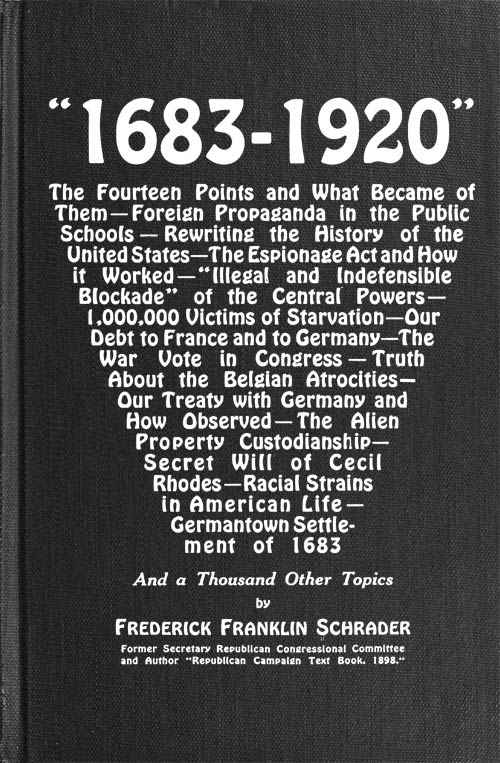 "1683-1920" / The Fourteen Points and What Became of Them—Foreign Propaganda in the Public Schools—Rewriting the History of the United States—The Espionage Act and How It Worked—"Illegal and Indefensible Blockade" of the Central Powers—1,000,000 Victims of Starvation—Our Debt to France and to Germany—The War Vote in Congress—Truth About the Belgian Atrocities—Our Treaty with Germany and How Observed—The Alien Property Custodianship—Secret Will of Cecil Rhodes—Racial Strains in American Life—Germantown Settlement of 1683 and a Thousand Other Topics
by Frederick Franklin Schrader
"1683-1920" / The Fourteen Points and What Became of Them—Foreign Propaganda in the Public Schools—Rewriting the History of the United States—The Espionage Act and How It Worked—"Illegal and Indefensible Blockade" of the Central Powers—1,000,000 Victims of Starvation—Our Debt to France and to Germany—The War Vote in Congress—Truth About the Belgian Atrocities—Our Treaty with Germany and How Observed—The Alien Property Custodianship—Secret Will of Cecil Rhodes—Racial Strains in American Life—Germantown Settlement of 1683 and a Thousand Other Topics
by Frederick Franklin Schrader
 "America for Americans!" / The Typical American, Thanksgiving Sermon
by John Philip Newman
"America for Americans!" / The Typical American, Thanksgiving Sermon
by John Philip Newman
 "Billy" Sunday, the Man and His Message / With his own words which have won thousands for Christ
by William T. Ellis
"Billy" Sunday, the Man and His Message / With his own words which have won thousands for Christ
by William T. Ellis
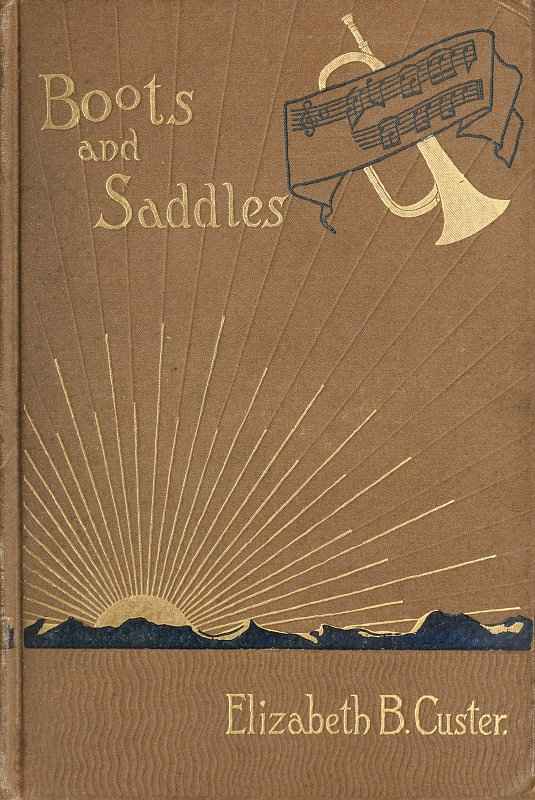 "Boots and Saddles"; Or, Life in Dakota with General Custer
by Elizabeth Bacon Custer
"Boots and Saddles"; Or, Life in Dakota with General Custer
by Elizabeth Bacon Custer
 "Broke," The Man Without the Dime
by Edwin A. Brown
"Broke," The Man Without the Dime
by Edwin A. Brown