
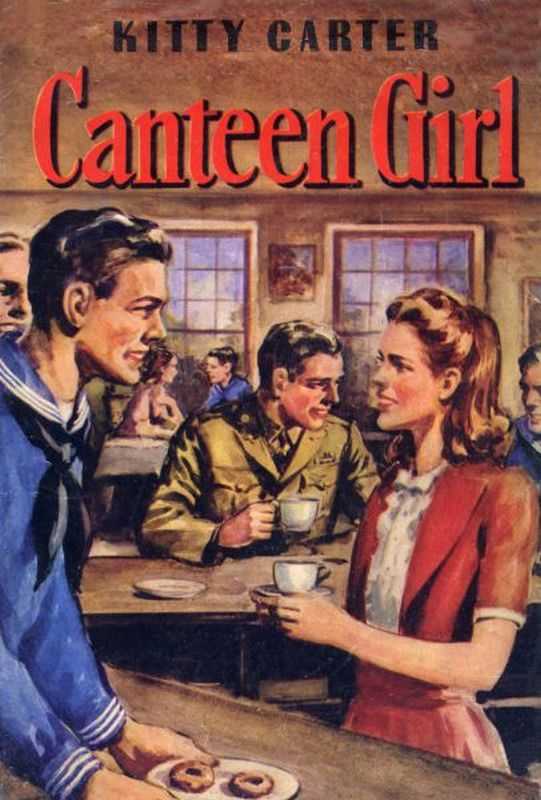
“What’s So Interesting There?” Brad Asked
Brad laughed. “I know he can dish up some mighty good chow on occasion.”
“He looks as though he didn’t object to good eating himself. He must weigh two hundred and twenty-five at least.” Kitty tried to make her tone seem trivial in case anyone else had overheard their conversation.
“I’ll be trotting along,” Brad said. “I promised to make a fourth for bridge over yonder.”
Kitty held his eyes a moment and lowered her voice to say, “There’s something I want to talk to you about when I have a chance.”
“I’ll see you home if you can get through before eleven. We can talk on the way up.”
“Fine,” she agreed.
Brad had scarcely taken his seat with the other players when Lieutenant Cary and Chief Krome came toward the bar.
Excitedly Kitty whispered to Judy, “Let me wait on them if they come here.”
Judy sent her a surprised look. “You’re welcome to them. I wouldn’t be interested.”
“Neither am I, in the way you think,” retorted Kitty with a laugh.
She thought what an odd pair they made as they came toward the Snack Bar. Lieutenant Cary was as lean and alert as a bloodhound, while the square-rigged Krome was almost a head shorter. Kitty would have felt curious about any man who was friendly with Lieutenant Cary, even if her curiosity had not already been stirred by one of Krome’s assistants, so that the association brought the Chief Steward under suspicion also.
Vera came out of the kitchen just as the two men straddled the stools at the counter and she took Lieutenant Cary’s order. Kitty’s hand was a little unsteady as she poured Krome’s cup of coffee.
“We have some special sandwiches tonight,” Judy explained to the two customers, “made by our new Canteen worker, Miss Kitty Carter.”
“I’ll take two,” Krome spoke up promptly.
When Kitty faced the head cook squarely he seemed such a hearty, good-natured sort her suspicions evaporated like the steam above his coffee cup.
“So you’re now a full-fledged Canteen worker.” Though Lieutenant Cary’s smile and words were friendly enough his tone held a slight cynicism.
“I wasn’t a bit prouder when I donned my cap and gown at graduation from college, than when I put on my uniform the first time,” she said frankly.
“They got something when they got you, young lady,” spoke up Krome warmly. “These sandwiches ain’t to be sneezed at.”
“Why, I’m thrilled that you think so! They tell me you can serve some very good things over at the hospital, and I can vouch for it myself the few times I’ve eaten there.”
“So you’re Chief Carter’s daughter?”
“And proud I am to have the honor.”
Krome finished the last crumb of his sandwich, and said, “How about giving me the recipe for that sandwich filling?”
Kitty looked disconcerted. “If you feed the boys on it at the hospital they may not want our sandwiches down here.”
“I’ll promise not to do that.”
Kitty laughed. “Oh, really, I wouldn’t be that selfish. You’re welcome to the recipe. And maybe you’d do me a favor in return.”
Krome looked surprised. “Me do you a favor?” he asked, indicating himself, then Kitty with his fat hand. Then he laughed as if it were a great joke.
“I heard the boys talking about your grand shrimp creole—and that they don’t get it often enough. How about giving me that recipe?”
“Oh, that? Sure. We’ll swap recipes then. I’ll bring it next time I come.”
When the men had gone Judy said with a sniff, “If you ever get a recipe out of him you’ll do better than Mrs. Evans has. He’s promised her several and never brought them.”
“Maybe he’ll pay more attention to my request if he wants a recipe from me.”
At ten-thirty when Kitty put on her light wrap to go home she was really tired. But how glowingly happy she felt at the realization that her job had been well done! Brad was waiting for her.
Though it was only March there was more than a hint of spring in the balmy night air, and the stars seemed close and warm in a sky like deep purple porcelain. Neither of them spoke while they walked the first block.
Then Brad said, “You wanted to ask me about something?”
“Yes, I did. But somehow it seems absurd to be suspicious of anyone on a night like this.”
“Well, forget it.” After an interval he asked, “Think you’re going to enjoy the Canteen work?”
“I’m crazy about it. But really it seems so little to do when there’s so much to be done.”
“It’s all the little bits put together that’s going to help us win this war.”
“And prepare us to live in a more wonderful peace afterward. It’s learning to work together that’s so important.”
“One person pulling in the wrong direction can upset the whole works.”
Kitty made no reply, but she thought he must know what was on her mind even before he added, “I figure you’ve been wondering why Krome and Cary seem so intimate.”
“You hit the nail on the head!”
“We’ve both put a big question mark behind Cary, and when we see Krome buddying with him he gets a question mark, too.”
“Not only Krome.”
“That chap, Punaro, you were asking about?”
“Uh-huh.”
“What’s he done?”
“I’ve hesitated a long time about mentioning it. It may seem I’m straining at a gnat.”
“Let’s have it,” he urged.
“You do hate to suspect people of being spies and saboteurs, especially when they’re right in the hospital with your own father.”
“All the more reason you shouldn’t take any chances.”
Quickly Kitty gave Brad an account of the little incident on the bus three weeks earlier. “It seems sort of absurd now that I’m talking about it for the first time to think the boy might have had anything to do with the fire at the oyster cannery, but that’s exactly what I have been thinking.”
“I don’t think your suspicions are unfounded.”
“If he used gasoline or kerosene to start that fire it was still fresh enough to flame up from those cigar ashes. And he certainly did get on the bus right at the cannery station.”
“If that fire was the work of saboteurs the objective was no doubt the shipyards, not the cannery.”
They walked on to Kitty’s door in silence. Then Brad said, “I sure wish you’d told me about this when it happened.”
“Why? I can’t see that we can do anything.”
“Maybe I could have managed to get a squint at Punaro’s shoes.”
“Punaro’s shoes? But the gasoline, or whatever it was, had already burned off.”
“But shell dust would still have been on the soles next morning.”
“Say—that’s so! I hadn’t thought of that.”
“You know all that land around the cannery has been built up of oyster shells,” explained Brad. “It was once only a marshy bog they tell me. If Punaro set that fire he’d be obliged to get shell dust on his shoes.”
“The only paved sidewalk runs along the street where the bus stopped,” explained Kitty. “I noticed that the day we went over to open the Canteen.”
“There’s a possibility I might still find out something.”
“How?”
“He probably stopped wearing those shoes with the burned stain. If he discarded them right away they’d probably still bear the evidence of shell dust.”
“And even if you found out he’d really been there, Brad, where would it take us?”
“I don’t know, but you can just be sure, Kit, I’m not going to let a thing like this slide by.”
CHAPTER SIX
A REVELATION
Kitty was still thinking of her conversation with Brad when she went in to help Jane with breakfast the next morning. What could they do about it, even if they had positive proof that the Punaro boy had visited the oyster cannery on the night of the fire? He could claim he had gone there to see friends, and they would have accomplished nothing by their prying. She hoped Brad wouldn’t get in any trouble about it.
“How did you like your Canteen work?” her father asked at breakfast.
“Oh, fine!” she exclaimed, her thoughts returning to the real work of the previous evening. “It’s really loads of fun. I’m going to be on duty every other night.”
“You’ll be doing more than your quota of hours, won’t you?”
“Oh, I don’t mind that. This is no time to stick to quotas, you know.”
“You spoke a truth then, Kitten,” her father said proudly.
“We have so few workers over here on the island each of us will have to do double duty. It’s going to be loads of fun.”
“I’m so pleased you’ve found your place in the war program. I was sure you would.”
Kitty glanced at her father gratefully as she handed him the hot muffins Jane had brought in.
“No, thanks. I have plenty.”
“But, Dad, you always eat two. And you haven’t eaten half your eggs. That’s very unpatriotic with eggs so high.”
He laughed. “I’m beginning to see the effects of your nutrition course already.”
“I’ll admit it’s made me food conscious, and I was already point conscious.”
“I must hand it to you women for having a streak of genius with handling rationing points.”
“I’m ashamed to admit it, Dad, but I find myself figuring up point values first and almost forgetting what a thing is going to cost.”
“I’ve had a few worries myself over supplies,” he said, and Kitty saw the furrow deepen between his brows.
“How’s that, Dad?” she asked eagerly, hoping he would open up about what was on his mind.
“Oh, you have problems enough without being burdened with mine,” he said.
Kitty ate the last half of her muffin with some orange-blossom honey, then she sat looking thoughtfully at her father. She had been so absorbed in her own activities lately she had paid scant heed to his failing appetite. Now she realized he had eaten very little for several days.
“Dad, don’t you think you’d better take a tonic or something?” she said finally. “Your appetite is just about gone.”
He tried to laugh off her anxiety. “Oh, I’ll pick up in a day or so. I’ve been rather preoccupied with things at the office.”
His admission gave her a start. “Anything wrong?”
“Nothing that can’t be adjusted in time, I hope.”
“You couldn’t tell me about it?”
“No sense in burdening you with my problems. Kitty. You have enough on your shoulders now.”
“Maybe I could help. Sometimes problems clear up after talking them over with others. Every time I’ve ever brought my troubles to you they seem to vanish in thin air.”
“There’re some things a man can’t talk over with anyone, Kitten, when he’s in the service. He has to keep things from even his own daughter, whom he’d trust with his very life.”
Kitty was now certain that there was something radically wrong. Was it possible that it could in any way be connected with the clues she had picked up in the last few weeks? Willard Dawson, Chief Pharmacist’s Mate, who had just preceded him, had been involved in some sort of trouble at the hospital. Was her father becoming involved in the same sort of complications? The idea that he, also, might be relegated to some remote base, filled Kitty with terror. The life they were living here together seemed a paradise when she feared that something tragic might happen to end it.
After her father had gone to the hospital Kitty couldn’t put him from her mind. She decided she must do something to lift him out of his depression. Later when she was in the kitchen helping to fix Billy’s breakfast plate, she remarked to Jane that she was afraid her father wasn’t very well.
“Reckon he worried ’bout somepen, Miss Kit?”
“Why? What makes you think that?”
“Las’ night atter us all in bed I hear him pacin’ back an’ fo’th, back an’ fo’th, like somepen whut’s trapped.”
“Somepen whut’s trapped,” kept ringing in Kitty’s head after she left the kitchen. This morning she felt like someone who had picked up half a dozen pieces of a jig-saw puzzle out of which she could make no sense at all. If she had had any idea of what was back of it all she might have pieced them together in an orderly pattern.
Later as she gathered fresh nasturtiums from the little flower bed under the living-room window, the vision of Lieutenant Cary and Chief Krome playing chess rose up to trouble her. Surely they could have nothing to do with her father’s anxieties. Yet she could not forget the mutual antagonism which Cary and Hazel had shown each other instantly, and she felt instinctively that they were all involved in a strange chess game which she had to play blindfolded. But she was determined, if her alertness could prevent it, that her father would never become a pawn to be sacrificed as Willard Dawson had been.
Suddenly she had a sense of guilt that she had given her father so little companionship lately. Then she thought of Nurse Dawson, and something he had said when she first arrived, “We must have her over to dinner some evening. It means so much to people in the service to go into real homes.”
“Why not have her over tonight?” she thought. She had an evening free of Canteen work, and Dad definitely needed cheering up. She hurried to her desk drawer to study her ration books to see if there were enough points left for a decent roast. Since Dad had been eating two meals at home he also had books, which helped out greatly, and with Jane’s books added she had much more latitude in her buying.
Her father had just reached his office when Kitty got him on the phone. She made her tone as sprightly as possible when she asked, “Dad, how about having Hazel over to dinner tonight?”
His voice had an eager quality when he answered, “Oh, fine, Kitten! It wouldn’t be too much bother?”
“How About Asking Hazel Over Tonight?”
“No, indeed! I’ve been wanting to for a long time. And this evening I haven’t another thing to do. Will you ask her?”
“Maybe you’d better phone her. I won’t have an opportunity to see her till lunch, and by that time she may have made other plans.”
“O.K., old dear, just as you say.”
“Tell her I’ll call for her at six.”
Kitty thought as she dialed the hospital that her father had let slip an important point. In mentioning that he wouldn’t see Hazel till noon, he implied that they must eat together every day. The thought made her feel very happy.
When Kitty finally got in touch with Hazel and gave her the invitation she eagerly accepted.
“Is she comin’?” Jane wanted to know as she stood in the doorway, awaiting the answer.
“She and Dad were as pleased as two kids being invited to a picnic. We’ll have to give them a swell feed, Jane, and see if this improves his appetite.”
Kitty dashed off to the market to see what she could get for their dinner. She did a weekly shopping in Bayport on Saturdays. In order to save gasoline she tried to manage the rest of the time with what she could pick up on the island.
It proved to be a busy day for both her and Jane. While the negro girl was busy in the kitchen, Kitty tried to brighten up the rather shabby furnishings of their little cottage. She reminded herself that it was wartime and one must make the best of undesirable living conditions. They had brought their own silver and linens from their old home on the Gulf coast, and with these she made the table look very pretty. The bowl of nasturtiums in the center gave quite a festive air.
“Ain’t no use to worry ’bout de looks, Miss Kit,” Jane consoled her when she arranged and re-arranged the flowers to get the right effect. “Us make de grub taste good enough an’ dey won’t think ’bout nothin’ else. Dese ain’t no times to worry ’bout de frills o’ livin’.”
Kitty had often thought that Jane, with a little more education, would have made a fine philosopher. Certainly she would never die of worrying over what couldn’t be helped.
Kitty wore sweater suits so constantly she felt really dressed up when she put on one of her old silk prints and let her hair down from its tight ringlets to fall in soft auburn curls about her face. It seemed to belong that way with the flowered print.
Though Kitty had intended cultivating Hazel Dawson’s acquaintance she had actually been with her only once since her arrival. Then she and her father and Hazel had eaten lunch together in the hospital dining-room, where there was little chance for connected conversation. So Kitty was also glad of this opportunity to develop their friendship.
Hazel couldn’t praise Kitty’s delicious dinner enough, and remarked several times how wonderful it was to be in a real home.
“It’s nothing like the lovely bungalow we had in New Orleans,” said Kitty. “Of course we had our own things there. But I’m not complaining. It’s too wonderful that we can be together in any sort of home now.”
After a while Kitty slipped into the background and listened while her father and Hazel discussed other places they had worked, and mutual friends who were now scattered far and wide. The meal was not half over before Kitty was certain her father had more than a passing interest in this nurse. His preoccupation of the morning had vanished with the genial companionship.
“I’m hoping I’ll get a chance at overseas duty again,” said Hazel.
“You wouldn’t want to go till you finish the job you came here to do.”
“Oh, no! No, indeed! I wouldn’t be satisfied to go anywhere till that’s done.”
Kitty glanced speculatively from one to the other. Their words implied much. When Hazel looked across the table to find a puzzled expression on Kitty’s face, she instantly changed the subject.
“Don’t forget, my dear, that you promised to take me on a tour of these inland waterways.”
“I haven’t forgotten, but there was so much to be done while I was taking my Canteen course.”
“I’m so interested in this coast country. It’s really beautiful.”
“In a week or so the weather will be getting very mild, then we’ll make a day of it when you have some time off,” Kitty promised.
After dinner Kitty excused herself to see about Billy, who had eaten earlier and been put to bed.
As she went down the hall she heard Hazel say to her father, “I’ve been wanting to tell you something I have just uncovered.”
Then for the first time Kitty felt certain that Hazel Dawson had come to the Bernard Hospital in the double capacity of nurse and investigator in behalf of her brother. In order to give them plenty of time for consultation she stayed in Billy’s room an hour, reading him bedtime stories.
His sleepy eyes had been closed some time when her father poked his head in the doorway and asked, “Kitten, aren’t you coming back to the living-room?”
She tried to smile disarmingly as she said softly, “Billy felt sort of out of it all. I had to make it up to him.”
“I want you to sing for Hazel,” he added as they went down the hall.
“Oh, please do!” exclaimed Hazel, who overheard them. “I’ve always wanted to hear you sing.”
“This old piano is terribly out of tune, and I’m out of practice, but I’ll try.”
She sang a simple little lullaby first, and gaining courage from their praise, she sang the aria she had learned for her closing recital at school.
“Oh, Kitty darling, your voice is really beautiful, so full and rich. You must go on with your music! All the world ought to be hearing that beautiful voice.”
Hazel’s words once more stirred Kitty’s old ambition, that had been overshadowed of late by circumstances.
“When the war is over, maybe,” she tried to speak with an indifference she did not feel. “But right now I have other jobs to do.”
“Haven’t we all!” said Hazel significantly, and turned to meet her friend’s understanding glance.
Later when her father had gone to take Hazel home, Kitty sat at the window a long time. She felt an unaccountable loneliness, even while her heart rejoiced at what the evening had revealed. What a wonderful wife Hazel would make for her dad! His loneliness had long been a source of unhappiness to her. Finally she went to her room, humming softly the lullaby, hoping that those suspicions at least had good foundation. Maybe some day after the war she would have a home of her own. What a comfort it would be to know Dad was not left alone!
CHAPTER SEVEN
THE TANGLED WEB
A wild March gale was howling over the island the following evening. Though rain poured in torrents Kitty found a score of marines and sailors already in the USO hall when she arrived at the Snack Bar. On such nights she always thought of the boys across the water, who were fighting in all sorts of weather. The Snack Bar and the cozy atmosphere of the big hall made her wish they could all share this comfort.
Nell Cruger, the USO hostess, was worried when she remarked to Kitty, “Vera just phoned from out at Thompsons’ place that she’s stuck in the mud but will get here as soon as she can. We haven’t half enough girls to keep the boys entertained till then.”
“Oh, depend on Vera to get out of any sort of tight spot,” replied Kitty confidently. “She’ll be along after a while with a station wagon full of girls.”
Kitty had her own Canteen duties to look after and was quite busy for half an hour before she realized that Vera had not yet arrived. Only one carful of girls had come in, and although they were doing their best to make the boys have a pleasant evening, there was still not nearly enough girls. Kitty decided the Canteen girls would have to do double duty by helping the USO hostess.
She was about to tell Mrs. Evans she would go outside into the hall to be some boy’s partner for a dance when she noticed a lonesome-looking fellow at her own Snack Bar. She had served him a cup of coffee when he first came in and had made overtures of friendship which had been indifferently received. He still sat on the end stool, looking dejectedly into space, half his coffee still in the cup.
“Anything else you’d like?” she asked.
“No, thanks,” he replied, without changing his position or looking toward her.
She went back to the kitchen a moment later to get some more cream, and Sally, elbow deep in suds, said, “Poor boy, he’s been sitting there in a fog for the last half hour. Guess he’s got something rather bothersome on his mind.”
“He looks like a new one in the service,” commented Kitty.
Later as she wiped the counter clean she noticed the sailor’s fresh, fair complexion not yet tanned by the southern sun. There was something about him that made her think of Billy. Her own little brother might look like that when he was grown up. In twenty years she hoped there wouldn’t be another war to catch him in its snares. If it had to happen she knew she would thank any Canteen worker who would cheer him.
She pushed a neatly wrapped sandwich toward the sailor. “These sandwiches are really good,” she said encouragingly. “Wouldn’t you like to try one?”
Then he turned slightly and looked at her for the first time. “I couldn’t swallow a bite,” he said.
His gentle gray eyes were as pathetic as a frightened lamb’s. Kitty couldn’t bear it. She darted back to the kitchen to tell Mrs. Evans about him.
“He’s been sitting there utterly dejected for the last half hour.”
“He’s Ned Miller,” explained Sally. “I’ve noticed him several times lately—seems awfully depressed.”
“He doesn’t even know they’re dancing and playing games out there in the hall,” Kitty said.
“I’ll see if I can draw him out,” Mrs. Evans volunteered.
She strolled from the kitchen and pretended to be busy at the counter. In a casual manner she addressed Ned, “Wouldn’t you like to dance a bit?”
“No, thanks, I don’t want to dance.” His tone was flat from lack of interest.
“They’re scarce of girls tonight, but we’re not so busy either. I could spare one of the Canteen girls to play a game of checkers with you, if you like.”
“No, thanks.”
Just inside the kitchen door Kitty and Sally listened to Mrs. Evans’s overtures of friendship.
Finally she spoke in a motherly tone. “Son, you’re worried about something. Isn’t there anything I can do for you?”
Then the pleading gray eyes looked up at the motherly face and this time they were swimming in tears. For a moment he seemed to be appraising her. Finding the sympathy of her heart reflected in her eyes he finally blurted, “I—I want to hold a baby.”
Kitty, watching beside Sally in the background fairly held her breath at this unexpected retort.
“A baby?” repeated Mrs. Evans.
Ned dug into his pocket and brought out a yellow sheet of paper. The girls saw it was a telegram as he handed it to her.
“Our baby came yesterday. They’re—they’re in California. I—I’ve been so scared for her the last week I haven’t had good sense. I can’t believe it’s all over and she’s all right.”
“Oh that’s wonderful!” exclaimed Mrs. Evans. “And a boy, too. Eight pounds.”
He grew more confidential at her warmth and understanding.
“If—if I could only hold a baby once to see how it feels. I’ve never held a baby. Maybe I can believe I’m a father when I know how a baby feels.”
Hot tears blinded Kitty’s eyes, and her throat tightened. How tragic it was to be three thousand miles away from your firstborn, with no real hope of ever seeing him before you were sent across!
“Sally, I’m going to find a baby for him to hold if there’s a young baby on this island!” Kitty whispered.
Sally wiggled her button nose as she, too, blinked back the tears. “Say, but that’s tough! Where’ll you find a young one, Kit? I don’t know where there’s a young baby.”
“I’ll find one. You’ll see,” said Kitty and dashed out to the telephone.
In two minutes she had Hazel Dawson on the phone. Surely she would know if any of the wives of the service men up at the hospital had young babies.
Hazel was rather surprised at Kitty’s unusual request, but after a little thought said, “Mrs. Harper’s baby is about ten days old. She came back from the hospital in town yesterday, I believe.”
“Do you think you could possibly arrange for me to bring Ned Miller up to see it?” asked Kitty.
“I’m sure they’d be glad to have him visit them,” Hazel said kindly. “Suppose you come past the hospital tomorrow at four-thirty when I get off duty and I’ll go with you.”
“Oh, you’re an angel! If you could only see this pathetic boy, you’d do anything in the world to make him a little happier.”
Kitty tried not to seem too excited over her success when she went back behind the bar. Mrs. Evans was still talking to Ned when she joined them.
“The Harpers have a young baby,” she said almost bluntly.
He glanced at her quickly, and his sensitive face flushed. “Maybe you think it’s silly of me,” he apologized. “But it’s an awful feeling to be three thousand miles away from your wife and baby.”
“You’re not silly at all! I’d be thrilled to pieces to go to see the Harpers’ baby with you. They’re friends of Hazel Dawson. You know Ensign Dawson up at the hospital?”
“Sure. She’s always ready to help somebody.”
“The Harpers’ baby is a few days older than yours, but then they’d feel the same.”
“You’re so kind to go to all that trouble for me.”
“I’ll pick you up in our car tomorrow at four-thirty. I’m going over to get Miss Dawson anyhow. She said she’d go with us and make arrangements with the Harpers.”
“I just can’t thank you enough.” A smile actually brightened Ned’s face as he spoke.
While Kitty was still talking to him Vera came in with half a dozen girls. After she turned them loose in the hall she went behind the Snack Bar looking rather excited. Kitty suggested that one of the new arrivals dance with Ned, and when they had gone she said to Vera, “Hear you had quite a time.”
“You’re Not Silly at All,” Kitty Told Him
“I’ll say.”
“Were you alone when you got stuck?” asked Sally.
“Sure! You never get stuck when there’s anyone along to help.”
“Where were you?” asked Kitty.
“On that lonely stretch of road leading to the Thompson place. I went out there to get Nancy. Rain had made the sand all gooey this side of Waco bridge, and I got stuck fast.”
“In that dark, swampy road?” asked Sally.
“It would be there,” said Vera in disgust. “I worked till nearly dark trying to get out, then I started on foot toward Thompsons’. I was just about to cross the bridge over Waco Creek when I heard oars up the stream.”
“I’d have been scared stiff there by myself,” said Sally with a shiver.
“I was too mad over being stuck to feel scared,” Vera stated. “I yelled for that boatman to come and help me out—told him I was stuck.”
“Well?” said Kitty, sensing there was something very peculiar to come. “He did help you, of course.”
“Not that sneak! The minute I yelled for help those oars stopped and I never heard another sound.”
“Why, he couldn’t help but know it was a woman calling!” Kitty exclaimed.
“Sure, he knew it was a woman in trouble.”
“I can’t understand that,” said Sally. “I’ve lived round here all my life, and all the natives, white and colored, will go to no end of trouble to help a person out of a tight spot, ’specially women.”
“I figured he was no native, and up to some skulduggery,” said Vera. “I went on down the road and got Nancy Thompson’s brother, and we searched that creek with flashlights as far as we could go.”
“And found nothing?” asked Kitty.
“That sneak had cleared out while I was gone. If you ask me there’s plenty happening on this island that’s not printed in the papers.”
Secretly Kitty agreed with her. The incident made her only more determined not to relax her vigilance about certain peculiar people she was watching.
The next afternoon Kitty was waiting outside Hazel’s door at the hospital promptly at four-thirty. She soon heard the soft, but brisk step of her friend coming down the hall.
“Come in, while I freshen up a bit,” Hazel invited.
Kitty had never been in her new friend’s room, and felt a little flutter of excitement as she went inside. Hazel proffered the only rocker invitingly.
“You sit there and rest a minute dear, while I powder my nose and brush my hair. You look as fresh as if you hadn’t had your household to look after all day.”
“I must admit I haven’t had any idle moments,” Kitty confessed.
While Hazel was in the bathroom Kitty glanced around the room that had been made so homelike with many individual touches. On the dresser she noticed a picture of a handsome man, evidently slightly older than Hazel. Her heart sank with misgivings. Perhaps Hazel was already engaged to someone. For a moment she felt a pang of jealousy and resentment. But she simply couldn’t believe Hazel would lead her father on if she were in love with someone else.
“Who’s the gorgeous-looking man?” she asked frankly when Hazel returned to the room.
“That’s my brother.”
“Oh, yes, of course—your brother, Willard, I’ve heard you speak about.”
“But how did you know his name? I—I never mention him here.”
“The day I met you in the launch Lieutenant Cary spoke of him.”
“Oh-h!” Hazel’s tone became a degree cooler. “He used to be stationed here,” she added after a moment.
“So Dad said. He was sent here in his place, I understand.”
“I hope we don’t live to regret his asking for this post.”
“You—you mean Dad asked for this appointment?”
“Oh, beg pardon. I thought you knew that.”
“No, I didn’t. I knew nothing about it till Dad wrote me he was coming to Palmetto Island, and it would be a grand place for me and Billy to live.”
Why had both her father and Hazel asked to come here after the trouble Hazel’s brother had had? To cover her confused thoughts Kitty took the picture from the dresser and studied the face frankly. Now she could see a resemblance to Hazel. In that strong chin, firm mouth and the wide frank eyes she could find no evidence of one whose conduct might merit his being relegated to some obscure Naval station.
As she and Hazel went out to meet Ned Miller in the lobby below she was more convinced than ever that there was something mysterious going on, in which her father was deeply involved.
Hazel proved herself an understanding pal that afternoon. She made it seem the most natural thing in the world that Ned should want to see a tiny baby. Kitty thought she had never seen anyone so frightened and so awkward as Ned when he first took that little blanketed form in his arms. But with every passing minute his stiffness and embarrassment grew less. Before their brief call was over he had promised to carve the baby a wooden bowl and spoon for his first eating.
“I like to carve things,” he said. “I made one for my own youngster two months ago.”
He seemed to expand to new importance as he spoke. When Kitty and Ned left together Hazel stayed on for a longer visit with her friends. As they drove away Kitty remarked, “I didn’t notice till this afternoon that you’re one of the boys who work in the galley.”
“I like it pretty well there,” admitted Ned. “I like doing things with my hands. Glad they didn’t put me where I have to work at a desk or anything like that.”
“And it helps a lot when you like the people you work with,” said Kitty, not without an ulterior motive.
“My boss is fine—good natured as they make ’em.”
“Krome you mean? Chief Steward Krome?”
“Only one trouble about him—he snores like a steam engine. You punch him and wake him up, and he goes right back at it again.”
“Isn’t there a thin, dark fellow named Punaro down in the galley?”
“Yeah! He collects waste from over the hospital and does things like that. Looks after the kitchen garbage too.”
“I saw him over at the USO the other night playing chess with Lieutenant Cary.”
Ned sent her an odd look and said, “You did?” After an interval he added diffidently, “I’m not the kind to talk about people, Miss Kitty, but if you were my sister I wouldn’t want you to be letting him take you home from Canteen, or anything like that—not Punaro!”
“Thanks for the hint, Ned.” She wanted to ask him more but didn’t know how without betraying those she felt she had no reason to suspect. They parted in the lobby as Kitty turned off toward her father’s office. But she thought how odd it was—that at almost every contact she made, the tangled web of clues she was picking up became more bewildering.