WeRead Powered by ReaderPub
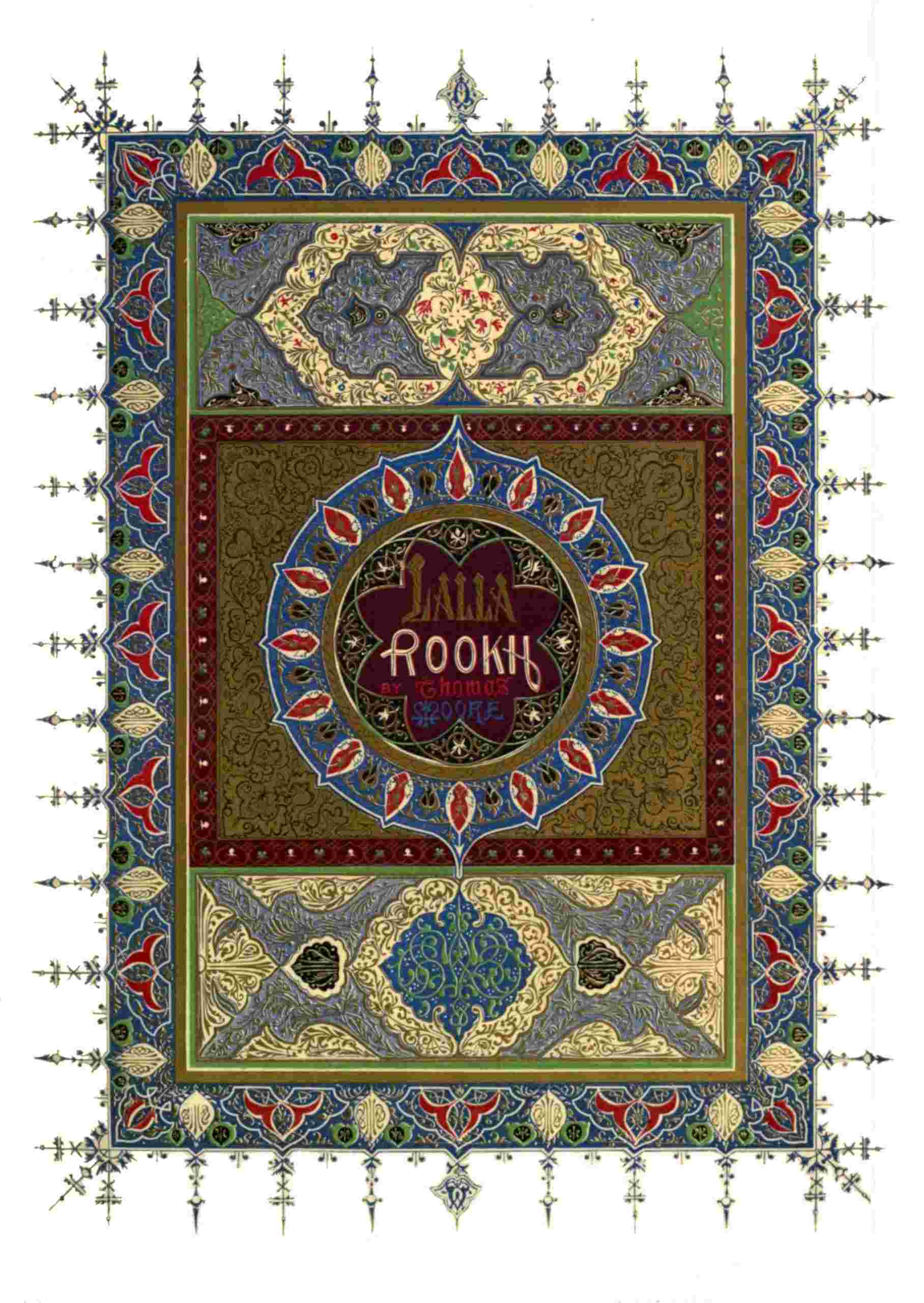
Lalla Rookh cover

Lalla Rookh

Chapter 7: The Fire Worshippers
Open in WeRead

Explore more books like this:

About This Book

A framed poetic romance follows a young noblewoman traveling to a proposed marriage, within which several embedded narrative poems are recited that range from a tale of a veiled prophet and secret identity to a penitent supernatural being, a story of love amid religious strife, and a dramatic harem episode. The work combines lyric description, ornate Orientalizing imagery, and episodic storytelling, exploring themes of love, sacrifice, faith, and revelation while alternating narrative momentum with richly detailed scene-setting and melodic verse.

The Fire Worshippers


’Tis moonlight over Oman’s Sea;[214]
Her banks of pearl and palmy isles
Bask in the night-beam beauteously,
And her blue waters sleep in smiles.
’Tis moonlight in Harmozia’s[215] walls,
And through her Emir’s porphyry halls,
Where, some hours since, was heard the swell
Of trumpet and the clash of zel,[216]
Bidding the bright-eyed sun farewell;—
The peaceful sun, whom better suits
The music of the bulbul’s nest,
Or the light touch of lovers’ lutes,
To sing him to his golden rest.
All hush’d—there’s not a breeze in motion;
The shore is silent as the ocean.
If zephyrs come, so light they come,
Nor leaf is stirr’d nor wave is driven;—
The wind-tower on the Emir’s dome[217]
Can hardly win a breath from heaven.
Even he, that tyrant Arab, sleeps
Calm, while a nation round him weeps;
While curses load the air he breathes,
And falchions from unnumbered sheaths
Are starting to avenge the shame
His race hath brought on Iran’s[218] name.
Hard, heartless Chief, unmov’d alike
Mid eyes that weep, and swords that strike;—
One of that saintly, murderous brood,
To carnage and the Koran given,
Who think through unbelievers’ blood
Lies their directest path to heaven;—
One, who will pause and kneel unshod
In the warm blood his hand hath pour’d,
To mutter o’er some text of God
Engraven on his reeking sword;[219]
Nay, who can coolly note the line,
The letter of those words divine,
To which his blade, with searching art,
Had sunk into its victim’s heart!
Just Alla! what must be thy look,
When such a wretch before thee stands
Unblushing, with thy Sacred Book,—
Turning the leaves with blood-stain’d hands,
And wresting from its page sublime
His creed of lust, and hate, and crime;—
Even as those bees of Trebizond,
Which, from the sunniest flowers that glad
With their pure smile the gardens round,
Draw venom forth that drives men mad.[220]
Never did fierce Arabia send
A satrap forth more direly great;
Never was Iran doom’d to bend
Beneath a yoke of deadlier weight.
Her throne had fallen—her pride was crush’d—
Her sons were willing slaves, nor blush’d,
In their own land,—no more their own,—
To crouch beneath a stranger’s throne.
Her towers, where Mithra once had burn’d,
To Moslem shrines—oh shame!—were turn’d,
Where slaves, converted by the sword,
Their mean, apostate worship pour’d,
And curs’d the faith their sires ador’d.
Yet has she hearts, mid all this ill,
O’er all this wreck high buoyant still
With hope and vengeance;—hearts that yet—
Like gems, in darkness, issuing rays
They’ve treasur’d from the sun that’s set,—
Beam all the light of long-lost days!
And swords she hath, nor weak nor slow
To second all such hearts can dare;
As he shall know, well, dearly know,
Who sleeps in moonlight luxury there,
Tranquil as if his spirit lay
Becalm’d in Heaven’s approving ray.
Sleep on—for purer eyes than thine
Those waves are hush’d, those planets shine;
Sleep on, and be thy rest unmov’d
By the white moonbeam’s dazzling power;—
None but the loving and the lov’d
Should be awake at this sweet hour.
And see—where, high above those rocks
That o’er the deep their shadows fling,
Yon turret stands;—where ebon locks,
As glossy as a heron’s wing
Upon the turban of a king,[221]
Hang from the lattice, long and wild—
’Tis she, that Emir’s blooming child,
All truth and tenderness and grace,
Though born of such ungentle race;—
An image of Youth’s radiant Fountain
Springing in a desolate mountain![222]
Oh what a pure and sacred thing
Is Beauty, curtain’d from the sight
Of the gross world, illumining
One only mansion with her light!
Unseen by man’s disturbing eye,—
The flower that blooms beneath the sea,
Too deep for sunbeams, doth not lie
Hid in more chaste obscurity.
So, Hinda, have thy face and mind,
Like holy mysteries, lain enshrin’d.
And oh, what transport for a lover
To lift the veil that shades them o’er!—
Like those who, all at once, discover
In the lone deep some fairy shore,
Where mortal never trod before,
And sleep and wake in scented airs
No lip had ever breath’d but theirs.
Beautiful are the maids that glide,
On summer-eves, through Yemen’s[223] dales,
And bright the glancing looks they hide
Behind their litters’ roseate veils;—
And brides, as delicate and fair
As the white jasmine flowers they wear,
Hath Yemen in her blissful clime,
Who, lull’d in cool kiosk or bower,[224]
Before their mirrors count the time,[225]
And grow still lovelier every hour.
But never yet hath bride or maid
In Araby’s gay Haram smil’d,
Whose boasted brightness would not fade
Before Al Hassan’s blooming child.
Light as the angel shapes that bless
An infant’s dream, yet not the less
Rich in all woman’s loveliness;—
With eyes so pure, that from their ray
Dark Vice would turn abash’d away,
Blinded like serpents, when they gaze
Upon the emerald’s virgin blaze;[226]
Yet fill’d with all youth’s sweet desires,
Mingling the meek and vestal fires
Of other worlds with all the bliss,
The fond, weak tenderness of this:
A soul, too, more than half divine,
Where, through some shades of earthly feeling.
Religion’s soften’d glories shine,
Like light through summer foliage stealing,
Shedding a glow of such mild hue,
So warm, and yet so shadowy too,
As makes the very darkness there
More beautiful than light elsewhere.
Such is the maid who, at this hour,
Hath risen from her restless sleep,
And sits alone in that high bower,
Watching the still and shining deep.
Ah! ’twas not thus,—with tearful eyes
And beating heart,—she used to gaze
On the magnificent earth and skies,
In her own land, in happier days.
Why looks she now so anxious down
Among those rocks, whose rugged frown
Blackens the mirror of the deep?
Whom waits she all this lonely night?
Too rough the rocks, too bold the steep,
For man to scale that turret’s height!—
So deem’d at least her thoughtful sire,
When high, to catch the cool night-air,
After the day-beam’s withering fire,[227]
He built her bower of freshness there,
And had it deck’d with costliest skill,
And fondly thought it safe as fair:—
Think, reverend dreamer! think so still,
Nor wake to learn what Love can dare;—
Love, all-defying Love, who sees
No charm in trophies won with ease;—
Whose rarest, dearest fruits of bliss
Are pluck’d on Danger’s precipice!
Bolder than they who dare not dive
For pearls, but when the sea’s at rest,
Love, in the tempest most alive,
Hath ever held that pearl the best
He finds beneath the stormiest water.
Yes—Araby’s unrivall’d daughter,
Though high that tower, that rock-way rude,
There’s one who, but to kiss thy cheek,
Would climb the’ untrodden solitude
Of Ararat’s tremendous peak,[228]
And think its steeps, though dark and dread,
Heaven’s pathways, if to thee they led!
Even now thou seest the flashing spray,
That lights his oar’s impatient way;—
Even now thou hear’st the sudden shock
Of his swift bark against the rock,
And stretchest down thy arms of snow,
As if to lift him from below!
Like her to whom, at dead of night,
The bridegroom, with his locks of light,[229]
Came, in the flush of love and pride,
And scal’d the terrace of his bride;—
When, as she saw him rashly spring,
And midway up in danger cling,
She flung him down her long black hair,
Exclaiming, breathless, “There, love, there!”
And scarce did manlier nerve uphold
The hero Zal in that fond hour,
Than wings the youth who, fleet and bold,
Now climbs the rocks to Hinda’s bower.
See—light as up their granite steeps
The rock-goats of Arabia clamber,[230]
Fearless from crag to crag he leaps,
And now is in the maiden’s chamber.
She loves—but knows not whom she loves,
Nor what his race, nor whence he came;—
Like one who meets, in Indian groves,
Some beauteous bird without a name,
Brought by the last ambrosial breeze,
From isles in the’ undiscover’d seas,
To show his plumage for a day
To wondering eyes, and wing away!
Will he thus fly—her nameless lover?
Alla forbid! ’twas by a moon
As fair as this, while singing over
Some ditty to her soft Kanoon,[231]
Alone, at this same witching hour,
She first beheld his radiant eyes
Gleam through the lattice of the bower,
Where nightly now they mix their sighs;
And thought some spirit of the air
(For what could waft a mortal there?)
Was pausing on his moonlight way
To listen to her lonely lay!
This fancy ne’er hath left her mind:
And—though, when terror’s swoon had past,
She saw a youth, of mortal kind,
Before her in obeisance cast,—
Yet often since, when he hath spoken
Strange, awful words,—and gleams have broken
From his dark eyes, too bright to bear,
Oh! she hath fear’d her soul was given
To some unhallow’d child of air,
Some erring Spirit cast from heaven,
Like those angelic youths of old,
Who burn’d for maids of mortal mould,
Bewilder’d left the glorious skies,
And lost their heaven for woman’s eyes.
Fond girl! nor fiend nor angel he
Who woos thy young simplicity;
But one of earth’s impassion’d sons,
As warm in love, as fierce in ire,
As the best heart whose current runs
Full of the Day-God’s living fire.
But quench’d to-night that ardour seems,
And pale his cheek, and sunk his brow;—
Never before, but in her dreams,
Had she beheld him pale as now:
And those were dreams of troubled sleep,
From which ’twas joy to wake and weep;
Visions, that will not be forgot,
But sadden every waking scene,
Like warning ghosts, that leave the spot
All wither’d where they once have been.
“How sweetly,” said the trembling maid,
Of her own gentle voice afraid,
So long had they in silence stood,
Looking upon that tranquil flood—
“How sweetly does the moon-beam smile
“To-night upon yon leafy isle!
“Oft, in my fancy’s wanderings,
“I’ve wish’d that little isle had wings,
“And we, within its fairy bowers,
“Were wafted off to seas unknown,
“Where not a pulse should beat but ours,
“And we might live, love, die alone!
“Far from the cruel and the cold,—
“Where the bright eyes of angels only
“Should come around us, to behold
“A paradise so pure and lonely.
“Would this be world enough for thee?”—
Playful she turn’d, that he might see
The passing smile her cheek put on;
But when she mark’d how mournfully
His eyes met hers, that smile was gone;
And, bursting into heart-felt tears,
“Yes, yes,” she cried, “my hourly fears,
“My dreams have boded all too right—
“We part—for ever part—to-night!
“I knew, I knew it could not last—
“’Twas bright, ’twas heavenly, but ’tis past
“Oh! ever thus, from childhood’s hour,
“I’ve seen my fondest hopes decay;
“I never lov’d a tree or flower,
“But ’twas the first to fade away.
“I never nurs’d a dear gazelle,
“To glad me with its soft black eye,
“But when it came to know me well,
“And love me, it was sure to die!
“Now too—the joy most like divine
“Of all I ever dreamt or knew,
“To see thee, hear thee, call thee mine,—
“Oh misery! must I lose that too?
Yet go—on peril’s brink we meet;—
“Those frightful rocks—that treacherous sea—
“No, never come again—though sweet,
“Though heaven, it may be death to thee.
“Farewell—and blessings on thy way,
“Where’er thou goest, beloved stranger!
“Better to sit and watch that ray,
“And think thee safe, though far away,
“Than have thee near me, and in danger!”

“Danger!—oh, tempt me not to boast—”
The youth exclaim’d—“thou little know’st
“What he can brave, who, born and nurst
“In Danger’s paths, has dar’d her worst;
“Upon whose ear the signal word
“Of strife and death is hourly breaking;
“Who sleeps with head upon the sword
“His fever’d hand must grasp in waking.
“Danger!—”
“Danger!—”“Say on—thou fear’st not then,
“And we may meet—oft meet again?”
“Oh! look not so—beneath the skies
“I now fear nothing but those eyes.
“If aught on earth could charm or force
“My spirit from its destin’d course,—
“If aught could make this soul forget
“The bond to which its seal is set,
“’Twould be those eyes;—they, only they,
“Could melt that sacred seal away!
“But no—’tis fix’d—my awful doom
“Is fix’d—on this side of the tomb
“We meet no more;—why, why did Heaven
“Mingle two souls that earth has riven,
“Has rent asunder wide as ours?
“Oh, Arab maid, as soon the Powers
“Of Light and Darkness may combine,
“As I be link’d with thee or thine!
“Thy Father—”
“Thy Father—”“Holy Alla save
“His grey head from that lightning glance!
“Thou know’st him not—he loves the brave;
“Nor lives there under heaven’s expanse
“One who would prize, would worship thee
“And thy bold spirit, more than he.
“Oft when, in childhood, I have play’d
“With the bright falchion by his side,
“In time should be a warrior’s bride.
“And still, whene’er at Haram hours
“I take him cool sherbets and flowers,
“He tells me, when in playful mood,
“A hero shall my bridegroom be,
“Since maids are best in battle woo’d,
“And won with shouts of victory!
“Nay, turn not from me—thou alone
“Art form’d to make both hearts thy own.
“Go—join his sacred ranks—thou know’st
“The’ unholy strife these Persians wage:—
“Good Heaven, that frown!—even now thou glow’st
“With more than mortal warrior’s rage.
“Haste to the camp by morning’s light,
“And, when that sword is raised in fight,
“Oh still remember, Love and I
“Beneath its shadow trembling lie!
“One victory o’er those Slaves of Fire,
“Those impious Ghebers, whom my sire
“Abhors—”
“Abhors”“Hold, hold—thy words are death—”
The stranger cried, as wild he flung
His mantle back, and show’d beneath
“Here, maiden, look—weep—blush to see
“All that thy sire abhors in me!
“Yes—I am of that impious race,
“Those Slaves of Fire, who, morn and even,
“Hail their Creator’s dwelling-place
“Among the living lights of heaven:[233]
“Yes—I am of that outcast few,
“To Iran and to vengeance true,
“Who curse the hour your Arabs came
“To desolate our shrines of flame,
“And swear, before God’s burning eye,
“To break our country’s chains, or die!
“Thy bigot sire,—nay, tremble not,—
“He, who gave birth to those dear eyes,
“With me is sacred as the spot
“From which our fires of worship rise!
“But know—’twas he I sought that night,
“When, from my watch-boat on the sea,
“I caught this turret’s glimmering light,
“And up the rude rocks desperately
“Rush’d to my prey—thou know’st the rest—
“I climb’d the gory vulture’s nest,
“And found a trembling dove within;—
“Thine, thine the victory—thine the sin—
“If Love hath made one thought his own,
“That Vengeance claims first—last—alone!
“Or could this heart e’en now forget
“How link’d, how bless’d we might have been,
“Had fate not frown’d so dark between!
“Hadst thou been born a Persian maid,
“In neighbouring valleys had we dwelt,
“Through the same fields in childhood play’d,
“At the same kindling altar knelt,—
“Then, then, while all those nameless ties,
“In which the charm of Country lies,
“Had round our hearts been hourly spun,
“Till Iran’s cause and thine were one;
“While in thy lute’s awakening sigh
“I heard the voice of days gone by,
“And saw, in every smile of thine,
“Returning hours of glory shine;—
“While the wrong’d Spirit of our Land
“Liv’d, look’d, and spoke her wrongs through thee,—
“God! who could then this sword withstand?
“Its very flash were victory!
“But now—estrang’d, divorc’d for ever,
“Far as the grasp of Fate can sever;
“Our only ties what love has wove,—
“In faith, friends, country, sunder’d wide;
“And then, then only, true to love,
“When false to all that’s dear beside!
“Thy father Iran’s deadliest foe—
“Thyself perhaps, even now—but no—
“Hate never look’d so lovely yet!
“No—sacred to thy soul will be
“The land of him who could forget
“All but that bleeding land for thee.
“When other eyes shall see, unmov’d,
“Her widows mourn, her warriors fall,
“Thou’lt think how well one Gheber lov’d,
“And for his sake thou’lt weep for all!
“But look—”
“But look”With sudden start he turn’d
And pointed to the distant wave,
Where lights, like charnel meteors, burn’d
Bluely, as o’er some seaman’s grave;
Flew up all sparkling from the main,
As if each star that nightly falls,
Were shooting back to heaven again.
“My signal lights!—I must away—
“Both, both are ruin’d, if I stay.
“Farewell—sweet life! thou cling’st in vain—
“Now, Vengeance, I am thine again!”
Fiercely he broke away, nor stopp’d,
Nor look’d—but from the lattice dropp’d
Down ’mid the pointed crags beneath,
As if he fled from love to death.
While pale and mute young Hinda stood
Nor mov’d, till in the silent flood
A momentary plunge below
Startled her from her trance of woe;—
Shrieking she to the lattice flew,
“I come—I come—if in that tide
“Thou sleep’st to-night, I’ll sleep there too,
“In death’s cold wedlock, by thy side.
“Oh! I would ask no happier bed
“Than the chill wave my love lies under:—
“Sweeter to rest together dead,
“Far sweeter, than to live asunder!”
But no—their hour is not yet come—
Again she sees his pinnace fly,
Wafting him fleetly to his home,
Where’er that ill-starr’d home may lie;
And calm and smooth it seem’d to win
Its moonlight way before the wind,
As if it bore all peace within,
Nor left one breaking heart behind!

The Princess, whose heart was sad enough already, could have wished that Feramorz had chosen a less melancholy story; as it is only to the happy that tears are a luxury. Her Ladies, however, were by no means sorry that love was once more the Poet’s theme; for, whenever he spoke of love, they said, his voice was as sweet as if he had chewed the leaves of that enchanted tree, which grows over the tomb of the musician, Tan-Sein.[235]

Their road all the morning had lain through a very dreary country;—through valleys, covered with a low bushy jungle, where, in more than one place, the awful signal of the bamboo staff,[236] with the white flag at its top, reminded the traveller that, in that very spot, the tiger had made some human creature his victim. It was, therefore, with much pleasure that they arrived at sunset in a safe and lovely glen, and encamped under one of those holy trees, whose smooth columns and spreading roofs seem to destine them for natural temples of religion. Beneath this spacious shade, some pious hands had erected a row of pillars ornamented with the most beautiful porcelain,[237] which now supplied the use of mirrors to the young maidens, as they adjusted their hair in descending from the palankeens. Here, while, as usual, the Princess sat listening anxiously, with Fadladeen in one of his loftiest moods of criticism by her side, the young Poet, leaning against a branch of the tree, thus continued his story:—


The morn hath risen clear and calm,
And o’er the Green Sea[238] palely shines,
Revealing Bahrein’s[239] groves of palm,
And lighting Kishma’s[239] amber vines.
Fresh smell the shores of Araby,
While breezes from the Indian sea
Blow round Selama’s[240] sainted cape,
And curl the shining flood beneath,—
Whose waves are rich with many a grape,
And cocoa-nut and flowery wreath,
Which pious seamen, as they pass’d,
Had tow’rd that holy headland cast—
Oblations to the Genii there
For gentle skies and breezes fair!
The nightingale now bends her flight[241]
From the high trees, where all the night
She sung so sweet, with none to listen;
And hides her from the morning star
Where thickets of pomegranate glisten
In the clear dawn,—bespangled o’er
With dew, whose night drops would not stain
The best and brightest scimitar[242]
That ever youthful Sultan wore
On the first morning of his reign.
And see—the Sun himself!—on wings
Of glory up the East he springs.
Angel of Light! who from the time
Those heavens began their march sublime,
Hath first of all the starry choir
Trod in his Maker’s steps of fire!
Where are the days, thou wondrous sphere,
When Iran, like a sun-flower, turn’d
To meet that eye where’er it burn’d?—
When, from the banks of Bendemeer
To the nut-groves of Samarcand,
Thy temples flam’d o’er all the land?
Where are they? ask the shades of them
Who, on Cadessia’s[243] bloody plains,
Saw fierce invaders pluck the gem
From Iran’s broken diadem,
And bind her ancient faith in chains:—
Ask the poor exile, cast alone
On foreign shores, unlov’d, unknown,
Beyond the Caspian’s Iron Gates,[244]
Or on the snowy Mossian mountains,
Far from his beauteous land of dates,
Her jasmine bowers and sunny fountains:
Yet happier so than if he trod
His own belov’d, but blighted, sod,
Beneath a despot stranger’s nod!—
Oh, he would rather houseless roam
Where Freedom and his God may lead,
Than be the sleekest slave at home
That crouches to the conqueror’s creed!
Is Iran’s pride then gone for ever,
Quench’d with the flame in Mithra’s caves?—
No—she has sons, that never—never—
Will stoop to be the Moslem’s slaves,
While heaven has light or earth has graves;—
Spirits of fire, that brood not long,
But flash resentment back for wrong;
And hearts where, slow but deep, the seeds
Of vengeance ripen into deeds,
Till, in some treacherous hour of calm,
They burst, like Zeilan’s giant palm,[245]
Whose buds fly open with a sound
That shakes the pigmy forests round!
Yes, Emir! he, who scal’d that tower,
And, had he reach’d thy slumbering breast,
Had taught thee, in a Gheber’s power
How safe e’en tyrant heads may rest—
Is one of many, brave as he,
Who loathe thy haughty race and thee;
Who, though they know the strife is vain,
Who, though they know the riven chain
Snaps but to enter in the heart
Of him who rends its links apart,
Yet dare the issue,—blest to be
E’en for one bleeding moment free,
And die in pangs of liberty!
Thou know’st them well—’tis some moons since
Thy turban’d troops and blood-red flags,
Thou satrap of a bigot Prince,
Have swarm’d among these Green Sea crags;
Yet here, e’en here, a sacred band,
Ay, in the portal of that land
Thou, Arab, dar’st to call thy own,
Their spears across thy path have thrown;
Here—ere the winds half wing’d thee o’er—
Rebellion brav’d thee from the shore.
Rebellion! foul, dishonouring word,
Whose wrongful blight so oft has stain’d
The holiest cause that tongue or sword
Of mortal ever lost or gain’d.
How many a spirit, born to bless,
Hath sunk beneath that withering name,
Whom but a day’s, an hour’s success
Had wafted to eternal fame!
As exhalations, when they burst
From the warm earth, if chill’d at first,
If check’d in soaring from the plain,
Darken to fogs and sink again;—
But, if they once triumphant spread
Their wings above the mountain-head,
Become enthroned in upper air,
And turn to sun-bright glories there!
And who is he, that wields the might
Of Freedom on the Green Sea brink,
Before whose sabre’s dazzling light[246]
The eyes of Yemen’s warriors wink?
Who comes, embower’d in the spears
Of Kerman’s hardy mountaineers?—
Those mountaineers that truest, last,
Cling to their country’s ancient rites,
As if that God, whose eyelids cast
Their closing gleam on Iran’s heights,
Among her snowy mountains threw
The last light of his worship too!