
The Project Gutenberg eBook of Les enfants du Ghetto
This ebook is for the use of anyone anywhere in the United States and
most other parts of the world at no cost and with almost no restrictions
whatsoever. You may copy it, give it away or re-use it under the terms
of the Project Gutenberg License included with this ebook or online
at www.gutenberg.org. If you are not located in the United States,
you will have to check the laws of the country where you are located
before using this eBook.
Title: Les enfants du Ghetto
Author: Israel Zangwill
Translator: Pierre Mille
Release date: December 17, 2025 [eBook #77482]
Language: French
Original publication: Paris: Georges Crès et Cie, 1918
Credits: Laurent Vogel and the Online Distributed Proofreading Team at https://www.pgdp.net (This file was produced from images generously made available by the Bibliothèque municipale de Lyon | Numelyo, 424245)
*** START OF THE PROJECT GUTENBERG EBOOK LES ENFANTS DU GHETTO ***
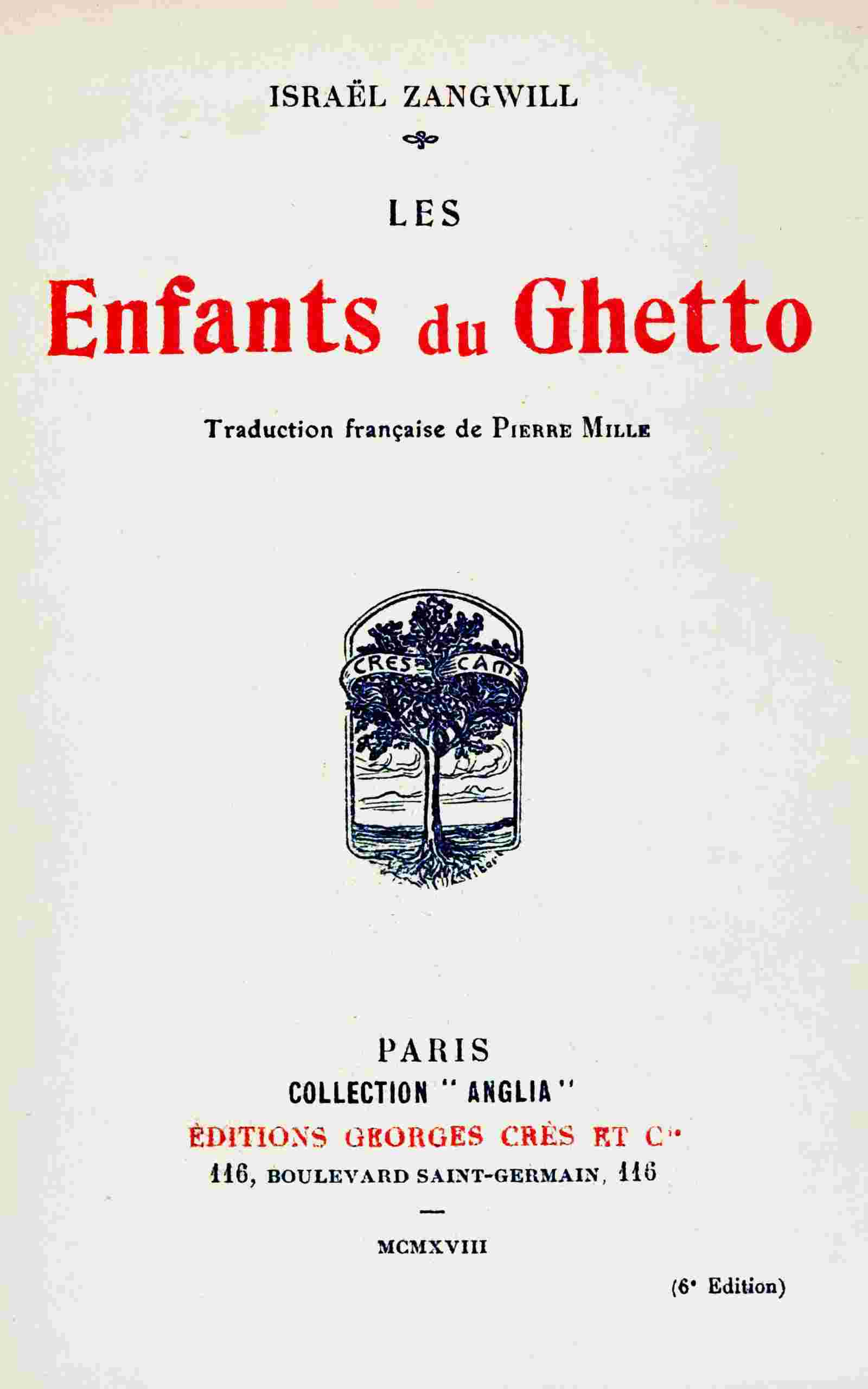
ISRAËL ZANGWILL
LES
Enfants du Ghetto
Traduction française de Pierre Mille
PARIS
COLLECTION “ANGLIA”
ÉDITIONS GEORGES CRÈS ET Cie
116, BOULEVARD SAINT-GERMAIN, 116
MCMXVIII
(6e Édition)
IL A ÉTÉ TIRÉ DE CET OUVRAGE :
- 5 exemplaires sur japon impérial, numérotés de 1 à 5.
- 5 exemplaires sur papier de Chine, numérotés de 6 à 10.
- 25 exemplaires sur papier vergé de Rives, numérotés de 11 à 35.
- 20 exemplaires sur papier vergé teinté de Rives, numérotés de 36 à 55.