
When I made up my mind to write this story, it was not to publish it, but it was at the request of my sister that lived in Africa, and has lived there more than thirty years. She had heard our parents tell about our being slaves, but she was not born until a number of years after they were free. When the war in which we have been engaged began, the thought came to her mind that her parents and brothers and sisters were once slaves, and she wrote to me from Africa for the story. I came to Norfolk on a visit at the time the war broke out, and some in Norfolk remember that I was once a slave. They asked me about it; I told them something about it; they seemed to take an interest in it, and as I was in Norfolk now, and having an opportunity to write it, I thought I would write it all through. In telling it to those, there were a great many things that I did not mention that I have written. After I had written it out, I saw that my brother and my other sister would think that I might give them the same; and my children had often asked me to write it. When I had got it written, as it made more writing than I was willing to undertake to give each of them one, I thought I would have it printed, and perhaps I might sell enough to pay the expenses, as many of the people now on the stage of life do not know that slavery ever lived in Connecticut.
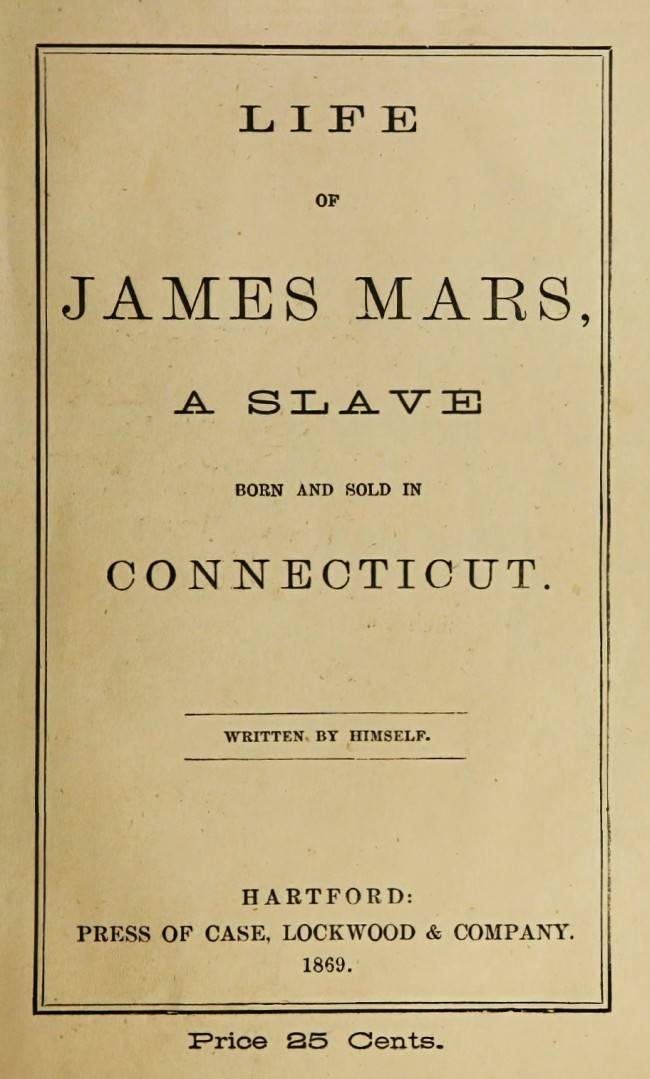
Life of James Mars, a Slave Born and Sold in Connecticut
Explore more books like this:
About This Book
The narrator recounts his life from birth into slavery in Connecticut, describing family origins, the mixed treatment of enslaved people in the North, repeated sales and threats of removal to the South, and the daily humiliations and physical punishments endured by his relatives. He explains why he set down his story—responding to requests from family and acquaintances—and chronicles his parents' efforts to resist separation, his father's plans to escape, and the community dynamics that influenced their choices. The account blends personal memory, local testimony, and reflections on freedom, providing a firsthand portrait of bondage and liberation in a northern state.