
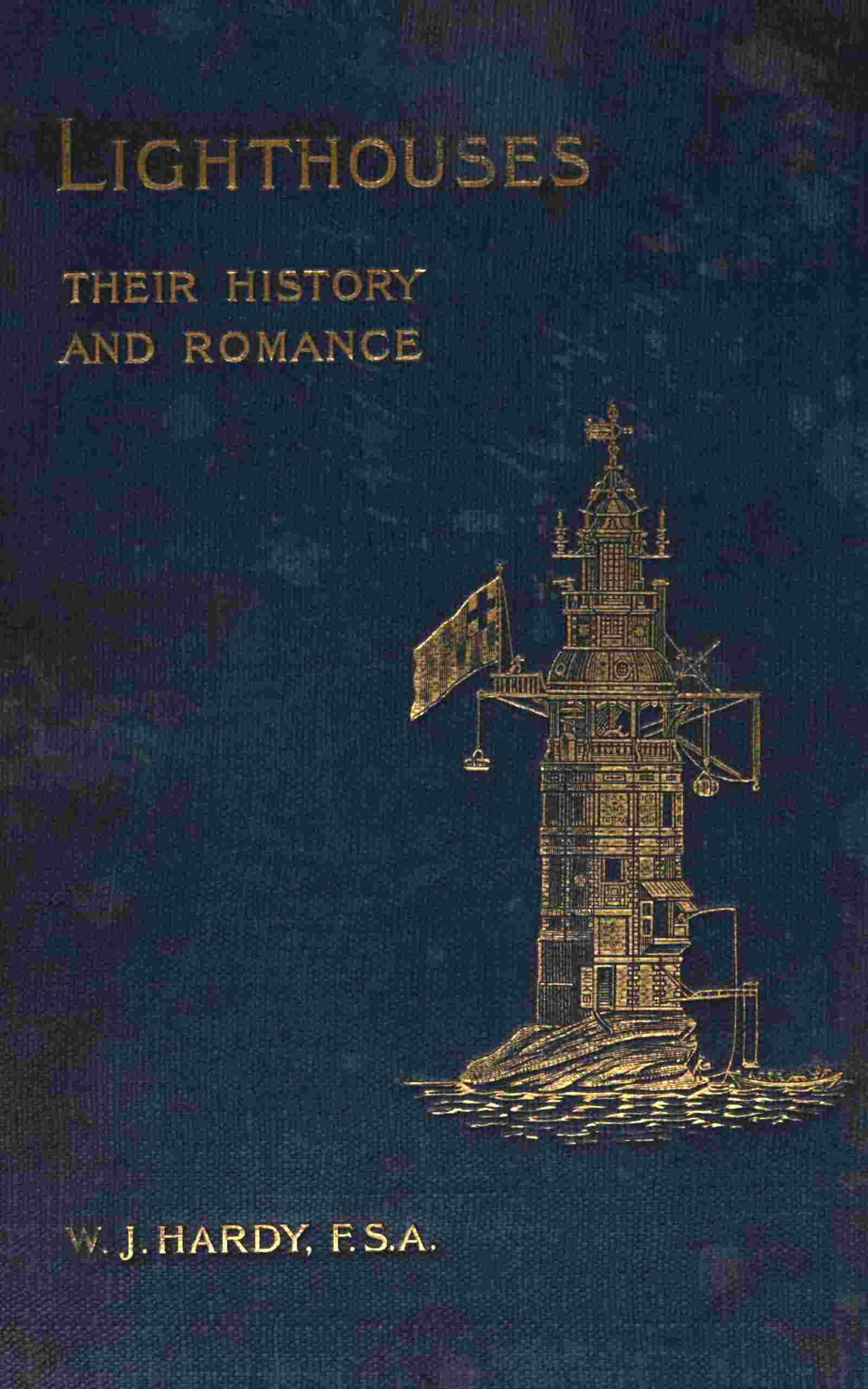
I have for some years past devoted a good deal of time to the study of facts connected with the history of English coast-lighting, and I have now woven together into this volume such of the scattered references to the subject which I have found, and have entitled it, Lighthouses: their History and Romance. That there is much romantic incident in connection with our lighthouses, and that many of them possess interesting histories, the reader of the following pages will, I think, admit; and it is really surprising that no history of them has before this been compiled.
I could not have obtained the facts I have here been able to bring together had I not received constant and generous assistance from all those in whose power it was to render it; and were I to attempt to convey to the officials of the British Museum and Public Record Office, who have assisted me, individual thanks, I should unduly prolong this preface. Yet I cannot leave unrecorded my gratitude to Mr. W. Y. Fletcher, F.S.A., late of the Printed Books Department, in the first-named office, and to Mr. G. H. Overend, F.S.A., in the latter.
Not one half of the facts here recorded could have been obtained had I not received free and full access to the muniments of the Corporation of the Trinity House. This was accorded to me through the instrumentality of Sir Edward Birkbeck, Bart., and my good friend, his brother, Mr. Robert Birkbeck, F.S.A. I presented their introduction to Sir Sydney Webb, K.C.M.G., the Deputy-Master of the Trinity House, and that gentleman, Mr. Kent, the Secretary, and Mr. Weller, one of the officials of the department, gave me every assistance in their power and the freest access to their records. To Mr. Dibdin and his assistants at the National Lifeboat Institution I also desire to express my gratitude for various information supplied, and in particular for some of the wreck incidents I have mentioned.
I am particularly grateful to Lord Kenyon for allowing the reproduction of two very interesting contemporary pictures of seventeenth-century lighthouses—those at Dungeness and the Scillies; and to Mr. Mill Stephenson, F.S.A., the Secretary of the Royal Archaeological Institute, for the use of one of the illustrations—the Silver Model of Winstanley’s Eddystone Lighthouse—that appeared, some years ago, in the Journal of the Society.
My thanks are due, and I return them with pleasure, to my fellow-worker, Mr. William Page, F.S.A., who has always brought to my knowledge any fact connected with Lighthouse history that he came upon in his researches.
In presenting to the public the last volume which I published through the Religious Tract Society, The Handwriting of the Kings and Queens of England, I was permitted to thank the Rev. Richard Lovett, M.A., the Society’s Book Editor, for his constant help and advice in bringing out that work. I trust that I may be again accorded the privilege of thanking him for his unfailing courtesy and good nature in discussing and settling points of detail in connection with this present work.
W. J. HARDY.