
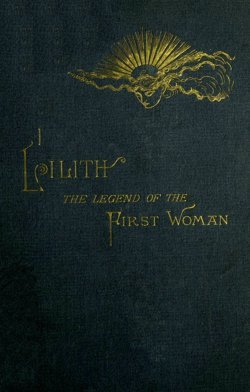
The Project Gutenberg eBook of Lilith
Title: Lilith
The legend of the first woman
Author: Ada Langworthy Collier
Release date: February 23, 2008 [eBook #24679]
Language: English
Credits: Produced by Irma Spehar, Markus Brenner and the Online
Distributed Proofreading Team at http://www.pgdp.net (This
file was produced from images generously made available
by The Internet Archive/American Libraries.)
LILITH
THE LEGEND OF THE FIRST WOMAN
BY
BOSTON
D. LOTHROP AND COMPANY
FRANKLIN AND HAWLEY STREETS
Copyright, 1885.
D. Lothrop & Company.
PREFACE.
That Eve was Adam’s second wife was a common Rabbinic speculation. Certain commentators on Genesis adopted this view, to account for the double account of the creation of woman, in the sacred text, first in Genesis i. 27, and second in Genesis xi. 18. And they say that Adam’s first wife was named Lilith, but she was expelled from Eden, and after her expulsion Eve was created. Abraham Ecchelensis gives the following account of Lilith and her doings: “There are some who do not regard spectres as simple devils, but suppose them to be of a mixed nature—part demoniacal, part human, and to have had their origin from Lilith, Adam’s first wife, by Eblis, prince of the devils. This fable has been transmitted to the Arabs, from Jewish sources, by some converts of Mohamet from Cabbalism and Rabbinism, who have transferred all the Jewish fooleries to the Arabs. They gave to Adam a wife formed of clay, along with Adam, and called her Lilith, resting on the Scripture: ‘Male and female created He them.’”—Legends of the Patriarchs and Prophets.—Baring Gould.
Lilith or Lilis.—In the popular belief of the Hebrews, a female spectre in the shape of a finely dressed woman, who lies in wait for, and kills children. The old Rabbins turned Lilith into a wife of Adam, on whom he begat demons and who still has power to lie with men and kill children who are not protected by amulets with which the Jews of a yet later period supply themselves as a protection against her. Burton in his Anatomy of Melancholy tells us: “The Talmudists say that Adam had a wife called Lilis, before he married Eve, and of her he begat nothing but devils.” A commentator on Skinner, quoted in the Encyclopædia Metropolitana, says that the English word Lullaby is derived from Lilla, abi (begone, Lilith)! In the demonology of the Middle Ages, Lilis was a famous witch, and is introduced as such in the Walpurgis night scene in Goethe’s “Faust.”—Webster’s Dictionary.
Our word Lullaby is derived from two Arabic words which mean “Beware of Lilith!”—Anon.
Lilith, the supposed wife of Adam, after she married Eblis, is said to have ruled over the city of Damascus.—Legends of the Patriarchs and Prophets.—Baring Gould.
From these few and meagre details of a fabled existence, which are all that the author has been able to collect from any source whatever, has sprung the following poem. The poet feels quite justified in dissenting from the statements made in the preceding extracts, and has not drawn Lilith as there represented—the bloodthirsty sovereign who ruled Damascus, the betrayer of men, the murderer of children. The Lilith of the poem is transferred to the more beautiful shadow-world. To that country which is the abode of poets themselves. And about her is wrapt the humanizing element still, and everywhere embodied in the sweetest word the human tongue can utter—lullaby. Some critics declare that true literary art inculcates a lofty lesson—has a high moral purpose. If poets and their work must fall under this rigorous rule, then alas “Lilith” will knock at the door of public opinion with a trembling hand indeed. If the poem have either moral aim or lesson of any kind (which observe, gentle critic, it is by no means asserted that it has), it is simply to show that the strongest intellectual powers contain no elements adverse to the highest and purest exercise of the affectional nature. That, in its true condition, the noblest, the most cultured intellect, and the loveliest, sublimest moral and emotional qualities, together weave the web that clothes the world’s great soul with imperishable beauty. The possessor of highest intellectual capacity will be also capable of highest developments in the latter qualities. The woman of true intellect is the woman of truest affection. For the rest let Lilith speak, whose life dropped unrecorded from the earliest world. It is the poet’s hope that the chords of the mother-heart universal will respond to the song of the childless one. That in the survival of that one word lullaby, may be revivified the pathetic figure of one whose home, whose hope, whose Eden passed to another. Whose name living in the terrors of superstitious peoples, now lingers in Earth’s sweetest utterance. That Pagan Lilith, re-baptized in the pure waters of maternal love, shall breathe to heathen and Christian motherhood alike, that most sacred love of Earth still throbbing through its tender lullaby.
A. L. C.
TO VALERIA.
Wore; nor gems that warriors’ hilts encrusted;
Nor fresh from heroes’ brows the laurels green;
Nor bright sheaves by bards of eld entrusted
To earth’s great granaries—I bring not these.
Only thin, scattered blades from harvests gleaned
Erewhile I plucked, may happen thee to please.
So poor indeed, those others had demeaned
Themselves to cull; or from their strong, firm hands
Down dropped about their feet with careless laugh,
Too broken for home gathering, these strands,
Or else more useless than the idle chaff.
But I have garnered them. Yet, lest they seem
Unworthy, and so shame Love’s offering,
Amid the loose-bound sheaf stray flowers gleam.
And fairer seeming make the gift I bring,
Lilies blood-red, that lit the waving field,
And now are knotted through the golden grain.
Thou wilt not scorn the tribute I now yield,
Nor even deem the foolish flowers vain.
So take it, and if still too slight, too small
It seem, think ’tis a bloom that grew anear,
In other Springtime, the old garden wall.
(That pale blue flower you will remember, dear.
The heedless world, unseeing, passed it by,
And left it to the bee and you.) Then say,
“Because the hands that tended it are nigh
No more, and little feet are gone away
That round it trampled down the beaded grass,
Sweeter to me it is than musky spray
Of Southland; and dearer than days that pass
In other summer-tides.” This simple song
Read so, dear heart; Nay, rather white-souled one,
Think ’tis an olden echo, wandered long
From a low bed where ’neath the westering sun
You sang. And if your lone heart ever said
“Lo, she is gone, and cannot more be mine,”
Say now, “She is not changed—she is not wed,—
She never left her cradle bed. Still shine
The pillows with the print of her wee head.”
So, mother-heart, this song, where through still rings
The strain you sang above my baby bed,
I bring. An idle gift mayhap, that clings
About old days forgotten long, and dead.
This loitering tale, Valeria, take.
Perchance ’tis sad, and hath not any mirth,
Yet love thou it, for the weak singer’s sake,
And hold it dear, though yet is little worth,
This tale of Elder-world: of earth’s first prime,
Of years that in their grave so long have lain,
To-day’s dull ear, through poets’ tuneful rhyme
No echo hears, nor mocking friar’s strain.
BOOK I.
Blue mountains hemmed it round; and airy sighs
Of rippling waters haunted it. Dim glades,
And wayward paths o’erflecked with shimmering shades,
And tangled dells, and wilding pleasances,
Hung moist with odors strange from scented trees.
Sweet sounds o’erbrimmed the place; and rare perfumes,
Faint as far sunshine, fell ’mong verdant glooms.
In that fair land, all hues, all leafage green
Wrapt flawless days in endless summer-sheen.
Bright eyes, the violet waking, lifted up
Where bent the lily her deep, fragrant cup;
And folded buds, ’gainst many a leafy spray—
The wild-woods’ voiceless nuns—knelt down to pray.
There roses, deep in greenest mosses swathed,
Kept happy tryst with tropic blooms, sun-bathed.
No sounds of sadness surged through listening trees:
The waters babbled low; the errant bees
Made answer, murmurous; nor paled the hue
The jonquils wore; nor chill the wild breath grew
Of daisies clustered white in dewy croft;
Nor fell the tasseled plumes as satin soft
Upon the broad-leaved corn. Sweet all the day
O’erflowed with music every woodland way;
And sweet the jargonings of nested bird,
When light the listless wind the forest stirred.
Straight as the shaft that ’gainst the morning sun
The slender palm uprears, the Fairest one—
The first of womankind—sweet Lilith—stood,
A gracious shape that glorified the wood.
About her rounded shoulders warm and bare,
Like netted sunshine fell her lustrous hair;
The rosy flush of young pomegranate bells
Dawned on her cheeks; and blue as in lone dells
Sleep the Forget-me-nots, her eyes. With bent
Brows, sullen-creased, swart Adam gazed intent
Upon a leopard, crouched low in its place
Beneath his feet. Not once in Lilith’s face
He looked, nor sought her wistful, downcast eyes
With shifting shadows dusk, and strange surprise.
“O, Love,” she said, “no more let us contend!
So sweet is life, anger, methinks, should end.
In this, our garden bright, why dost thou claim
Ever the highest place, the noblest name?
Freely to both our Lord gave self-same sway
O’er living things. Love, thou art gone astray!
Twin-born, of equal stature, kindred soul
Are we; like dowed with strength. Yon stars that roll
Their course above, down-looking on my face,
See yours as fair; in neither aught that’s base.
Thy wife, not handmaid I, yet thou dost say,
‘I first in Eden rule.’ Thou, then, hast sway.
Must I, my Adam, mutely follow thee?
Run at thy bidding, crouch beside thy knee?
Lift up (when thou dost bid me) timid eyes?
Not so will Lilith dwell in Paradise.”
“Mine own,” Adam made answer soft, “’twere best
Thou didst forget such ills in noontide rest.
Content I wake, the keeper of the place.
Of equal stature? Yea! Of self-same grace?
Nay, Love; recall those lately vanished eves,
When we together plucked the plantain leaves;
Yon leopard lowly stretched at my command
Its lazy length beneath my soothing hand.
At thee she snarled, disdaining half, to sheathe
’Neath thy soft pleading eyes her milk-white teeth.
Oft, Love, in other times, in sheltered nook,
We scattered pearly millet by the brook.
Lo thine lay barren in the sand. Quick mine
Upspringing sifts o’er pale blooms odors fine:
Hateful thy chidings grow; each breeze doth bring
Ever thy plaints—thy fretful murmuring.
These many days I weary of thy sighs;
Know, Lilith, I alone rule Paradise.”
Thereat he rose, and quick at every stride
The fawning leopard gambolled at his side.
So fell the first dark shadow of Earth’s strife.
With coming evil all the winds were rife.
Lone lay the land with sense of dull loss paled.
The days grew sick at heart; the sunshine failed;
And falling waters breathed in silvery moan
A hidden ail to starlit dells alone—
As sometimes you have seen, ’neath household eaves,
’Mong scents of Springtime, in the budded leaves,
The swallows circling blithe, with slant brown wing,
Home-flying fleet, with tender chattering,
And all the place o’errun with nested love—
So have you come, when leaves hung crisp above
The silent door. Yet not again, I ween,
Those shining wings, cleaving the air, have seen
Nor heard the gladsome swallows twittering there—
Only the empty nests, low-hung and bare,
Spake of the scattered brood.—So lonely were
To Lilith grown her once loved haunts. Nor fair
The starlit nights, slow-dropping fragrant dew,
Nor the dim groves when dawn came shifting through.
Far ’mong the hills the wood-doves’ moan she heard,
Or in some nearer copse, a startled bird;
Or the white moonshine ’mong green boughs o’erhead
Wrought her full heart to tears. “Sweet peace,” she said,
“Alas—lies slain!”
With musing worn, she brake
At last her silence, and to Adam spake:
“Beyond these walls I know not what may be—
Islands low-fringed, or bare; or tranquil sea,
Spaces unpeopled, wastes of burning sands,
Green-wooded belts, enclasping summer lands,
Or realms of dusky pines, or wolds of snow,
Or jagged ice-peaks wrapt in purple glow,
Or shadowy oceans lapped in fadeless sheen—
Yet there were Paradise, were Lilith queen.
To dally with my lord I was not meant;
To soothe his idle whims, above him bent,
Warm in my milk-white arms, lull his repose,
Nor deep in subtle kisses drown his woes.
Wherefore, since here no more dwells love, I fly
To seek my home in other lands. For why
Should Lilith wait since Adam’s empty state
More dear he holds than Lilith desolate?”
But answer soft made Adam at the word,
For faint his dying love, yet coldly stirred
Its ashen cerements: “Nay, love, our home
Within these garden walls lies safe. Wouldst roam
Without? Sweet peace, by loss, wilt thou restore
One little loss, or miss it evermore?”
“In goodly Eden, Adam, safely bide,
But I, for peace, nor love, nor life,” she cried,
“Submit to thee. Unto our Lord I own
Allegiance true; my homage his alone.
Oft have I watched the mists athwart yon peaks,
Pursuing oft past coves and winding creeks,
Have thought to touch their shining veil outspread,
In happy days ere Love, alas, was dead;
So now, farewell! Ere the new day shall break
Adown their gleaming track, my way I take.”
She turned; but ere the gate that looked without
She reached, one fleeting moment paused in doubt
Upon a river’s brink. In one swift glance
All coming time she saw. A weird romance
Wherein she traced great peoples yet unborn,
New springing cycles, strange lands cleft with tarn
Or pleasant vale, and green plains stretching far,
And quiet bays, and many a shingly bar,
And troubled seas, with bitter perils past,
And elfin shapes that jeering flitted fast
With scornful faces, leering lips that smiled,
Or bursts of laughter through that vision wild.
Uncertain, then, she stood, half loth to turn.
“Against yon deepening sky, how dimly burn
The stars, new-lit. Dear home, thou art so fair!”
She fondly sighed.
Then sudden she was ’ware
The angel near her paused, whose watchful care
Guards Eden’s peaceful bounds. Serene, his air
So tender-sweet, so pure the gentle face,
She scarce dared look upon its subtle grace.
Sad were his eyes; his words, rebuking, fell
Soft as the moonshine clear, in sleeping dell.
“My sister, go not hence, lest these gates bar
Lilith forever out. From peace afar,
Anger and pride shall lead through distant ways
Thy feet reluctant, in the evil days.
All is decreed. At yonder southern gate
Behold! waits even now my princely mate.
Thou can’st not tell which hath in our far land
The highest place. Nay; nor, indeed, whose hand
Hath grasped the noblest fame; nor yet divine
Whose brows enwound with honor, brightest shine.
In pleasant labor lurks no thought of pain;
The greatest loss oft brings the noblest gain;
The heart’s warm pulse feels not one throb of strife,
And Love is holiest crown of human life.
Ere thou didst sleep, beyond the rim of night
I heard a voice that sang. The carol light,
Scarce earth-born seemed. So sweet the matchless strain,
Its cadence weird, lowly to breathe again,
Wrapt echo, listening, half forgot; and o’er
And o’er, as joyous birds unprisoned soar,
The free notes rose. And in the silence wide,
Across the seas, across the night, I cried:
O sinless soul, whose clear voice blithely rings
’Gainst the blue verge of stars! ’Tis Lilith sings
The happy song of love. O Love! the tint
Of light divine thou wearest. Thou hast no hint
Of storm or turmoil, or of Sin’s rough ways,
Whose feet to heaven climb, through darkest maze.
Ah, Lilith, sure the love that basely weighs,
That stoops to count its gifts, and hoarding, says,
‘Such and so many, these indeed are mine;
I hold my treasure dear, nor covet thine;’
This is not love; ’tis Thrift in borrowed dress,
Deceiving thee. Love giveth free largess
With open hand, clean as the whitest day;
Yea, that it gave, forgetteth it straightway.
Beyond these walls dwells bliss that lives not here?
When thou hast bartered peace, outshining clear
And storm-tossed wide, art wildly driven hence,
The outer world gives thee no recompense.
Each shining sphere that trembles in blue space
Hath orbit true—its own familiar place.
Nor doth the planet pale that gems the night
Reel wanton down, the smallest star to smite.
No twining vine, tendril, or springing shoot
Ere taught thee so; for bud and leaf and root
Doth its best self lift upward into light,
Yet climbing still, scorns not the sacred right
That shrines its fellow.
“So pattering rains
The dark roots drink—and healthful juice slow drains
Deep ’neath the mould; and with their secret toil
Bear stainless, leaf and flow’r above the soil.
Noblest the soul that self hath most forgot;
Strongest the self which hath most humbly wrought;
Purest the soul that in full light serene,
Unquestioning, enwrapt, God’s field doth glean.
I have seen worlds far hence; thy tender feet
Bleeding, will tread their stony ways. And sweet
Is love. And wedded love, grown cold and rude,
More bitter-seeming makes dull solitude.
Security is sweet; and light and warm
The young heart beats, close shut from every harm.”
“Yet,” Lilith answered slow, “in that still night
Ere He, the garden’s Lord, passed from our sight,
Hast thou forgot his words? ‘Lo this fair spot
Made for your pleasance; see ye mar it not,
Oh, twin-born pair! So richly dight with grace
Of soul and stature; unto whom the place
I give. Together rule. Bear equal sway
O’er all that live herein.’ Hath Lilith sought
A solitary reign? Hath she in aught
Offended? Nay; ’tis Adam who doth break
The compact. Therefore, unhindered let me take
My way far hence. I shall not vex his soul
With fretful plaints, where unknown stars shall roll,
Far, far away,” she sighed.
“Yet ere these bounds
Thy feet pass, linger. Lilith, list glad sounds
That greet thine ear. Slow cycles will pass on
And in the time-to-be-bright years, grow wan;
Old planets fade, new stars shall dimly burn,
But not to Eden’s peace shalt thou return.
Oft from thy yearning heart glad hope shall fail.
Thy fruit of life lift bloom all sere and pale.
Certain, small comfort bides, when joy is gone,
In Great or Less. Grim Sorrow waits to lead thee on.
Sorrow! Thou hast not seen her pallid face.
In thy most troubled dream she had no place”—
“Nay, I depart,” she said, with lips grown chill.
“Fearless and free, exiled, but princess still.”
“I may not hinder thee,” the Angel sighed;
“No soul unwilling here may ever bide.”
Slow swung the verdant gates neath saddest eyes.
Lilith forever lost fair Paradise.
BOOK II.
The walls of Paradise, through night’s dark rift
Lilith fled far; nor stopped lest deadly snare
Or peril by the wayside lurked.
The air
Grew chill. Loud beat her heart, as through the wind
Echoed, unseen, pursuing feet, behind.
And reached a weird, strange land at last.
When morning flecked the dappled sky with red,
And odors sweet from waking flowers were shed,
Lilith beheld a plain, outstretching wide,
With distant mountains seamed.
Afar, a silvery tide
The blue shore kissed. And in that tropic glow
Dim islands shone, palm-fringed, and low.
In nearer space, like scarlet arrows flew
Strange birds, or ’mong the reedy fens, or through
Tall trees, of unknown leafage, glancing, went.
Now Lilith seaward passed, and stooping, bent
Her hollowed hand above the wave, and quaffed;
For she was spent with wanderings wide. Loud laughed
She then, beholding on that silent shore
Rare shells, that still faint in their pink lips bore
Wild ocean-songs; and precious stones, that bright
That dim sea’s marge, deep in the land of night
Thick strewed.
Then glad, she lifted shining eyes,
Loud crying there, “O Lilith, now arise,
Great queen-triumphant! See how wildly fair
Before me lies my realm! And from its air
Soft, sensuous, new life as ruddy wine,
My spirit drinks. Nor beauty so divine
Hath Eden’s self. Look, where upon the sands
The garish mosses spread with dainty hands,
Like goblin network fine, each fairy frond.
And dusky trees shut in broad fields beyond,
And hang long trembling garlands, age-grown-gray,
From topmost boughs adown, athwart the day;
And sweet amid these wilds, bright dewy bells
Ring summer chimes. And soft in fragrant dells,
’Mong tender leaves, great spikes of scarlet flaunt
About the pools—the errant wild bees’ haunt—
And thick with bramble-blooms pink petals starred,
And dew-stained buds of blue, the velvet sward.
Scarce ripple stirred the sea; and inland wend
Far bays and sedgy ponds; and rolling rivers bend.
A land of leaf and fruitage in the glow
Of palest glamours steeped. And far and low
Great purple isles; and further still a rim
Of sunset-tinted hills, that softly dim
Shine ’gainst the day. “O world, new found,” she said,
“With treasures heaped and odors rare, ’mong flowers shed,
For whose dear sake I came o’er flinty ways,
And paths with danger fraught; ’mong brambly sprays,
With bleeding feet, and shoulders thorn-pierced deep.
But perils past, fade fast. And I will weep
My Eden lost no more.” And sweet and low
As one who dreams, she said, “For now I know
These mountain heights, these level plains, are mine.”
She ceased, and inland quickly turned. “Fair shine
Strange fruits thick-set, or blossoms lightly tossed
Low at my feet.” Therewith, a dusk globe, crossed
With golden bands, from bent boughs, stripped she. Through
The gleaming sphere its nectrous juices drew,
And thirsting cried—as one grown drunken: “Mine
These fruits unknown, in thorny combs that shine,
Or gray-green spikes that glow, dull on the sands.
Fain would I pluck, out-reaching eager hands,
Save that a marvel grows of ruddier rind
Out-flinging fruity breath upon the wind,
Beneath harsh spines half-hid. Nor drains
My wilful spouse such nectars fine. Nor gains
His patient care the fruitage rare, these plains
That heaps unheeded. Nay, nor bearded grains
Golding this goodly land, where Lilith reigns.”
Its woods and mountains, its clear streams—to roam,
She loved. The inmost throb of Nature’s heart
She felt amid the grass. Each daintiest part
Of Nature’s work she knew; each gain, each loss.
And reverent watched on high the starry cross
Gleaming, mute symbol in that southern dome
Of One—the Promised One—of days to come.
She scanned, pitying each inmate gone. Each
Named. ’Mong beetling crags, the sea-bird’s home,
Light-footed, went. Or, idly, in the foam
Under the cocoa-palms, her fingers dipped,
Much marveling to see where featly slipped
Beneath the waves scaled creatures, crimson-dyed
Or luminous: Barred-yellow, purple pied,
Rose-tinted, opaline, or dight with stain,
Rich as the rainbow streaks, when through the rain
The Sun’s kiss falls. Much wondered she when bright
By sedgy pools, flamingoes stalked. And light
The startled ostrich bent his headlong flight
O’er desert bare. And on the woody height
Trooped zebras, velvet-brown. The date’s green crest
Beneath, the peaceful camels lay at rest.
And slender-straight camelopards the boughs
Down-drew, the lush-green leaves thereon to browse.
Or oft ’mong oozy bogs, or through the fens,
Fearless she went, when low, ’mong reedy dens
The water-courses by, huge creatures slept,
Or in the jungles spotted panthers crept,
And in the thickets deadly serpents wound
Like blossomed wreaths, their coils upon the ground.
All forms of life she saw; with tenderest care
Uplifting humblest sprays, or blooms most rare.
Pierced the deep heart of Nature’s subtlest lore,
Touched highest knowledge, probed the inmost core
Of hidden things. She tracked each circling world
And the wide sweep of billows lightly curled.
Each page the Master writ she read, close furled
In lotus blooms, or, ’mong the storm-clouds whirled;
Or traced, star-lettered, on the flaming scroll
The night unwinds toward the southern pole.
And sometimes wiling idle days, she wove
In quaint device, gems from her treasure-trove,
Rare garlanded, or set in flashing zone
Soft emerald, sapphire pale, and many a stone
Out-gleaming amethyst. Her yellow hair
Among, the glinting diamonds shone. And there
The sultry topaz burned. And laughing, twined
She round her bare white throat red rubies shrined
In pearls.
Or she among the haunts would rove
That sheltered island birds; or in the grove,
Or ’mong the rocky cliffs, where dainty nests
They fashioned swift. She scaled the seaward crests,
And on the sands piled turtle eggs, when all
About hoarse-shrieked the water-fowl, or call
Of plovers fell among the tangled glens,
Or lonely bitterns’ boom came o’er the fens.
So traversed she her realm, when mangoes green
Baobabs by, showed freshest hues; and sheen
Of silver touched acacias slight; and lone
The solitary aloes, dreamed. The moan
Of that far sea against the shore brake soft.
And through that blossom-burdened land as oft
She roamed and far, sweet sped the passing days.
Till one dawned fairest, in whose noon-tide haze
Sweet slumbering she lay; and dreamed-steeped still,
Half conscious, caught the tinkle of a rill
In far-off Paradise. More silver clear
Across her thoughts, as once she loved to hear,
Rippled the waters, low against the stones
Where poised gemmed dragon-flies; and sudden moans
Shook ’mong blue flags. Waked, vague unrest
And tender yearning rose within her breast,
And longing love, that she ne’er more might still.
When late upon her parting day smiled chill,
Pensive she gazed upon the darkling land,
With lingering feet o’er-passed the shining strand,
And silent sat on an o’erhanging ledge,
The sea o’erlooking. Far the horizon’s edge
Athwart her gaze a rim of blue hills cleft,
Whereat she sighed. “So rose, ere I them left,
So smiled, the dim hills round my Eden home.
But I—wherefore recall, when far I roam,
Dreams vanished—gone? And now since long time dead
Is that fair past, I fain would lay it low
Where soft about it memories sweet may blow
As summer winds the fallen leaves among.”
Then passed her tender thoughts, and loud and glad
As our morn wakens, strong that yesternight slept sad,
She sang. The song triumphant upward swelled,
Unsorrowed by soft dreams or thoughts of eld—
As fresh the full, free, mellow notes did rise
As the blithe skylark’s strain, anear the skies:
I watch thy flight, above thy craggèd rock.
Below thee, torrents roar,
Down-bursting wild with angry shock
Upon the vales. O proud bird, free,
My spirit, mounting, follows thee,
Still follows thee, still follows thee.
Far roll thy waves ere yet they find thy shore.
I hear thy sullen tide
Break ’neath the beetling cliffs with muffled roar.
Afar, afar, O moaning Sea,
My roving soul still follows thee,
Still follows thee, still follows thee.
Thy scorching breath fierce burns the crouching land
And thou dost sweep along
The raveled clouds. O Whirlwind, see—
My spirit rising, follows thee,
Still follows thee, still follows thee.
Still higher than thy wing, O Eagle, soars,
And wider still than roll
Thy waves, and further than thy shores,
My spirit flees—O Sea—O Sea
No more it follows, follows thee.
My soul, that fearless leaps to thine embrace
And thy stern, wrinkled brow
Doth tender touch and soothingly,
And vassal art thou still to me,
That no more, Whirlwind, follows thee.
As sometimes in an open, sunny place
The sudden dusks o’er crinkling waters run,
So fell her thoughts to music. And as one
That grieves, she sang. That lay—soft, weirdly clear,
The babbling waves made murmurous pause to hear:
The Sun, thy lover, hath his farewell kiss.
I only pine
While dim stars shine.
Falls soft upon thy faltering lips. O land,
Thou hast a bliss
I ever miss.
The shadows curtain dusk, thy lonely rest.
I only wake
My plaint to make.
From my shut lips his flight. Here leaves me lone
My moan to make,
My heart to break.
As failing sunshine soft, in woodland glade.
And Lilith, listening, heard—so wild, so shrill,
Yet dream-like, far, again that tinkling rill
In Paradise. And o’er her spirit swept
A sadness bitter-sweet, as ’neath the green palms crept
The wind, low-sighing, faint. As from lone nest
A bird torn pinion lifts, striving to soar
To shelter safe, so, Edenward once more
Turned Lilith’s drooping thoughts.
Uprose she then,
And brooding, homeward slowly went again.