
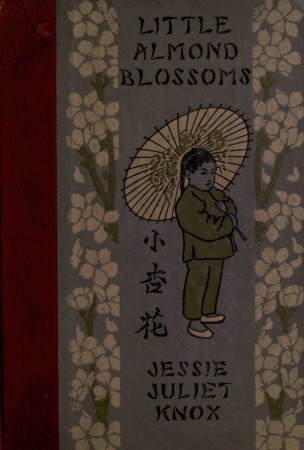
The Project Gutenberg eBook of Little Almond Blossoms: A Book of Chinese Stories for Children
Title: Little Almond Blossoms: A Book of Chinese Stories for Children
Author: Jessie Juliet Knox
Release date: January 29, 2016 [eBook #51073]
Most recently updated: October 22, 2024
Language: English
Credits: Produced by Charlene Taylor, Chuck Greif and the Online
Distributed Proofreading Team at http://www.pgdp.net (This
book was produced from images made available by the
HathiTrust Digital Library.)
LITTLE ALMOND
BLOSSOMS
LITTLE
ALMOND BLOSSOMS
A Book of Chinese Stories
for Children
BY
JESSIE JULIET KNOX
With Illustrations from Photographs of Chinese Children
in California
BOSTON
LITTLE, BROWN, AND COMPANY
1907
Copyright, 1904,
By Little, Brown, and Company.
All rights reserved
Published October, 1904
Printers
S. J. Parkhill & Co., Boston, U. S. A.
This Book is lovingly Dedicated
to
MY MOTHER
CONTENTS
LIST OF ILLUSTRATIONS
IN THE LAND OF THE DRAGON
Little Almond
Blossoms
IN THE LAND OF THE DRAGON
CHUNG GOY ran as fast as his little sandals would permit, up the narrow flight of steps which led to the Chinese restaurant, and out on the balcony, where a crowd of Chinamen were watching for the great Procession of the Dragon. His little legs were encased in pale green silk trousers tied at the ankles, and his lavender shom (blouse) gleamed in the light of the many dragon lanterns which were swaying in the night breeze. His hair was in a long queue, and on his head he wore the little round black cap of the Chinese, with a button on top.
Chung Goy was so afraid he would miss seeing the dragon. He had never seen it as yet, for he was not so very old, and now that the long-expected moment had come he fairly trembled with excitement.
His ho chun (father) was on this balcony, which was near their home, and he hurried to nestle up to him, as it was cold, and the wind was always blowing in San Francisco.
It seemed as if the procession would never come; he grew tired watching so many people pass, and perhaps the fumes of the opium his father was smoking got into his brain; but, at any rate, the first thing he
knew he saw a great squirming thing approaching him.
It was spitting fire from its eyes and mouth, and at first he felt afraid. Oh, what a dreadful monster! it would surely devour him. He heard himself saying: “Velly bad snake—I no likee; go ’way! I ’flaid.” And then he heard a voice like the muttering of thunder, and the voice came out of the dragon’s mouth, and it was saying in the Chinese language: “Samen jai (little boy), I have come to take you to Dragon Land. Slip away from ho chun, and fly with me.”
“Oh, no!” gasped the trembling boy, “I velly much ’flaid the big dlagon eat me up.” And then the dragon spoke again, but this time his voice was as soft and sweet as music, and the fire no longer came from his eyes and mouth. He had such a kind look on his face too, and spoke in such a persuasive tone, that little Chung Goy ceased to be afraid, and slipping from his father’s arms he ran down the narrow steps again, and out into the street, climbing up on the big dragon’s back. He saw lots of other Chinese boys he knew, doing the same thing. He held on tightly, for the dragon went in such a squirming way that he was afraid he would fall off, and he held on to his little silk cap, too, as the dragon’s speed increased, for it was his best one, and he did not want to lose it.
Oh, this was jolly! He had never thought he would ever ride on a dragon’s back. What a lot he would have to tell his mo chun (mother)
when he reached home. It was a good thing mo chun did not know it now, he thought, or she would be “velly much ’flaid.”
After squirming through all sorts of queer countries, the big dragon stopped so suddenly that they all fell off his back, and down his slippery sides. Chung Goy rubbed his eyes and looked around him. Oh, how funny! There were just thousands of dragons of all sizes, and this beautiful place was their home. They all had such kind faces, and spoke in such a gentle way, that no one could feel afraid. There were great groves of trees, all full of the tiny Chinese mandarin orange. Chung Goy just loved those “ollanges,” but he had never before picked them from a tree, as his ho chun had bought them from the street-stands in Chinatown. There were trees of lichee (nuts), and long tables just filled with Chinese candy, delicious preserved ginger, watermelon seed, and all those good things so dear to a boy’s heart.
It was night, but the trees were so full of the great dragon lanterns that it made it almost as light as day, and there were no dark corners anywhere. There was a dragon orchestra under one of the trees, playing the loveliest Chinese music. The shrill piping of the flageolets and the beating of the “tom-toms” were indeed beautiful to the ears of Chung Goy and his friends. It looked too funny for anything to see dragons holding the different instruments with their claws. The Chinese children all marched to
the music in a row, holding each other by the queue.
Chung Goy had never had so much fun in all his little life as he was having now. Just as he was beginning to feel hungry there appeared before his gaze a very long table, just filled with everything a child could possibly want, and all served by cunning little dragons. There were such dainty little China cups without handles, and in them the most delicious chah (tea).
Everybody giggled all the time, in their funny little Chinese way, and no one told them to stop.
While they were sitting at the table the dragons brought them each a big basket of fireworks. Now a Chinese child is even more fond of fireworks than an American child, and so they all kicked up their little sandals with delight, and after each one had been given a lighted Chinese punk, they began to pop them, and oh, what fun it was! There was a delightful noise, with so much popping, and the odor of the punks was most pleasant to their little Chinese noses. It really seemed as if the more they popped, the more they had left in their baskets.
Finally, the big King of the dragons said he must take them home now, or he would not be back in time for the parade, and it would never do to disappoint the people. So each one was allowed to keep his basket, and they squirmed away again, until at last they entered the narrow streets of Chinatown, with its rows of dragon lanterns, and its odor of incense everywhere. Once more Chung Goy climbed the narrow steps, and crept into the arms of ho chun, who had not noticed his absence, and he arrived just in time, for just then there was a great noise of “tom-toms,” and crowds shouting.
The streets were aglare with a strange red light, and looking down he saw the familiar form of the King Dragon, which was spitting fire from its eyes and mouth; but this time little Chung Goy did not feel afraid, for he knew—he knew.
TWO LITTLE CHINESE SISTERS
ONE day during the Chinese New Year, when the sea breezes blew softly through the narrow, blossom-lined streets of Chinatown, and swayed the great red dragon lanterns to and fro, Poon Chew and her little sister, Poon Yet, decided that they would take a walk through the streets, and have a look at all the beautiful things displayed in the windows. Their mo chun had dressed them up in their very best silken robes,—robes she had made for this very week,—and they made a pretty picture as they started out under their gay umbrella. Their blouses were of pink silk, and their trousers of pale lavender. They wore gay head-dresses, and were indeed beautiful to look upon. They would never have started out alone if the little mo chun had not been so busy making the great New Year cake, which was to be served with tea to her guests of the New Year.
“Let’s go see Sai Gee,” said Poon Chew.
“All light,” replied the little sister.
Sai Gee, a little-footed playmate of theirs, lived just a few doors from them, and they had no difficulty in finding her home. Sai Gee was also dressed up in her gayest attire, but her feet were too small to find much enjoyment in running around with the children whose feet were of the ordinary size. But she could
entertain them, anyway, for Sai Gee could play the flute.
It was really wonderful. She sat upon a stool, over which an embroidered robe had been thrown, and played to them. Her hair was done in a coil back of her right ear, and her little brown face was sweet and wistful as she brought forth from the flute the most wonderful sounds. Sai Gee’s father was very wealthy, and so the little one had everything that money could buy. Poon Chew made up her mind right then that she would ask her father to buy her a flute. Then Sai Gee brought forth some tiny cakes, made of powdered nuts, and some tea, and preserved watermelon; and for each of the little sisters a big slice of New Year’s cake.
“My! but we have good time. I likee make New Yeah call, like mo chun—we go now; good-by,” said Poon Chew.
“Let’s look in window,” the big sister said; and of course the little one, having perfect confidence in Poon Chew, gladly followed, the soft little hand clasped in that of the sister. Oh, the wonderful things they saw! The streets looked like a garden, with the rows of almond blossoms and China lilies, and on every balcony swung in rows the immense dragon lanterns.
They stopped awhile—they thought it only a few minutes—to watch some boys playing a New Year’s game, and then passed on by the stores, where the smell of the good things made them very hungry.
“Oh, how nice the loast pohk (roast pork) smell! I velly hungly,—we go home pletty soon,” said the older sister.
“Yes, we go home pletty soon,” echoed Poon Yet.
The little feet were growing tired, for they had never before been on the streets alone, and they wanted to get all the pleasure they could out of it. How they did wish they had brought some money, as they looked longingly at the great heaps of candied cocoanut and ginger on the street-stands. Their eyes must have said so, for just as they were gazing at the dainties with longing eyes a richly-dressed Chinaman came by, and the first thing they knew he was saying: “You likee candy, ne jai?” (little girl).
It startled them at first, but when they looked up and saw what a kind face the man had, they did not feel afraid, but replied: “Yes—we velly hungly—we no bling money; we catch ’em plenty money at home.”
The man laughed good-naturedly, and having bought them a large package of candy, started on. After they had eaten some of it they noticed the growing darkness. Could it be possible that night was coming on? They had not thought of that; it had seemed so bright when they started, and it did not seem as if they could have been gone long.
Meanwhile, what of the little brown mother at home?
When she finished her cake she called her children. She had made a little cake just for them, and she wanted them to come and eat it.
“Poon Chew! Poon Yet!” she called; but no sound came back through the silence.
“Little one—ne jai, come to mo chun!” No reply.
With wildly beating heart she rushed through the tiny rooms and out to the narrow pavement. She hailed a passing policeman, and in faltering Chinese told him that her little ones were lost, described the pretty clothes they wore, and all the while her heart was wrung with a nameless fear. What would life be without the soft little arms about her neck?—the patter of the little sandalled feet?—the sound of the shrill little voices at play?
This policeman told others, and they were all searching for the two children, who were out making New Year’s calls.
And it grew darker. Poon Chew trembled, as she realized that they were lost. She did not know which way to turn. Some men were lighting the big dragon lanterns on the balcony opposite, so it was really night.
“Oh, little sister, we are lost! I forget; I no ’member the way home. What will we do?” she moaned. She had no idea what direction her home was in, and her eyes were filled with tears; but now through the tears she saw some one approaching. It was—oh, joy! the old nurse Suey, leading the richly dressed little Sai Chong, brother of Sai Gee.
She was greatly surprised when she saw the children so far from home,
and they clung to her neck, weeping and laughing by turns. “Take us home—take us home;” they cried. They had walked so far and were so tired that she got a Chinaman who was standing by to take them all home in his wagon. When they arrived, they found the little mo chun in the greatest distress. She was very much astonished as she saw them all tumble out of the covered wagon, and they all cried and laughed, and never did the little mother receive so many kisses; and four little brown arms clasped her neck all at once, and the little sisters were so very sorry to have been so naughty that they said:
“Mo chun, beautiful cherry blossom—we neveh, neveh make New Yeah calls again without you.”
THE LITTLE HIGHBINDER
IT was the one desire of little Sing Lee to be a highbinder. It must be a fine thing, for his father was one, and so it must be good. It was true he did not have a very definite idea of just what it meant to be one, but he knew this: his father belonged to the Hip Sing Tongs, an order of highbinders in San Francisco, and they were men who kept their promises. At night as he lay on his hard bamboo couch, with the fumes of opium thick around him, he could hear ho chun talking in a low tone to a crowd of men, who were all of the same order of highbinders as his father. “There is Chong Sing,” they were saying; “he has told some of our secrets to a white devil, and he must die; the joss frowns upon him.”
This sounded very discouraging for Chong Sing, and little Sing Lee felt sorry for a moment, for he remembered that one day this same Chong Sing had spoken kindly, and had given him a three-cornered package of lichee (nuts) and candy. He could even yet taste the delicious strips of candied cocoanut, and the dainty citron. Chong Sing had said he would bring him some more another time, and now—he was to die. If he died, perhaps no one else would bring candy or speak a kind word.
Little Sing Lee lay trembling in his bed as they planned the murder of his friend. What could he do? He was only a little boy, and—he had thought to be a highbinder when he was a big man like ho chun; and if he was going to be one, he must conquer all tenderness of heart,—and yet, this man had been kind to him, and it might be that he had little boys of his own at home.
“If I was a highbinder,” he said to himself, “I no kill nice men who bling children candy; I kill bad men.”
Next day he confided his thoughts to mo chun, but she replied: “No! no! my little boy. No use—Hip Sing Tongs heap big—heap stlong (strong). They no care if Chong Sing give lichee; they kill him, allee samee.” But little Sing Lee did not forget. He still thought, however, that it must be a fine thing to be a highbinder, if only one just killed the bad men—men who did not give candy to lonely little children and speak kind words to them. So that very day he went around through Chinatown and organized a society of highbinders among his boy friends.
He succeeded in getting four other boys to join, and they all took their oaths very solemnly. Now that they were really highbinders they must begin to kill somebody. Not ever having killed anybody, they did not know how to go about it, or on whom to begin.
Mo chun noticed the boys carrying on a great deal of private conversation, and she wondered what it could be; so that night, after Sing Lee had burned his punks before the god, and had eaten his bowl of rice with chopsticks, she said to him: “What for you allee time whisper? You no eat—you no sleep; tell me! what you think?”
Mo chun was such a dear little brown mother, and he loved her so, that when she looked at him with her slanting velvet eyes, and asked him to tell her, he just had to, that was all. He was not afraid of her, for Chinese mothers do not punish their children, and anyway—the secret was too good to keep, so why not tell her? She never laughed at him like ho chun. So he crept close up against the warmth of her silken blouse—he could feel her tender mother heart beating beneath it—and he gazed at the polished hair and the pretty mouth as he talked.
“Mo chun—I likee be like big man—like ho chun. I get boys togeddeh; we be highbinders, allee samee ho chun.
“Ho chun velly fine man; he kill heap of people; I likee do that, but, mo chun, my beautiful blossom, I no likee ho chun to kill Chong Sing; he heap good—he bling me candy.”
“What you mean, little boy? How you sabe (know) ho chun kill Chong Sing? Speak!—tell me!”
“Oh, mo chun of mine, I no sleep at night; I no can help—I hear ho chun say Chong Sing must die. I velly solly; he heap good man—I likee.”
Mo chun was sorry too, for she knew him to be a good man, but she knew there was no use to say anything. If they had decided upon his death there was nothing to be said.
The next day Sing Lee set forth with his little band of highbinders to find some one to kill. Mo chun had said: “You must not really kill them, you sabe, just pletend kill.”
Suddenly, as they marched on, a bright thought struck little Sing Lee. “Suppose I tell Chong Sing?—he live near—I know the way, and—he was kind to me.”
He then confided his secret to his trusty men, and they marched on, through the narrow streets, till they came to the home of the good Chong Sing—the man who was to be killed.
It was dark and gloomy where Chong Sing lived, and his two little children, trudging homeward through the narrow alley-way, arrived at the door just before the little highbinders. Sing Lee could see their ho chun as he greeted them, and they clasped their little arms about his neck, while he gazed at them with love in his eyes—and yet—he must die.
Sing Lee’s mind was made up. He marched boldly to the door, and stood under the big Chinese letters which meant happiness to all who should enter there, and he could even smell the incense ever kept burning for the god,—the god who had given no warning to Chong Sing. With a soft sound of sandalled feet the doomed man appeared at the door. His face was beaming with good nature. He carried his little girl in his arms, and by his side stood his son, a manly little fellow.
With his heart throbbing as if it would burst, Sing Lee advanced in front of his men, saying, “I am Sing Lee! You were kind to me once; these are my men—highbinders—” (at this Chong Sing smiled in a very amused way, but the smile was changed to something else when the boy went on) “I no forget you; I velly lonely—you bling me candy; you say good word to me, and now—I pay you back.
“No one know I come to tell you; the Hip Sing Tongs they say you must die. They say you tell seclets to white devil: I no know, I no care, but you good man; I likee save you. I want you to go ’way, acloss the water. You go quick!—I velly solly—good-by.”
The little highbinder did not kill any one that day; he was thinking of a pale, set face, and two little brown arms clasped about a father’s neck. Never mind! he would kill some one next week, or “to-mollow.” Some one who was bad—who did not bring candy.
There was great surprise among the Hip Sing Tongs when their victim was not to be found. Such a thing had never happened before, and they could account for it in no way.
Of course they did not think to ask the little mother or the embryo highbinder. And while they were wondering and searching, away over across the blue sea were the Chinese father and mother, and brown, happy children—safe.
HOW AH CHEE FOUND SANTA CLAUS
IT was Christmas Eve. In the big Chinatown of San Francisco little Ah Chee and her brother Ah Gong were eagerly drinking in the words of the old Chinese story-teller as he sat on the streets and told stories for any one who cared to listen and to give him a few pennies. It was getting late, and the sea wind blew roughly through the narrow streets, and made the dear little Chinese noses so cold; but then Ah Chee did not mind, for the old man had been telling them the most wonderful tale,—something about Christmas—the ’Melican Clismas—and he had said something about it being a little Baby’s birthday, and that almost everybody in the world celebrated it. She pondered over it, in her vague little Chinese way, and thought it very queer that they should make such an ado about just a baby.
The old man did not understand it very well himself, but he remembered that when he used to be cook for an American family once, a long time ago, the children had hung up their stockings on this particular night, and had some kind of a tree with beautiful things on it. They called it a Christmas tree, he remembered, and how pleased he had been when there were found to be some packages for him on that same tree. They had told him then that Santa Claus had put them there, and he could never forget the thrill of surprise and pleasure he felt at the thought that this mysterious Santa Claus, whoever he might be, should have remembered him when he had never even seen him.
And now the story was finished, and the old man went on down the street, and entered a shop where he would smoke opium and forget all about Christmas. But little Ah Chee did not forget. She sat scraping her little sandals against the pavement, thinking it all over. Her mo chun was upstairs in the poor little rooms, sewing by the dim light which struggled through the lattice, and wishing that she were not so poor, for she had to work very hard, and often they did not have enough to eat. The rice was almost gone now, and there were only a few leaves of chah (tea) left.
A Chinese mother loves her children very dearly, and always tries to gratify their every wish; so it made her feel badly to think she could not give them embroidered shoms (blouses), and sandals, instead of the plain dark ones they always had to wear. The children had had their rice early to-night, and had gone out in the street to play “hawk catching young chickens,” they said.
She did not know the story-teller had been there, but she would not have objected if she had known, for he was a kind old man, and if she could have spared the time from her sewing she also would have listened; for a Chinese woman is like a child in many things. She had heard some one say this was the American Christmas, but to her all days were alike,—just work, that was all.
Meanwhile Ah Chee was filled with a curious longing to run away from the picturesque Chinatown, just for a little while, to see if she could not find out something more about this wonderful Santa Claus. She would give anything in the world to see him, only—she had nothing to give. All the trinkets the poor little child owned were a mud pagoda and a bit of painted wood she called a doll.
Once during the Chinese New Year her dear mo chun had taken them for a walk outside of Chinatown, and she had seen the wonderful shop-windows of the Americans. How different they were from the Chinese! She had also seen some beautiful things that her mother had said were dolls. She had never forgotten it, and had even dreamed of holding one of these wonderful things in her arms. But it could only be a dream,—no such happiness was for her,—for it was all they could do to get enough rice to eat, without buying American dolls.
“Ah Gong!” she cried, fired with a sudden and bold resolution, “Ah Gong! you likee take a walk with sisteh?”
Ah Gong was at that moment busily engaged in eating a dried herring, which the kind-hearted owner of the shop next door had given him; but that fact did not in the least interfere with his desire to see new sights. His sparkling Chinese eyes fairly danced out of his head at the mere prospect.
“Yes, I likee,” he replied, with his mouth full of herring. “What foh you takee walk? Where you go?”
She took hold of the end of his queue, and pulling him toward her, whispered in his ear the magic words: “We go see Clismas! we catch ’em Sanny Claw.”
This announcement was almost too much for Ah Gong, and his little celestial brain could not take in so much happiness all at once, so he stared at her a moment until he had swallowed the bite of herring, and then gasped out: “But Ah Gong ’flaid Sanny Claw spit fieh (fire) on us; allee samee heap big dlagon.”
Ah Chee had to giggle at this, with her ever-ready Chinese giggle, but putting her long sateen sleeve round him in a protecting manner she answered him in the kindest tone: “Oh, no! ’Melican Sanny Claw heap good man—allee samee joss; we go find him; come along!”
So they started in the growing darkness, with the sweet faith of a child in their hearts. They knew not where to go, nor which way to turn, but only had the one thought—just to find the ’Melican Clismas. When they had disappeared, the shopkeeper believed they had gone home for the night, and gave them no more thought; the tired mother upstairs supposed that they were in the shop, as they often went in there and played until late, because it was bright, and the man was kind to them.
They knew they could not find Santa Claus in Chinatown, so the first thing to do was to get out of the Chinese section, and into one of the great thoroughfares of the city. On they went, past the joss house, where they had once been with their mother to burn pretty candles before the joss, and they looked up with childish admiration at the big round lanterns which hung on the balcony, and tried to read the Chinese letters at the door. Sometime, perhaps when the moon festival came, or the Chinese New Year, it might be that mo chun would take them again, if she had money enough to buy any more pretty candles. The good joss liked pretty candles.
There were many lovely things to be seen in Chinatown, but to-night they were going somewhere else. It did not occur to them that they might get lost, or that their dear mother might be uneasy. They were too much excited over what the story-teller had told them to worry over anything, so they toddled on, their hearts full of expectation. They had no idea what Christmas would be like when they should find it, or whether it would be alive, but they could wait. How very queer it seemed when they had left the narrow crooked streets of Chinatown, with its smell of incense and its balconies and lanterns, and found themselves on a great wide street full of people, so full of people that the heart of the motherly little Ah Chee almost failed her, and she clasped her arm protectingly around the body of her fat baby brother, and whispered words of encouragement in his little brown ear.
Many people, in the hurry of their Christmas shopping, gave a passing thought of wonder that the two little Chinese children should be in the dense crowd alone, but thought perhaps their parents were following them; and so, with a smile at the dimpled tea-rose face and sparkling eyes of the Chinese maiden they passed on, to the brightness and good cheer of their own comfortable homes. There were so many street cars, with bells clanging, carriages dashing past, and so much noise and confusion that they were both frightened. Even the brave little heart of Ah Chee beat violently under the padded warmth of her dark blue blouse, and for a moment she almost feared they would not find Santa Claus. But just then a voice said something, and a big policeman picked her up, and smiled at her, saying: “Where are you going, little one? Where is mamma?”
The timid little voice of Ah Chee replied, “Mo chun, she at home; can you tell me,” she eagerly questioned, “where Sanny Claw is?”
“Why, yes, to be sure; he is in there.”
In there,—could it be possible they were so near the wonderful being and had not known it?
They saw a very large store, with great crowds of people, big and little, jostling each other in their efforts to
get in. So all these people were hunting Santa Claus. Ah Chee in her childish eagerness slipped, and would have fallen, had she not been caught in some one’s arms. The arms belonged to a richly dressed lady, who looked down with indifference at the pathetic picture of the two little children, and was about to draw her skirts aside and pass on, when the little Christ-child must have put a thought into her worldly heart, for she turned and looked again into the wistful little faces.
They must have seen some sympathy in her face, for Ah Chee said hesitatingly, “Oh, if you please, we likee see Sanny Claw; could you show us?”
For a moment she hesitated. What would her aristocratic friends think if they saw her taking two dirty Chinese children into the elegant shop?
“Why didn’t your father bring you?” she said.
“My fatheh—he die; we no got fatheh.”
Something in the pleading little face, and the quiver in the little red mouths, and the despair in the great oblique eyes must have touched the woman’s heart beneath all its worldly coating. With sudden decision she grasped the two little trembling hands, and throwing all her old false pride to the Christmas winds, stepped boldly into the shop, where all was elegance and warmth and light and beauty.
To her it was an old story. She had long since lost the spirit of Christmas, and the old legend of Santa Claus brought no ecstasy to her, for there were no children at her home to hang up their stockings. The little Chinese children were all eyes now, and forgot their poverty and the bleak darkness of their home as they looked for the first time at all this sparkling beauty. At last they found him—the “ ‘Melican Sanny Claw!” To the lady it was nothing,—such an old, old story,—but to the two little Chinese children it was the perfect and blissful realization of a dream, the one beautiful event in two little barren lives. And now—they actually stood face to face with Santa Claus. Little Ah Gong was glad to see that he was not spitting fire, like the Chinese dragon, and felt quite reassured.
Santa was standing by a sparkling tree all covered with pretty candles, such as they had burned for the joss, and on top of the tree was a great shining star.
“What is that?” said Ah Gong, pointing with his chubby forefinger to the star.
“That? It is the star of Bethlehem,” said the pretty lady, with a queer catch in her voice, while for the first time in her life she realized a little of the true meaning of the star.
They did not understand, and clung closer to each other as they neared the wonderful Santa Claus. He must have come from a very cold country, for he was dressed all in fur, from head to foot, and had rosy cheeks and long white whiskers.
“See,” whispered the little girl to her brother, “it is the heap good ’Melican Santa; do you see him?”
“Yes—yes—I see him; I no ’flaid now,” he said, edging closer to him.
The beautiful lady was whispering to Santa Claus—actually whispering. What a brave lady she must be, and they wondered vaguely what she could have to say to him. And, wonder of wonders! Santa came right up to them, and putting out his big warm hand, clasped the trembling little cold hands of the two children, and said: “What do you want me to bring you?”
Was there ever anything so wonderful? That he should notice them, and speak to them? Their eyes almost danced out of their heads at this unexpected question. It had never occurred to their innocent little hearts that he would bring them anything, because they were only Chinese, and the Chinese did not believe in Santa Claus; they only believed in the Moon Rabbit.
As he spoke, visions of wonderful things flitted through their minds,—things they dared not name. The lady said to Ah Chee: “Tell him, dear; he would like to give you something.”
Before the child thought, she had spoken the words: “Could you—oh, could you—bling me—a—doll?”
“A doll? Why, yes; of course you shall have a doll,” he said, as the lady looked at him in a meaning way. And then all the boy in little Ah Gong’s repressed nature broke forth, and he hurriedly gasped: “A knife—I likee knife.”
The lady smiled at Santa again, and he said: “And what else, my little man?”
“I likee led (red) wagon—”
“No—no—” whispered the timid sister, “that too muchee—Santa no likee give so muchee.”
Some more mysterious whispering went on, and Santa produced from his fur pocket a little book and pencil, and wrote down a great many things. Ah Chee did not know what he could be writing—perhaps a letter to his wife at the North Pole, but she did not care; she only knew she was going to get what she had longed for all her little lonely life,—a doll,—and her motherly heart warmed and thrilled at the happy thought.
“And what would your mamma like?” he was saying now.
“Oh,—my mo chun; let me see,—I think she likee wahm (warm) shom (blouse) and—that’s all light; you must not give too muchee; you so good—you so good,” she sobbed.
Her little starved soul was running over with the joy of Christmas—the new joy, which she had never before tasted.
“You shall not be forgotten, neither shall your mother. Good-by, and merry Christmas!” he said; and then, after showing the excited children all the beautiful toys in the shop, the lady went out with them once more into the crowded streets.
The air was full of Christmas cheer, and every one was smiling and happy, as they hurried along with their arms full of mysterious packages and called out Christmas greetings to each other.
“Do you know where you live, children?” the lady now said.
Fortunately Ah Chee remembered the number and place of their home, so the lady put them into a carriage and seated herself beside them. They waited in the carriage awhile, till a man came out of the shop and placed many bundles of various shapes and sizes in with them. It was so dark they could not see them, but at last, after rattling over the cobblestones for a time, they saw that they had entered Chinatown, and once again the odor of the incense greeted them.
Soon the carriage stopped right in front of their door, and they could see the pale face of mo chun peeping from the lattice.
The lady told the driver to wait, while she went with the children up the dark stairway. Mo chun was never so surprised in her life as she was when the excited children rushed in, pulling the lady after them. She had begun to be frightened, and was just going down to the shop to see what was the matter, when they arrived, breathless and happy. She was very much embarrassed to have the rich and beautiful lady come into her poor little home, but almost as much excited and pleased over the gifts as the children, and to see the purse of gold that Santa had brought her. She had not dreamed there was such kindness in the whole big world, or such plenty and happiness.
It was enough to cure any amount of heartaches to note the rapture in the eyes of Ah Chee as she hugged the wonderful doll to her motherly little heart, and to see the boyish delight with which Ah Gong displayed his knife and red wagon. There were many other gifts, yet they had never even thought there were such things in the world. Mo chun did not know how to thank the kind lady, who had, with one gift from her jewelled hands, lifted her and her children from poverty to comfort. She could only make her a cup of delicious Chinese tea, and thank her in her pretty little Chinese way; but in her heart she thanked her, and the beautiful lady understood, and for the first time in her life realized the true meaning of Christmas.