
WeRead Powered by ReaderPub
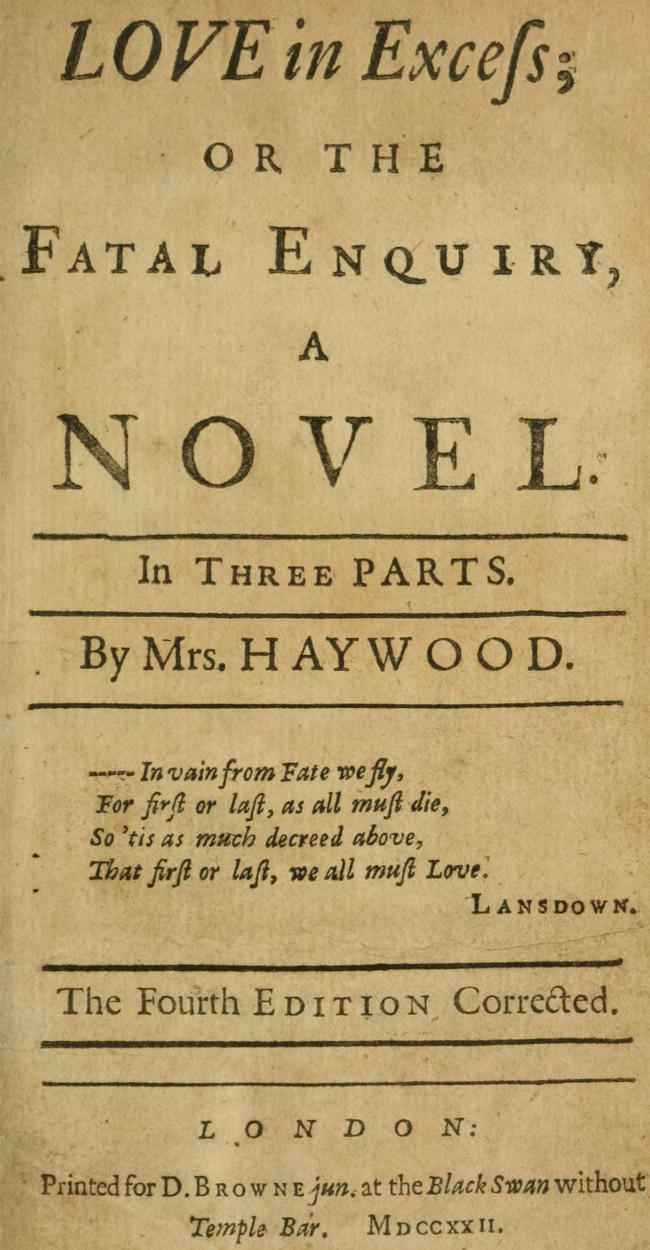
Love in Excess; or, the Fatal Enquiry / A Novel in Three Parts cover

Love in Excess; or, the Fatal Enquiry / A Novel in Three Parts

Chapter 3: VERSES Wrote in the Blank Leaf of Mrs. Haywood’s Novel.
Open in WeRead

Explore more books like this:

About This Book

The narrative follows Count D’Elmont, a celebrated soldier returned to court whose easy charm attracts many admirers but masks an even, noncommittal temper that frustrates would-be lovers. A proud heiress named Alovisa becomes obsessively attached, alternating between jealousy and cunning as she plots to elicit proof of his passion. Interwoven episodes of balls, billets, letters, and domestic encounters expose schemes, misunderstandings, and social posturing, while other romantic entanglements and tests of fidelity reveal pressures of reputation and female agency. The plot advances through rivalries, deceptions, and escalating consequences across three parts, examining how excess of desire and artifice shape personal ruin and reconciliation.

VERSES
Wrote in the Blank Leaf of
Mrs. Haywood’s Novel.

Of all the Passions given us from above,
The Noblest, Truest, and the Best, is Love;
’Tis Love awakes the Soul, informs the Mind,
And bends the stubborn Temper to be kind,
Abates the Edge of ev’ry poi’nant Care
Succeeds the Wishes of the trembling Fair,
And ravishes the Lover from Despair.
’Tis Love Eliza’s soft Affections fires,
Eliza writes, but Love alone inspires;
’Tis Love, that gives D’Elmont his manly Charms,
And tears Amena from her Father’s Arms;
Relieves the Fair one from her Maiden Fear,
And gives Melliora all her Soul holds dear,
A generous Lover, and a Bliss sincere.
Receive, my Fair, the Story, and approve,
The Cause of Honour, and the Cause of Love;
With kind Concern, the tender Page peruse,
And aid the Infant Labours of the Muse.
So never may those Eyes forget to shine,
And bright Melliora’s Fortune be as Thine;
On thy best Looks, an happy D’Elmont feed,
And all the Wishes of thy Soul succeed.