
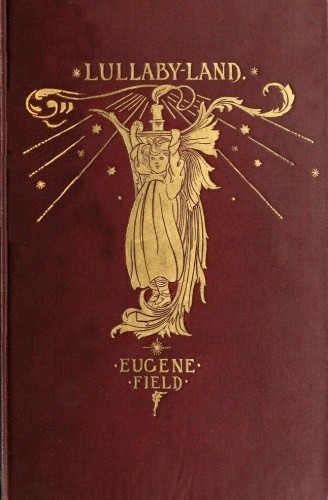
The Project Gutenberg eBook of Lullaby-Land: Songs of Childhood
Title: Lullaby-Land: Songs of Childhood
Author: Eugene Field
Editor: Kenneth Grahame
Illustrator: Charles Robinson
Release date: June 9, 2017 [eBook #54874]
Most recently updated: October 23, 2024
Language: English
Credits: Produced by Chuck Greif, MWS, for Emmy and the Online
Distributed Proofreading Team at http://www.pgdp.net (This
file was produced from images generously made available
by The Internet Archive/Canadian Libraries)
|
(In certain versions of this etext [in certain browsers] clicking on the image will bring up a larger version.) (etext transcriber's note) |
COPYRIGHT, 1892 AND 1897, BY JULIA SUTHERLAND
FIELD. 1892, BY MARY
FRENCH FIELD.
1893 AND 1894, BY EUGENE FIELD.
There is a sort of a garden—or rather an estate, of park and fallow and waste—nay, perhaps we may call it a kingdom, albeit a noman’s-land and an everyman’s land—which lies so close to the frontier of our work-a-day world that a step will take us therein. Indeed, some will have it that we are there all the time, that it is the real fourth dimension, and that at any moment—if we did but know the trick—we might find ourselves trotting along its pleasant alleys, without once quitting our arm-chair. Nonsense-Land is one of the names painted up on the board at the frontier-station; and there the custom-house officers are very strict. You may take as much tobacco as you please, any quantity of spirits, and fripperies of every sort, new and old; but all common-sense, all logic, all serious argument, must strictly be declared, and is promptly confiscated. Once safely across the border, it is with no surprise at all that you greet the Lead Soldier strutting somewhat stiffly to meet you, the Dog with eyes as big as mill-wheels following affably at his heel; on the banks of the streams little Johnny-head-in-air is perpetually being hauled out of the water; while the plaintive voice of the Gryphon is borne inland from the margin of the sea.
Most people, at one time or another, have travelled in this delectable country, if only in young and irresponsible days. Certain unfortunates, unequipped by nature for a voyage in such latitudes, have never visited it at all, and assuredly never will. A happy few never quit it entirely at any time. Domiciled in that pleasant atmosphere, they peep into the world of facts but fitfully, at moments; and decline to sacrifice their high privilege of citizenship at any summons to a low conformity.
Of this fortunate band was Eugene Field. He knew the country thoroughly, its highways and its byways alike. Its language was the one he was fondest of talking; and he always refused to emigrate and to settle down anywhere else. As soon as he set himself to narrate the goings-on there, those of us who had been tourists in bygone days, but had lost our return-tickets, pricked up our ears, and listened, and remembered, and knew. The Dinkey-Bird, we recollected at once, had been singing, the day we left, in the amfalula-tree; and there, of course, he must have been singing ever since, only we had forgotten the way to listen. Eugene Field gently reminded us, and the Dinkey-Bird was vocal once more, to be silent never again. Shut-Eye Train had been starting every night with the utmost punctuality; it was we who had long ago lost our way to the booking-office (I really do not know the American for booking-office). Now we can hurry up the platform whenever we please, and hear the doors slam and the whistle toot as we sink back on those first-class cushions! And the Chocolate Cat,—why, of course the cats were all chocolate then! And how pleasantly brittle their tails were, and how swiftly, though culled and sucked each day, they sprouted afresh!
It is an engaging theory, that we are all of us just as well informed as the great philosophers, poets, wits, who are getting all the glory; only unfortunately our memories are not equally good—we forget, we forget so terribly! Those belauded gentlemen, termed by our fathers “makers”—creators, to wit—they are only reminders after all: flappers, Gulliver would have called them. The parched peas in their gaily-painted bladders rattle with reminiscences as they flap us on the ears; and at once we recall what we are rightly abashed beyond measure to have for one instant forgotten. At any rate, it is only when the writer comes along who strikes a new clear note, who does a thing both true and fresh, that we say to ourselves, not only “How I wish I had done that myself!”—but also “And I would have done it, too—if only I had remembered it in time!” Perhaps this is one of the tests of originality.
Of course I am touching upon but one side of Eugene Field the writer. An American of Americans, much of his verse was devoted to the celebration of what we may call the minor joys which go to make social happiness in the life he lived with so frank and rounded a completion—a celebration which appealed to his countrymen no less keenly, that the joys were of a sort which, perhaps from some false sense of what makes fitness in subject, had hitherto lacked their poet—on that side at least. This, of course, was the fault of the poets. And though I spoke just now of minor joys, there are really no such things as minor joys—or minor thrushes and blackbirds. Fortunately this other aspect does not need to be considered here. I say fortunately, because it is not given to a writer to know more than one Land—to know it intimately, that is to say, so as to dare to write about it. This is the Law and the Prophets. Even that most native utterance, which sings of “the clink of the ice in the pitcher that the boy brings up the hall,” appeals to us but faintly, at second-hand. That pitcher does not clink in England.
In this spheral existence all straight lines, sufficiently prolonged, prove to be circles: and a line of thought is no exception. We are back at the point we started from—the consideration of Eugene Field as a citizen; of a sort of a cloud-country, to start with; and later, of a land more elemental. In either capacity we find the same note, of the joy of life. We find the same honest resolve, to accept the rules and to play out the game accordingly; the same conviction, that the game is in itself a good one, well worth the playing. And so, with no misgiving, he takes his America with just the same heartiness as his Nonsense-land.
The little boy who should by rights have been lost in the forest, by the white pebbles he had warily dropped found his way back safely to sunlight and to home; and to keep in touch with earth is at least to ensure progression in temperate and sweet-breathed atmosphere, as well as in a certain zone, and that no narrow one, of appreciation; the appreciation of our fellows, the world over; those who, whatever their hemisphere, daily find themselves pricked by a common sun, with the same stimulus for every cuticle, towards pleasures surprisingly similar.
KENNETH GRAHAME.
“Rub-a-dub!” it goeth;
There is one little dream of a big sugar-plum,
Of popguns that bang, and tin tops that hum,
And a trumpet that bloweth!
With laughter and singing;
And boats go a-floating on silvery streams,
And the stars peek-a-boo with their own misty gleams,
The fairies go winging!
They’ll come to you sleeping;
So shut the two eyes that are weary, my sweet,
For the Rock-a-By Lady from Hushaby street,
With poppies that hang from her head to her feet,
Comes stealing; comes creeping.
Around his tinkling feet the sunbeams play;
The posies they are good to him,
And bow them as they should to him,
As fareth he upon his kingly way;
And birdlings of the wood to him
Make music, gentle music, all the day,
When our babe he goeth walking in his garden.
Then the night it looketh ever sweetly down;
The little stars are kind to him,
The moon she hath a mind to him
And layeth on his head a golden crown;
And singeth then the wind to him
A song, the gentle song of Bethlem-town,
When our babe he goeth swinging in his cradle.
’Tis a pitiful sound to hear!
It seems to chill you through and through
With a strange and speechless fear.
’Tis the voice of the night that broods outside
When folks should be asleep,
And many and many’s the time I’ve cried
To the darkness brooding far and wide
Over the land and the deep:
“Whom do you want, O lonely night,
That you wail the long hours through?”
And the night would say in its ghostly way:
“Yoooooooo!
Yoooooooo!
Yoooooooo!”
(When I was a little tad)
That when the night went wailing so,
Somebody had been bad;
And then, when I was snug in bed,
Whither I had been sent,
With the blankets pulled up round my head.
I’d think of what my mother’d said,
And wonder what boy she meant!
And “Who’s been bad to-day?” I’d ask
Of the wind that hoarsely blew,
And the voice would say in its meaningful way:
“Yoooooooo!
Yoooooooo!
Yoooooooo!”
You’ll not believe it, though!
Yes, though I’m quite a model now,
I was not always so.
And if you doubt what things I say,
Suppose you make the test;
Suppose, when you’ve been bad some day
And up to bed are sent away
From mother and the rest—
Suppose you ask, “Who has been bad?”
And then you’ll hear what’s true;
For the wind will moan in its ruefulest tone:
“Yoooooooo!
Yoooooooo!
Yoooooooo!”
And taffy’s thick as peas—
Caramels you pick like berries
When, and where, and how you please;
Big red sugar-plums are clinging
To the cliffs beside that sea
Where the Dinkey-Bird is singing
In the amfalula tree.
And make merry all the day,
When there’s naught to put a damper
To the ardor of their play;
When I hear their laughter ringing,
Then I’m sure as sure can be
That the Dinkey-Bird is singing
In the amfalula tree.
And staccatos are so sweet—
His roulades, appoggiaturas,
And robustos so complete,
That the youth of every nation—
Be they near or far away—
Have especial delectation
In that gladsome roundelay.
Their lungs begin to crow,
Their hearts get light and lighter,
And their cheeks are all aglow;
For an echo cometh bringing
The news to all and me,
That the Dinkey-Bird is singing
In the amfalula tree.
To see your feathered friend—
And so many goodies grow there
You would like to comprehend!
Speed, little dreams, your winging
To that land across the sea
Where the Dinkey-Bird is singing
In the amfalula tree!
Off to the garden where dreamikins grow;
And here is a kiss on your winkyblink eyes,
And here is a kiss on your dimpledown cheek
And here is a kiss for the treasure that lies
In the beautiful garden way up in the skies
Which you seek.
Now mind these three kisses wherever you go—
So, so, rock-a-by so!
For he dances all night where the dreamikins grow;
I send him this kiss on your droopydrop eyes,
I send him this kiss on your rosy-red cheek.
And here is a kiss for the dream that shall rise
When the fumfay shall dance in those far-away skies
Which you seek.
Be sure that you pay those three kisses you owe—
So, so, rock-a-by so!
Don’t forget mother who loveth you so!
And here is her kiss on your weepydeep eyes,
And here is her kiss on your peachypink cheek,
Like a babe on the breast of those far-away skies
Which you seek—
The blinkywink garden where dreamikins grow—
So, so, rock-a-by so!
Side by side on the table sat;
’Twas half-past twelve, and (what do you think!)
Nor one nor t’other had slept a wink!
The old Dutch clock and the Chinese plate
Appeared to know as sure as fate
There was going to be a terrible spat.
(I wasn’t there; I simply state
What was told me by the Chinese plate!)
And the calico cat replied “mee-ow!”
The air was littered, an hour or so,
With bits of gingham and calico,
While the old Dutch clock in the chimney place
Up with its hands before its face,
For it always dreaded a family row!
(Now mind: I’m only telling you
What the old Dutch clock declares is true!)
And wailed, “Oh, dear! what shall we do?”
But the gingham dog and the calico cat
Wallowed this way and tumbled that,
Employing every tooth and claw
In the awfullest way you ever saw—
And, oh! how the gingham and calico flew!
(Don’t fancy I exaggerate!
I got my news from the Chinese plate!)
They found no trace of dog or cat;
And some folks think unto this day
That burglars stole that pair away!
But the truth about the cat and pup
Is this: they ate each other up!
Now what do you really think of that!
(The old Dutch clock it told me so,
And that is how I came to know.)