
WeRead Powered by ReaderPub
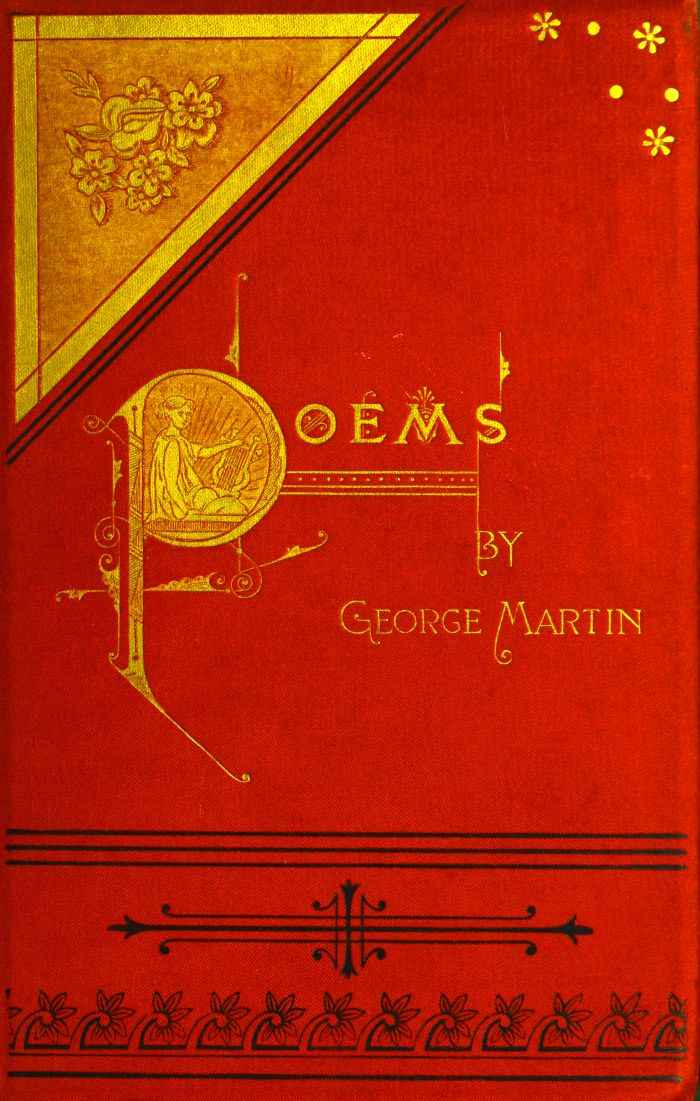
Marguerite; or, The Isle of Demons and Other Poems cover

Marguerite; or, The Isle of Demons and Other Poems

Chapter 12: THE SONG OF A GLORIFIED SPIRIT
Open in WeRead

Explore more books like this:

About This Book

A varied collection of lyric and narrative verse centered on a long romantic legend about a woman’s ordeal on a haunted island and its personal and moral aftermath, accompanied by shorter sonnets, ballads, and occasional pieces. Many poems draw on Canadian history and local scenes, offering meditative nature writing, urban sketches of Montreal and Ottawa life, winter and carnival scenes, elegies and civic tributes, and moral or humorous vignettes about everyday people. Themes of love, exile, faith, memory, and social concern recur across diverse forms and voices, blending personal reflection with regional colour and historic atmosphere.

THE SONG OF A GLORIFIED SPIRIT

A youth knelt down by a new made grave Unseen by the world, and wept;— A sister whose beauty no love could save Beneath in the darkness slept.
’Twas a calm, sweet eve, and on hill and plain The summer had lavished her dower; But the full sad heart of the youth could gain No solace from sun or flower.
The big warm tears he wiped from his cheek, As he said with a struggling faith, “O God, if I could but hear her speak!— My sister! now thine, O death!”
In silence and sorrow he lingered long, And just as he rose to depart, In the heavens was warbled this saintly song, Which fell like a balm on his heart:
“Beautiful are my walks in the sky, Beautiful, beautiful! Here the amaranths never die, Here the sweet winds murmur and sigh, Beautiful, beautiful!
“Joyfully glide my golden hours, Joyfully, joyfully! Here the leaves of the hyacinth flowers Whisper around my love-lit bowers: Joyfully, joyfully!
“Lovingly smile my comrades here, Lovingly, lovingly! All the bright shapes of this blissful sphere Tell how that each unto each is dear, Lovingly, lovingly!
“Merciful is my Father, my all, Merciful, merciful! Here the white-cheeked lilies, so tall, Sing in their place by the jasper wall: Merciful, merciful!”

Note.—The origin of this lyric may possibly be of interest. A young friend had lost an only sister and, in an outburst of passionate sorrow, had exclaimed “O God if I could hear her speak.” Brooding over his sorrow, I retired to rest one evening and without attempting to embody my sympathy in words, I fell into a quiet slumber which lasted until day light. On waking, I had a vivid recollection of having seen in dream the youth kneeling by his sister’s grave and of having heard the words of his sister’s spirit chanted from the empyrean with inexpressible sweetness as if responding to his yearning exclamation. The words I heard in my dream I wrote down immediately lest their exactness and coherency might be lost. I was not at that time aware that Kubla Khan originated in a somewhat similar manner. As the occurrence, if standing alone, might seem difficult to believe, I refer to Coleridge’s poem merely to justify in some degree the publication of such a freak of the imagination.