
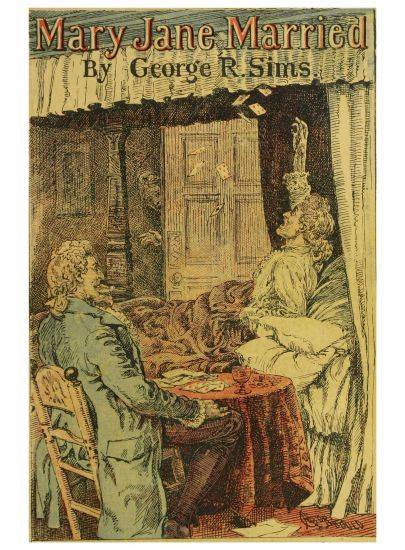
CHAPTER V.
THE LONDON PHYSICIAN.
Our hotel being just a nice driving distance from London, and a very easy and convenient distance by train, and the village being really very quaint and pretty, and nice scenery and walks all round us, we made up our minds that, if we were lucky, we should soon be able to make it a staying-place—that is, a place people would come and stop at for a day or two, or perhaps a week, who wanted a little fresh air and not to be too far from town. We had every accommodation, and very pretty bedrooms, and private sitting-rooms, and all we wanted was the connection—the last people never having worked it up as an hotel, being satisfied with the local trade and the coffee-room customers, of which there were a good many in the summer.
Harry said, as soon as we had put our nice new furniture in and done the rooms up a little, that he thought we ought to advertise. The refurnishing was very nice, but it cost a lot of money; and, as we paid for everything in cash, of course we had to buy useful cheap things. I had to select the things, as Harry said he was no good at that; so we went to London together, and looked over one or two big furniture places.
It was a great treat, but, of course, nothing was very new to me, as I had lived in good houses and seen lots of beautiful furniture and had the care of it—and a nice bother it was to keep dusted, I can tell you, especially in London, where directly you open a window the dust and dirt seem to blow in in clouds, and if you don’t open a window it gets in somehow. It was the ornamental carving, and the chairbacks and things with fret-work, that used to be the greatest worry. Fret-work it was, and no mistake, and I used to fret over it, for it would take me hours to work my duster in and out and get the things to look decent.
Harry had never seen such beautiful things as we were shown before, and he kept standing and staring at them really with his mouth almost open, and it was as much as I could do to get him to leave the beautiful things and look at the ordinary ones that we wanted.
The salesman—a very nice young man—when he saw Harry admired the things, kept showing us cabinets and suites and bookcases that were really grand. “How much is that wardrobe?” said Harry, pointing to a very fine one. “Two hundred and forty pounds,” said the salesman; and I thought Harry would have dropped into a thirty-pound armchair that was just behind him.
He whispered to me that it seemed wicked for people to give all that money for a wardrobe just to hang a few old clothes up in.
“A few old clothes?” I laughed, and wondered what he would have said if he could have seen the number of dresses some ladies have, and known the prices they pay for them. But I didn’t begin talking to him about that, because I wanted to get our business done and get back again home, and he would have liked to stop there all day looking at the things and talking to the nice salesman.
We chose what we wanted—a few simple things, cheap but pretty, and in the very newest style, and Harry gave a cheque for them. I can’t tell you how proud I felt as I stood by and saw my husband take out his cheque-book and flourish the pen round; and the way he said, “Let’s see, what’s the day of the month?” was really quite grand.
It was three days before the goods came down, and when they did, on a big van, there was quite a little crowd outside to see them unloaded. When they had been carried upstairs and put in their places, and I had finished off the rooms with the mats and the toilet-covers that I had made all ready, and had put the antimacassars in the sitting-rooms, and stood the ornaments that we had bought on the little cabinet, everything looked lovely.
And all that afternoon I kept going into the different rooms and looking at them and admiring them, and I fancied I could hear the guests, when they were shown in, saying, “How very nice! how very neat and comfortable! what excellent taste!” and paying me compliments on my sitting-rooms and bedrooms.
Oh dear me! I know more about hotel customers now than I did then, and I don’t expect any of them to go into raptures about anything. It’s generally the other way; they always find something to grumble at. We had one gentleman who, all the time he was with us, did nothing but grumble at the pattern of the wall-paper in his bedroom (a very pretty paper it was, being storks with frogs in their mouths, and some other animal sitting on its hind legs that I’ve never met anybody who could tell me its name), and he declared that he had the nightmare every night through looking at it; and another gentleman wanted all the furniture shifted in his room because it was green, and he hated green; and another said the pattern of the carpet made him bilious; and we had a lady who used to go on all day long to me about the bedroom furniture, and say it was so vulgar that if she lived with it long she believed that she would begin to use vulgar language. Then she went into a long rigmarole about the influence of your surroundings, or whatever you call it, till I quite lost my patience, and said we couldn’t refurnish the house for everybody who came.
It was the same with the beds. One person wouldn’t sleep in a wooden bedstead, because—— Well, you know the usual objection to wooden beds, but such a thing, I am sure, need never have been mentioned in my house, for one has never been known; and if they do get into bedsteads it’s the fault of the mistress of the house and the servants in nine cases out of ten.
Another gentleman, who was put in a room with a brass bedstead—the only room we had to spare—shook his head, and said he was sorry he had to sleep on brass, as it destroyed the rural character of the place. Give him a good old four-poster and he felt he was sleeping in the country, but with a brass bedstead you might just as well be in London.
And if the customers didn’t grumble about the bedsteads, they did about the beds. It was really quite heart-breaking at first, when we were very anxious to please, and so, of course, listened to everything people had to say, so as to alter what was wrong, if possible. But it was no use. We had nearly all feather beds at first, and then the customers all hated feather beds and said they weren’t healthy, and we bought mattresses, and then half the people that came said they preferred feather beds, and couldn’t sleep on mattresses.
And as to the bolsters and the pillows, the grumbling about them used to be terrible. I think we must have had an extra fanciful lot of people, for one swore the pillows were too hard, and another that they were too soft. There was one old gentleman who stayed with us three weeks, and all that time we never managed to make his bed right. I made it myself, the housemaid made it, and I even got cook to come and make it, to see if by accident she could make it right. But it was no use; every morning he swore he hadn’t slept a wink because the bed wasn’t made his way, and he kept on about it till he had his breakfast, and then he began to grumble about the tea, and say nobody in the house knew how to make a decent cup of tea. Then it was the same with the bacon, and with the eggs: they were never right. I believe that old gentleman was what you call a born grumbler; nothing was ever right while he was with us. He grumbled so much that I said to Harry we must be careful with his bill, for I felt sure he would fight every item, as some of them do; but when I took it to him he just looked at the total and threw down a couple of banknotes, and never said a word or examined a single item.
I’ve found that often with people who grumble at everything—they don’t grumble at the bill; and people you think have been pleased with everything, you have to argue with them for half an hour to make them believe they’ve had a meal in the house.
But these people aren’t so much bother as the customers who make it a rule to grumble at the wines and the spirits and the beer. Harry used to get quite wild at first when they used to send for him over a bottle of wine, before a lot of people, and say, “Landlord, just taste this wine.” Harry used to have to take a glass, of course, and put on a pleasing expression, and taste it and say, “There’s nothing the matter with it, sir!”
But, they would have it that it wasn’t sound, or it was new, or it was corked, or it was something or the other; and the same with the spirits. There are a lot of people who go about and pretend to be great judges of sixpenny-worths of whiskey and brandy, and sniff at it, and taste it, and palate it as if you were selling it ten shillings a bottle and warranting it a hundred years old. And they’re not at all particular about saying out loud that it isn’t good. I heard one gentleman say one day, when our coffee-room was quite full of customers, “Very nice people who keep this house; pity they sell such awful stuff.”
It made me go crimson; I felt so indignant, because it wasn’t true. Harry is most particular, and if anything were wrong he would speak to the distillers at once; but there is nothing wrong, for he is an excellent judge of whiskey and brandy himself, and we always pay the best price to have the best article, because that is what we believe in. Some people, especially young beginners, do doctor their stuff, I know, to make a larger profit; but it is a great mistake, for it soon gets known, and the house gets a bad name.
I’ve heard a gentleman myself, when asked to go into a certain house with a friend, say, “No, thank you; if I have anything to drink there, I’m always ill for a week afterwards.” The tricks of the trade are all very well, but trade that’s done by trick doesn’t last long, and in inn-keeping, as in any other business, honesty is the best policy in the long run.
These complaints worried us very much, and made Harry almost swear—a thing which, being a sailor, he can’t help sometimes, but doesn’t do often, and then only something very mild, quite different to real sea-swearing, which I’ve heard is very strong indeed.
He was telling another gentleman in our business who came to see us one day about it, and the gentleman said, “My boy, we all have to put up with that sort of thing. But I’ll tell you what to do. If you give a man a good bottle of wine, and he grumbles at it, and pretends there’s something wrong with it, the next bottle he orders give him the worst you’ve got in your cellar, and it’s ten to one he’ll smack his lips and say, ‘Ah, that’s something very different now.’ Then you say, ‘Yes, sir; it was a mistake yesterday—a mistake of the cellarman’s.’ ‘Ah,’ he will say, ‘I am a connoisseur, and my opinion of a wine is taken by the best judges.’ You humour him and flatter him a bit, and if he stays long enough he’ll drink up all the common wine that you’ve got, pay the top price, and recommend your house everywhere for its ‘capital cellar.’”
Of course Harry wouldn’t play such a trick, but it would have served some of the customers right if he had. There are people who think it shows what a lot they know to grumble at the quality of everything—especially at hotels, where some gentlemen never forget to let everybody know that they are capital judges of wines and spirits. With the cigars, too, there is trouble sometimes, though, of course, not so much, as hotel customers who smoke good cigars generally carry their own Havannahs, and for the ordinary cigars, except in the bar and the smoking-room, there is not much call.
But sometimes a gentleman who is sitting in our parlour talking to us, will ask for a Havannah cigar, and Harry will offer him one of the best—and they are really good, for Harry is a judge, and has been with his ship to Havannah, and smoked them green. And I’ve known a gentleman—after smoking the Havannah a little while—say, it was a British cigar in a Havannah box; he could tell by the flavour. And the same gentleman, one evening that we were out, asked for a cigar, and our barmaid gave him one of the threepenny ones by mistake, and he liked it, and said that was something like a cigar. He said Harry had been swindled in the others.
Of course I don’t say all gentlemen are like this. Plenty of them who come to our place do know good wine and good cigars, and when they get them, appreciate them, and don’t mind paying for them.
It is always the people who grumble so much about the quality that are the worst judges, and they do it to be thought good judges. I only mention these things to show what innkeepers have to put up with, and how difficult it is for them always to please their customers, though they try as hard as they can.
Soon after our hotel was quite ready and repainted and repapered, we determined to advertise. We put an advertisement in a London paper, and the next morning we had twenty or thirty letters. “Oh, Harry,” I said, “that advertisement has brought us a lot of customers already.” I expected all the letters were ordering apartments. So when I opened them I was very disappointed. They were all from different newspapers, and guide-books, and railway time-tables, and things of that sort, enclosing our advertisement cut out, and saying, “The cost for inserting this advertisement in so-and-so will be so much;” and soon after that, we began to be pestered with men coming in with big books in a black bag which were just coming out, and they talked for an hour to try and convince us that we ought to put our advertisement in their books.
Some of these books were going all over the world, and everybody was sure to read them; they would be put in every hotel in Europe and Asia and Africa and America, and I don’t know where else besides.
Harry listened for a long time, till the advertisement man began to point out that we should be advertised all over the world for thirty shillings, and then Harry said, “Thank you—but we can’t go into your book till we’ve enlarged our premises. If we are to have customers from Europe and Asia and Africa and America, we shall want a barracks instead of a village hotel.”
But our first advertisement did bring us some customers, and from London, too. It was very nicely worded, because we had copied one that was in the Daily News, and altered it to suit our hotel. We said: “Pretty and quiet little country hotel. Charming apartments. Picturesque scenery. Moderate terms. Very suitable for ladies and gentlemen desiring home comforts, perfect privacy, and salubrious air.”
We got several answers to the advertisement from people who didn’t come. The questions they asked were awful—it took me a whole day nearly to answer them. Were we on gravel soil? Where did we get our water from? Was the church High or Low? How far off was the nearest doctor? Was the air bracing or relaxing?—and, some of them, if these things were all satisfactory, were good enough to say that they would come if we could take them on inclusive terms. One lady and her three daughters, after writing four pages every other day, wanted the best sitting-room and three bedrooms, fire and light, breakfast, lunch, afternoon tea, and late dinner, for two guineas a week for the four of them, no extras to be charged.
It was about a week after our advertisement appeared that we got our first visitor through it. A very nice old gentleman, with beautiful silver hair and gold spectacles, and a hand portmanteau, arrived one evening, and told us that he’d seen our advertisement, and he’d come to give the place a trial.
He told us that he was a London physician, and had been ordered a few days’ holiday; and he had seen our advertisement, and thought, if it suited, it would be just the place for him to send some of his patients to. He said he had a big practice among City men, and he had often to tell them to go and sleep in the country for a week or so because of their nerves; but as they wanted to get to business every day he couldn’t send them far, and we were just the right distance.
Harry was delighted when he heard the gentleman say that, because it was just the sort of connection he wanted—people who wanted to be quiet and go to bed early, and wouldn’t want a lot of waiting on till all hours of the morning; and people of that sort, business people, are always so respectable.
You may be sure we made the celebrated London physician as comfortable as we could, and gave him the best rooms, and waited on him hand and foot, and I went into the kitchen myself to look after cook while his meals were being prepared, because our cook was what you call “unequal.”
One day everything would be beautiful, a credit to the best hotel in the kingdom, and the next day everything would be spoiled. And she always was at her best when we’d nobody particular in the house, and she was always at her worst when it was a very particular customer. And she had a vile temper, too, as most cooks have, through standing so much over the fire, and wanted a lot of humouring, especially when she knew everything depended on her and I was anxious.
When the London physician came, I remembered how particular doctors are about food for their patients, especially for those that have nerves, and stomachs, and gout, and other things that come from overwork and anxiety, some of them saying that a badly-cooked dinner is at the bottom of many ailments that people suffer from, such as dyspepsia and indigestion.
So I stopped in the kitchen as much as I could to keep cook up to the mark for the London physician, and, to make her try her best, I told her if she suited she was to have her wages raised when we began to get busy.
She did try her best, and came out really quite grand once or twice in entrées and fancy puddings that I didn’t know she knew anything about, so that all the time the London physician was with us his dinners were fit for a nobleman.
He enjoyed them, too, and no mistake, and there wasn’t much that went up that came down again. “Ah, my dear madam,” he said to me one day, when I came to clear away and found that he’d finished a whole apple charlotte, and only left a quarter of a wine-jelly that cook had made—“ah, my dear madam, your salubrious air has made a new man of me. Why, before I came down here the very sight of food almost made me ill!”
He was very affable and chatty, not only to me, but to everybody, and we all liked him very much. Of an evening, he said he felt lonely in his sitting-room, so he would come down and sit in the bar-parlour, and have his pipe and talk with Mr. Wilkins, and the one or two of our neighbours that made it a sort of a local club.
He was a very nice talker, and full of anecdotes. So he soon got to be quite a favourite, and Mr. Wilkins told him about the people in the neighbourhood, and of course that story about the Squire’s room that I told you when I began these Memoirs.
He said it was a very pretty story, and then he asked about the people who lived at the Hall now. “Oh,” said Mr. Wilkins, “it’s the eldest son of the Phillipses, the wholesale clothes people, who lives there now. The old people are dead, and he’s the master of the place, and lives there with his family. They’re very rich, for his father made an immense fortune in business.” (Mr. Phillips was the gentleman I told you about who comes and talks to Harry sometimes about foreign parts, through having run away to sea himself when a boy.)
“Is he married?” said the London physician.
“Oh yes,” I said, joining in the conversation; “he married a very rich young lady, and has a large family.”
“Let’s see,” he said, “she was a Miss Jacobs, wasn’t she?”
“Yes, sir; that was the name. She’s a very beautiful woman. I’ve got a picture of her in an illustrated newspaper, if you’d like to see it.”
“Thank you, I should very much.”
I went and got out a back number of an illustrated lady’s paper that had Mrs. Phillips in it, sketched at the Lord Mayor’s ball.
“That’s her, sir,” I said, pointing to her picture; “but she’s really handsomer than she looks here. That dress was made for her in Paris, it says here. Everybody noticed her at the ball, not only because she was so beautiful, but because of her diamonds. They say she’s got the finest jewellery in the county.”
The London physician looked at the picture, and said she was certainly very handsome; and then he asked about the house they lived in, and if the grounds were very fine.
“Fine!” said Mr. Wilkins; “they’re grand! Haven’t you seen them?”
“No; I didn’t know that they were open.”
“They aren’t,” said Mr. Wilkins; “but I can always go when I like and take a friend. I’m going up there to-morrow to see the head gardener. If you’d like to go, sir, I should be very pleased to show you over the place.”
“Thank you. I’ll go with pleasure. I should like to leave a card at the hall, as I knew Mrs. Phillips’s brother once. I might inquire after his health. Is Mr. Phillips at home?”
“No; he’s on the Continent. Mrs. Phillips would have been with him, but she’s ill in bed.”
“Oh, I’m sorry for that,” said the physician. “Never mind, I can see the grounds with you.”
The next day Mr. Wilkins called and took our guest up to the Hall, and when he came back he said, “What a delightful old place! I don’t wonder at the old Squire feeling the loss of it so much.”
“Did you see the house, sir?” I said.
“Oh, yes; Mr. Wilkins got the butler to take me over it. What a beautiful drawing-room!”
“Yes, it is, sir,” I said. “Ah, you can do a lot with money—and they’re rolling in it.”
He had been with us nearly a week when this happened. The morning after that he said he must go to London for the day to make some arrangements, but he would be back in the evening, and he hoped, if he found all well at home, to be able to stay a few days longer. He said he’d be back by the six o’clock train, and would I have dinner ready for him at half-past.
He came back and said he was very sorry, but he found he shouldn’t be able to stay as he had hoped, so would I have his bill ready for him in the morning, when he would have to return to town.
“I hope you have been comfortable, sir?” I said.
“Very comfortable indeed, Mrs. Beckett, and I shall certainly recommend all my patients who want a few days’ change and rest to come to you.”
That evening, about nine o’clock, one of our customers came into the bar-parlour looking very pale. It was Mr. Jarvis, the miller, whose mill was about five minutes’ walk from the lodge gates of the Hall.
“What’s the matter, Jarvis?” everybody said, for they saw something was wrong directly they looked at him.
“Oh,” he said; “it’s nothing. I shall be all right directly; but I’ve had a narrow escape. You know how narrow the lane is near my place. Well, as I was walking along coming here I heard wheels, and before I could get out of the way a dog-cart came along at a fearful pace, and the shaft caught me and threw me into the hedge. It was a mercy I wasn’t killed. I shouted after the man who was driving, and he turned round and used the most fearful language at me. What with the fright and my rage at being treated like that, it’s no wonder if I look queer. Give me six o’ brandy neat, Mrs. Beckett, please.”
“How disgraceful!” said the London physician. “Do you know the driver?”
“No, he don’t belong about here. I couldn’t see his face, because he didn’t carry no lights; but he were a Londoner. I could tell by the way he spoke.”
The conversation turned on Londoners and their horrid ways in the country, and how they drove over people; and Mr. Wilkins said that there ought to be something done to stop it, for at holiday times and on Sundays a lot of roughs came from London, and, when they got drunk in the evening, drove at such a rate and so carelessly that it was a mercy people weren’t killed every day.
He said there ought to be two or three of the inhabitants in places that suffered from the nuisance made special constables, and be about every Sunday evening to look out for the wretches, and have them caught and brought to justice.
The conversation was still on the same subject when it was closing time, and they all had to go. The London physician told me he was going by the half-past nine train in the morning, and to be sure and have his bill ready: and I promised to see that it should be. Then he said good night and went to bed; and we went to bed about a quarter of an hour after, and I went to sleep and dreamed that a man in a dog-cart was driving over me, and I was running away, and the faster I ran the faster he drove, and I was just falling down and the dog-cart was coming over my body, when somebody shouted, “Hi! hi! hi!” and I woke up with a start.
And somebody was shouting “Hi!” and hammering at our bedroom door.
I sat bolt upright in bed to see if I was awake, and then I woke Harry, who’d sleep, I believe, if somebody was hammering on his head instead of on the door.
“Harry!” I screamed, “there’s something the matter. See who it is.”
He got up and opened the door, and there was Jones, our village policeman.
“Hullo!” says Harry, “how the devil did you get in?”
“Walked in,” he said; “do you know your front door’s open?”
“What!” said Harry. “Why, I bolted and barred it myself.”
“It’s open now, then,” said Jones. “I only found it out by accident. It looked shut all right when I passed it twice before, but just now when I came by I could see a streak of light, and I pushed it and it flew back wide open, so I found my way upstairs and woke you. You’d better come down.”
Harry was out after the policeman in a minute, and I got up and dressed, knowing something must be wrong, for I’d seen Harry bolt up that door with my own eyes.
It was about five in the morning, and just getting daylight. I went down all of a tremble, and my heart beating loud enough to be heard all over the house. I found Harry and the policeman examining the door.
“It’s been done from the inside,” said Harry; “that’s certain. What can it mean?”
“Who’s in the house?” said the policeman.
“Only the servants and ourselves and the gentleman who’s been staying here for a week,” I said.
“Go and see if the servants are in bed, please, ma’am,” said Jones.
I went and knocked at their doors, and they thought they were all oversleeping themselves, and late, and jumped up directly I knocked.
“Well,” said the policeman, when I told him, “you’d better see if that gentleman’s in the house still.”
“Oh, nonsense!” I said; “I can’t go and disturb him at this hour. Whatever would he think? Besides, it mightn’t be wise to let him know about this. It isn’t a thing to do the house good.”
“I’d like you to go,” said Jones, “just for me to be able to say I ascertained as no one had left the house. Which is his room?”
“I’ll take you,” said Harry; and they went upstairs together. Presently Harry came tearing down.
“Mary Jane;” he said, looking as scared as if he’d seen a ghost, “the London physician’s gone, and he’s taken his portmanteau with him!”
I couldn’t speak. I dropped down flop on the stairs with horror.
And at that very minute a man on horseback came dashing through the streets, and pulled up by our door as Jones ran out to see what it could be.
It was a groom from the Hall. “I’m going to the station for help,” he said. “The Hall’s been broken into in the night by burglars, and the missus’s jewellery——”
* * * * *
“What’s that? It’s in the best sitting-room, Susan. It’s something smashed. Oh dear me, whatever can it be? What! the best vase! Of course; the cat got on the mantelpiece! Well, whose fault is it? I told you you’d shut it in one day by accident, and now you see what’s happened!”
CHAPTER VI.
MR. AND MRS. SMITH.
It was a long time before I got over the burglary at the Hall. It was a most daring thing, and the detective that came down from London, said it was the work of an old hand. A nice haul the wretches had made, though they hadn’t got all Mrs. Phillips’s diamonds and jewels, because, it seems, the best had been sent to the bank, but they had taken a lot that were in her room, and valuable plate and things, and got clean away with everything.
We didn’t learn all about it till next day. The first story that went about when people got up in the morning was that Mrs. Phillips had been murdered in her bed, but, thank goodness, it wasn’t as bad as that; but the nurse that slept in the next room to her, got a nasty knock on the head, hearing a noise and coming in, which made her so queer that she was a long time before she could say what the man was like she saw in the room, ransacking the things.
But what gave us the most dreadful shock first of all, was the disappearance of the London physician, and him going out in the middle of the night and leaving our front door open.
Directly we told the policeman, he said, “He’s the man.”
“What man?” I said.
“Why, the man that committed the burglary.”
I couldn’t believe that. I said it was nonsense. A London physician wouldn’t go breaking into people’s houses at night. But he certainly was gone, and his hand portmanteau too, and he didn’t come back again the next morning, and then we recollected about his going up to the Hall with Mr. Wilkins, and his having seen the grounds and been shown over the house by the butler.
But it was such a dreadful idea that it was a very long time before I could believe it, and I didn’t quite till the detective came down from London and began to ask questions.
We’d never asked the physician his name, and no letters had come for him, which he explained by saying, that as he wanted to be quite quiet and rest, he had ordered no letters to be forwarded, only he was to be telegraphed to in case of anything very particular, and of course we should have taken up any telegram that came, and said, “Is this for you, sir?” because there was nobody else staying in the house. His going away like that and not coming back again, wasn’t what a first-class London physician would have done, so it was evident he’d deceived us about himself, and if he’d done that, why shouldn’t he be the burglar?
The detective said it was a “put-up job”—that’s what he called it. He said the Hall had been “marked,” and this fellow had come to stay at our house so as to take his observations and find out all he could, and “do the trick” (those were the detective’s words) as soon as he saw a good opportunity.
Poor Mr. Wilkins was nearly mad to think that he’d been the one to take him over the grounds and introduce him to the butler, and so let him find out all he wanted to, and you may be sure that we were pretty mad, too, that the burglar who burgled the Hall should have been a visitor staying at our house. Our first visitor, too, and one we’d been so proud of, and thought was going to do us such a lot of good!
It wasn’t his not paying his bill so much that we minded as the scandal!
Harry said, “Well, we wanted to get something about our house in the papers, and, by Jove, missus, we’ve got it! It’s all over the county now. I shouldn’t wonder if our hotel wasn’t known as ‘The Burglar’s Arms.’”
“Oh, Harry,” I said, “don’t say that—it’s awful. If we got a name like that no respectable person would pass a night here.” I began to think, when Harry said that, about an inn I’d seen on the stage, where awful things are done—a murder, I think; by two awful villains who stayed there, though they made you laugh. Their names were Mr. Macaire and Mr. Strop, I think; but how the landlord could have taken them in dressed as they were, and putting bread and cheese and onions in their hats, and stuffing their umbrellas with meat and vegetables, I couldn’t understand. You could see they were bad characters, but no one would ever have suspected that silver-haired, golden-spectacled old gentleman, who really looked just what he said he was—a London physician.
I must confess that for a good many nights after the awful discovery I didn’t feel very comfortable. It made me nervous to think that we should never know who was sleeping under our roof. I’m sure I should never have suspected that nice amiable old gentleman of being a burglar.
We got over it after a bit, and when no trace was found of the burglar, and the excitement was over, I didn’t think so much about it. All that was found out was that the man in the dog-cart who nearly drove over the miller was an accomplice. They traced the wheels away from the Hall, and the detective said the man in the dog-cart had waited for the physician and driven him off with the “swag.” (That’s what the detective called it.)
A few days after that another old gentleman came, and wanted a room, but he’d only got a black bag, and I was so nervous that I told him we were full, and he went back to the station, and went on somewhere else.
Of course it was a stupid thing to do, but my nerves were bad, and being an old gentleman and having no luggage it gave me a turn, and I sent him away on the spur of the moment.
Afterwards we found out he was a big solicitor in London, and very savage with myself I was for my foolishness.
Soon after that two more customers came, and I was not a bit frightened of them, for they were just the sort of people we wanted. It must have been a little more than a fortnight after the burglary that the station fly brought us a young lady and gentleman with some lovely luggage—honeymoon luggage I saw it was at once by the new dress trunks, and the new dressing-bags, and I knew it was a honeymoon by the way the young gentleman helped the young lady out of the fly and the bashful way he came in and said, “Can I have apartments here for myself and my wife?”
“Certainly, sir,” I said; “I will show you the apartments we have vacant.”
We had all the apartments vacant, but of course it’s never business to say that. I took him upstairs, the lady following, and showed him the best sitting-room and the best bedroom, and he said to his wife, “I think these will do, dear, don’t you?” and she said, “Oh, yes! they are very nice indeed,” and then she went to the window and looked out into the garden, and said, “Oh, what a pretty garden!”—and then he went and looked out too, and she slipped her arm through his, and they stood there together, and I saw him give her a little squeeze with his arm, and it made me think of my own honeymoon, when Harry used to squeeze my arm just like that.
When I went downstairs the young gentleman followed me to settle with the fly, and I told him not to bother about the things—everything should be sent upstairs directly. He was very shy and awkward, I thought—shyer and awkwarder than Harry had been; but then, of course, he wasn’t a sailor, and sailors have a knack of accommodating themselves to circumstances at once.
When I went up to take their orders for dinner, I knocked at the door, and I heard them move before the young gentleman said, “Come in.”
I’m sure they were sitting side by side on the sofa, and when I went in he was standing up by the fireplace, and the young lady was looking out of the window, with her face close to the glass, just as if they hadn’t been within a mile of each other!
“What time will you have dinner, please?” I said; “and what would you like?”
He turned to her and asked her what I had asked him.
“Six o’clock, I think, dear,” she said.
“And what shall we have?”
I saw that they didn’t quite know what to say, so I suggested what we could get easiest, and they said, “Oh, yes; that will do capitally,” and seemed quite pleased that I had helped them.
“Will you take dinner, here, sir,” I said, “or in the coffee-room?”
“Oh, here, please, if you don’t mind,” said the young lady, turning round from the window in a minute, and looking at me quite anxiously.
“Oh, it’s no trouble,” I said. “All your meals can be served here.”
“Thank you,” she said; and they both seemed quite relieved at not having to go down in the coffee-room.
Before dinner they went out for a little walk, and I stood at the door and looked after them as they strolled away.
Oh, how happy they looked!—his arm through hers, and his head bent down a little listening to her. It made a tear come into my eye as I watched them.
I think it is so beautiful to see young sweethearts together like that, in the first beautiful sunshine of their married life, without a care, without a thought except for each other. I think it must be one of the most beautiful things in life, that first happy married love, that first “together,” with no good-bye to come, and the future looking so bright and peaceful. Troubles must come, we know. It’s very few couples who can go on to the end of the journey loving and trusting and worshipping like that; but even when the troubles come, there is that dear old happy, holy time—the purest and most sacred happiness that we get in this world—to look back upon; and it is so bright in our memory that its light can reach still to where we stand in the darkness, and make that darkness less.
I know it’s sentimental, as they call it, to talk like that; but I can’t help being sentimental when I write about that happy boy-husband and girl-wife—write it at a time when I have had my own little troubles of married life; only little ones, Harry is so good—and my own love and my own honeymoon get mixed up in my mind with theirs, and that makes sentimental thoughts come into my head.
When they came in just before dinner, the table was ready laid for them, and I had gathered some flowers and made a nice nosegay, and put it in a glass, to make the table look nice; and I waited on them myself—Susan, the housemaid, carrying the dishes up for me.
The young lady looked so pretty with her hat off when she sat down to dinner, her cheeks bright with the air and the sunshine, and her eyes—those beautiful, gentle brown eyes that have such a world of love in them—watching her husband every moment, that for a minute I stood and looked at her instead of taking the cover off the soles.
She caught my look, and went so red, poor girl; and I felt quite confused myself, and was afraid I had made her uncomfortable by my awkwardness.
The young gentleman served the fish all right, but when I put the next dish in front of him—a roast chicken—he looked at it quite horrified, and the young lady she looked horrified too. Then they both looked at each other and laughed.
“I—I’m afraid—I—er—can’t carve this properly,” he stammered. “Would you mind cutting it up downstairs?”
I smiled, and said, “If you like, sir, I’ll carve it.”
“Oh, thank you so much,” he said; “I’m such a bad carver.”
I took the chicken on to the side-table, and cut it up for them; and from that minute both their spirits rose. I’m sure that chicken had been on their minds from the moment they ordered it.
They had a bottle of champagne with their dinner; and to follow the chicken I had made a fruit tart, and they both said it was beautiful, and they ate it all. I told them I made it myself, and the young lady said it was very clever of me, and asked me how to make pastry as light as that. I told her my way, and they got quite friendly, and asked me about the hotel, and how long I’d been there; and then I told them how I’d lived in service; and then the young lady asked me how long I’d been married, and all the shyness wore off, and they began to laugh quite merrily; and the young gentleman, when he heard Harry was a sailor, said he hoped he should see something of him, as sailors were jolly fellows.
After they’d had some tea, I said to Harry, “Harry, I shall take them up our visitors’ book that we’ve bought. They’re our first customers since we’ve had it, and must put their names in for us.”
We bought that visitors’ book after the burglar had stayed with us that we’d never asked his name, because Harry said we must always ask people’s names in future, and you can do it in a nicer way by saying, “Please enter your name in the visitors’ book.”
I got the book, and was going upstairs with it, when Harry said, “Wait a minute. Won’t it be better to write a few names in first? P’r’aps they won’t like to be the first, being on a honeymoon; it will be so conspicuous, and everybody who comes afterwards will see their names, being the first, and they mightn’t like it.”
That was quite true, and I understood what Harry meant; so, not to be deceitful and write false names, I wrote my maiden name first, and then Harry wrote H. Beckett, and I went into the bar and got Mr. Wilkins, who had just come in, to write his name, and then we put the names of some of the people who came in of an evening.
When I went in, the young lady was sitting in the arm-chair reading a book out loud, and the young gentleman was smoking a cigar, sitting by the table, listening to her.
“If you please, sir,” I said, “will you kindly write your names in our visitors’ book?”
If I’d asked them to come to prison they couldn’t have looked more terrified. I saw both their faces change in a moment, the young lady’s going quite white, and the young gentleman’s quite red.
His hand trembled as he took the cigar out of his mouth. But he recovered himself in a moment, and said, “Certainly—with pleasure.”
I gave him the book, and put the pen and ink by him, and I saw him exchange glances with the young lady, as much as to say, “Don’t be frightened. I’ll manage it.”
Then he took the pen and wrote in a bold, distinct hand, “Mr. and Mrs. Smith, from London.”
“Thank you,” I said; and took the book and went downstairs.
“Harry,” I said, “there’s something wrong upstairs.”
“Good gracious!” he said; “whatever do you mean?”
“I don’t know what I mean,” I said; “but that young gentleman has signed a false name in our visitors’ book.”
Harry looked grave for a minute, and he didn’t like the idea any more than I did, and I felt so sorry that there should be anything that might be wrong, because I had taken to the young lady and gentleman so much, and they seemed so very nice.
Presently Harry said, “Perhaps it’s a runaway match.”
“No,” I said, “I don’t think so, because of the luggage and the dressing-bags.”
“Oh, they might have had them all ready,” he said; “if people are going to run away they can have luggage.”
“They are so young,” I said; “it—it can’t be anything worse than that, can it?”
“Oh no,” said Harry, “I’m sure it’s not. Come, cheer up, little woman; don’t let’s get frightened because we’ve had one bad lot in the house! Nice hotel-keepers we shall be if we’re going to be nervous about everybody that puts up at the ‘Stretford Arms!’”
I tried to laugh, but I didn’t feel comfortable, and all that night I kept thinking about it, and in the morning, when I took the breakfast up to the sitting-room, I think they saw by my manner that I suspected something, and they both looked very uncomfortable.
We didn’t talk at all. I only just said “Good morning,” and I put the eggs and bacon on the table and left them.
About ten o’clock they went out for a walk, and I went upstairs to see that the rooms had been properly tidied up by the housemaid.
When I went into the bedroom the first thing that caught my eye was the young gentleman’s dressing-bag. It was closed, and the waterproof cover was over it, but not fastened.
I lifted it off the chair on which it stood, to put it on the chest of drawers while the chair was dusted, and as I did so the waterproof flap flew back, and I saw that there were three initials stamped on the leather, and the initials were “T. C. K.”
“I knew it!” I exclaimed; and I rushed downstairs and told Harry.
“If his surname begins with K, it’s certain his name isn’t Smith,” said Harry.
“I don’t want you to tell me that!” I said, a little sharply. “I do know how to spell. What I do want to know is what we are going to do?”
“How do you mean?”
“How do I mean! I suppose we are not going to let people stay at our hotel under false names after the lesson we’ve had with the London physician.”
Harry looked puzzled.
“Well, my dear,” he said, “I haven’t much experience yet, and I don’t know. I suppose as long as people pay their bill and behave themselves, they can stay under what name they choose. Besides,” he said, his face brightening, and being evidently struck with an idea, “people do travel nowadays under false names. The Queen, when she travels, calls herself the countess of something or other, and so do many crowned heads.”
“Perhaps they do,” I said; “but you don’t want me to believe that we’ve got crowned heads staying in our house.”
“No,” said Harry, laughing, “I’m sure they’re not crowned heads, but they may be big swells who are travelling in—in something.”
“Incognito, you mean.”
I knew the word from a story I’d read with that title to it.
“Yes, that’s it. Perhaps they’re a young earl and countess.”
“No, they’re not, or they’d have coronets all over their bags, and on their brushes.”
While we were talking, the young couple came in, and went up to their sitting-room and rang the bell.
I went up, and they ordered luncheon. While I was taking the order, Harry came up and called me out of the room.
“Here’s a telegram for Mr. Smith,” he said; “somebody knows him by that name, at any rate.”
I took the telegram in and handed it to the young gentleman. The young lady, who was sitting down, jumped up and watched him with a frightened look in her eyes as he tore the envelope open.
He read the telegram, and sank down on to the sofa.
“I’ve an important telegram,” he stammered. “We must go home at once: somebody ill. Let me have my bill. What time’s the next train to London?”
I looked at the clock.
“In half an hour, sir,” I said.
“Order a fly to the door, then. We shall be ready. Pack your things, dear,” he said to the young lady; and then, turning to me, “Let me have the bill at once.”
This new turn worried me more than anything. There was evidently something very wrong. Harry agreed with me, and we both felt glad they were going.
I took up the bill, and he paid it, and said he was sorry to have to go, and he gave me half-a-sovereign, saying, “For the servants,” and then he and the young lady went downstairs and got into the fly.
I noticed that she had a thick veil on, but I could see she had been crying and was trembling like an aspen leaf.
When they had driven off, I said to Harry, “Thank goodness they’re gone! It’s quite a load off my mind.”
“Well,” he said, “it’s a rum go. We’ve been trying all we know to get people to come to our house, and when they do come we’re jolly glad to get rid of them.”
I didn’t answer him, but I never got Mr. and Mrs. Smith out of my head all that afternoon, and I made up my mind they’d be a mystery to me for the rest of my life.
But they were not.
That very afternoon, just as we were sitting down to tea, two gentlemen drove up in the station fly, and one of them came in and asked to see the landlord.
Harry came out to him, and I followed.
“Have you had a young gentleman and lady staying here lately?”
“Yes, sir,” I said, beginning to tremble, for I expected something dreadful was coming. “Yes, sir; they came yesterday.”
“Are they here now?”
“No, sir, they left this afternoon.”
The gentleman said something—it was only one word, but it meant a good deal. He said “D——!”
“If you please, sir, is there anything wrong about them?” I asked, feeling that I must know the truth.
“Wrong? I should think there was!” the gentleman yelled out—he really did yell it. “I’m that young lady’s guardian, and she’s a ward in Chancery, and that young scoundrel’s married her without my consent—without the Lord Chancellor’s consent—and he’ll spend his honeymoon in Holloway. That’s what’s wrong.”
“Oh dear!” I said. “Poor young gentleman!”
“Poor young gentleman;” the old gentleman yelled. “D——d young scoundrel! The girl’s got ten thousand a year, and he’s the beggarly youngest son of a beggarly baronet, who has to work for his living. Did they say where they were going?”
“No, sir,” I said.
It was a little white story, but I couldn’t find it in my heart to say “To London,” for fear it might be true. I wasn’t going to help to send a handsome young gentleman to prison for marrying his sweetheart and taking her away from that horrid Court of Chancery, which, judging by the outside, must be a dreadful place for a young girl to be brought up in.
The old gentleman swore a little more, then he jumped into the fly again, said something to the other old gentleman, and drove off again back to the station.
“I hope they won’t be caught,” I said to Harry. “Poor young things! How dreadful to be hunted about on their honeymoon, and the poor young lady to be always dreaming that her husband is being seized and dragged away from her and put into prison.”
* * * * *
About a week after that Harry was reading the paper, when suddenly he shouted out, “They’re caught!”
“Oh, Harry, no!” I said. I knew what he meant.
“Yes, they are!”
Then he read me the account. The young gentleman, Mr. Thomas C. Kenyon, was brought before the Lord Chancellor. He was arrested at Dover just as they were going on board the steamer for France. Our hotel was mentioned as one of the places they’d been traced to, but, though it was another advertisement, we didn’t want it at that price—we’d had enough of newspaper advertisement of that sort; and the young gentleman was ordered to be imprisoned.
Oh, how my heart ached for that dear young lady when I read that! Harry said it was an infernal shame, and I said so too, only I didn’t say the word Harry did.
There was a lot of talk at our bar about it, and it made the bar trade brisk for some time—lots of people coming in from the village to have a glass and ask about the case who didn’t use our house as a rule; but I could have thrown something at that Mrs. Goose, who came in, of course, and said right out before everybody, “My dear, you ought to keep a policeman on the premises to take up the people who come to stay with you.”
But some time afterwards we heard that the young gentleman had been released, having apologized, and having got his friends and the young lady’s friends to try and melt the Lord Chancellor’s heart, or whatever a Lord Chancellor has in the place of one; and that evening Harry opened three bottles of champagne, and invited all our regular customers to join him in drinking long life and happiness to the first young couple who had stayed at our hotel, Mr. and Mrs. Kenyon—or, as they were always called at the ‘Stretford Arms,’ “Mr. and Mrs. Smith.”
* * * * *
They came to see us soon after the young gentleman was released. They came and stayed with us, and had their old rooms; but they weren’t shy or bashful this time, but, oh, so nice!—and they said they would do all they could to recommend us, and they did. In fact, we owe a great deal to them, and they were very lucky customers to us after all. This time they brought a beautiful victoria with them, and a pair of lovely horses and a coachman and a groom. Our stabling was just ready, so we were able to take them in, and they drove about the place, and were the admiration of the village, and it’s wonderful how Harry and I went up in the estimation of the inhabitants of the place through our having carriage company staying at our hotel.
When “Mr. and Mrs. Smith” left they shook hands heartily with Harry and with me, and they told us——
* * * * *
Met our pony galloping down the lane? Why, he’s in the stable! The door’s open? Oh, that boy! I’ve told him twenty times what would happen. Harry, put on your hat and go after him at once. The pony’s got loose, and he’s galloping down the lane as hard as he can go.
CHAPTER VII.
MR. SAXON’S GHOST.
I think I have mentioned how, soon after we had got our house straight and ready to be an hotel, I sent a nice, respectful letter to those of my old masters and mistresses that I thought I should like to know where I was, so that we might perhaps have their patronage.
Of course I did not expect them all to pack up at once, and leave their homes and come and stay with us, but I thought at some time or other one or two of them might want to go somewhere, say, from Saturday to Monday, and they might say, “Oh, let us go down and see how Mary Jane is getting on!”
But the one I was most anxious to get down was Mr. Saxon—the author I told you such a lot about in my “Memoirs”—because I knew he wrote in the papers about the places he visited, and I thought if we made him comfortable, and the place suited him, and the air did his liver good, he might write about our hotel, and give it what Harry calls “a leg up,” though, of course, it isn’t right, because an hotel doesn’t have legs.
Mr. Saxon wrote a line of congratulation to us. I think it was to say he was glad we were settled so comfortably, and he’d come and see us one day, but we only guessed it was that, after reading over the letter for about two hours, because he wrote so dreadfully that you had to get as near what he meant as a word that was readable here and there would let you.
After the letter we heard no more, and as months went by we’d quite given up expecting him, when one morning we had a telegram from him, and that not being in his handwriting (thank goodness!), we could read it. It was this: “Keep me sitting-room and bedroom. Arrive this evening.—Saxon.”
“Oh, I’m so glad!” I said. “I hope he’ll like the place. We must make him comfortable and humour him, and he’ll give us a nice advertisement.”
“I hope he will,” said Harry; “but, I say, my dear, you don’t think he’ll go on like he does in your ‘Memoirs,’ do you?”
“Oh, he’s a little odd, and he’s sure to be a bit fidgety, but you’ll soon get used to him,” I said; and then I went upstairs and got the best rooms ready, and put the furniture just how I knew he liked it. Two tables in the sitting-room—one for him to eat on, and the other for him to write on—and I put a great big linen-basket in the room for a waste-paper basket, and I put the big inkstand on the table, and I sent out for a dozen pens and a new blotting-pad; and I put an easy-chair for him to sit in, because I remembered how particular he was about his chairs, always declaring that he never could get one that was fit to sit in, and I made the place look so nice and comfortable that I said to Harry, “There now, I don’t believe even he can grumble at it.”
We wished he had said whether he was coming to dinner or not, because we could have had the table all laid ready for him; but as he only said “this evening,” we made up our minds he would arrive by the train which got in at 8.15; and that was the one he did come by.
When the fly drove up we went outside to welcome him, and we saw there was another gentleman with him—a big gentleman, with a large round face and a fair moustache and blue eyes, who looked like a German, but we found out afterwards he wasn’t—through Mr. Saxon, who, when we asked what nation the gentleman was, said, “Oh, I don’t think he knows himself, but his father was a Russian and his mother was a German, and so I suppose he’s a Swede.”
When Mr. Saxon got out he was going on at the other gentleman about something dreadfully, and I said to myself, “Oh dear, he’s come down in a bad temper! We must look out for squalls.”
The other gentleman said, “Well, Mr. Saxon, it was not my fault; didn’t you tell me you would pack the manuscript yourself?”
“No, I didn’t. Never mind. It doesn’t matter. Nothing matters now. I’m getting used to everything. I’ve come down here on purpose to finish that story, and you’ve left the manuscript behind, and it’s wanted in a hurry. I’m working against time. Don’t say anything. It’s my punishment—it’s my doom. Heaven doesn’t want me to prosper. I’m to be ruined, and you are only the humble instrument sent by Providence to accomplish my ruin.”
“Well, sir, hadn’t I better telegraph?”
“Telegraph! To whom? Who knows which manuscript I want? Besides, it couldn’t get here in time. I wanted to finish that story to-night. Now it’s impossible. If my greatest enemy had employed you to play me a trick, you couldn’t have played me one that would have caused me more inconvenience.”
The Swedish gentleman looked very miserable, and all this time there was me and Harry and the fly-driver standing with the door of the fly open, and Mr. Saxon was going on at the Swedish gentleman, taking no notice of anybody.
So I thought I’d interrupt, and I said, “I hope you’re well, Mr. Saxon?”
He turned on me in a minute, and said, “No, Mary Jane, I am not well. I’m half dead.”
“I’m very sorry, sir. What’s the matter with you?”
“What’s the matter with me!” he said. Then he gave a withering glance at the Swedish gentleman, and said, “Idiots, Mary Jane—that’s the disease I’m suffering from! Idiots!”
Then he nodded to Harry, and walked into the house, and Harry showed him upstairs to his sitting-room.
I helped the flyman to get the rugs and the small things out of the fly and carried them in, and the Swedish gentleman paid the man.
I noticed all he did, because I said to myself, “This is somebody new. I suppose he’s Mr. Saxon’s new secretary.” And so he was, as he told me afterwards, when he came down and had a pipe in the bar-parlour, Mr. Saxon being busy upstairs writing, having found the manuscript after all in the portmanteau, where he’d put it himself.
“Mr. Saxon seemed a little put out just now,” I said to him.
“Oh, that’s nothing,” he said. “His liver’s bad. He can’t help it. He must go on at somebody when he’s like that, and I’m getting used to it.”
Presently I went upstairs and knocked at the sitting-room door. When I went in Mr. Saxon was groaning, but writing away for his life.
“If you please, sir,” I said, “I only want to know if you would like any supper.”
“What!” he yelled—really he used to yell sometimes, and that’s the only word for it. “Supper! Good heavens, Mary Jane, do you want me to wake the house up in the middle of the night screaming murder? Look at me now. Do you see how yellow I am? Can’t you see the agony I’m suffering? Supper! Yes, bring me some bread and beetlepaste and a pint of laudanum in a pewter. That’s the supper I want!”
“Lor’, sir,” I said, beginning to be used to him again through old times coming back, “I shouldn’t like you to have that in my house. I hope we’re going to do you good and make you better here. I’m sure we shall do our best.”
He looked up at that, and said, “Thank you, I know you will. You mustn’t mind me if I grumble and growl a bit. I can’t help it. I’m ill, and the least thing makes me irritable.”
“Oh, we sha’n’t take any notice, sir. We hope you’ll do just as you like here, and if there’s anything you want, tell us, so that we can get it for you.”
He turned quite nice after that, and began chatting with me so pleasantly, you’d think he was the most agreeable gentleman in the world if you didn’t know him. He asked about the house and the customers, and all about the people who lived in the neighbourhood, and, thinking to amuse him, I told him a lot of queer things about the people who came to the house, and were characters, being quite taken off my guard, till I saw him jotting down something on the blotting-pad, and then I saw what a stupid girl I’d been. He was taking notes, and I knew he’d go and use up all my characters and make stories of them. So I stopped short all at once, and pretended I’d left somebody downstairs waiting for me.
It was a narrow escape, and I only just remembered his old tricks in time, and what a dreadful man he was for putting everybody into his stories. I knew he’d put his own pa and ma and all his brothers and sisters and all his relations in stories, and nobody ever told their experience about anything, or an adventure that had happened to them, but he’d have it all in his note-book before you could say Jack Robinson.
I remember what he did once, when I was in his service. He went down to stay with his ma at Cheltenham at a boarding-house for a day or two, and his ma told him a lot of things about the people in the house, and the queer characters they were, and what they said and did, never dreaming of any harm; and the very next week if he didn’t write a paper about “Life in a boarding-house,” and put all these people in, only making them a good deal worse than they were, because he couldn’t help exaggerating if he was to be killed the next minute for it.
His pa, it seems, who came down to the boarding-house too, had let out to several people that it was his son who was the Mr. Saxon who wrote for the newspapers, and had persuaded a lot of the people to read what he wrote; and the Monday after, when the paper on boarding-houses came out, a lot of the people staying at the same boarding-house as his ma bought it, and saw themselves in it, and things that only the landlady could know—it was the landlady who had told his ma—and they were so indignant they all gave notice and left, except some that didn’t care and stopped, and were so nasty his ma had to leave. I heard him tell the story, and that’s how I knew, and it was remembering that that made me drop the conversation before I put my foot in it in the same way.
When I got downstairs, the Swedish gentleman was talking to Harry, and telling him some of the wonderful adventures he and Mr. Saxon had had abroad, and we sat talking till it was closing time. Then the Swedish gentleman said, “I must go upstairs to the governor and get all his medicines out.”
“All his medicines!” I said. “Why, how many does he take?”
“Oh, it’s awful!” said the Swedish gentleman. “We have to carry a whole portmanteau full everywhere. There’s the medicine for his dyspepsia, and the medicine for his liver, and the embrocation for his rheumatics, and the wash for his hair, and three different sorts of pills, and a tonic, and now he takes powdered charcoal, and we have to carry a great bottle full of that—and I have to put them all out, so that he can find them directly he wants them—and then there are his clothes to unpack and his books. I tell you we shall want a furniture-van to take us about soon.”
The Swedish gentleman went upstairs, and presently he came down again looking as white as death.
“Oh, Mrs. Beckett,” he said, “whatever shall I do? Look here.” He held up a lot of underclothing all smothered with black patches.
“Why, whatever is it?” I said.
“It’s the bottles broken in the portmanteau,” he said. “The governor kept worrying me so while I was packing I didn’t know if I was on my head or my heels, and I’ve put the bottle of powdered charcoal and the bottle of cod liver oil too close together, and they’ve broken each other in the jolting, and mixed and run about all over the clothes.”
It was a nice mess, and no mistake. The cod liver oil and the charcoal had made a nasty, sticky blacking, and smothered everything.
“Whatever shall I do?” said the Swedish gentleman. “If the governor finds it out he’ll go on at me for a month.”
I thought a minute, and then I said, “Well, sir, the best thing will be for me to have them all washed to-morrow. I’ll get them done at once and sent home. Perhaps he won’t want them before they’re ready.”
He left the things with me and went upstairs again to put the medicines out, and then we went upstairs to bed. Passing Mr. Saxon’s door I knocked just to ask him about breakfast in the morning, and when I opened the door he was dancing about in an awful rage, and the Swedish gentleman was standing in the middle of the room looking the picture of misery.
Mr. Saxon was shouting out, “I can’t sleep without it—you know I can’t! Not one wink shall I have this blessed night. It’s murder, downright cold-blooded, brutal murder, and you’re my murderer!”
“Well, sir,” said the Swedish gentleman, “you didn’t tell me the bottle was empty. It’s in a wooden case for travelling, and I couldn’t see it was empty.”
“What is it you want, sir?” I said. “If it’s anything I can get you——”
“Oh, I dare say you can get it me!” exclaimed Mr. Saxon, “I’ve no doubt you keep it on draught! Do you draw bromide of potassium in people’s own jugs?”