
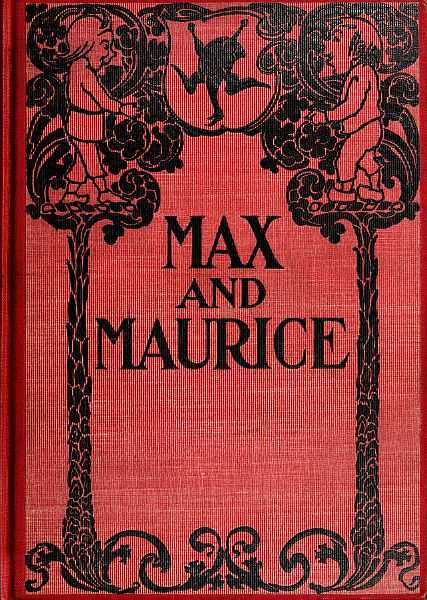
The Project Gutenberg eBook of Max and Maurice: A Juvenile History in Seven Tricks
This ebook is for the use of anyone anywhere in the United States and
most other parts of the world at no cost and with almost no restrictions
whatsoever. You may copy it, give it away or re-use it under the terms
of the Project Gutenberg License included with this ebook or online
at www.gutenberg.org. If you are not located in the United States,
you will have to check the laws of the country where you are located
before using this eBook.
Title: Max and Maurice: A Juvenile History in Seven Tricks
Author: Wilhelm Busch
Translator: Charles Timothy Brooks
Release date: May 16, 2009 [eBook #28847]
Most recently updated: January 5, 2021
Language: English
Credits: Produced by Suzanne Shell and the Online Distributed
Proofreading Team at https://www.pgdp.net (This file was
produced from images generously made available by The
Internet Archive/American Libraries.)
*** START OF THE PROJECT GUTENBERG EBOOK MAX AND MAURICE: A JUVENILE HISTORY IN SEVEN TRICKS ***
Max and Maurice
A
Juvenile History
IN
Seven Tricks,
BY
William Busch.
FROM THE GERMAN BY
CHARLES T. BROOKS.
BOSTON:
LITTLE, BROWN, AND COMPANY,
1902.
Entered according to Act of Congress, in the year 1870, by
ROBERTS BROTHERS,
In the office of the Librarian of Congress at Washington
Copyright, 1898,
By Little, Brown, and Company.
UNIVERSITY PRESS . JOHN WILSON
AND SON . CAMBRIDGE U.S.A.
ROBERTS BROTHERS,
In the office of the Librarian of Congress at Washington
Copyright, 1898,
By Little, Brown, and Company.
UNIVERSITY PRESS . JOHN WILSON
AND SON . CAMBRIDGE U.S.A.
MAX AND MAURICE.
PREFACE.
Ah, how oft we read or hear of
Boys we almost stand in fear of!
For example, take these stories
Of two youths, named Max and Maurice,
Boys we almost stand in fear of!
For example, take these stories
Of two youths, named Max and Maurice,
Who, instead of early turning
Their young minds to useful learning,
Often leered with horrid features
At their lessons and their teachers.
Look now at the empty head: he
Is for mischief always ready.
Teasing creatures, climbing fences,
Stealing apples, pears, and quinces,
Is, of course, a deal more pleasant,
And far easier for the present,
Than to sit in schools or churches,
Fixed like roosters on their perches.
But O dear, O dear, O deary,
When the end comes sad and dreary!
'Tis a dreadful thing to tell
That on Max and Maurice fell!
All they did this book rehearses,
Both in pictures and in verses.
Their young minds to useful learning,
Often leered with horrid features
At their lessons and their teachers.
Look now at the empty head: he
Is for mischief always ready.
Teasing creatures, climbing fences,
Stealing apples, pears, and quinces,
Is, of course, a deal more pleasant,
And far easier for the present,
Than to sit in schools or churches,
Fixed like roosters on their perches.
But O dear, O dear, O deary,
When the end comes sad and dreary!
'Tis a dreadful thing to tell
That on Max and Maurice fell!
All they did this book rehearses,
Both in pictures and in verses.
TRICK FIRST.
To most people who have leisure
Raising poultry gives great pleasure
First, because the eggs they lay us
For the care we take repay us;
Secondly, that now and then
We can dine on roasted hen;
Thirdly, of the hen's and goose's
Feathers men make various uses.
Some folks like to rest their heads
In the night on feather beds.
Raising poultry gives great pleasure
First, because the eggs they lay us
For the care we take repay us;
Secondly, that now and then
We can dine on roasted hen;
Thirdly, of the hen's and goose's
Feathers men make various uses.
Some folks like to rest their heads
In the night on feather beds.
One of these was Widow Tibbets,
Whom the cut you see exhibits.
Whom the cut you see exhibits.
Hens were hers in number three,
And a cock of majesty.
Max and Maurice took a view;
Fell to thinking what to do.
One, two, three! as soon as said,
They have sliced a loaf of bread,
Cut each piece again in four,
Each a finger thick, no more.
These to two cross-threads they tie,
Like a letter X they lie
In the widow's yard, with care
Stretched by those two rascals there.
And a cock of majesty.
Max and Maurice took a view;
Fell to thinking what to do.
One, two, three! as soon as said,
They have sliced a loaf of bread,
Cut each piece again in four,
Each a finger thick, no more.
These to two cross-threads they tie,
Like a letter X they lie
In the widow's yard, with care
Stretched by those two rascals there.
Scarce the cock had seen the sight,
When he up and crew with might:
Cock-a-doodle-doodle-doo;—
Tack, tack, tack, the trio flew.
When he up and crew with might:
Cock-a-doodle-doodle-doo;—
Tack, tack, tack, the trio flew.
Cock and hens, like fowls unfed,
Gobbled each a piece of bread;
Gobbled each a piece of bread;
But they found, on taking thought,
Each of them was badly caught.
Each of them was badly caught.
Every way they pull and twitch,
This strange cat's-cradle to unhitch;
This strange cat's-cradle to unhitch;
Up into the air they fly,
Jiminee, O Jimini!
Jiminee, O Jimini!
On a tree behold them dangling,
In the agony of strangling!
And their necks grow long and longer,
And their groans grow strong and stronger.
In the agony of strangling!
And their necks grow long and longer,
And their groans grow strong and stronger.
Each lays quickly one egg more,
Then they cross to th' other shore.
Then they cross to th' other shore.
Widow Tibbets in her chamber,
By these death-cries waked from slumber,
By these death-cries waked from slumber,
Rushes out with bodeful thought:
Heavens! what sight her vision caught!
Heavens! what sight her vision caught!
From her eyes the tears are streaming:
"Oh, my cares, my toil, my dreaming!
Ah, life's fairest hope," says she,
"Hangs upon that apple-tree."
"Oh, my cares, my toil, my dreaming!
Ah, life's fairest hope," says she,
"Hangs upon that apple-tree."
Heart-sick (you may well suppose),
For the carving-knife she goes;
Cuts the bodies from the bough,
Hanging cold and lifeless now
And in silence, bathed in tears,
Through her house-door disappears.
For the carving-knife she goes;
Cuts the bodies from the bough,
Hanging cold and lifeless now
And in silence, bathed in tears,
Through her house-door disappears.
This was the bad boys' first trick,
But the second follows quick.
But the second follows quick.
TRICK SECOND.
When the worthy Widow Tibbets
(Whom the cut below exhibits)
Had recovered, on the morrow,
From the dreadful shock of sorrow,
She (as soon as grief would let her
Think) began to think 'twere better
Just to take the dead, the dear ones
(Who in life were walking here once),
And in a still noonday hour
Them, well roasted, to devour.
True, it did seem almost wicked,
When they lay so bare and naked,
Picked, and singed before the blaze,—
They that once in happier days,
In the yard or garden ground,
All day long went scratching round.
Ah! Frau Tibbets wept anew,
And poor Spitz was with her, too.
(Whom the cut below exhibits)
Had recovered, on the morrow,
From the dreadful shock of sorrow,
She (as soon as grief would let her
Think) began to think 'twere better
Just to take the dead, the dear ones
(Who in life were walking here once),
And in a still noonday hour
Them, well roasted, to devour.
True, it did seem almost wicked,
When they lay so bare and naked,
Picked, and singed before the blaze,—
They that once in happier days,
In the yard or garden ground,
All day long went scratching round.
Ah! Frau Tibbets wept anew,
And poor Spitz was with her, too.
Max and Maurice smelt the savor.
"Climb the roof!" cried each young shaver.
"Climb the roof!" cried each young shaver.
Through the chimney now, with pleasure,
They behold the tempting treasure,
Headless, in the pan there, lying,
Hissing, browning, steaming, frying.
They behold the tempting treasure,
Headless, in the pan there, lying,
Hissing, browning, steaming, frying.
At that moment down the cellar
(Dreaming not what soon befell her)
Widow Tibbets went for sour
Krout, which she would oft devour
With exceeding great desire
(Warmed a little at the fire).
Up there on the roof, meanwhile,
They are doing things in style.
Max already with forethought
A long fishing-line has brought.
(Dreaming not what soon befell her)
Widow Tibbets went for sour
Krout, which she would oft devour
With exceeding great desire
(Warmed a little at the fire).
Up there on the roof, meanwhile,
They are doing things in style.
Max already with forethought
A long fishing-line has brought.
Schnupdiwup! there goes, O Jeminy!
One hen dangling up the chimney.
Schnupdiwup! a second bird!
Schnupdiwup! up comes the third!
Presto! number four they haul!
Schnupdiwup! we have them all!—
Spitz looks on, we must allow,
But he barks: Row-wow! Row-wow!
One hen dangling up the chimney.
Schnupdiwup! a second bird!
Schnupdiwup! up comes the third!
Presto! number four they haul!
Schnupdiwup! we have them all!—
Spitz looks on, we must allow,
But he barks: Row-wow! Row-wow!
But the rogues are down instanter
From the roof, and off they canter.—
Ha! I guess there'll be a humming;
Here's the Widow Tibbets coming!
Rooted stood she to the spot,
When the pan her vision caught.
From the roof, and off they canter.—
Ha! I guess there'll be a humming;
Here's the Widow Tibbets coming!
Rooted stood she to the spot,
When the pan her vision caught.
Gone was every blessed bird!
"Horrid Spitz!" was her first word.
"Horrid Spitz!" was her first word.
"O you Spitz, you monster, you!
Let me beat him black and blue!"
Let me beat him black and blue!"
And the heavy ladle, thwack!
Comes down on poor Spitz's back!
Loud he yells with agony,
For he feels his conscience free.
Comes down on poor Spitz's back!
Loud he yells with agony,
For he feels his conscience free.
Max and Maurice, dinner over,
In a hedge, snored under cover;
And of that great hen-feast now
Each has but a leg to show
In a hedge, snored under cover;
And of that great hen-feast now
Each has but a leg to show
This was now the second trick,
But the third will follow quick.
But the third will follow quick.
TRICK THIRD.
Through the town and country round
Was one Mr. Buck renowned.
Was one Mr. Buck renowned.
Sunday coats, and week-day sack-coats,
Bob-tails, swallow-tails, and frock coats,
Gaiters, breeches, hunting-jackets;
Waistcoats, with commodious pockets,—
And other things, too long to mention,
Claimed Mr. Tailor Buck's attention.
Or, if any thing wanted doing
In the way of darning, sewing,
Piecing, patching,—if a button
Needed to be fixed or put on,—
Any thing of any kind,
Anywhere, before, behind,—
Master Buck could do the same,
For it was his life's great aim.
Therefore all the population
Held him high in estimation.
Max and Maurice tried to invent
Ways to plague this worthy gent.
Right before the Sartor's dwelling
Ran a swift stream, roaring, swelling.
Bob-tails, swallow-tails, and frock coats,
Gaiters, breeches, hunting-jackets;
Waistcoats, with commodious pockets,—
And other things, too long to mention,
Claimed Mr. Tailor Buck's attention.
Or, if any thing wanted doing
In the way of darning, sewing,
Piecing, patching,—if a button
Needed to be fixed or put on,—
Any thing of any kind,
Anywhere, before, behind,—
Master Buck could do the same,
For it was his life's great aim.
Therefore all the population
Held him high in estimation.
Max and Maurice tried to invent
Ways to plague this worthy gent.
Right before the Sartor's dwelling
Ran a swift stream, roaring, swelling.
This swift stream a bridge did span,
And the road across it ran.
And the road across it ran.
Max and Maurice (naught could awe them!)
Took a saw, when no one saw them:
Ritze-ratze! riddle-diddle!
Sawed a gap across the middle.
When this feat was finished well,
Suddenly was heard a yell:
Took a saw, when no one saw them:
Ritze-ratze! riddle-diddle!
Sawed a gap across the middle.
When this feat was finished well,
Suddenly was heard a yell:
"Hallo, there! Come out, you buck!
Tailor, Tailor, muck! muck! muck!"
Buck could bear all sorts of jeering,
Jibes and jokes in silence hearing;
But this insult roused such anger,
Nature couldn't stand it longer.
Tailor, Tailor, muck! muck! muck!"
Buck could bear all sorts of jeering,
Jibes and jokes in silence hearing;
But this insult roused such anger,
Nature couldn't stand it longer.
Wild with fury, up he started,
With his yard-stick out he darted;
For once more that frightful jeer,
"Muck! muck! muck!" rang loud and clear.
With his yard-stick out he darted;
For once more that frightful jeer,
"Muck! muck! muck!" rang loud and clear.
On the bridge one leap he makes;
Crash! beneath his weight it breaks.
Crash! beneath his weight it breaks.
Once more rings the cry, "Muck! muck!"
In, headforemost, plumps poor Buck!
While the scared boys were skedaddling,
Down the brook two geese came paddling.
In, headforemost, plumps poor Buck!
While the scared boys were skedaddling,
Down the brook two geese came paddling.
On the legs of these two geese,
With a death-clutch, Buck did seize;
With a death-clutch, Buck did seize;
And, with both geese well in hand,
Flutters out upon dry land.
Flutters out upon dry land.
For the rest he did not find
Things exactly to his mind.
Things exactly to his mind.
Soon it proved poor Buck had brought a
Dreadful belly-ache from the water.
Dreadful belly-ache from the water.
Noble Mrs. Buck! She rises
Fully equal to the crisis;
With a hot flat-iron, she
Draws the cold out famously.
Fully equal to the crisis;
With a hot flat-iron, she
Draws the cold out famously.
Soon 'twas in the mouths of men,
All through town: "Buck's up again!"
All through town: "Buck's up again!"
This was the bad boys' third trick,
But the fourth will follow quick.
But the fourth will follow quick.
TRICK FOURTH.
An old saw runs somewhat so:
Man must learn while here below.—
Not alone the A, B, C,
Raises man in dignity;
Not alone in reading, writing,
Reason finds a work inviting;
Not alone to solve the double
Rule of Three shall man take trouble:
But must hear with pleasure Sages
Teach the wisdom of the ages.
Man must learn while here below.—
Not alone the A, B, C,
Raises man in dignity;
Not alone in reading, writing,
Reason finds a work inviting;
Not alone to solve the double
Rule of Three shall man take trouble:
But must hear with pleasure Sages
Teach the wisdom of the ages.
Of this wisdom an example
To the world was Master Lämpel.
For this cause, to Max and Maurice
This man was the chief of horrors;
For a boy who loves bad tricks
Wisdom's friendship never seeks.
With the clerical profession
Smoking always was a passion;
And this habit without question,
While it helps promote digestion,
Is a comfort no one can
Well begrudge a good old man,
When the day's vexations close,
And he sits to seek repose.—
Max and Maurice, flinty-hearted,
On another trick have started;
Thinking how they may attack a
Poor old man through his tobacco.
Once, when Sunday morning breaking,
Pious hearts to gladness waking,
Poured its light where, in the temple,
At his organ sate Herr Lämpel,
To the world was Master Lämpel.
For this cause, to Max and Maurice
This man was the chief of horrors;
For a boy who loves bad tricks
Wisdom's friendship never seeks.
With the clerical profession
Smoking always was a passion;
And this habit without question,
While it helps promote digestion,
Is a comfort no one can
Well begrudge a good old man,
When the day's vexations close,
And he sits to seek repose.—
Max and Maurice, flinty-hearted,
On another trick have started;
Thinking how they may attack a
Poor old man through his tobacco.
Once, when Sunday morning breaking,
Pious hearts to gladness waking,
Poured its light where, in the temple,
At his organ sate Herr Lämpel,
These bad boys, for mischief ready,
Stole into the good man's study,
Where his darling meerschaum stands.
This, Max holds in both his hands;
Stole into the good man's study,
Where his darling meerschaum stands.
This, Max holds in both his hands;
While young Maurice (scapegrace born!)
Climbs, and gets the powderhorn,
And with speed the wicked soul
Pours the powder in the bowl.
Hush, and quick! now, right about!
For already church is out.
Climbs, and gets the powderhorn,
And with speed the wicked soul
Pours the powder in the bowl.
Hush, and quick! now, right about!
For already church is out.
Lämpel closes the church-door,
Glad to seek his home once more;
Glad to seek his home once more;
All his service well got through,
Takes his keys, and music too,
And his way, delighted, wends
Homeward to his silent friends.
Full of gratitude he there
Lights his pipe, and takes his chair.
Takes his keys, and music too,
And his way, delighted, wends
Homeward to his silent friends.
Full of gratitude he there
Lights his pipe, and takes his chair.
"Ah!" he says, "no joy is found
Like contentment on earth's round!"
Like contentment on earth's round!"
Fizz! whizz! bum! The pipe is burst,
Almost shattered into dust.
Coffee-pot and water-jug,
Snuff-box, ink-stand, tumbler, mug,
Table, stove, and easy-chair,
All are flying through the air
In a lightning-powder-flash,
With a most tremendous crash.
Almost shattered into dust.
Coffee-pot and water-jug,
Snuff-box, ink-stand, tumbler, mug,
Table, stove, and easy-chair,
All are flying through the air
In a lightning-powder-flash,
With a most tremendous crash.
When the smoke-cloud lifts and clears,
Lämpel on his back appears;
God be praised! still breathing there,
Only somewhat worse for wear.
Lämpel on his back appears;
God be praised! still breathing there,
Only somewhat worse for wear.
Nose, hands, eyebrows (once like yours),
Now are black as any Moor's;
Burned the last thin spear of hair,
And his pate is wholly bare.
Who shall now the children guide,
Lead their steps to wisdom's side?
Who shall now for Master Lämpel
Lead the service in the temple?
Now that his old pipe is out,
Shattered, smashed, gone up the spout?
Now are black as any Moor's;
Burned the last thin spear of hair,
And his pate is wholly bare.
Who shall now the children guide,
Lead their steps to wisdom's side?
Who shall now for Master Lämpel
Lead the service in the temple?
Now that his old pipe is out,
Shattered, smashed, gone up the spout?
Time will heal the rest once more,
But the pipe's best days are o'er.
But the pipe's best days are o'er.
This was the bad boys' fourth trick,
But the fifth will follow quick.
But the fifth will follow quick.
TRICK FIFTH.
If, in village or in town,
You've an uncle settled down,
Always treat him courteously;
Uncle will be pleased thereby.
In the morning: "'Morning to you!
Any errand I can do you?"
Fetch whatever he may need,—
Pipe to smoke, and news to read;
Or should some confounded thing
Prick his back, or bite, or sting,
Nephew then will be near by,
Ready to his help to fly;
Or a pinch of snuff, maybe,
Sets him sneezing violently:
"Prosit! uncle! good health to you!
God be praised! much good may't do you!"
Or he comes home late, perchance:
Pull his boots off then at once,
Fetch his slippers and his cap,
And warm gown his limbs to wrap.
Be your constant care, good boy,
What shall give your uncle joy.
Max and Maurice (need I mention?)
Had not any such intention.
See now how they tried their wits—
These bad boys—on Uncle Fritz.
What kind of a bird a May-
Bug was, they knew, I dare say;
You've an uncle settled down,
Always treat him courteously;
Uncle will be pleased thereby.
In the morning: "'Morning to you!
Any errand I can do you?"
Fetch whatever he may need,—
Pipe to smoke, and news to read;
Or should some confounded thing
Prick his back, or bite, or sting,
Nephew then will be near by,
Ready to his help to fly;
Or a pinch of snuff, maybe,
Sets him sneezing violently:
"Prosit! uncle! good health to you!
God be praised! much good may't do you!"
Or he comes home late, perchance:
Pull his boots off then at once,
Fetch his slippers and his cap,
And warm gown his limbs to wrap.
Be your constant care, good boy,
What shall give your uncle joy.
Max and Maurice (need I mention?)
Had not any such intention.
See now how they tried their wits—
These bad boys—on Uncle Fritz.
What kind of a bird a May-
Bug was, they knew, I dare say;
In the trees they may be found,
Flying, crawling, wriggling round.
Flying, crawling, wriggling round.
Max and Maurice, great pains taking,
From a tree these bugs are shaking.
From a tree these bugs are shaking.
In their cornucopiæ papers,
They collect these pinching creepers.
They collect these pinching creepers.
Soon they are deposited
In the foot of uncle's bed!
In the foot of uncle's bed!
With his peaked nightcap on,
Uncle Fritz to bed has gone;
Tucks the clothes in, shuts his eyes,
And in sweetest slumber lies.
Uncle Fritz to bed has gone;
Tucks the clothes in, shuts his eyes,
And in sweetest slumber lies.
Kritze! Kratze! come the Tartars
Single file from their night quarters.
Single file from their night quarters.
And the captain boldly goes
Straight at Uncle Fritzy's nose.
Straight at Uncle Fritzy's nose.
"Baugh!" he cries: "what have we here?"
Seizing that grim grenadier.
Seizing that grim grenadier.
Uncle, wild with fright, upspringeth,
And the bedclothes from him flingeth.
And the bedclothes from him flingeth.
"Awtsch!" he seizes two more scape-
Graces from his shin and nape.
Graces from his shin and nape.
Crawling, flying, to and fro,
Round the buzzing rascals go.
Round the buzzing rascals go.
Wild with fury, Uncle Fritz
Stamps and slashes them to bits.
Stamps and slashes them to bits.
O be joyful! all gone by
Is the May bug's deviltry.
Is the May bug's deviltry.
Uncle Fritz his eyes can close
Once again in sweet repose.
Once again in sweet repose.
This was the bad boys' fifth trick,
But the sixth will follow quick.
But the sixth will follow quick.
TRICK SIXTH.
Easter days have come again,
When the pious baker men
Bake all sorts of sugar things,
Plum-cakes, ginger-cakes, and rings.
Max and Maurice feel an ache
In their sweet-tooth for some cake.
When the pious baker men
Bake all sorts of sugar things,
Plum-cakes, ginger-cakes, and rings.
Max and Maurice feel an ache
In their sweet-tooth for some cake.
But the Baker thoughtfully
Locks his shop, and takes the key.
Locks his shop, and takes the key.
Who would steal, then, this must do:
Wriggle down the chimney-flue.
Wriggle down the chimney-flue.
Ratsch! There come the boys, my Jiminy!
Black as ravens, down the chimney.
Black as ravens, down the chimney.
Puff! into a chest they drop,
Full of flour up to the top.
Full of flour up to the top.
Out they crawl from under cover
Just as white as chalk all over.
Just as white as chalk all over.
But the cracknels, precious treasure,
On a shelf they spy with pleasure.
On a shelf they spy with pleasure.
Knacks! The chair breaks! down they go—
Schwapp!—into a trough of dough!
All enveloped now in dough,
See them, monuments of woe.
See them, monuments of woe.
In the Baker comes, and snickers
When he sees the sugar-lickers.
When he sees the sugar-lickers.
One, two, three! the brats, behold!
Into two good brots are rolled.
Into two good brots are rolled.
There's the oven, all red-hot,—
Shove 'em in as quick as thought.
Shove 'em in as quick as thought.
Ruff! out with 'em from the heat,
They are brown and good to eat.
They are brown and good to eat.
Now you think they've paid the debt!
No, my friend, they're living yet.
No, my friend, they're living yet.
Knusper! Knasper! like two mice
Through their roofs they gnaw in a trice;
Through their roofs they gnaw in a trice;
And the Baker cries, "You bet!
There's the rascals living yet!"
There's the rascals living yet!"
This was the bad boys' sixth trick,
But the last will follow quick.
But the last will follow quick.
LAST TRICK
Max and Maurice! I grow sick,
When I think on your last trick.
When I think on your last trick.
Why must these two scalawags
Cut those gashes in the bags?
Cut those gashes in the bags?
See! the farmer on his back
Carries corn off in a sack.
Carries corn off in a sack.
Scarce has he begun to travel,
When the corn runs out like gravel.
When the corn runs out like gravel.
All at once he stops and cries:
"Darn it! I see where it lies!"
"Darn it! I see where it lies!"
Ha! with what delighted eyes
Max and Maurice he espies.
Max and Maurice he espies.
Rabs! he opens wide his sack,
Shoves the rogues in—Hukepack!
Shoves the rogues in—Hukepack!
It grows warm with Max and Maurice,
For to mill the farmer hurries.
For to mill the farmer hurries.
"Master Miller! Hallo, man!
Grind me that as quick as you can!"
Grind me that as quick as you can!"
"In with 'em!" Each wretched flopper
Headlong goes into the hopper.
Headlong goes into the hopper.
As the farmer turns his back, he
Hears the mill go "creaky! cracky!"
Hears the mill go "creaky! cracky!"
Here you see the bits post mortem,
Just as Fate was pleased to sort 'em.
Just as Fate was pleased to sort 'em.
Master Miller's ducks with speed
Gobbled up the coarse-grained feed.
Gobbled up the coarse-grained feed.
CONCLUSION.
In the village not a word,
Not a sign, of grief, was heard.
Widow Tibbets, speaking low,
Said, "I thought it would be so!"
"None but self," cried Buck, "to blame!
Mischief is not life's true aim!"
Then said gravely Teacher Lämpel,
"There again is an example!"
"To be sure! bad thing for youth,"
Said the Baker, "a sweet tooth!"
Even Uncle says, "Good folks!
See what comes of stupid jokes!"
But the honest farmer: "Guy!
What concern is that to I?"
Through the place in short there went
One wide murmur of content:
"God be praised! the town is free
From this great rascality!"
Not a sign, of grief, was heard.
Widow Tibbets, speaking low,
Said, "I thought it would be so!"
"None but self," cried Buck, "to blame!
Mischief is not life's true aim!"
Then said gravely Teacher Lämpel,
"There again is an example!"
"To be sure! bad thing for youth,"
Said the Baker, "a sweet tooth!"
Even Uncle says, "Good folks!
See what comes of stupid jokes!"
But the honest farmer: "Guy!
What concern is that to I?"
Through the place in short there went
One wide murmur of content:
"God be praised! the town is free
From this great rascality!"
University Press: John Wilson & Son, Cambridge.
NONSENSE BOOKS
BY EDWARD LEAR
Containing—
| A BOOK OF NONSENSE. |
| NONSENSE SONGS. |
| NONSENSE STORIES. |
| NONSENSE COOKERY. |
| NONSENSE BOTANY. |
| NONSENSE ALPHABETS. |
| MORE NONSENSE BOTANY. |
| ONE HUNDRED NONSENSE PICTURES AND RHYMES. |
| TWENTY-SIX NONSENSE RHYMES AND PICTURES. |
| LAUGHABLE LYRICS. |
| MORE NONSENSE BOTANY. |
| MORE NONSENSE ALPHABETS. |
It is, as our readers will remember, the remarkable work that Ruskin placed at the head of the best books.—Baltimore American.