
![Memoirs of Benjamin Franklin; Written by Himself. [Vol. 2 of 2] / With his Most Interesting Essays, Letters, and Miscellaneous Writings; Familiar, Moral, Political, Economical, and Philosophical, Selected with Care from All His Published Productions, and Comprising Whatever Is Most Entertaining and Valuable to the General Reader cover](/books/content/40236/OEBPS/4140302961978391678_cover.jpg)
Memoirs of Benjamin Franklin; Written by Himself. [Vol. 2 of 2] / With his Most Interesting Essays, Letters, and Miscellaneous Writings; Familiar, Moral, Political, Economical, and Philosophical, Selected with Care from All His Published Productions, and Comprising Whatever Is Most Entertaining and Valuable to the General Reader
Explore more books like this:
About This Book
The volume continues the author's autobiographical narrative and collects moral and practical essays, aphorisms on thrift and industry, advice for work and health, and miscellaneous reflections on public life. It assembles wide-ranging correspondence alongside scientific and philosophical papers that present experiments, observations, and conjectures on electricity, weather, geology, and other practical inventions. The selections blend personal anecdote, civic commentary, and empirical inquiry, stressing self-improvement, pragmatic wisdom, and the application of observation and experiment to both private affairs and public concerns.
About the Author
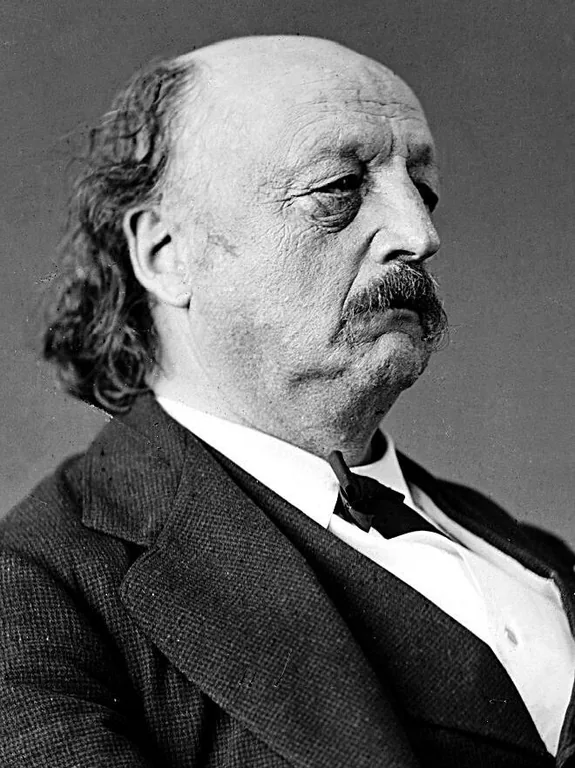
More Books by This Author
6 picks
 A Book of Gems, or, Choice selections from the writings of Benjamin Franklin
by Benjamin Franklin
A Book of Gems, or, Choice selections from the writings of Benjamin Franklin
by Benjamin Franklin
 Autobiography of Benjamin Franklin
by Benjamin Franklin
Autobiography of Benjamin Franklin
by Benjamin Franklin
 Benjamin Franklin
by Benjamin Franklin
Benjamin Franklin
by Benjamin Franklin
 Benjamin Franklin and the First Balloons
by Benjamin Franklin
Benjamin Franklin and the First Balloons
by Benjamin Franklin
 Experiments and Observations on Electricity Made at Philadelphia in America
by Benjamin Franklin
Experiments and Observations on Electricity Made at Philadelphia in America
by Benjamin Franklin
 Expériences et observations sur l'électricité faites à Philadelphie en Amérique
by Benjamin Franklin
Expériences et observations sur l'électricité faites à Philadelphie en Amérique
by Benjamin Franklin
You May Also Like
6 picks
 "All's not Gold that Glitters;" or, The Young Californian
by Alice B. Haven
"All's not Gold that Glitters;" or, The Young Californian
by Alice B. Haven
 "Bring Me His Ears"
by Clarence Edward Mulford
"Bring Me His Ears"
by Clarence Edward Mulford
 "Browne's Folly" / (From: "The Doliver Romance and Other Pieces: Tales and Sketches")
by Nathaniel Hawthorne
"Browne's Folly" / (From: "The Doliver Romance and Other Pieces: Tales and Sketches")
by Nathaniel Hawthorne
 "Forward, March": A Tale of the Spanish-American War
by Kirk Munroe
"Forward, March": A Tale of the Spanish-American War
by Kirk Munroe
 "Gentlemen prefer blondes"
by Anita Loos
"Gentlemen prefer blondes"
by Anita Loos
 "George Washington's" Last Duel / 1891
by Thomas Nelson Page
"George Washington's" Last Duel / 1891
by Thomas Nelson Page