
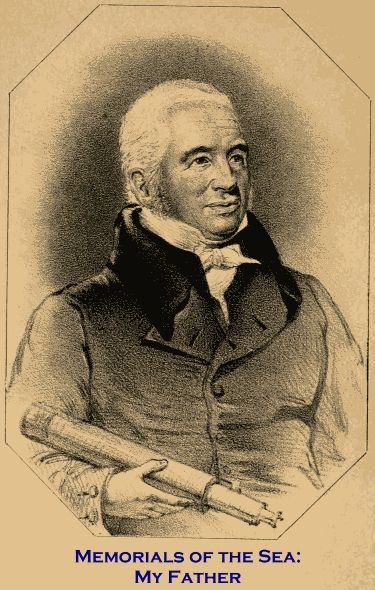
Section III.—Judicious Treatment of Men having suffered from severe Exposure.
The Resolution was moored to a flat sheet of ice, surrounded by streams and open drift ice, on the 30th of April, 1808. It blew fresh, and the weather was cold. In the evening a whale was harpooned, which ran out about the length of a mile and a half of line from the fast-boat. Other harpoons, and several lances, were then struck, and no doubt remained with the pursuers but that it would speedily become their prize. But this expectation signally failed. A tremendous and convulsive throe of the whale produced an extraordinary effect: one of the lines, and also a harpoon were broken, and the other two harpoons drawn out simultaneously, when, to the astonishment of the beholders, the imagined capture was found, in one moment, to have become free. It dived and escaped!
A storm meanwhile had commenced. Five boats, with their crews, remained for the getting in of the long length of line run out from the first fast-boat, whilst two, myself in one of them, returned to the ship, in aid of the inadequate residue of men—for any nautical operation—left on board.
Thick snow set in, the storm increased, and the ship, being fast to a light piece of ice, drifted rapidly to leeward, and away from the boats. We became distressfully anxious about the safety of the absent men. At one the next morning the mooring was cut, and the ship being got under way, was worked on short tacks to windward, in the supposed direction of the boats. At three we were rejoiced by the appearance of three of the boats, which, with crews unharmed, we got safely on board. The remainder, they reported, might be expected by the same track in half an hour.
Cheered by this hope, we continued making every effort to get the ship to windward. But, long after the time of their expected return, no other boat appeared. Hour after hour of anxiety and distress passed over whilst we navigated, off and on, among troublesome and dangerous ices. Guns were fired occasionally, and at every unoccupied interval all hands were engaged in the one object which sympathy urged—the straining of their eyes in the hope of discerning the boats of their comrades through the obscurity of the snow. The obscurity was not attenuated; the storm raged, and the sea increased, whilst a foreboding gloom appeared in every countenance, darkening and keeping pace with the dismalness of the night. The loss of one-half of the Ipswich’s crew on a similar occasion was yet fresh on our minds, and low whisperings of expressions of fear, and shuddering responses, indicated a prevailing dread of a similar fate to their comrades.
At length, happy moment! a little after eight in the morning, a sudden shout of joy announced the discovery of the boats, and in a few minutes we had the undescribable satisfaction of seeing them alongside. Aided by those on board with ropes and hands, they were all, twelve to fourteen in number, received safe on board, and welcomed with the most heartfelt greeting by their truly exulting shipmates.
The natural desire and effort to get below, into a place of genial warmth, both with the shivering sailors and the sympathising people on board, was, with most judicious consideration on the part of my Father, restrained. The men had been suffering from more than a twelve hours’ exposure, without food or adequate extra clothing, to cold and storm,—the thermometer, which had been as low as 13 degrees, being still 8 or 10 degrees below freezing,—and many were partially frost-bitten, and some stiff and half-paralyzed with the severity of the weather. In this case, he wisely considered, that sudden transition to the warm galley, and proximity to the blazing fire of the cabouse below, might be productive of dangerous, possibly of fatal, effects. He felt it was needful for their safety that means should be previously adopted for restoring, in some measure, the arrested or retarded circulation.
Stimulants, in a case of this kind, moderately administered, were considered advantageous; but friction, and muscular exercise, much more essential to safety. Those, therefore, whose hands or feet, or faces or ears, had become white (like the appearance of a tallow candle) by the utter abstraction of the blood, had their frost-bitten parts actively and perseveringly rubbed with the open hands of others, and the worst cases with snow, until the endurance of the severe, or even agonizing pain usually attending the recovery, when the repelled circulation begins to be restored in the affected parts, had removed the risk of mortification taking place. Others were variously exercised, as they were able to make muscular efforts of themselves, or with the assistance of others. Those who were capable of the exertion were made to run about the deck, chasing, or being chased, one by another. And soon apprehending, as most of them did, the wisdom of the measures adopted, they not only entered into them heartily, but those who had been the most affected, as soon as their limbs obtained power for the exertion, were ready to join, or to attempt to join, in the exercise and race, until some glow of warmth, and consciousness of restored sensation, had taken place of the pre-existing chilliness or insensibility. They were then, under strict cautions against approaching at first too near the fire, suffered to go below; and, happily, under this wise and effective treatment, all escaped without any permanent injury.
A stout Shetland boy had well nigh fallen a sacrifice to the severity of the exposure. He expressed a great desire, whilst abroad in one of the boats, for sleep, and earnestly entreated the men, who objected to the indulgence of the inclination, to allow him to compose himself for half an hour, “for he was sure,” he said, “that he should dream of the situation of the ship.” After a few minutes’ repose, which they were induced to permit, he was awoke, but with difficulty, and it required considerable attention on the part of his companions to keep him from a sleep which, under such circumstances, they well knew must be the harbinger of death.
Other instances of the happy exercise of good judgment in the treatment of men who had suffered long exposure to cold and hunger, might have been adduced had I particularly noted them. One other case, though of no real danger, (occurring May 29th, 1809,) may be briefly mentioned, in which I was personally a participator.
It was blowing a fresh gale from the north-east, with strong frost, thermometer 20°, but the sea was not very considerable because of the sheltering influence of surrounding ice. Two whales were captured; but one of them dying at a great depth under water, had to be hauled up by the united crews of two or three boats, which proved a tedious and severe labour. We were absent from the ship from fourteen to sixteen hours, without food or shelter from the inclement gale, sometimes lying inertly on our oars waiting for the rising of the harpooned whales, or for the hauling up of the sunken one to the surface; and sometimes we were engaged in pulling about, hauling in lines, or in “towing” the dead fish to the ship. By the time we got on board we were mostly in a state of considerable exhaustion, and all were painfully suffering from cold and hunger.
My Father had considerately provided for our return. Instead of the distribution of ardent spirits,—the measure universally resorted to at this period, with the view of cheering and restoring the depressed energies of any long-exposed party of adventurers in the boats,—a far better and more effective provision had been made. A huge kettle of coffee was boiling on the fire, which, with the usual supplies of bread and beef, was distributed in ample quantity among the half-starved party now returning; and a more grateful or more salutary instance of administered refreshment I do not remember ever to have enjoyed. The heat of this beverage, supplied as it was so liberally to all, had the most happy effect in aiding the restoration of the animal heat, and of exhilarating without unduly stimulating the depressed physical condition of the men. The case afforded an admirable practical example of the correctness of the principles generally asserted, in favour of simple drinks over spirituous or fermented stimulants, by the advocates of “Temperance.”
Section IV.—The Crow’s Nest.
The invention of the Crow’s Nest in the form now universally used by the British Arctic whalers, and adopted generally by our discovery ships, deserves, from its convenience, comfort, and importance, a special record.
For the safe and effective navigation of the Arctic ices, as well as for a due watch being kept for the discovery of whales, an elevated position on the mast, as a station for the directing or “look-out” officer, is absolutely necessary. In seas covered over with numerous masses of ice, or in positions where the navigation is at once encumbered, difficult, and perhaps dangerous, it is impossible for the officer on deck to perform the duty, at all adequately, of directing the ship’s course and progress.
From time immemorial, therefore, the captains of whalers, or other acting officers, have always been wont to take their station occasionally, and when necessity required, at the mast-head, or rather on the main top-mast “cross-trees.” For the benefit of a little shelter from the piercing breezes in this exposed situation, some ships were provided with a canvas screen of about three and a half or four feet in height, passed round the sides and fore-part of the top-gallant rigging, from the top-mast cross-trees upward. This, with a sort of wooden rail for a seat, extending betwixt the aftermost shrouds of the top-gallant rigging, afforded the best crow’s nest hitherto made use of; a shelter tolerably effective when the ship was sailing by or near the wind, but altogether useless when going with the wind abaft the beam. It was not very safe either, as accidents from sleepiness, or the giving way of the very inadequate seat, sometimes happened. Besides, when top-gallant sails were set, this contrivance was all but useless. But a far inferior sort of protection than this was in frequent or ordinary use at the time of my first experience in the Arctic seas. For years, I remember, we had nothing more for sheltering behind but bits of canvas on either side of the top-gallant rigging and round the top-mast head, without anything in front; and in some voyages still less,—a slip of canvas bound round the head of the top-mast and heel of the top-gallant mast, spreading some eighteen inches to two feet wide, and perhaps three and a half feet high, being all that the poor officer had to shield him from the most penetrating severity of the Arctic winds. Often have I myself sat, when a little boy, by the side of my Father for hours at a time, in this wretchedly exposed position, shivering with cold generally, and with hands and feet frequently in severe pain, whilst he habituated me in his superior practice of navigating amid dangerous ices.
The consequences of this deficiency of protection were,—that the proper navigation of the ship was often neglected, the discovery of many whales sufficiently within view from thence was prevented, and the success of the adventure was much restricted.
The greatest boon, therefore, of modern times, ever given to the Arctic navigator, it may be safely, I think, said, was my Father’s invention of the round top-gallant crow’s nest. It was in May, 1807, I believe, in which the first of these was built. It was placed, in the first instance, at the top-mast head, but ultimately, when the invention became perfected, it was perched, like a rostrum, on the head of the main top-gallant mast, with nothing whatever above.
This structure, as most approved by the inventor, is about four and a half feet in height and two and a half in diameter. The form is cylindrical, open above and closed below. The frame-work of the cylindrical part is covered with leather or canvas. The entrance is by a trap-hatch at the bottom. Arrangements are made for the depositing (sheltered from the weather) of various pieces of useful apparatus, such as speaking-trumpet, telescope, signal-flag, perhaps a rifle for shooting narwals, compass, etc. For the more effectual shelter of the observer when standing up, a moveable screen, two or three feet wide and adding a foot to the elevation, is placed on the windward side, and shifted whenever the ship is tacked, or the course materially changed.
The protection thus obtained from the chilling action of the wind is most perfect. Not a breath of air stirs within this elevated rostrum. The observer has free use of all his limbs, and, being safe from the possibility of falling, has nothing to disturb him in giving his entire attention to the navigation of the ship and the look-out for whales. Being perched, too, on the most elevated part of the mast, there is nothing to interfere with his view of the whole area of the circle of vision, having, in clear weather, a diameter of twenty to twenty-two geographical miles. So supported, and so effectually protected, with the means of sitting, and space for moving about when standing, there is no particular hardship, in tolerable weather, in remaining at the mast-head for some hours together. Often has this elevated position been occupied by my Father, (and often by myself, too,) during ten or twelve hours, and sometimes fourteen hours or more, within the twenty-four.
This invention has not only added unspeakably to the comfort and security of the officer at the mast-head, but has, no doubt, contributed greatly both to the safety of ships navigating the Arctic ices, and, in respect of its position for “a good look-out,” in no inconsiderable degree to the prosperity of their adventures.
The attainment of this position during storm and snow, or when the rigging, as not unfrequently happens, is covered with glassy ice, is the chief matter of discomfort, difficulty, and risk. The frigid northerly blast feels as if blowing quite through and through you. The ascent, by the ordinary rigging and ratlings, conducts you to about three-fourths of the elevation of the top-mast; you then step into midships, upon a series of battens extending betwixt the top-mast backstays; and, finally, when approaching the cross-trees, you proceed up a vertically stretched ladder of ropes and battens,—ropes on the sides, and battens as steps,—until you make lodgment within the crow’s nest by the trap-hatch, which, being then put down, forms a part of the close and secure platform.
Section V.—Extraordinary Celerity in preparing an empty Boat for active Service in the Fishery.
In the celerity with which he accomplished complex or tedious operations pertaining to seamanship or the whale-fishery, my Father stood quite unrivalled. We have elucidated this characteristic in a former section, in respect to the flensing of a young whale with extraordinary rapidity, and we now adduce another example of a more incidental nature.
During the outward passage towards the fishing-stations, the boats, designed for the fishery, are carried out in an entirely dismantled state,—some being stowed away upon deck, and some, perhaps, below. On reaching the ice it is usual to suspend a couple of boats, or more, by their davits, at the quarters of the ship, to be ready for sealing, or any occasional purpose. But the whale-lines and other fishing apparatus are not wont to be put into them until the ship reaches, or approaches near to, some of the accustomed fishing-stations.
The boats of the Resolution were in this second condition on the 11th of April, 1808, when the ship, in her progress northward, had reached the 71st degree of latitude,—a parallel in which whales were not expected to be met with. It happened, however, on the occasion alluded to, (as I find it noted in my log-book, kept at the time,) that a whale made its appearance very near to the ship. It was in the morning, early, whilst my Father was yet in bed; but he was not called, because, in the unprepared condition of the boats, the officer of the watch, and indeed all the people on deck, considered the pursuit of it to be utterly impracticable.
My Father, however, as little trammelled in judgment by ordinary usages as he was in the habit of being guided by popular ideas of the limits of practicability, was much annoyed by the officer’s assumption, which had prevented his being called. “It was no use disturbing you,” the officer pleaded, “as there was not a boat in readiness for the fishery.” “But a boat might have been got ready,” was the confidently asserted rebuke. That this could have been done, however, within the short period of time in which a solitary whale might be expected to remain within sight, seemed to the officers as utterly impossible; for whilst a whale, under such circumstances, would seldom be found to remain within sight for half an hour, the preparing of the boats with lines, harpoons, and other requisites for the fishery, would, as they conceived, occupy several hours.
My Father maintained, however, the practicability of a boat being fitted out, in a manner sufficient for efficiency, in the course of a quarter of an hour; and, when the idea was unhesitatingly objected to as an impossibility, he undertook to prove his assertion. A boat then hanging at the larboard quarter, empty, except as to oars, he selected for an experiment, and undertook, with the help only of the watch upon deck,—about sixteen hands,—to have that boat ready for active service within the space of fifteen minutes.
To the due apprehending of this unprecedented undertaking, it will be proper to describe what is ordinarily deemed needful for fitting out a boat for the harpooning and capturing of the whale. The loose furniture of oars, harpoons, lances, etc., present no particular difficulty; but the supplying of an adequate quantity of lines, and placing them in a condition for being safely run out, is, as ordinarily practised, a long and tedious operation. The lines, it may be mentioned, are taken on board from their winter storehouse, in coils made up by the ropemaker, in the shape of a short drum, each coil weighing a little more than a hundred-weight, and measuring 120 fathoms in length. They are so coiled, in regular layers, commencing with that of the slender square or cylindrical centre on which they are wound, that they may be either unwound, by reversing the original motion of the coil from the exterior, or by taking up the inner end left loose in the open centre, the line may be drawn out thence whilst the coil remains at rest. For the lodgment of the lines, when deliberately preparing for the fishery, they are unrolled from the cylindrical mass, and coiled in compartments in the boats as they come off; but as this could not be done under a period of some hours, the running of the lines out of the centre of the coils was the plan alone available for my Father’s object.
Whilst every article of the requisite apparatus was yet in the place of its ordinary lodgment,—harpoons and lances being in the places appropriated for them in the ’tween decks, and whale-lines in the gunroom,—the time for commencing was noted, and my Father proceeded, as I very well recollect witnessing, to the proof of this new feat of activity and management.
To the several hands of the “watch,” now gathered round him, was distinctly apportioned his part of the undertaking; first of all in bringing promptly on deck the requisite quantity of whale-lines and fishing apparatus, and then in placing them fit for service. Several lines (I think about four in number) were stowed away in different compartments of the boat, with the interior cavity of each upward. The inner end of the line of one of the coils, in the most favourable position for running, was rapidly “spliced” to the “foreganger” of the harpoon by my Father, whilst the officers about him were set to the splicing properly together of the alternate outside end of one coil with the inner end of another, so as to constitute an appropriate running series. Everything being accomplished, and the boat got ready for lowering, the time was again noted, when, to the astonishment of all on board, the interval expended was found only to have been twelve minutes!
The rebuke of the officer of the morning watch, thus experimentally justified, occasioned, very naturally, a desire to question, if questioning could in any one particular be maintained, the effectiveness or safety of the preparations thus hastily made. And it was questioned whether lines so disposed, for being run off the ropemaker’s coils, would be safe to trust to their running clear in the case of actual service. This matter was soon settled by a most satisfactory experiment. As a whale when harpooned does not go faster away than a man can run, it was proposed to run off the whole of the lines out of the boat by hand, in order to prove that the arrangements that had been made were adequate, both for ordinary service and safety.
The decks were forthwith cleared, fore and aft, and the men arranged to run with the line, from the boat to the forecastle, in unceasing succession,—a service which they performed, after the word was given to start, with a hearty goodwill and their utmost activity; and the experiment was admirably successful. The whole of the lines went out of the boat, by the usual notch over the stem, without hitch or failure of the slightest kind interrupting their free progress from beginning to end!
Section VI.—Tact and Bravery in attacking and killing a dangerously-resisting Whale.
It was no uncommon event for my Father, in case of any difficult or dangerous enterprise in the fishery, to take part himself in the adventure. The special case now referred to will illustrate at once his practice and talent.
On the 29th of May, 1807, a whale was harpooned by one of our officers. It descended to some considerable depth, but speedily returned. On its reappearance, it evinced an uncommon degree of irritation. Its motions, whilst making but little progress a-head, were vehement and incessant,—rolling itself quite over, or, in an oscillating manner, from side to side; throwing its huge tail into the air, or flinging it with fearful impulse right and left, and so keeping the surface of the sea around it in perpetual commotion and foam. The display of its fins and tail was so terrific and dangerous, that few of those in command of our boats were hardy enough to approach it. But, under this violent action of the fish, and the inaction of our men, the risk of losing the hoped-for prize became imminent. This being evident to my Father, who, with discerning and watchful eye, had all along been viewing from the mast-head, with intense anxiety, the exciting scene with his glass,—he made the signal, and in a manner indicative of urgent haste, for one of the boats to come to the ship. In brief space,—the fish not being far distant,—he had personally embarked on his dangerous enterprise.
On reaching the scene of action, where the wounded monster was still exerting its excited energies in aiming blows at any approaching boats, or thrashing the sea into a foam,—our accomplished whale-hunter quietly assumed a station, in parallelism, nearly, with the direction of the animal’s extended length, and within a few fathoms of its broadside. The boat-steerer,—as the custom is,—he guided by the motion of his hand; but the boat’s crew, being previously urged to exert a tremendous spring on their oars when he should decide on making his attack, were to await his verbal command.
A favourable pause, succeeding a terrific display of action and power, had been watchfully discerned by my Father, when, giving the signal to the boat-steerer to sheer towards the fish, and, simultaneously, the emphatic order to the men,—“Give way, my lads; give way!”—he was in a moment placed within reach; and then, at long arm’s length, whilst leaning over the boat’s bow for distance’ sake, he plunged his well-sharpened harpoon deep into the writhing creature’s side. Its usual vengeance-slash of its tail was made harmlessly; for the order to “back off,” had been so instantly and effectively obeyed, that the boat was beyond reach before this ponderous engine of motion or destruction could be thrown out.
Rebuked, in a measure, by this daring attack of their commander, as well as encouraged and stimulated by its success, one of the hitherto hesitating boats immediately followed for a similar object; but the officer commanding it, not having the same tact, advanced incautiously, at an unfavourable moment, and too far within the range of the enemy’s destructive members, as to subject himself and comrades to a formidable peril. The tail of the fish was again reared into the air, in a terrific attitude over the boat. The harponeer, who was directly underneath, happily discovered his danger, and leaped overboard; and the next moment the threatened stroke was impressed with tremendous force upon the centre of the boat, which literally buried it in the water!
Providentially, no one was hurt. The officer who leaped overboard, escaped certain death by the prompt adventure. The huge tail (a member measuring perhaps twenty feet in width, extending to a superficial area of about eighty square feet, and weighing from one to two tons), struck the very spot on which he had previously stood. The effects of the blow on the boat were extraordinary. The keel was broken; the gunwale, and all the planks, except two, were cut through; and it was evident that the boat would have been completely divided, had not the tail struck directly upon a deep coil of the whale-lines. The crew, succoured by the various boats lying around, were all speedily picked up; but the boat was so thoroughly smashed as to be rendered useless.
This alarming discouragement, with the crippling of their strength and resources by the destruction of one boat and the withdrawal of another for the conveyance to the ship of the drenched and shivering sailors, threw the principal burden of the exploit of capture on my Father. For though other harpoons, after some minor adventures, were struck, the actual killing of this leviathan of its tribe was effected by himself.
Contrary to the usual habits of the Greenland whale, this individual, instead of occasionally seeking the depths of ocean for its protection, especially on receiving a fresh and painful wound, remained mainly at the surface. Its natural energies, but yet little acted on by the exhausting influence of the pressure of water, were consequently very little impaired; for the superficial wounds of harpoons produce no immediate effect upon life.
Hence, the operation of lancing was yet to be effected, before there could be any chance of subduing the still existing dangerous vigour. My Father, as was his wont, proceeded next to this venturous undertaking. Again he plants his boat in parallelism of position with that of his gigantic game. Full of ardour and confidence in their leader, his boat’s crew are ready for any effort or adventure which the daring or activity of man may accomplish. The proper moment for the attack is waited for, and, when seen, instantly improved. The boat, as a thing of life, springs, at his signal, towards the side of the whale. The Commander’s long lance—six feet in the iron, and four feet in the handle—is darted, at arm’s length, into the writhing carcass, up to the very socket; and, before the fling of fins or tail can reach, he has recovered a safe distance. The effect of the wound in the vitals is speedily seen. The previous white steamy vapour ejected from the lungs has become tinged with red; and nature’s powers, as experience indicates, must soon decay. Convulsive action in the monster, as stimulated by this inward stab, being at length suspended, the favourable moment is again improved. Another lance,—darted in as quickly as the stroke of the tiger’s paw,—penetrates, for the second time, the vast viscera of the whale; whilst the active agents of the attack escape, as before, unscathed. The deadly thrust is quickly repeated; and, as the capability of exerting instant violence is diminished, the deeply stricken lance is worked actively up and down whilst still within, so that every movement effects an additional wound, and the work of death is the more speedily and mercifully promoted. Thick jets of blood now issue from the blow-holes, and the sea, through the wide space of disturbed waters, is tinged by the overflowing streams; whilst boats, oars, and men, are thickly sprinkled with the sanguinous dye. Lanced, now, on both sides at once, with these formidable instruments of destruction, the dangerous energies of this vast animal become soon overpowered, and it now yields itself passively to its inevitable fate. One effort alone remains. The instinctive impulse or spasm of expiring vitality,—like the brilliant gleam or coruscation of the expiring taper, is expended in a series of tremendous death-throes. The writhing body of the giant captive is now thrown into strangely powerful action; fins and tail play with terrific violence, tossing up huge waves, and dashing the sea, for a considerable circle round, into foam. The prudent fishermen push off to a safe distance, and, looking on with the solemnised impression of a spectacle at once wonderful and sublime, leave the convulsions of expiring nature to expend themselves. The vital energies are exhausted; the huge carcass, so recently perilous in the energies of life, rolls, by the gravitating tendency of its formation, on one side, and slowly the helpless fin rises to the surface of the water, and inherent power of motion ceases for ever! Three hearty cheers from all hands engaged in the capture, with the waving and “striking” of the “jacks” displayed in the boats from which harpoons had been struck, announce to the ship the happy issue of the conflict; from whence, in turn, similar exulting cheers are heard loudly responding.[J]
We have remarked, in a foregoing chapter, on the economy in Providence, by which the fiercest quadrupeds, under human tact and intelligence, become subdued and tractable. Here, again, we are led to reflect on the economy manifest in respect to the hugest of the animal creation, whether on earth or in the ocean, whereby all become subject to man, either for advantageous employment, as to their living energies, or for purposes of utility as to the produce of their dead carcasses.
The capture of the whale by man, when their relative proportions, as to physical power and mass, are considered, is a result truly wonderful. An animal of a thousand times the bulk of man, with a corresponding superiority in strength, inhabiting an element in which man cannot exist, and diving to depths where no other creature can follow, with the capabilities, too, of abiding there for an hour together, is attacked by man on its own ground, not only in the tranquil Pacific, but in the boisterous north-western seas; not only in the open seas of the tropics, but amid ice-bound regions around the pole; and in each region is constrained to yield its life to his attacks, and its carcass a tribute to his marvellous enterprise.
Why this result, with such disproportionate physical powers in conflict, should not only take place, but prevalently follow the attack, is satisfactorily explained on the simple principle of the Divine enactment. It was the appointment of the Creator that it should be so. And this, besides what we have already quoted from the sacred records of creation, we have again, by the inspired Psalmist and elsewhere, declared. Hence, as to the fact of the dominion of man over the inferior creation, Divinely yielded, we have the authority of this adoring appeal of God’s inspired servant:—“What is man, that thou art mindful of him!” “Thou madest him to have dominion over the works of thy hands; thou hast put all things under his feet; all sheep and oxen, yea, and the beasts of the field; the fowl of the air, and the fish of the sea, and whatsoever passeth through the paths of the sea. O Lord, our Lord, how excellent is thy name in all the earth!”—Psalm viii. 6-8. No doubt this striking psalm has direct reference to the world’s Great and Divine Redeemer; but what herein is true of the “Son of Man,” is also, in respect to the consideration of the Almighty for man and his appointed dominion, true of men as a species. And so it follows, that the monsters of the deep, as well as the wild beasts of the earth, yield to this law of creation, that man should have the dominant power!
The whale, thus adventurously subdued, proved a large one of its kind, and a very valuable prize. Its special dimensions and produce, though not noted, may be very proximately gathered from the record (always made in the whaler’s journals) which we have of the length of the largest of the laminæ of whalebone, viz. 11 feet 9 inches. According to the general averages, as given in the “Account of the Arctic Regions,” (vol. i. pp. 449-478,) this specimen would be about 56 feet in length, and must have yielded about 20 tuns of oil, with about 22 cwt. of whalebone. The value of the capture (oil being very low in price at the time) was about 500l.; but the same capture, in the years 1801, 1813, or 1817, when prices were high, would have been worth no less than 1000l. to 1100l.
Section VII.—Remarkable Enterprise.—The nearest Approach to the North Pole.
The adventurous attempt to reach the North Pole, like that of the “North-west Passage,” may be considered as an enterprise peculiarly British. Of six voyages expressly undertaken for this object, up to the time, and inclusive of, Captain Buchan’s, in 1818, there was no advance beyond the 81st parallel. The highest latitude reached was by Captain Phipps, in 1773, who advanced to 80° 48′. Captain Buchan’s farthest was about 80° 34′. And up to the present day we have no account which can be fully relied upon of any ship, discovery ship or whaler, having approached within forty geographical miles of the high northern latitude reached by my Father in the year 1806.
The Honourable Daines Barrington, indeed, in his discussion of the question of the “Probability of Reaching the North Pole,” adduces a great variety of instances of the advance of whalers to far higher positions of northern latitude; but for the reasons stated in the “Account of the Arctic Regions,” (vol. i. p. 42,) I consider the authorities from which Mr. Barrington derived his information as not satisfactory. As to the defectiveness in authority of mere recollections, or even of the notes of ordinary observers, in respect of adventures of this kind, I have a curious example in the “Account of a Voyage to Spitzbergen,” by a Greenland Surgeon, who sailed in the Resolution professionally, on the very voyage on which my Father made his greatest advance northward. The author, in respect to this advance, thus states from his journal:—“May 28. Latitude by observation 81° 50′. Sea almost clear of ice, with a great swell; weather serene. Had our object been the making of discoveries, there was not apparently anything to have prevented us from going a good way farther to the north; at least we did not perceive any large fields of ice in that direction.”
Now this is mainly erroneous. Instead of 81° 50′, the highest latitude observed was only 81° 12′ 42″, and the statements as to the nature and position of the ice, are equally diverse from what those circumstances actually were.
My Father’s notable enterprise in the attainment, probably, of the highest latitude that had ever been reached by man was made in the ship Resolution, in the voyage of 1806. Occupying, young as I was, the responsible office of chief-mate in the ship, I have the records of the adventure preserved in my journal in all their essential or important details.
The entrance into the ordinary fishing-stations on the western side of Spitzbergen was, on this occasion, occupied by ice of extraordinary breadth and compactness. We entered it on the 28th of April, in the latitude of 76° N., and, pressing northward at every available opening, we reached the latitude of 77° on the 7th of May. Several ships were then in sight. On the 10th, a gale setting in from the S.E., we were enabled to make considerable progress through the encumbering ice, and soon left all our associate whalers fairly out of sight; and from that time until the 19th of June (after we had retraced much of our progress southward) we never saw a sail.
Up to the 13th of May, indeed, there was nothing unusual, as to the practice of my Father, in the nature of the adventure. But on that day, being in latitude about 78° 46′, within sight of Charles Island, on the western coast of Spitzbergen, he entered upon a new and apparently dangerous enterprise,—the attempt to find, whilst the sea was apparently filled with ice, in this high latitude, a navigable sea still nearer the Pole.
The ice around was singularly compact, and, to ordinary apprehension, impenetrable. Northward of us it consisted, as far as our view extended, of scattered masses of heavy drift-ice, closely cemented into a compact body by recently formed bay-ice. To attempt a passage herein, if such were possible, must, in any case, be a most difficult and laborious undertaking; but if the compact body were entered, and not successfully penetrated and passed beyond, it might involve a risk, which a considerable fleet actually fell into, of the loss of the fishing season by a helpless besetment. There were indications, however, which my Father’s experienced eye alone discerned,—of open water to the northward. The bright reflection of the snow-covered ices in the sky, constituting the phenomenon of the “ice blink,” most certainly pointed out the continuous encumbering of the navigation for a considerable way in advance; but, when elevated to the very top of the mast, he could perceive a bluish grey streak below the ice-blink, parallel to and skirting the horizon, which he deemed a sure indication of “clear water,” beyond the proximate “pack.” Yet this grey reflection, or “water-sky,” might not be of any great extent? It might arise from a transient vein of water capable of being obliterated on the first change of wind? Were such the nature of the opening, it might prove, even if reached, the more dangerous trap, as its position was more advanced northward?
These considerations, of very serious import, were settled, happily, by another sign which the watchful navigator got sight of. He discerned, for short intervals, occasionally, a very slight motion, as he conceived, of the water in contact with some of the large lumps of ice near the ship. His careful scrutiny of the masses, under an anxiously watchful eye, at length assured him that there was a movement. Experience then certified that the movement could only arise from a swell, and that the swell must proceed either from the main ocean, southward, or else from some immense interglacial lake, or what is technically called “a sea of water,” northward. That it did not come from the southern ocean, the distance to which he had penetrated, and the unmixed brightness of the ice-blink in each of the southern quarters, convinced him; and that it did come from the northward he was able to satisfy himself, by carefully observing the points or places on the masses of ice where the alteration of level in the water was the greatest; for this scrutiny sufficed to show, that the axial position of the ice, which the motion pointed out, was in strict parallelism with a wave coming directly from the place of the “water-sky” to the northward.
Encouraged by these indications, he determined on leaving a position recently attained, where the ship had some little room, and pushing, at all risks, into the formidable body of consolidated ices still beyond him. This arduous and adventurous purpose was commenced on the 13th of May, with a moderate breeze (favourable to our advance) from the south-west. Little progress was, indeed, then made; but laborious perseverance, rendered effective by a consummate application of all the means and resources available for our furtherance, ultimately yielded the desired, and I might add, deserved success. During five successive days, a series of labours were carried on of the most energetic and persevering description. The transit through the intervening ice,—which consisted, as we have intimated, of extensive sheets of bay-ice, with heavy lumps and masses consolidated therein,—was urged by all the variety of aids that were known to be applicable. These aids, beyond the available force of occasional favourable winds, consisted in the cutting of tracks or channels with ice-saws, where the thickness was too great to be broken, or, where thinner, in breaking the ice under the bows by boats suspended beneath the bowsprit, whilst their crews rolled them violently, from side to side, as in “sallying;” in making canals, by well-laden boats being run across extensive planes of ice, where their weight, with that of their crews, might be sufficient to break the resisting surface; in “warping” through encumbered channels, or amid lumps of more ponderous ices; in “towing” with boats, or “tracking” by men on the ice, during calms, along any clear channels of water which might have been opened out a-head; and, finally, by sallying the ship, in aid of any of these resources, for widening the space in which she floated, so as to leave her free to move, where room might exist in advance. And here, I think it due to my Father to notice, in regard to the sallying of the ship,—an oscillating or rolling motion accomplished by the running of the crew, simultaneously, from side to side across the deck,—that the application of this most important auxiliary process was original with him, and, as far as I can remember, now for the first time employed. It is a process, I may add, which has subsequently been adopted by fishermen and discoverers in general, as a mean which may often be made effective when, under all other means for the promotion of progress, the wedged-up or ice-bound ship has become utterly immoveable.
The manner in which these various operations were carried on was laborious in an extreme degree. Whilst the crew were allowed but limited and distant periods for rest, my Father’s exertions were such as, except under the pressure of circumstances involving the alternative of life or death, I think I never saw equalled. Not only was he always at his post directing, instructing, stimulating his men when progress was being made or attempted, but often looking out when the hands in general slept, or continuing his superintending toils, watch after watch, when portions of the crew had, alternately, their intervals of rest. In that severe service, indeed, few men could have so persevered. An extraordinary vigour and strength of constitution enabled him to accomplish, in labours of this kind, for which he had so high capabilities, what most men would have broken down in attempting.
His exertions and talents, as we have indeed anticipated, had their due recompense in the most successful results of the enterprise. After passing an icy barrier of extraordinary tenaceousness and compactness, as well as of formidable extent, we reached a region, in the 80th parallel, of incomparably greater openness than we could have anticipated,—“a sea of water,”—to which we could see no bounds, but the ice we had passed through on the south side, and the land to the eastward.
Under a brisk gale of wind and with fine clear weather, we were enabled rapidly to explore through a considerable portion of its extent, the immense interglacial sea upon which we had entered. It was found to stretch east and west, or E.N.E. and W.S.W. more nearly, to an extraordinary extent, and to be bounded to the northward as well as to the southward by packed ice of undeterminable extent,—the two bodies of ice being ten to twenty leagues apart. And within this vast opening, though not till after the northern and southern ices had closed together and joined to the westward, we made the principal part of our fishery.
On the 28th of May, being in latitude 80° 8′, we killed our first whale; and within the next fortnight, and near the same position, sixteen others yielded their lives to our harpoons and lances. On the 29th of June, only two-and-thirty days from the time of our first capture, we completed our cargo, being “a full ship,” with the produce of twenty-four whales, one narwal, two seals, two walruses, and two bears. This cargo, by far the largest, I believe, of the season, yielded 216 tuns of oil, and almost eleven tons of whalebone. The fishery, in consequence of the peculiar position of the ice, and the unusual inaccessibility of the best fishing stations, proved generally bad. Judging from the returns in my possession, comprising the successes of twenty-four of the Greenland whalers of that year, I should calculate the general average at about fifty tuns of oil per ship, or less than one-fourth of the Resolution’s cargo. The united cargoes of nine ships, out of eighteen, from one port (taking, of course, the worst fished ships), exceeded only by a few tuns the single cargo which resulted from the singular enterprise of my Father.
But we return to the grand exploration of a region which, as far as conclusive records go, has not, before or since, ever been navigated.
In the first instance, after our arrival in this vast northern opening of the ice, we proceeded to the westward, and, finding no whales, tacked, when we had reached the longitude of about 8° W., in the parallel of 79° 30′ N. We then stretched to the northward and eastward, proceeding, generally, near to or within sight of the northern “pack,” for a distance of above 300 miles,—a direct uninterrupted progress in this high latitude quite unparalleled. On the 23d-24th, at midnight, an altitude of the sun, below the Pole, carefully taken with a fifteen-inch sextant by Ramsden, gave the latitude 81° 12′ 42″. We continued our progress until (early the following morning) we had reached the longitude of 19° E., when our latitude, as estimated from the recent observation, was 81° 30′ N. This was our farthest advance northward, in which we had gained a position within about 510 miles of the Pole! Even then, the navigation was still quite open to the E.N.E., (true) and from that point round to the S.E.; so open, that, as we could certainly gather from the appearance of the sky, we could have easily advanced many many leagues farther in the direction we had so extensively pursued.
Our situation, at our farthest advance, was singular and solitary indeed. No ship, no human being, it was believed, was within 300 or 350 miles of us. Unquestionably, the crew of the Resolution now occupied the most northern position of any individuals in the world! The sea began to freeze and threatened our detention. We had made no progress in the fishery, nor could we find any whales. The seamen began to be anxious, fearful, and troublesome, so that abundant considerations urged our return to the westward, where, as has been shown, our commercial enterprise became so signally successful.
The accuracy of the determinations for the latitude we have stated, was variously verified during our progress both ways. Thus, going north-eastward, we observed, May 23d, at noon, in lat. 80° 50′ 28″; at next midnight, as we have noted, in 81° 12′ 42″. At the succeeding noon, after above eight hours sailing on our return, we again observed in 81° 1′ 53″; and, still running south-westerly, we sighted at 8 P.M. of the same day Hackluyt’s Headland, some forty miles still to the southward of our position.
We have spoken of this adventure as reaching to the highest latitude ever attained, as far as we have conclusive records, by sailing. Captain Parry, in his Polar attempt of 1827, indeed, went beyond my Father’s greatest attainment a distance of seventy or eighty miles; but this advance was wholly gained by travelling across the ice. For with all the advantage of a later period in the summer, and the penetration of the loose ice by boats, the travelling had to be commenced on attaining the latitude of 81° 13′.
In referring to this attempt, one can hardly refrain from expressing regret at the success of an expedition so energetically pursued being marred by circumstances which, under better arrangements, might have been avoided. For had the plan as originally suggested, about twelve years before this adventure, been acted on, I have no hesitation in affirming, that a far greater advance northward, if not complete success, must have attended the daring enterprise. It falls not, indeed, within the object of the present Memorials to take up again a question which is discussed in detail in a communication of mine to the “Edinburgh Philosophical Journal,” and published in the number for July 1828; but it may suffice to say, that the opinion offered just above has now the sanction of the gallant conductor of the enterprise himself, who, in a letter published by the late Sir John Barrow, in his volume of “Arctic Voyages” (p. 313) states, that “he believes it to be an object of no very difficult attainment, if set about in a different manner.” And, it may be added, a plan for that adventure is given in the letter now quoted, substantially embodying the characteristic points of my original scheme,[K] and, indeed, in no essential particular, except the suggestion for spending the previous winter at Spitzbergen, differing from it.
Under such support in the idea, from one of the best authorities amongst those experimentally acquainted with the difficulties of the undertaking, I am led, not only to an increased conviction of the practicability of the enterprise, but to the entertaining of the belief, that the triumph is yet in store for the daring and adventurous nation