
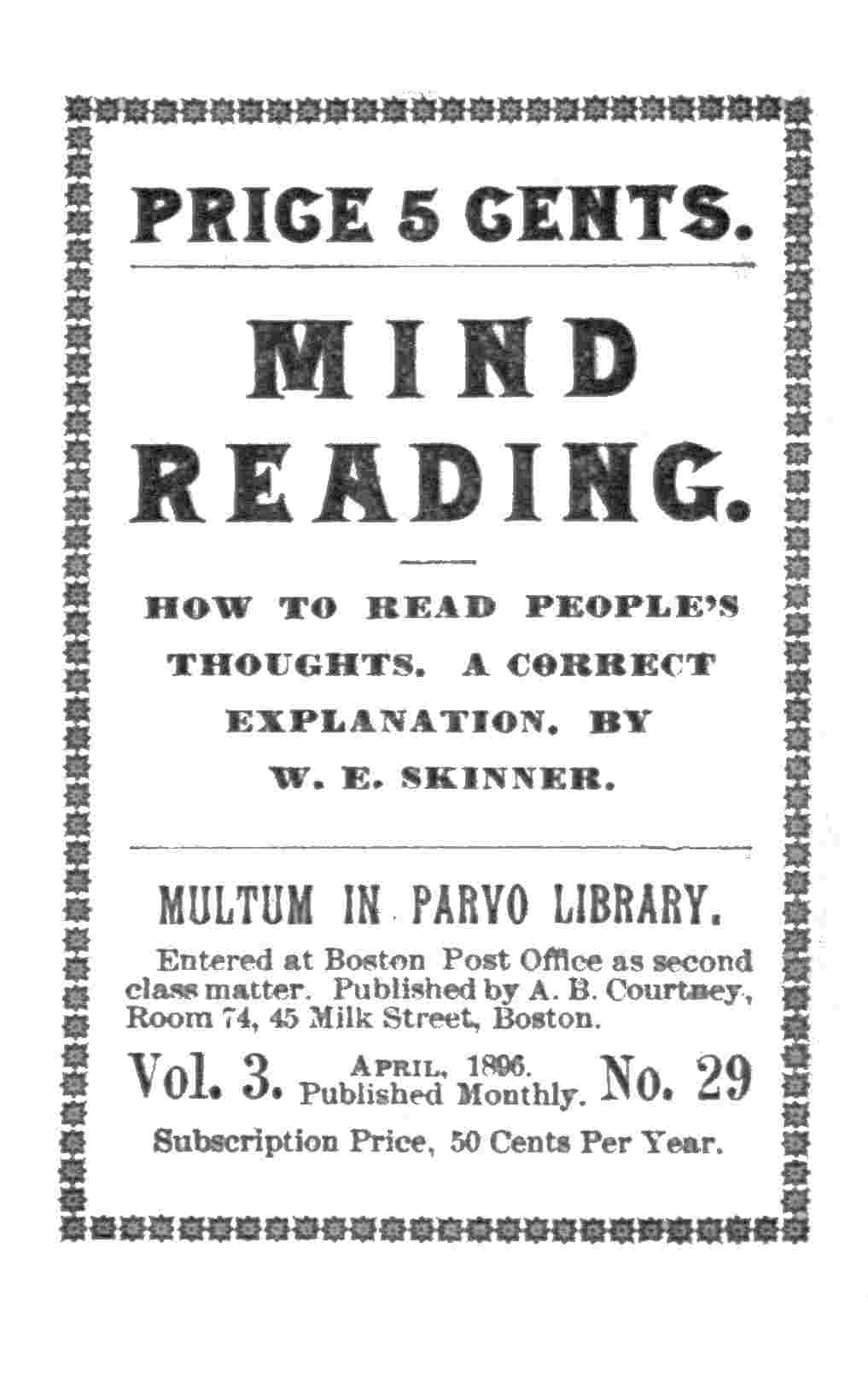
MIND READING.
Secrets of Mind Reading.
Many pages have been, and probably, will be, devoted to lengthy essays on the art, science, and theory of so called mind reading.
To the average reader such an essay is dull and uninteresting as well as uninstructive, and of no practical use.
Rare instances of genuine thought transference there may be, they are not general, and not possible to even the most susceptible people in a promiscuous and usually unsympathetic audience.
The modus operandi here given is the method used by Stuart Cumberland, the late Washington Bishop and others who might be termed professional mind readers.
This system is known as “muscle reading” and ethereal influence, thought waves, and other uncertain and generally unreliable things form no part of the programme.
The usual feats of the mind reader who gives public exhibitions are to find concealed articles, write names, pick out keys thought of on piano or similar instrument.