
I will tell to you a story, for in winter time we bore ye
With many an ancient legend and tale of by-gone time;
And methinks that there is in it enough to pass a minute,
So, to add to my vain-glory, I have put it into rhyme.
As I heard it you shall hear it,—by one whom I revere, it
Was told me, as in childhood upon his knee I sat.
It treats of days long vanished,—of the times of James the Banished,
Of periwig and rapier, and quaint three-cornered hat.
Sir Walter Ralph de Guyon, of a noble house the scion,
Though his monarch was defeated, still held bravely to his cause,
And foremost in the slaughter by the Boyne’s ill-fated water
Was seen his knightly cognizance,—a bear with bloody paws.
But when the fight was over, escaping under cover
Of the darkness and confusion, to England he returned,
As well might be expected, dispirited, dejected,
But his rage within him smouldered, nor ever brightly burned.
Save when his daughter Alice would say in playful malice,
That she loved the gallant Orange much better than the Green;
And that as a maid she’d tarry, till she found a chance to marry
With one true to William, her bold king, and Mary, her good queen.
Then Sir Walter’s brow would darken, and he’d mutter, “Alice, hearken!
By my child no such treason shall be spoken e’en in jest;
And bethink you, oh, my daughter! there is one across the water
Who shall one day have his own again, though now he’s sore distressed.”
Little knew he that each even, ’twixt the hours of six and seven,
Just below his daughter’s casement a whistle low was blown;
And that soon as e’er it sounded through the wicket-gate she bounded,
And was clasped in the embrace of one of bold “King William’s Own.”
Ay! De Ruyter was a gentleman, and high-bred were his people;
No chapel-going folks were they, but loved a church and steeple!
His blood, of every good Dutch race contained a little sprinkle—
A Knickerbocker was his sire, his aunt a Rip van Winkle;
And so well he danced and sang, and kissed and talked so wondrous clever,
He gave this maiden’s heart a twist, and conquered it for ever!
And being thus a captain gay, “condemned to country quarters,”
A favourite of his royal lord, adorned with stars and garters,
He saw this young maid,
As one day on parade
He was gaily attired, all jackboots and braid.
He stared, she but glanced,
Her charms it enhanced;
She passed by him quickly, he rested entranced!
No orders he utters,
But vacantly mutters
(Though clamouring round him his underlings gabble hard),
“She’s to me Eloisa; to her I’ll be Abelard!”
And ever since that hour, whene’er he had the power,
Across to bold Sir Walter’s the captain bent his path;
At the garden-gate he met her—upon his knee he set her—
And, vanquished by the daughter’s love, forgot the father’s wrath:
Till when on the day in question, with a view to aid digestion,
Some retainers of Sir Walter, who with their lord had dined,
Bethought of promenading, what by Gamp is called the “garding,”
And, during their researches, what think ye they should find?
But a gallant captain kneeling, and apparently appealing,
To a dame who to all seeming, was encouraging his suit;
All dishevelled were her tresses by the warmth of his caresses,
And her eye with love was liquid, although her voice was mute!
“A prize! a prize!” quoth these Papist spies,—
“A prize for our gallant lord!”
And before poor De Ruyter awoke from surprise
They had pinioned his arms, they had bandaged his eyes;
And when he recovered, his first surmise
Was “At length I am thoroughly floored!”
For assistance he calls, but they gag him,
And off to Sir Walter they drag him;
While Abraham Cooper,
A stalwart old trooper,
Expresses a hope that they’ll “scrag” him.
He conceives it “a pretty idea, as
To think that these Dutch furrineerers
Should come here a-courtin’,
On our manors sportin’;
A set of young winkers and leerers!”
Sir Walter’s brow grew black as night,
He doubted if he heard aright;
“What, to my daughter kneeling here!
Methinks thou’rt daring, cavalier,
To venture ’neath the gripe of one
Whose ancient race, from sire to son,
Has ever, e’en in face of death,
Upheld that pure and holy faith
By thee and thine denied!
Or think’st thou that, to bow the knee
And whisper words of gallantry
To one of English blood and birth
Were pastime meet for hour of mirth?
God’s life! before to-morrow’s sun
Gilds yonder wood, thy race is run;
Nought care I for thy foreign king,
From yon tall oak thy corpse shall swing,
Let good or ill betide!”
Away he is hurried,
All worried and flurried,
And locked in a chamber, dark, dirty, and small,—
Huge barriers of iron
The windows environ,
And the door leads but into the banqueting-hall.
The banqueting-hall is soon gaily lit up,
For Sir Walter loved dearly a well-filled cup,
And sent to invite
Each guest that night,
With “where you have dined, boys, why there you shall sup.”
In the banqueting-hall,
Both great and small,
The cavalier knights, the retainers tall,
Together are gathered—one and all.
The red wine has flowed and taken effect
On all, save poor Alice, who, distraite, deject,
Has refused to take part in this riotous revel,
And wished those who did with the—Father of Evil.
The mirth was at its loudest, the humblest and the proudest
Were hobnobbing together, as though the dearest friends;
While some for wine were bawling, there were others loudly calling
For a song,—that ancient fiction which e’er to misery tends;
When Sir Walter grasped the table—rose, as well as he was able—
And entreated for a moment that his guests would give him heed:
“’Tis St. Michael’s Eve,—a time accursèd by a crime
Committed by my ancestor—a ruthless, bloody deed!
“For during times of danger, a sable-armoured stranger
One night had roused the castle, and shelter had implored;
Much gold, he said, he carried, and now too late had tarried,
To risk the chance of robbers, or to cross the neighbouring ford.
“He was shown into a bedroom, since that period called the Red Room,
(You can see it,” said Sir Walter, “for yonder is the door;
And there, in our safe keeping, the Dutchman now is sleeping);
And from that room the stranger never, never issued more.
“But throughout this ancient castle, each terror-stricken vassal
Heard shriek on shriek resounding in the middle of the night;
And with the dawn of morning would each have ‘given warning,’
But for one little obstacle yclept the ‘feudal right.’
“So no murm’ring e’er was uttered, and old Sir Brandreth muttered
That his visitor had left him as soon as break of day;
But one thing worth attention Sir Brandreth didn’t mention,—
He didn’t take his armour; there in the room it lay,
“And there it lies at present; but each credulous old peasant
Will tell you that upon this night the spectre walks abroad;
’Tis just about his hour, if he really have the power,
We now shall see him. Heavens! he enters, by the Lord!”
Bang! clash!
With a terrible crash,
Flies open the bedroom door,
And out stalks a figure,
To their eyes much bigger
Than great Gog or Magog, more black than a nigger,
In armour accoutred from head to heel,—
Black rusty old armour, not polished steel.
His vizor is down, but he takes a sight,
Though he moves not his eyes to the left or right;
He says not a word, but he walks straight on,
The hall door opes at his step! he’s gone!
He clanks ’cross the court-yard, and enters the stable;
His footsteps are heard by the guests ’neath the table,
For there they have hidden them every one.
There, shivering and shaking, they waited till the breaking
Of the daylight showed the power of all ghosts was at an end;
Then one by one uprising, declared it was surprising
That, overcome by liquor, each had dropped down by his friend;
Till the heart of each was lightened by finding that as frightened
As he himself were all by the spiritual sight;
But their courage and their strength coming back to them at length,
They hasten to the prisoner’s room, and find it—vacant quite!
Yes! De Ruyter had departed! for while lying all downhearted,
And thinking of poor Alice, he remembered just in time
The spectre-walking legend—he had heard it from a “peagant”
(Excuse the Gampism, reader, but I use it for the rhyme);
And on the instant bright’ning, he proceeded, quick as lightning,
To dress him in the armour which the sable knight had left;
And he listened to the host, till, at mention of the ghost,
He burst upon the drinkers, of their senses nigh bereft.
He called Alice to the stable; then, as fast as he was able,
Galloped off towards his quarters; thence to London hastened on;
There was married to his charmer, thence sent back the sable armour,
And asked Sir Walter’s sanction to the good deed he had done.
My tale is nearly ended. Sir Walter, much offended
At the hoax played off upon him, would not listen for awhile;
But regretting much his daughter, came at length to town and sought her,
For he missed her childish prattle and her fond endearing smile.
And then on this occasion a grand reconciliation
He had with young De Ruyter—ever after they were friends.
So having now related the tale to me as stated,
I take my humble leave of you, and here my story ends.
E. H. Y.
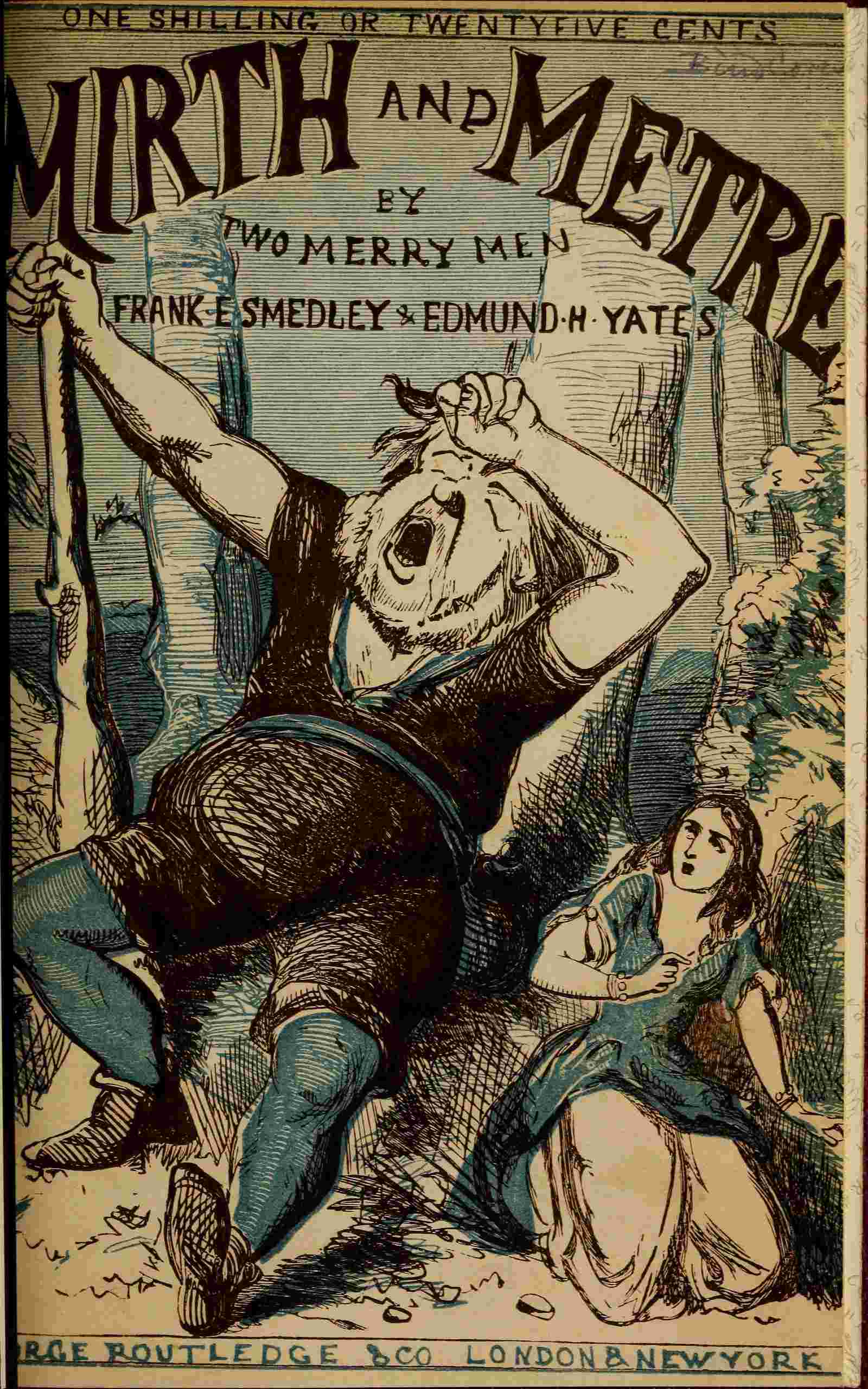
ST. MICHAEL’S EVE.—p. 36.