
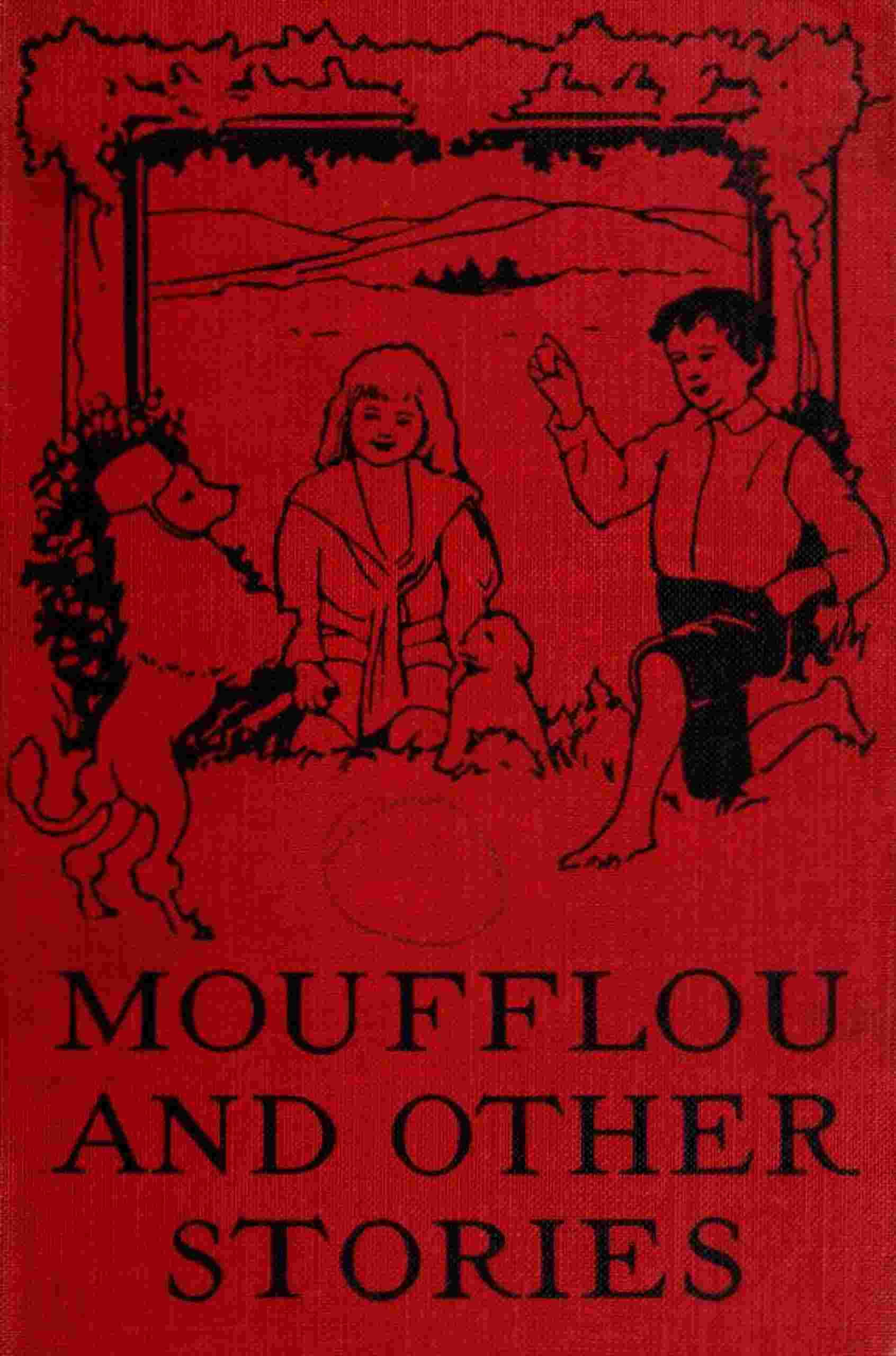
MOUFFLOU
MOUFFLOU
MOUFFLOU’S masters were some boys and girls. They were very poor, but they were very merry. They lived in an old, dark, tumble-down place, and their father had been dead five years; their mother’s care was all they knew; and Tasso was the eldest of them all, a lad of nearly twenty, and he was so kind, so good, so laborious, so cheerful, and so gentle, that the children all younger than he adored him. Tasso was a gardener. Tasso, however, though the eldest and mainly the bread-winner, was not so much Moufflou’s master as was little Romolo, who was only ten, and a cripple. Romolo, called generally Lolo, had taught Moufflou all he knew, and that all was a very great deal, for nothing cleverer than was Moufflou had ever walked upon four legs.
Why Moufflou?
Well, when the poodle had been given to them by a soldier who was going back to his home in Piedmont, he had been a white woolly creature of a year old, and the children’s mother, who was a Corsican by birth, had said that he was just like a moufflon, as they call sheep in Corsica. White and woolly this dog remained, and he became the handsomest and biggest poodle in all the city, and the corruption of Moufflou from Moufflon remained the name by which he was known; it was silly, perhaps, but it suited him and the children, and Moufflou he was.
They lived in an old quarter of Florence, in that picturesque zigzag which goes round the grand church of Or San Michele, and which is almost more Venetian than Tuscan in its mingling of color, charm, stateliness, popular confusion, and architectural majesty. The tall old houses are weather-beaten into the most delicious hues; the pavement is enchantingly encumbered with peddlers and stalls and all kinds of trades going on in the open air, in that bright, merry, beautiful Italian custom which, alas, alas! is being driven away by new-fangled laws which deem it better for the people to be stuffed up in close, stewing rooms without air, and would fain do away with all the good-tempered politics and the sensible philosophies and the wholesome chatter which the open-street trades and street gossipry encourage, for it is good for the populace to sfogare and in no other way can it do so one-half so innocently. Drive it back into musty shops, and it is driven at once to mutter sedition.... But you want to hear about Moufflou.
Well, Moufflou lived here in that high house with the sign of the lamb in wrought iron, which shows it was once a warehouse of the old guild of the Arte della Lana. They are all old houses here, drawn round about that grand church which I called once, and will call again, like a mighty casket of oxidized silver. A mighty casket indeed, holding the Holy Spirit within it; and with the vermilion and the blue and the orange glowing in its niches and its lunettes like enamels, and its statues of the apostles strong and noble, like the times in which they were created,—St. Peter with his keys, and St. Mark with his open book, and St. George leaning on his sword, and others also, solemn and austere as they, austere though benign, for do they not guard the White Tabernacle of Orcagna within?
The church stands firm as a rock, square as a fortress of stone, and the winds and the waters of the skies may beat about it as they will, they have no power to disturb its sublime repose. Sometimes I think of all the noble things in all our Italy; Or San Michele is the noblest, standing there in its stern magnificence, amidst people’s hurrying feet and noisy laughter, a memory of God.
The little masters of Moufflou lived right in its shadow, where the bridge of stone spans the space between the houses and the church high in mid-air: and little Lolo loved the church with a great love. He loved it in the morning-time, when the sunbeams turned it into dusky gold and jasper; he loved it in the evening-time, when the lights of its altars glimmered in the dark, and the scent of its incense came out in the street; he loved it in the great feasts, when the huge clusters of lilies were borne inside it; he loved it in the solemn nights of winter; the flickering gleam of the dull lamps shone on the robes of an apostle, or the sculpture of a shield, or the glow of a casement-moulding in majolica. He loved it always, and, without knowing why, he called it la mia chiesa.
Lolo, being lame and of delicate health, was not enabled to go to school or to work, though he wove the straw covering of wine-flasks and plaited the cane matting with busy fingers. But for the most part he did as he liked, and spent most of his time sitting on the parapet of Or San Michele, watching the venders of earthenware at their trucks, or trotting with his crutch (and he could trot a good many miles when he chose) out with Moufflou down a bit of the Stocking-makers’ Street, along under the arcades of the Uffizi, and so over the Jewellers’ Bridge, and out by byways that he knew into the fields on the hill-side upon the other bank of Arno. Moufflou and he would spend half the day—all the day—out there in daffodil-time; and Lolo would come home with great bundles and sheaves of golden flowers, and he and Moufflou were happy.
His mother never liked to say a harsh word to Lolo, for he was lame through her fault: she had let him fall in his babyhood, and the mischief had been done to his hip never again to be undone. So she never raised her voice to him, though she did often to the others,—to curly-pated Cecco, and pretty black-eyed Dina, and saucy Bice, and sturdy Beppo, and even to the good, manly, hard-working Tasso. Tasso was the mainstay of the whole, though he was but a gardener’s lad, working in the green Cascine at small wages. But all he earned he brought home to his mother; and he alone kept in order the lazy, high-tempered Sandro, and he alone kept in check Bice’s love of finery, and he alone could with shrewdness and care make both ends meet and put minestra always in the pot and bread always in the cupboard.
When his mother thought, as she thought indeed almost ceaselessly, that with a few months he would be of the age to draw his number, and might draw a high one and be taken from her for three years, the poor soul believed her very heart would burst and break; and many a day at twilight she would start out unperceived and creep into the great church and pour her soul forth in supplication before the White Tabernacle.
Yet, pray as she would, no miracle could happen to make Tasso free of military service: if he drew a fatal number, go he must, even though he take all the lives of them to their ruin with him.
One morning Lolo sat as usual on the parapet of the church, Moufflou beside him. It was a brilliant morning in September. The men at the hand-barrows and at the stalls were selling the crockery, the silk handkerchiefs, and the straw hats which form the staple of the commerce that goes on round about Or San Michele,—very blithe, good-natured, gay commerce, for the most part, not got through, however, of course, without bawling and screaming, and shouting and gesticulating, as if the sale of a penny pipkin or a twopenny pie-pan were the occasion for the exchange of many thousands of pounds sterling and cause for the whole world’s commotion. It was about eleven o’clock; the poor petitioners were going in for alms to the house of the fraternity of San Giovanni Battista; the barber at the corner was shaving a big man with a cloth tucked about his chin, and his chair set well out on the pavement; the sellers of the pipkins and pie-pans were screaming till they were hoarse, “Un soldo l’uno, due soldi tre!” big bronze bells were booming till they seemed to clang right up to the deep-blue sky; some brethren of the Misericordia went by bearing a black bier; a large sheaf of glowing flowers—dahlias, zinnias, asters, and daturas—was borne through the huge arched door of the church near St. Mark and his open book. Lolo looked on at it all, and so did Moufflou, and a stranger looked at them as he left the church.
“You have a handsome poodle there, my little man,” he said to Lolo, in a foreigner’s too distinct and careful Italian.
“Moufflou is beautiful,” said Lolo, with pride. “You should see him when he is just washed; but we can only wash him on Sundays, because then Tasso is at home.”
“How old is your dog?”
“Three years old.”
“Does he do any tricks?”
“Does he!” said Lolo, with a very derisive laugh: “Why, Moufflou can do anything! He can walk on two legs ever so long; make ready, present, and fire; die; waltz; beg, of course; shut a door; make a wheelbarrow of himself; there is nothing he will not do. Would you like to see him do something?”
“Very much,” said the foreigner.
To Moufflou and to Lolo the street was the same thing as home; this cheery piazzetta by the church, so utterly empty sometimes, and sometimes so noisy and crowded, was but the wider threshold of their home to both the poodle and the child.
So there, under the lofty and stately walls of the old church, Lolo put Moufflou through his exercises. They were second nature to Moufflou, as to most poodles. He had inherited his address at them from clever parents, and, as he had never been frightened or coerced, all his lessons and acquirements were but play to him. He acquitted himself admirably and the crockery-venders came and looked on, and a sacristan came out of the church and smiled, and the barber left his customer’s chin all in a lather while he laughed, for the good folk of the quarter were all proud of Moufflou and never tired of him, and the pleasant, easy-going, good-humored disposition of the Tuscan populace is so far removed from the stupid buckram and whalebone in which the new-fangled democracy wants to imprison it.
The stranger also was much diverted by Moufflon’s talents, and said, half aloud, “How this clever dog would amuse poor Victor! Would you bring your poodle to please a sick child I have at home?” he said, quite aloud, to Lolo, who smiled and answered that he would. Where was the sick child?
“At the Gran Bretagna; not far off,” said the gentleman. “Come this afternoon, and ask for me by this name.”
He dropped his card and a couple of francs into Lolo’s hand, and went his way. Lolo, with Moufflou scampering after him, dashed into his own house, and stumped up the stairs, his crutch making a terrible noise on the stone.
“Mother, mother! see what I have got because Moufflou did his tricks,” he shouted. “And now you can buy those shoes you want so much, and the coffee that you miss so of a morning, and the new linen for Tasso, and the shirts for Sandro.”
For to the mind of Lolo two francs was as two millions—source unfathomable of riches inexhaustible!
With the afternoon he and Moufflou trotted down the arcades of the Uffizi and down the Lung’ Arno to the hotel of the stranger, and, showing the stranger’s card, which Lolo could not read, they were shown at once into a great chamber, all gilding and fresco and velvet furniture.
But Lolo, being a little Florentine, was never troubled by externals, or daunted by mere sofas and chairs; he stood and looked around him with perfect composure; and Moufflou, whose attitude, when he was not romping, was always one of magisterial gravity, sat on his haunches and did the same.
Soon the foreigner he had seen in the forenoon entered and spoke to him, and led him into another chamber, where stretched on a couch was a little wan-faced boy about seven years old; a pretty boy, but so pallid, so wasted, so helpless. This poor little boy was heir to a great name and a great fortune, but all the science in the world could not make him strong enough to run about among the daisies, or able to draw a single breath without pain. A feeble smile lit up his face as he saw Moufflou and Lolo; then a shadow chased it away.
MOUFFLOU ACQUITTED HIMSELF ABLY AS EVER.
“Little boy is lame like me,” he said, in a tongue Lolo did not understand.
“Yes, but he is a strong little boy, and can move about, as perhaps the suns of his country will make you do,” said the gentleman, who was the poor little boy’s father. “He has brought you his poodle to amuse you. What a handsome dog! is it not?”
“Oh, bufflins!” said the poor little fellow, stretching out his wasted hands to Moufflou, who submitted his leonine crest to the caress.
Then Lolo went through the performance, and Moufflou acquitted himself ably as ever; and the little invalid laughed and shouted with his tiny thin voice, and enjoyed it all immensely, and rained cakes and biscuits on both the poodle and its master. Lolo crumped the pastries with willing white teeth, and Moufflou did no less. Then they got up to go, and the sick child on the couch burst into fretful lamentations and outcries.
“I want the dog! I will have the dog!” was all he kept repeating.
But Lolo did not know what he said, and was only sorry to see him so unhappy.
“You shall have the dog to-morrow,” said the gentleman, to pacify his little son; and he hurried Lolo and Moufflou out of the room, and consigned them to a servant, having given Lolo five francs this time.
“Why, Moufflou,” said Lolo, with a chuckle of delight, “if we could find a foreigner every day, we could eat meat at supper, Moufflou, and go to the theatre every evening!”
And he and his crutch clattered home with great eagerness and excitement, and Moufflou trotted on his four frilled feet, the blue bow with which Bice had tied up his curls on the top of his head, fluttering in the wind. But, alas! even his five francs could bring no comfort at home. He found his whole family wailing and mourning in utterly inconsolable distress.
Tasso had drawn his number that morning, and the number was seven, and he must go and be a conscript for three years.
The poor young man stood in the midst of his weeping brothers and sisters, with his mother leaning against his shoulder, and down his own brown cheeks the tears were falling. He must go, and lose his place in the public gardens, and leave his people to starve as they might, and be put in a tomfool’s jacket, and drafted off among cursing and swearing and strange faces, friendless, homeless, miserable! And the mother,—what would become of the mother?
Tasso was the best of lads and the mildest. He was quite happy sweeping up the leaves in the long alleys of the Cascine, or mowing the green lawns under the ilex avenues, and coming home at supper-time among the merry little people and the good woman that he loved. He was quite contented; he wanted nothing, only to be let alone; and they would not let him alone. They would haul him away to put a heavy musket in his hand and a heavy knapsack on his back, and drill him, and curse him, and make him into a human target, a live popinjay.
No one had any heed for Lolo and his five francs, and Moufflou, understanding that some great sorrow had fallen on his friends, sat down and lifted up his voice and howled.
Tasso must go away!—that was all they understood. For three long years they must go without the sight of his face, the aid of his strength, the pleasure of his smile: Tasso must go! When Lolo understood the calamity that had befallen them, he gathered Moufflou up against his breast, and sat down, too, on the floor beside him and cried as if he would never stop crying.
There was no help for it: it was one of those misfortunes which are, as we say in Italian, like a tile tumbled on the head. The tile drops from a height, and the poor head bows under the unseen blow. That is all.
“What is the use of that?” said the mother, passionately, when Lolo showed her his five francs. “It will not buy Tasso’s discharge.”
Lolo felt that his mother was cruel and unjust, and crept to bed with Moufflou. Moufflou always slept on Lolo’s feet.
The next morning Lolo got up before sunrise, and he and Moufflou accompanied Tasso to his work in the Cascine.
Lolo loved his brother, and clung to every moment whilst they could still be together.
“Can nothing keep you, Tasso?” he said, despairingly, as they went down the leafy aisles, whilst the Arno water was growing golden as the sun rose.
Tasso sighed.
“Nothing, dear. Unless Gesú would send me a thousand francs to buy a substitute.”
And he knew he might as well have said, “If one could coin gold ducats out of the sunbeams on Arno water.”
Lolo was very sorrowful as he lay on the grass in the meadow where Tasso was at work, and the poodle lay stretched beside him.
When Lolo went home to dinner (Tasso took his wrapped in a handkerchief) he found his mother very agitated and excited. She was laughing one moment, crying the next. She was passionate and peevish, tender and jocose by turns; there was something forced and feverish about her which the children felt but did not comprehend. She was a woman of not very much intelligence, and she had a secret, and she carried it ill, and knew not what to do with it; but they could not tell that. They only felt a vague sense of disturbance and timidity at her unwonted manner.
The meal over (it was only bean-soup, and that is soon eaten), the mother said sharply to Lolo, “Your aunt Anita wants you this afternoon. She has to go out, and you are needed to stay with the children: be off with you.”
Lolo was an obedient child; he took his hat and jumped up as quickly as his halting hip would let him. He called Moufflou, who was asleep.
“Leave the dog,” said his mother, sharply. “’Nita will not have him messing and carrying mud about her nice clean rooms. She told me so. Leave him, I say.”
“Leave Moufflou!” echoed Lolo, for never in all Moufflou’s life had Lolo parted from him. Leave Moufflou! He stared open-eyed and open-mouthed at his mother. What could have come to her?
“Leave him, I say,” she repeated, more sharply than ever. “Must I speak twice to my own children? Be off with you, and leave the dog, I say.”
And she clutched Moufflou by his long silky mane and dragged him backwards, whilst with the other hand she thrust out of the door Lolo and Bice.
Lolo began to hammer with his crutch at the door thus closed on him; but Bice coaxed and entreated him.
“Poor mother has been so worried about Tasso,” she pleaded. “And what harm can come to Moufflou? And I do think he was tired, Lolo; the Cascine is a long way; and it is quite true that Aunt ’Nita never liked him.”
So by one means and another she coaxed her brother away; and they went almost in silence to where their aunt Anita dwelt, which was across the river, near the dark-red bell-shaped dome of Santa Spirito.
It was true that her aunt had wanted them to mind her room and her babies whilst she was away carrying home some lace to a villa outside the Roman gate, for she was a lace-washer and clear-starcher by trade. There they had to stay in the little dark room with the two babies, with nothing to amuse the time except the clang of the bells of the church of the Holy Spirit, and the voices of the lemonade-sellers shouting in the street below. Aunt Anita did not get back till it was more than dusk, and the two children trotted homeward hand in hand, Lolo’s leg dragging itself painfully along, for without Moufflou’s white figure dancing on before him he felt very tired indeed. It was pitch dark when they got to Or San Michele, and the lamps burned dully.
Lolo stumped up the stairs wearily, with a vague, dull fear at his small heart.
“Moufflou, Moufflou!” he called. Where was Moufflou? Always at the first sound of his crutch the poodle came flying towards him. “Moufflou, Moufflou!” he called all the way up the long, dark twisting stone stair. He pushed open the door, and he called again, “Moufflou, Moufflou!”
But no dog answered to his call.
“Mother, where is Moufflou?” he asked, staring with blinking, dazzled eyes into the oil-lit room where his mother sat knitting. Tasso was not then home from work. His mother went on with her knitting; there was an uneasy look on her face.
“Mother, what have you done with Moufflou, my Moufflou?” said Lolo, with a look that was almost stern on his ten-year-old face.
Then his mother, without looking up and moving her knitting-needles very rapidly, said,—
“Moufflou is sold!”
And little Dina, who was a quick, pert child, cried, with a shrill voice,—
“Mother has sold him for a thousand francs to the foreign gentleman.”
“Sold him!”
Lolo grew white and grew cold as ice; he stammered, threw up his hands over his head, gasped a little for breath, then fell down in a dead swoon, his poor useless limb doubled under him.
When Tasso came home that sad night and found his little brother shivering, moaning, and half delirious, and when he heard what had been done, he was sorely grieved.
“Oh, mother, how could you do it?” he cried. “Poor, poor Moufflou! and Lolo loves him so!”
“I have got the money,” said his mother, feverishly, “and you will not need to go for a soldier: we can buy your substitute. What is a poodle, that you mourn about it? We can get another poodle for Lolo.”
“Another will not be Moufflou,” said Tasso, and yet was seized with such a frantic happiness himself at the knowledge that he would not need go to the army, that he, too, felt as if he were drunk on new wine, and had not the heart to rebuke his mother.
“A thousand francs!” he muttered; “a thousand francs! Dio mio! Who could ever have fancied anybody would have given such a price for a common white poodle? One would think the gentleman had bought the church and the tabernacle!”
“Fools and their money are soon parted,” said his mother, with cross contempt.
It was true: she had sold Moufflou.
The English gentleman had called on her while Lolo and the dog had been in the Cascine, and had said that he was desirous of buying the poodle, which had so diverted his sick child that the little invalid would not be comforted unless he possessed it. Now, at any other time the good woman would have sturdily refused any idea of selling Moufflou; but that morning the thousand francs which would buy Tasso’s substitute were forever in her mind and before her eyes. When she heard the foreigner her heart gave a great leap, and her head swam giddily, and she thought, in a spasm of longing—if she could get those thousand francs! But though she was so dizzy and so upset she retained her grip on her native Florentine shrewdness. She said nothing of her need of the money; not a syllable of her sore distress. On the contrary, she was coy and wary, affected great reluctance to part with her pet, invented a great offer made for him by a director of a circus, and finally let fall a hint that less than a thousand francs she could never take for poor Moufflou.
The gentleman assented with so much willingness to the price that she instantly regretted not having asked double. He told her that if she would take the poodle that afternoon to his hotel the money should be paid to her; so she despatched her children after their noonday meal in various directions, and herself took Moufflou to his doom. She could not believe her senses when ten hundred-franc notes were put into her hand. She scrawled her signature, Rosina Calabucci, to a formal receipt, and went away, leaving Moufflou in his new owner’s rooms, and hearing his howls and moans pursue her all the way down the staircase and out into the air.
She was not easy at what she had done.
“It seemed,” she said to herself, “like selling a Christian.”
But then to keep her eldest son at home—what a joy that was! On the whole, she cried so and laughed so as she went down the Lung’ Arno that once or twice people looked at her, thinking her out of her senses, and a guard spoke to her angrily.
Meanwhile, Lolo was sick and delirious with grief. Twenty times he got out of his bed and screamed to be allowed to go with Moufflou, and twenty times his mother and his brothers put him back again and held him down and tried in vain to quiet him.
The child was beside himself with misery. “Moufflou! Moufflou!” he sobbed at every moment; and by night he was in a raging fever, and when his mother, frightened, ran in and called in the doctor of the quarter, that worthy shook his head and said something as to a shock of the nervous system, and muttered a long word—“meningitis.”
Lolo took a hatred to the sight of Tasso, and thrust him away, and his mother, too.
“It is for you Moufflou is sold,” he said, with his little teeth and hands tight clinched.
After a day or two Tasso felt as if he could not bear his life, and went down to the hotel to see if the foreign gentleman would allow him to have Moufflou back for half an hour to quiet his little brother by a sight of him. But at the hotel he was told that the Milord Inglese who had bought the dog of Rosina Calabucci had gone that same night of the purchase to Rome, to Naples, to Palermo, chi sa?
“And Moufflou with him?” asked Tasso.
“The barbone he had bought went with him,” said the porter of the hotel. “Such a beast! Howling, shrieking, raging all the day, and all the paint scratched off the salon door.”
Poor Moufflou! Tasso’s heart was heavy as he heard of that sad helpless misery of their bartered favorite and friend.
“What matter?” said his mother, fiercely, when he told her. “A dog is a dog. They will feed him better than we could. In a week he will have forgotten—chè!”
But Tasso feared that Moufflou would not forget. Lolo certainly would not. The doctor came to the bedside twice a day, and ice and water were kept on the aching hot little head that had got the malady with the long name, and for the chief part of the time Lolo lay quiet, dull, and stupid, breathing heavily, and then at intervals cried and sobbed and shrieked hysterically for Moufflou.
“Can you not get what he calls for to quiet him with a sight of it?” said the doctor. But that was not possible, and poor Rosina covered her head with her apron and felt a guilty creature.
“Still, you will not go to the army,” she said to Tasso, clinging to that immense joy for her consolation. “Only think! we can pay Guido Squarcione to go for you. He always said he would go if anybody would pay him. Oh, my Tasso, surely to keep you is worth a dog’s life!”
“And Lolo’s?” said Tasso, gloomily. “Nay, mother, it works ill to meddle too much with fate. I drew my number; I was bound to go. Heaven would have made it up to you somehow.”
“Heaven sent me the foreigner; the Madonna’s own self sent him to ease a mother’s pain,” said Rosina, rapidly and angrily. “There are the thousand francs safe to hand in the cassone, and what, pray, is it we miss? Only a dog like a sheep, that brought gallons of mud in with him every time it rained, and ate as much as any one of you.”
“But Lolo?” said Tasso, under his breath.
His mother was so irritated and so tormented by her own conscience that she upset all the cabbage broth into the burning charcoal.
“Lolo was always a little fool, thinking of nothing but the church and the dog and nasty field-flowers,” she said, angrily. “I humored him ever too much because of the hurt to his hip, and so—and so——”
Then the poor soul made matters worse by dropping her tears into the saucepan, and fanning the charcoal so furiously that the flame caught her fan of cane-leaves, and would have burned her arm had not Tasso been there.
“You are my prop and safety always. Who would not have done what I did? Not Santa Felicita herself,” she said, with a great sob.
But all this did not cure poor Lolo.
The days and the weeks of the golden autumn weather passed away, and he was always in danger, and the small close room where he slept with Sandro and Beppo and Tasso was not one to cure such an illness as had now beset him. Tasso went to his work with a sick heart in the Cascine, where the colchicum was all lilac among the meadow grass, and the ashes and elms were taking their first flush of the coming autumnal change. He did not think Lolo would ever get well, and the good lad felt as if he had been the murderer of his little brother.
True, he had had no hand or voice in the sale of Moufflou, but Moufflou had been sold for his sake. It made him feel half guilty, very unhappy, quite unworthy of all the sacrifice that had been made for him. “Nobody should meddle with fate,” thought Tasso, who knew his grandfather had died in San Bonifazio because he had driven himself mad over the dream-book trying to get lucky numbers for the lottery and become a rich man at a stroke.
It was rapture, indeed, to know that he was free of the army for a time at least, that he might go on undisturbed at his healthful labor, and get a raise in wages as time went on, and dwell in peace with his family, and perhaps—perhaps in time earn enough to marry pretty flaxen-haired Biondina, the daughter of the barber in the piazzetta. It was rapture indeed; but then poor Moufflou!—and poor, poor Lolo! Tasso felt as if he had bought his own exemption by seeing his little brother and the good dog torn in pieces and buried alive for his service.
And where was poor Moufflou?
Gone far away somewhere south in the hurrying, screeching, vomiting, braying train that it made Tasso giddy only to look at as it rushed by the green meadows beyond the Cascine on its way to the sea.
“If he could see the dog he cries so for, it might save him,” said the doctor, who stood with a grave face watching Lolo.
But that was beyond any one’s power. No one could tell where Moufflou was. He might be carried away to England, to France, to Russia, to America—who could say? They did not know where his purchaser had gone. Moufflou even might be dead.
The poor mother, when the doctor said that, went and looked at the ten hundred-franc notes that were once like angels’ faces to her, and said to them,—
“Oh, you children of Satan, why did you tempt me? I sold the poor, innocent, trustful beast to get you, and now my child is dying!”
Her eldest son would stay at home, indeed; but if this little lame one died! Rosina Calabucci would have given up the notes and consented never to own five francs in her life if only she could have gone back over the time and kept Moufflou, and seen his little master running out with him into the sunshine.
More than a month went by, and Lolo lay in the same state, his yellow hair shorn, his eyes dilated and yet stupid, life kept in him by a spoonful of milk, a lump of ice, a drink of lemon-water; always muttering, when he spoke at all. “Moufflou, Moufflou, dov’ è Moufflou?” and lying for days together in somnolence and unconsciousness, with the fire eating at his brain and the weight lying on it like a stone.
The neighbors were kind, and brought fruit and the like, and sat up with him, and chattered so all at once in one continuous brawl that they were enough in themselves to kill him, for such is ever the Italian fashion of sympathy in all illness.
But Lolo did not get well, did not even seem to see the light at all, or to distinguish any sounds around him; and the doctor in plain words told Rosina Calabucci that her little boy must die. Die, and the church so near? She could not believe it. Could St. Mark, and St. George, and the rest that he had loved so do nothing for him? No, said the doctor, they could do nothing; the dog might do something, since the brain had so fastened on that one idea; but then they had sold the dog.
“Yes; I sold him!” said the poor mother, breaking into floods of remorseful tears.
So at last the end drew so nigh that one twilight time the priest came out of the great arched door that is next St. Mark, with the Host uplifted, and a little acolyte ringing the bell before it, and passed across the piazzetta, and went up the dark staircase of Rosina’s dwelling, and passed through the weeping, terrified children, and went to the bedside of Lolo.
Lolo was unconscious, but the holy man touched his little body and limbs with the sacred oil, and prayed over him, and then stood sorrowful with bowed head.
Lolo had had his first communion in the summer, and in his preparation for it had shown an intelligence and devoutness that had won the priest’s gentle heart.
Standing there, the holy man commended the innocent soul to God. It was the last service to be rendered to him save that very last of all when the funeral office should be read above his little grave among the millions of nameless dead at the sepulchres of the poor at Trebbiano.
All was still as the priest’s voice ceased; only the sobs of the mother and of the children broke the stillness as they kneeled; the hand of Biondina had stolen into Tasso’s.
Suddenly, there was a loud scuffling noise; hurrying feet came patter, patter, patter up the stairs; a ball of mud and dust flew over the heads of the kneeling figures, fleet as the wind Moufflou dashed through the room and leaped upon the bed.
Lolo opened his heavy eyes, and a sudden light of consciousness gleamed in them like a sunbeam. “Moufflou!” he murmured, in his little thin faint voice. The dog pressed close to his breast and kissed his wasted face.
Moufflou was come home!
And Lolo came home too, for death let go its hold upon him. Little by little, very faintly and flickeringly and very uncertainly at the first, life returned to the poor little body, and reason to the tormented, heated little brain. Moufflou was his physician; Moufflou, who, himself a skeleton under his matted curls, would not stir from his side and looked at him all day long with two beaming brown eyes full of unutterable love.
Lolo was happy; he asked no questions,—was too weak, indeed, even to wonder. He had Moufflou—that was enough.
Alas! though they dared not say so in his hearing, it was not enough for his elders. His mother and Tasso knew that the poodle had been sold and paid for; that they could lay no claim to keep him; and that almost certainly his purchaser would seek him out and assert his indisputable right to him. And then how would Lolo ever bear that second parting?—Lolo, so weak that he weighed no more than if he had been a little bird.
Moufflou had, no doubt, travelled a long distance and suffered much. He was but skin and bone; he bore the marks of blows and kicks; his once silken hair was all discolored and matted; he had, no doubt, travelled far. But then his purchaser would be sure to ask for him, soon or late, at his old home; and then? Well, then if they did not give him up themselves, the law would make them.
Rosina Calabucci and Tasso, though they dared say nothing before any of the children, felt their hearts in their mouths at every step on the stair, and the first interrogation of Tasso every evening when he came from his work was, “Has any one come for Moufflou?” For ten days no one came, and their first terrors lulled a little.
On the eleventh morning, a feast-day, on which Tasso was not going to his labors in the Cascine, there came a person, with a foreign look, who said the words they so much dreaded to hear: “Has the poodle that you sold to an English gentleman come back to you?”
Yes: his English master claimed him!
The servant said that they had missed the dog in Rome a few days after buying him and taking him there; that he had been searched for in vain, and that his master had thought it possible the animal might have found his way back to his old home: there had been stories of such wonderful sagacity in dogs: anyhow, he had sent for him on the chance; he was himself back on the Lung’ Arno. The servant pulled from his pocket a chain, and said his orders were to take the poodle away at once: the little sick gentleman had fretted very much about his loss.
Tasso heard in a very agony of despair. To take Moufflou away now would be to kill Lolo,—Lolo so feeble still, so unable to understand, so passionately alive to every sight and sound of Moufflou, lying for hours together motionless with his hand buried in the poodle’s curls, saying nothing, only smiling now and then, and murmuring a word or two in Moufflou’s ear.
“The dog did come home,” said Tasso, at length, in a low voice; “angels must have shown him the road, poor beast! From Rome! Only to think of it, from Rome! And he a dumb thing! I tell you he is here, honestly: so will you not trust me just so far as this? Will you let me go with you and speak to the English lord before you take the dog away? I have a little brother sorely ill——”
He could not speak more, for tears that choked his voice.
At last the messenger agreed so far as this. Tasso might go first and see the master, but he would stay here and have a care they did not spirit the dog away,—“for a thousand francs were paid for him,” added the man, “and a dog that can come all the way from Rome by itself must be an uncanny creature.”
Tasso thanked him, went up-stairs, was thankful that his mother was at mass and could not dispute with him, took the ten hundred-franc notes from the old oak cassone, and with them in his breast-pocket walked out into the air. He was but a poor working lad, but he had made up his mind to do an heroic deed, for self-sacrifice is always heroic. He went straightway to the hotel where the English milord was, and when he had got there remembered that still he did not know the name of Moufflou’s owner; but the people of the hotel knew him as Rosina Calabucci’s son, and guessed what he wanted, and said the gentleman who had lost the poodle was within up-stairs and they would tell him.
Tasso waited some half-hour with his heart beating sorely against the packet of hundred-franc notes. At last he was beckoned up-stairs, and there he saw a foreigner with a mild fair face, and a very lovely lady and a delicate child who was lying on a couch. “Moufflou! Where is Moufflou?” cried the little child, impatiently, as he saw the youth enter.
Tasso took his hat off, and stood in the doorway an embrowned, healthy, not ungraceful figure, in his working-clothes of rough blue stuff.
“If you please, most illustrious,” he stammered, “poor Moufflou has come home.”
The child gave a cry of delight; the gentleman and lady one of wonder. Come home! All the way from Rome!
“Yes, he has, most illustrious,” said Tasso, gaining courage and eloquence; “and now I want to beg something of you. We are poor, and I drew a bad number, and it was for that my mother sold Moufflou. For myself, I did not know anything of it; but she thought she would buy my substitute, and of course she could; but Moufflou is come home, and my little brother Lolo, the little boy your most illustrious first saw playing with the poodle, fell ill of the grief of losing Moufflou, and for a month has lain saying nothing sensible, but only calling for the dog, and my old grandfather died of worrying himself mad over the lottery numbers, and Lolo was so near dying that the Blessed Host had been brought, and the holy oil had been put on him, when all at once there rushes in Moufflou, skin and bone, and covered with mud, and at the sight of him Lolo comes back to his senses, and that is now ten days ago, and though Lolo is still as weak as a new-born thing, he is always sensible, and takes what we give him to eat, and lies always looking at Moufflou, and smiling, and saying, ‘Moufflou! Moufflou!’ and, most illustrious, I know well you have bought the dog, and the law is with you, and by the law you claim it; but I thought perhaps, as Lolo loves him so, you would let us keep the dog, and would take back the thousand francs, and myself I will go and be a soldier, and heaven will take care of them all somehow.”
Then Tasso, having said all this in one breathless, monotonous recitative, took the thousand francs out of his breast-pocket and held them out timidly towards the foreign gentleman, who motioned them aside and stood silent.
“Did you understand, Victor,” he said, at last, to his little son.
The child hid his face in his cushions.
“Yes, I did understand something: let Lolo keep him; Moufflou was not happy with me.”
But he burst out crying as he said it.
Moufflou had run away from him.
Moufflou had never loved him, for all his sweet cakes and fond caresses and platefuls of delicate savory meats. Moufflou had run away and found his own road over two hundred miles and more to go back to some little hungry children, who never had enough to eat themselves, and so, certainly, could never give enough to eat to the dog. Poor little boy! He was so rich and so pampered and so powerful, and yet he could never make Moufflou love him!
Tasso, who understood nothing that was said, laid the ten hundred-franc notes down on a table near him.
“If you would take them, most illustrious, and give me back what my mother wrote when she sold Moufflou,” he said, timidly, “I would pray for you night and day, and Lolo would too; and as for the dog, we will get a puppy and train him for your little signorino; they can all do tricks, more or less, it comes by nature; and as for me, I will go to the army willingly; it is not right to interfere with fate; my old grandfather died mad because he would try to be a rich man, by dreaming about it and pulling destiny by the ears, as if she were a kicking mule; only, I do pray of you, do not take away Moufflou. And to think he trotted all those miles and miles, and you carried him by train, too, and he never could have seen the road, and he has no power of speech to ask——”
Tasso broke down again in his eloquence, and drew the back of his hand across his wet eyelashes.
The English gentleman was not altogether unmoved.
“Poor faithful dog!” he said, with a sigh. “I am afraid we were very cruel to him, meaning to be kind. No; we will not claim him, and I do not think you should go for a soldier; you seem so good a lad, and your mother must need you. Keep the money, my boy, and in payment you shall train up the puppy you talk of, and bring him to my little boy. I will come and see your mother and Lolo to-morrow. All the way from Rome! What wonderful sagacity! what matchless fidelity!”
You can imagine, without any telling of mine, the joy that reigned in Moufflou’s home when Tasso returned thither with the money and the good tidings both. His substitute was bought without a day’s delay, and Lolo rapidly recovered. As for Moufflou, he could never tell them his troubles, his wanderings, his difficulties, his perils; he could never tell them by what miraculous knowledge he had found his way across Italy, from the gates of Rome to the gates of Florence. But he soon grew plump again, and merry, and his love for Lolo was yet greater than before.
By the winter all the family went to live on an estate near Spezia that the English gentleman had purchased, and there Moufflou was happier than ever. The little English boy is gaining strength in the soft air, and he and Lolo are great friends, and play with Moufflou and the poodle puppy half the day upon the sunny terraces and under the green orange boughs. Tasso is one of the gardeners there; he will have to serve as a soldier probably in some category or another, but he is safe for the time, and is happy. Lolo, whose lameness will always exempt him from military service, when he grows to be a man means to be a florist, and a great one. He has learned to read, as the first step on the road of his ambition.
“But oh, Moufflou, how did you find your way home?” he asks the dog a hundred times a week.
How indeed!
No one ever knew how Moufflou had made that long journey on foot, so many weary miles; but beyond a doubt he had done it alone and unaided, for if any one had helped him they would have come home with him to claim the reward.
And that you may not wonder too greatly at Moufflou’s miraculous journey on his four bare feet, I will add here two facts known to friends of mine, of whose truthfulness there can be no doubt.
One concerns a French poodle who was purchased in Paris by the friend of my friend, and brought all the way from Paris to Milan by train. In a few days after his arrival in Milan the poodle was missing; and nothing more was heard or known of him until many weeks later his quondam owner in Paris, on opening his door one morning, found the dog stretched dying on the threshold of his old home.
That is one fact; not a story, mind you, a fact.
The other is related to me by an Italian nobleman, who in his youth belonged to the Guardia Nobile of Tuscany. That brilliant corps of elegant gentlemen owned a regimental pet, a poodle also, a fine merry and handsome dog of its kind; and the officers all loved and made much of him, except, alas! the commandant of the regiment, who hated him, because when the officers were on parade or riding in escort the poodle was sure to be jumping and frisking about in front of them. It is difficult to see where the harm of this was, but this odious old martinet vowed vengeance against the dog, and, being of course all powerful in his own corps, ordered the exile from Florence of the poor fellow. He was sent to a farm at Prato, twenty miles off, along the hills; but very soon he found his way back to Florence. He was then sent to Leghorn, forty miles off, but in a week’s time had returned to his old comrades. He was then, by order of his unrelenting foe, shipped to the island of Sardinia. How he did it no one ever could tell, for he was carried safely to Sardinia and placed inland there in kind custody, but in some wonderful way the poor dog must have found out the sea and hidden himself on board a returning vessel, for in a month’s time from his exile to the island he was back again among his comrades in Florence. Now, what I have to tell you almost breaks my heart to say, and will, I think, quite break yours to hear: alas! the brute of a commandant, untouched by such marvellous cleverness and faithfulness, was his enemy to the bitter end, and, in inexorable hatred, had him shot! Oh, when you grow to manhood and have power, use it with tenderness!