
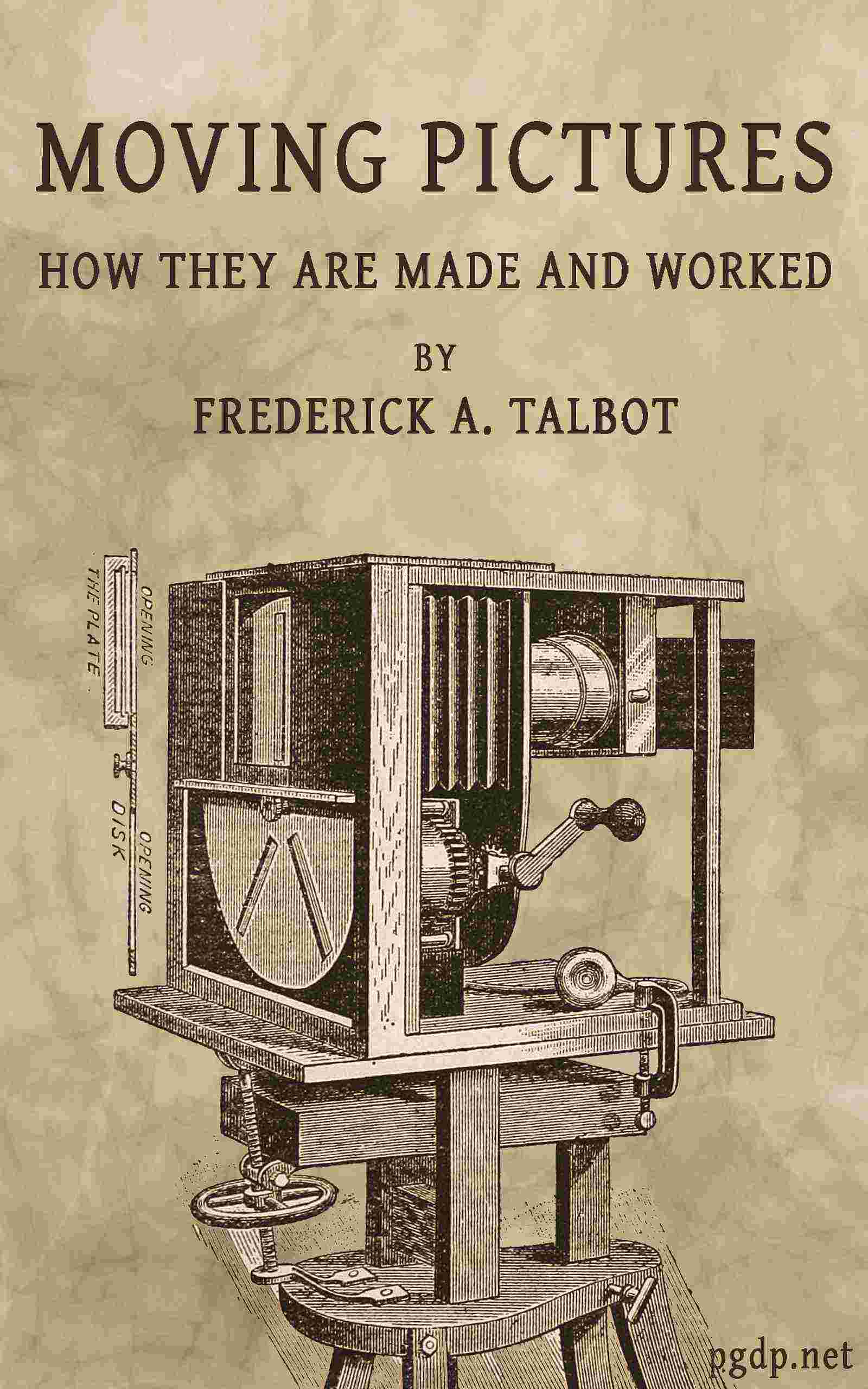
The Project Gutenberg eBook of Moving Pictures: How They Are Made and Worked
This ebook is for the use of anyone anywhere in the United States and
most other parts of the world at no cost and with almost no restrictions
whatsoever. You may copy it, give it away or re-use it under the terms
of the Project Gutenberg License included with this ebook or online
at www.gutenberg.org. If you are not located in the United States,
you will have to check the laws of the country where you are located
before using this eBook.
Title: Moving Pictures: How They Are Made and Worked
Author: Frederick Arthur Ambrose Talbot
Release date: May 2, 2022 [eBook #67972]
Most recently updated: October 18, 2024
Language: English
Original publication: United States: J. B. Lippincott, 1914
Credits: deaurider, Charlie Howard, and the Online Distributed Proofreading Team at https://www.pgdp.net (This file was produced from images generously made available by The Internet Archive)
*** START OF THE PROJECT GUTENBERG EBOOK MOVING PICTURES: HOW THEY ARE MADE AND WORKED ***
Transcriber's Note
Larger versions of most illustrations may be seen by right-clicking them and selecting an option to view them separately, or by double-tapping and/or stretching them.
Cover created by Transcriber and placed into the Public Domain.