
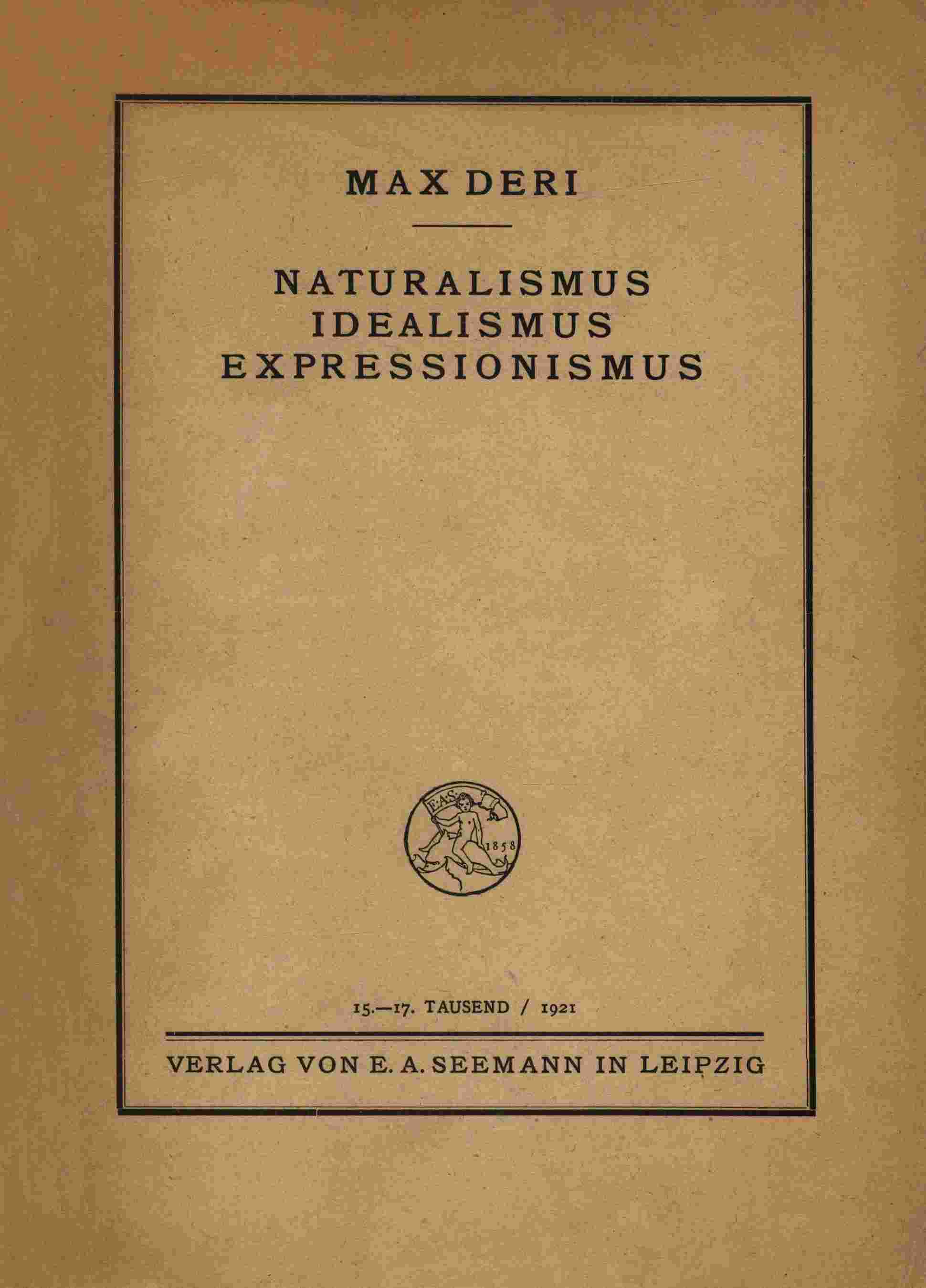
About This Book
The essay builds an empiricist framework for aesthetics by treating observation and theory as adaptive, nonmetaphysical processes and applying an economy principle to choose among competing explanations. It rejects the assumption that artistic creation and appreciation depend on special, innate faculties and instead seeks to derive aesthetic concepts from commonly shared perceptual facts. The author distinguishes a naturenear domain, which serves as a foundation, from a nature‑distant domain requiring a structured arrangement of three modes—naturalistic permutation, idealism, and expressionism—and offers a comparative classification, formal criteria, and schematic examples to clarify their relations and practical application.
About the Author

You May Also Like
6 picks
 "Phiz" (Hablot Knight Browne), a Memoir.
by Frederic George Kitton
"Phiz" (Hablot Knight Browne), a Memoir.
by Frederic George Kitton
 "Præterita": souvenirs de jeunesse
by John Ruskin
"Præterita": souvenirs de jeunesse
by John Ruskin
 "The spirit of '76": Some recollections of the artist and the painting
by Henry Kelsey Devereux
"The spirit of '76": Some recollections of the artist and the painting
by Henry Kelsey Devereux
 "Their Majesties' Servants." Annals of the English Stage (Volume 1 of 3)
by Dr. Doran
"Their Majesties' Servants." Annals of the English Stage (Volume 1 of 3)
by Dr. Doran
 A architectura religiosa na Edade Média
by Augusto Fuschini
A architectura religiosa na Edade Média
by Augusto Fuschini
 A Book About the Theater
by Brander Matthews
A Book About the Theater
by Brander Matthews