
CHARACTERISTICS OF THE NEUFCHÂTEL GROUP OF CHEESES.
Cheeses of the Neufchâtel group have been produced in the United States almost exclusively by a very few factories whose methods were not readily available to the public and whose extensive and high-priced equipment created the mistaken notion that it is not practicable to make these cheeses except upon a factory scale. The methods of manufacture of Neufchâtel and cream cheese and their modifications are, however, simple, and the equipment needed for making them in small quantities is not elaborate; therefore an excellent opportunity is offered to produce at low cost a fresh, wholesome, and attractive food for home use. Since Neufchâtel and cream cheese may be marketed upon a small scale, they often offer to dairymen an exceptional opportunity for the disposal of surplus milk.
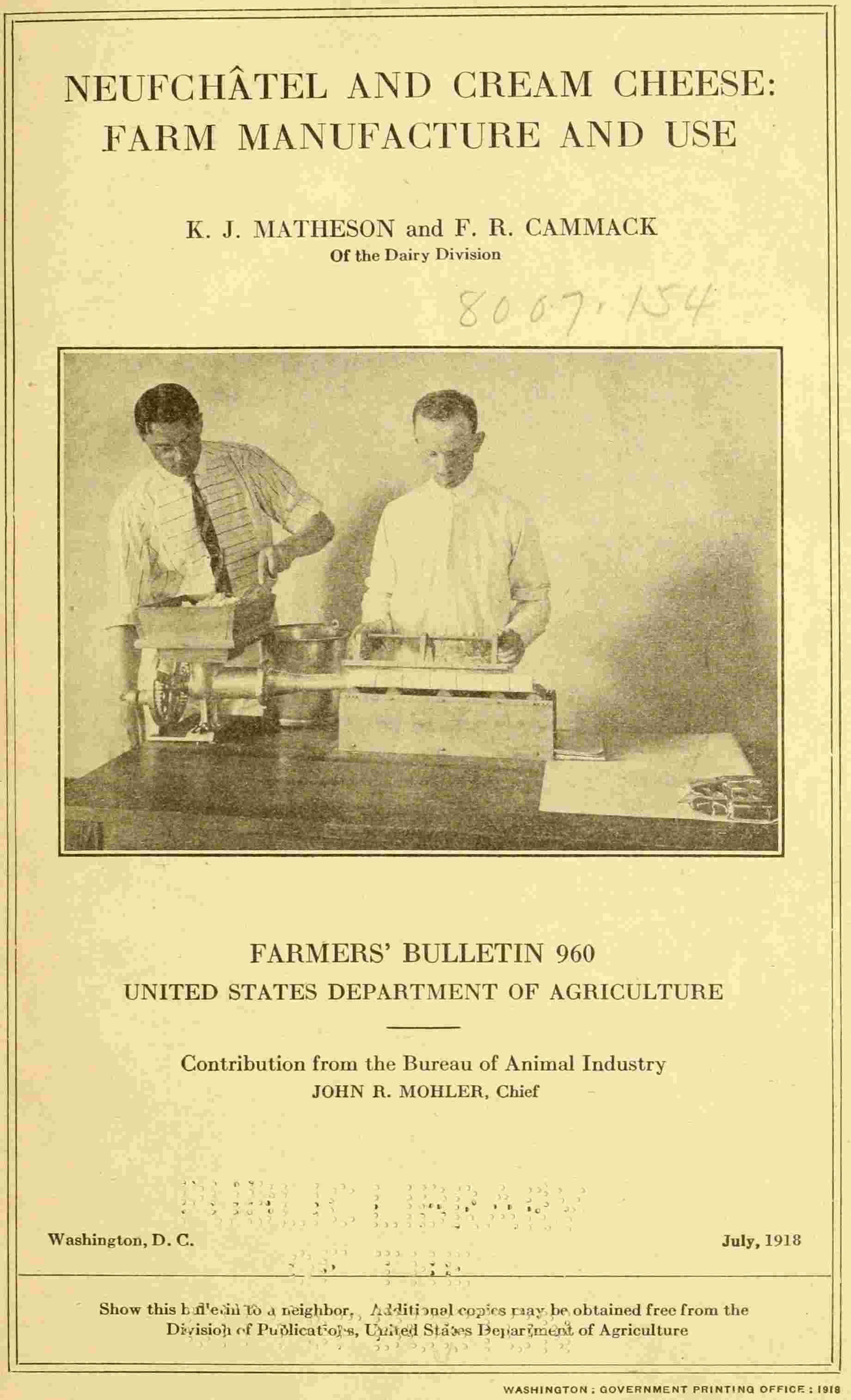
The cheeses of this group are perishable, and their selling prices are somewhat higher, pound for pound, than the harder cheeses. They are coming more and more into common use, however, because, in addition to their rich flavor and high nutritive value, they may be used with other foods to form many appetizing dishes. When cheeses of this group are to be sent to market, special, though inexpensive, equipment is necessary in order to obtain the greatest efficiency of time and labor in molding them into marketable form. An expenditure of from $10 to $25 will provide proper equipment for handling the cheese from several hundred pounds of milk. Such equipment should enable the dairyman to make and market cheese directly to the consumer at less cost and in fresher condition than that shipped from a more distant point. The fact that fresh cheese can be obtained readily will tend to increase its consumption.