
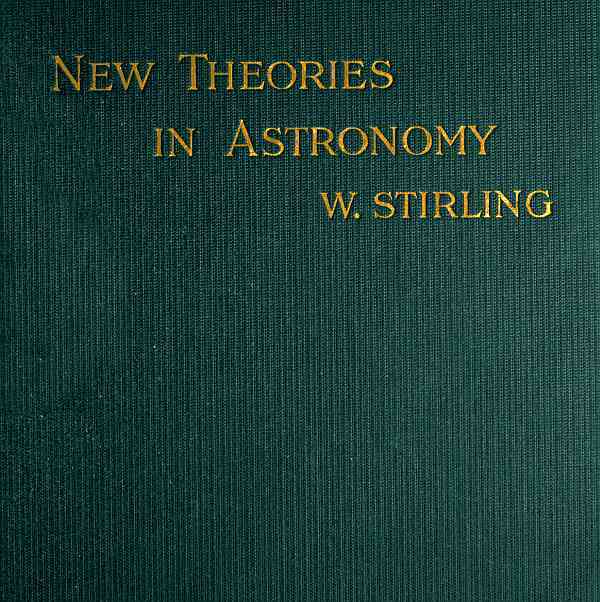
About This Book
A technical critique of contemporary astronomy evaluates observational instruments and measurement methods, questions experiments used to infer terrestrial density, and challenges the application of the spherical shell attraction result. It argues that the Moon lacks an independent axial rotation and considers centrifugal effects on lunar air and water, examines several cosmogonies including nebular and impact models, and analyzes how rings could separate and condense into planets and satellites. The text presents calculations on densities, temperatures tending toward absolute zero, ring dimensions, and satellite masses, offering alternative interpretations of planetary formation, retrograde motion, and the likely fate of rings and satellites.
About the Author

You May Also Like
 A Brief Account of Radio-activity
by F. P. Venable
A Brief Account of Radio-activity
by F. P. Venable
 A Brief History of Element Discovery, Synthesis, and Analysis
by Glen W. Watson
A Brief History of Element Discovery, Synthesis, and Analysis
by Glen W. Watson
 A Budget of Paradoxes, Volume I
by Augustus De Morgan
A Budget of Paradoxes, Volume I
by Augustus De Morgan
 A Color Notation / A measured color system, based on the three qualities Hue, Value and Chroma
by A. H. Munsell
A Color Notation / A measured color system, based on the three qualities Hue, Value and Chroma
by A. H. Munsell
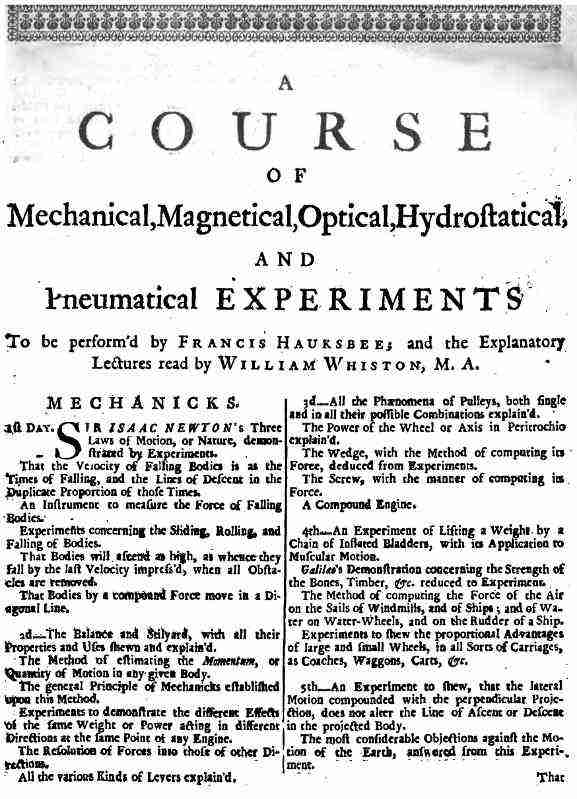 A Course of Mechanical, Magnetical, Optical, Hydrostatical and Pneumatical Experiments / perform'd by Francis Hauksbee, and the Explanatory Lectures read by William Whiston, M.A.
by William Whiston
A Course of Mechanical, Magnetical, Optical, Hydrostatical and Pneumatical Experiments / perform'd by Francis Hauksbee, and the Explanatory Lectures read by William Whiston, M.A.
by William Whiston
 A Discourse Presented to the Most Serene Don Cosimo II., Great Duke of Tuscany, Concerning the Natation of Bodies Vpon, and Submersion In, the Water.
by Galileo Galilei
A Discourse Presented to the Most Serene Don Cosimo II., Great Duke of Tuscany, Concerning the Natation of Bodies Vpon, and Submersion In, the Water.
by Galileo Galilei