
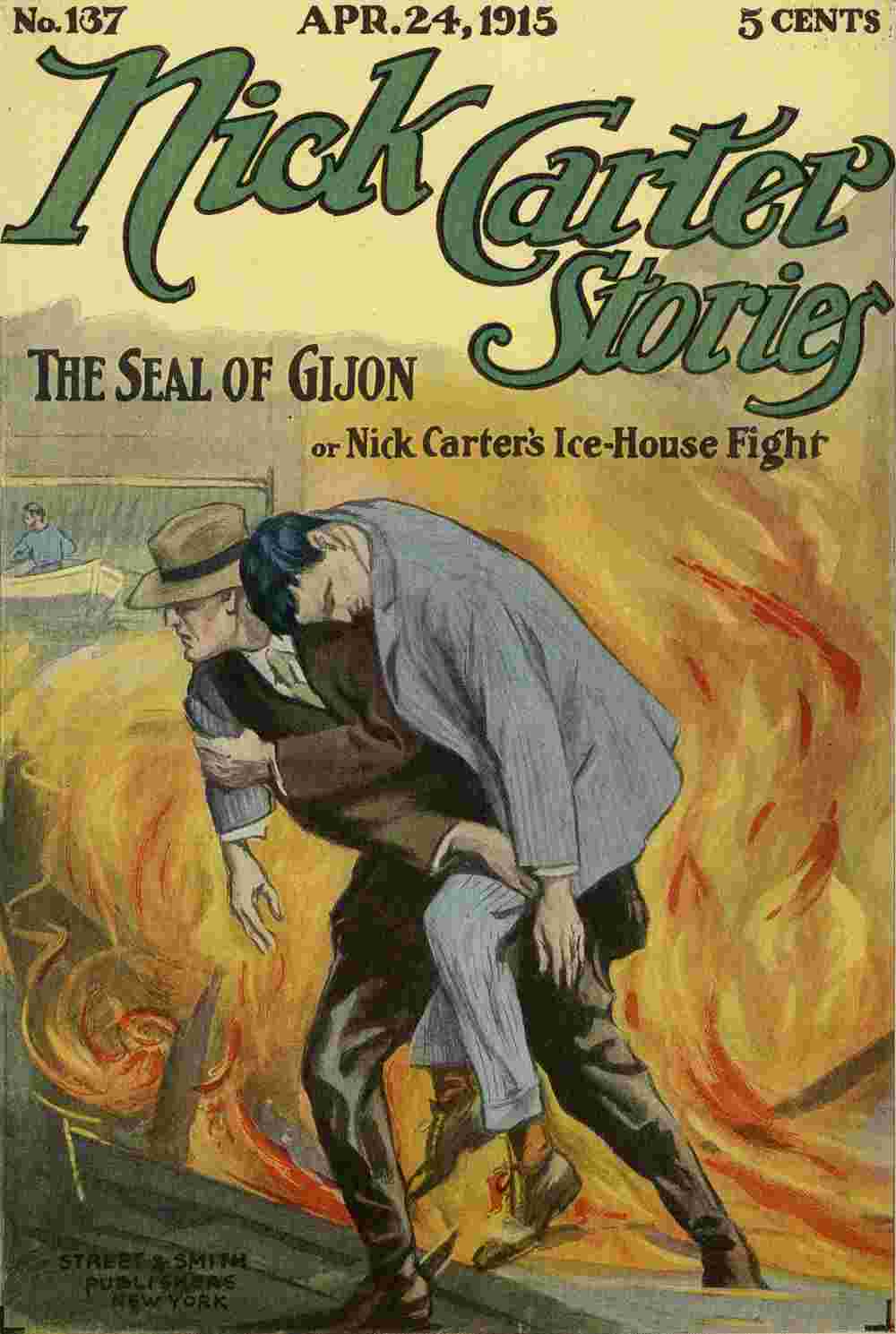
THE NEWS OF ALL NATIONS.
Store Water in Highest Dam.
Storage of water has begun at Arrow Rock Dam, the highest in the world, in the Boise reclamation project, which will reclaim an area in southeastern Idaho three times as great as the crop acreage of Rhode Island.
Will Tango Way Into Navy.
David Keller, aged twenty-one, applied for enlistment in the navy at the Evansville, Ind., United States naval recruiting station, and was rejected because of his weight. Recruiting Officer Muelchi told the young man to go home and dance the tango a few weeks or until he had reduced his weight, and then to come back and he would take him into the navy. Muelchi says that tango dancing is the greatest flesh reducer in the world, as he has tried it. Keller returned to his home in Poseyville, and says he is going to dance the tango with every girl in that town.
High Honor Won by French Airman.
Official announcement is made that Adolphe Pegoud, the famous French aviator, has received the military medal, the highest honor within the gift of the government.
The announcement says that Pegoud “on several occasions pursued enemy aëroplanes, and on February 2d attacked at a great height and caused the fall of a German machine. Soon afterward he attacked two other aircraft, causing the first to fall and the second to land.”
Pegoud first came into fame in 1913, while making experiments for obtaining safety in the air, as the originator of the feat of flying upside down in an aëroplane. A short time later he enhanced his reputation for daring by performing for the first time the feat of looping the loop. For his experiments Pegoud received the decoration of the legion of honor.
Several times since the outbreak of the war Pegoud has come into notice. On August 20th he returned to Paris from the front to get a new aëroplane, his old one having been riddled by bullets. He was mentioned in dispatches for valor in November, and later, in January, was reported to have destroyed a German explosive depot by dropping bombs on it.
Old Police Horse Sold.
Slator was discharged from the New York police force recently. With eleven other horses, condemned by the department, he was auctioned off in the arena of Van Tassel & Kearney. Slator is twenty-two years old, and has behind him sixteen years of honorable service in the traffic squad.
“The gamest little horse that ever looked through a bridle,” the auctioneer called him. He sold for $37.50.
It was hard for Slator to understand yesterday’s proceedings. A little brown horse whose memory holds only the recollection of hours of easy pacing through the park bridle paths, with now and then a thrilling dash after a runaway, or the more serious excitement of pushing back an unruly crowd without stepping on its toes, has no place in his mind for a scene like this. Slator was puzzled.
In the first place, his boss was missing—the man who rode him and was kind to him. Then the night had been spent in a Van Tassel & Kearney stall. That was strange and uncomfortable after having slept on the straw of the police stables since a time when most of the present force were boys.
Slator remembered his manners, though. When he was brought on to the tanbark, he walked up to the auctioneer’s desk, his ears pricked forward and his muzzle twitching a greeting. Then, when the man pushed his head away, he submitted meekly to being dragged up and down the arena by a shouting groom and suffered himself to be poked and handled by various horsy men whom he did not know.
It was years since he had felt a lash, but when they cut him across the flanks to show off his action, he did not kick. Clearly this was some new order of the department which had not been imparted to him. Therefore it was incumbent upon a member of the force to behave himself. Slator showed he was a gentleman.
For many years the little horse was the mount of Patrolman—now Lieutenant—Gumbricht. The price paid for him yesterday was perhaps an eighth of his original value. And Slator is not “all in” yet by a good deal. He is old, but he is wise, and a perfect saddle horse. That is one reason why he did not bring a larger price. The men at the sale were looking for work animals.
Slator always looked down on the patrol-wagon horses as plebeians, yet those sold yesterday brought twice his price. But arithmetic is one of the few things which the little police mount does not know. That is one worry which will be spared him in the future, at any rate.
Braves Five Thousand Volts in Pit of Fire.
Patrolman John A. Swift, of Springfield, Mass., veteran of the British army, hero of a dozen fires and accidents, proved his mettle when he dashed through a crowd of 150 persons, descended into a blazing manhole charged with five thousand volts, and saved the life of Benjamin W. Martin, cable repairman, who had been left to his fate.
The blaze was the result of a short circuit of the big city power mains. Martin, deserted by his helpers, lay at the bottom of the manhole while the crowd watched. Patrolman Swift went through the choking smoke and took down a rope. His first attempt was unsuccessful, and he was hauled up unconscious. Peeling off his officer’s coat, he went down again, making Martin’s body fast to the rope. Both were drawn up unconscious.
“It was easier for me to get him than to stand there and hear him croakin’ in that hot place,” said Swift.
Luke’s Peck at Girl’s Hose Starts Uproar in Subway.
Arthur Mullens, of New York City, works in paper and publishing houses, and all he finds he reads. If he had not read on a proof sheet yesterday that cruelty to animals was the unpardonable sin, he would not have enlarged the hole in the sack he carried, thereby freeing the eagle eyes and more eaglish beak of Luke, a rooster, and—but to start at the beginning.
Mullens was called from his home, at 460 Pearl Street, by a friend to deliver Luke, a prize rooster and a great fighter in his day, to an acquaintance in 112th Street. Luke was put into a thick paper bag, the neck of which was securely tied. Mullens swung him by his side as he walked to the subway.
On the train he read a speech that an assemblyman had delivered to a sleeping audience about an antivivisection bill. So he tenderly tore a tiny aperture in one side of the bag to give Luke the benefit of all the spare air there might be in a Broadway express.
A young woman sitting next to Mullens snatched at her knee, and then screamed like a siren whistle. Mullens woke with a frightened start, but was too late. Luke had withdrawn his head for an instant at the girl’s yelp of terror. Then he swelled his fighter’s neck, and lo! there was no bag. Luke was free.
The rooster started for authority, like true rebels, but the guard ducked. Luke next became bellicosely neutral; he did not care whose eyes he scratched. Men, women, children, oaths, prayers, and Mullens’ endearing calls got all mixed up.
The train reached Ninety-sixth Street—Luke’s first peck at the young woman’s hose had been near Seventy-second Street—before Mullens got back his ruffled charge. Mob rule seemed imminent, but the guard magnanimously permitted Luke to ride on to the Cathedral Parkway station. There Mullens, chastened, his humanitarianism gone, departed with the then sullen bird.
“I’ve been a hard-working man all my days,” he said, “but never have I had to do anything so hard as chaperon this sanguinary rooster.”
“Electric” Towel is Latest.
The new municipal building at Washington, D. C., is equipped with “electro towels,” devised by its superintendent, J. M. Ward. The electro towel is simply an electric hand dryer. It looks like a rectangular box with the front face knocked out and set on a pedestal which brings it about waist-high. The box is large enough to accommodate an ordinary pair of hands. There is an electric-heating device in the stand and a blower which forces the air through ducts into the box on top, where the hands are held while drying. A lever, operated by the foot, turns the current of hot air into it and sets the blower at work.
Superintendent Ward contends that as the lever is operated by the foot and the hands are merely extended into the box through the open front they come into contact with no part of the device, and so the operation is perfectly sanitary. It takes thirty seconds to dry hands in this way.
Pass Utah Prohibition Bill.
The Wootten State-wide prohibition bill for Utah passed the House by a vote of forty to five. It passed the Senate two weeks ago.
Only “Cowgirl” in Oklahoma.
Little Miss Mary Miller, daughter of the late S. W. Miller, prominent stockman of Hominy, Okla., was, three years ago, the cashier in a small restaurant; later of the Hominy National Bank, and was delving into books and accounts and participating in the younger social functions. Now she lives on her ranch near here and is acknowledged to be the only real “cowgirl” in Oklahoma.
Upon the death of her father she assumed charge of the ranch that she had established some years ago. She superintends every department and carries out her own ideas in its operation. She has stocked the ranch with pure-bred cattle, and her success in this line was demonstrated last fall when she topped the Kansas City market with the first shipment of cake-fed cattle. She is an active member of the Texas Cattle Raisers’ Association.
Idaho is Made Dry After January 1, 1916.
Governor Alexander, of Boise, Idaho, this week signed the prohibition bill, which makes the manufacture or sale of intoxicating drinks in Idaho unlawful after January 1, 1916. Idaho thus becomes the seventeenth State to bar the traffic in alcoholic beverages.
Colorado Law Completed.
The legislature of Colorado has completed the law to enforce the State-wide constitutional prohibition amendment, effective January 1, 1916. Senate and House adopted the report of the conference committee, and the measure now goes to the governor.
Kiddie With a Mighty Punch.
When he was startled from sleep and found a big burglar beating his mother, Isidore Weinstein, six years old, of Cleveland, Ohio, drew back a bare foot and drove it hard into the robber’s face. The robber apparently believing that he had been struck by a man’s fist, took to his heels.
Mrs. Edith Weinstein and her son live alone in rooms adjoining her candy store. She was awakened long after midnight by a man’s hands at her throat. The burglar had entered by forcing a bedroom window. Mrs. Weinstein screamed. Then the burglar beat her with his fist until she was nearly unconscious.
Isidore’s bare foot saved the day. Mrs. Weinstein is sure the burglar mistook Isidore’s kick for the blow of a man’s fist. If he had known her protector was only a six-year-old boy, there would have been a different story, she is confident.
A Triple Sport Alliance.
A triple understanding in all branches of sport by Yale, Harvard, and Princeton is at hand. The signing of a formal agreement by the three for a series of nine games to settle the triple baseball championship and the continued conferences of the captains of the three elevens of the universities are surface indications of the movement that has been quietly in progress for several years, furthered by Yale, for at least a general understanding between the three in all branches of the sport.
In track athletics and rowing the triple entente is not in operation. Yale meets both her rivals on the track and would be glad for them to meet each other, but Harvard and Princeton have no arrangement for such contests. Princeton has not yet come into the Yale-Harvard annual rowing regatta on the Thames, but may do so at any time. Yale meets Princeton and Harvard both on the water annually, but there is no movement on the part of Princeton to arrange a dual-crew race with Harvard. Officials of the Princeton navy and athletic association have assured Yale rowing men that the Tigers were likely before long to come into the Yale-Harvard annual races at New London.
When the results of the series of informal football conferences between Yale, Harvard, and Princeton are announced, it is expected that progress toward a much more complete understanding of gridiron matters of mutual interest will be shown. The informal talks of Captains Wilson, of Yale; Mahan, of Harvard, and Glick, of Princeton, will be projected into the business of the general athletic committees of the three universities during the remainder of the school year.
The agreement for a definite series of nine baseball games has completed another project, suggested by Yale, similar to that proposed by Coach Frank Quinby, of the Eli baseball team, last year, which has resulted in a formal agreement of the three universities for the coaches of their baseball nines to remain off the player’s benches during a game for the purpose of proving the contests to be a genuine battle of the undergraduate players and captains.
The agreement for playing nine definite games, without regard to the results of the individual series between any two of the three university teams, is regarded as the most radical step that has been taken in college sport in the East this year. Yale, Harvard, and Princeton call their games, played against one another, their “championship” matches. There will be a genuine “champion” chosen this year for the first time among the three rivals, for the percentage leader in the series of nine games played will be the holder of a clean title to championship honors.
For years Yale, Harvard, and Princeton have played baseball without a decision as to championship honors. Last year, for instance, Yale defeated Harvard; Harvard easily beat Princeton, yet Princeton neatly trimmed Yale, leaving honors easy all around. Although each of the three old rivals may win three of the scheduled games of the series this year and a championship may be again impossible, chances are against any such outcome of the advent of the new triangular arrangement, the baseball triple entente of Yale, Harvard, and Princeton.
Convicts Ask for “Dry” Law.
A petition signed by more than one thousand inmates of the Eastern Penitentiary at Philadelphia, asking the legislature to give favorable consideration to any legislation looking to curtailment of the sale of liquor has been presented to the Pennsylvania House of Representatives.
Explains the Vacant Chair.
Miss Edith Davis, of Grand Rapids, Mich., has just received an invitation to a pedro party which was held on the evening of October 31, 1892. The letter was postmarked October 18, 1892. It is supposed that the letter was mislaid in the local post office.
Aërial Mail Service Coming.
During the last year the post-office department gave permission to eight applicants for experimental aërial mail service, and in the estimate of expenses for 1916 an item of $50,000 has been inserted for departmental experiments in this line. It is hoped to make use of the aëroplane to advantage in the mountainous region, where, in many instances, towns only a short distance from each other in the air line, are hundreds of miles by the only available surface routes. It is also anticipated that many of the interruptions to the service now experienced by reason of weather conditions will be overcome by making use of air machines.
Recommend New Flag.
The municipal art commission of New York City has discovered that Greater New York has been going along for nearly twenty years without an official flag, and has taken steps to remedy the defect. It has recommended to the board of estimate and the board of aldermen the adoption of a flag to take the place of the mayor’s flag now used on State occasions as the emblem of the city.
The design for the new flag was selected by a committee consisting of John B. Pine, Francis C. Jones, R. T. H. Halsey, and I. N. Phelps Stokes, of the Art Commission Associates, an organization of former members of the commission. They had been at work on the selection for a year.
The design recommended by this committee and by the commission in turn to the city’s legislative authorities provides for a flag consisting of three perpendicular bars of orange, white, and blue, the blue to be nearest to the flagstaff, with the seal of the city in blue on the middle bar of white. The colors are to correspond as nearly as possible to those of the flag of the United Netherlands in use in 1626.
The commission also recommends the adoption of a model of the city seal submitted by the flag committee. This seal corresponds to the present city seal in all essential details, but it is executed somewhat more faithfully than the majority of the present seals after the pattern of the original city seal. The commission recommends that in order that there may be no further confusion in the use of the city seal in decorations or otherwise, a cast of the new pattern be made in bronze and kept in the safe in the mayor’s office, to be copied whenever necessary.
At present the flag used as the city flag is the one officially adopted for the mayor. It has a solid white ground, with the seal of the city in blue.
Big Increase in Prison Ranks.
A marked increase in the population of the various State prisons, reformatories, penitentiaries, county jails, and New York City institutions reporting to the State commission of prisons for the year ended September 30, 1914, is shown in statistics collected by the commission. The total prison population on that date was 16,678, an increase of 1,817 over the preceding year. The increase for the year 1913 over 1912 was seventy. Ten years ago the prison population was 12,793, showing an increase in a decade of 3,885. A marked increase is also shown in the number of actual commitments. The number jumped from 101,611, in 1913, to 118,027, in 1914.
The number in custody in the four State prisons, including the State prison for women, at Auburn, was 4,955, an increase of 235. There was, however, a decrease in the number of inmates of the women’s prison from 116 to 103. The number of prisoners in the State prisons at the close of the fiscal year was 1,503 more than it was ten years ago.
The population of the three reformatories for males—the New York State Reformatory, at Elmira; the Eastern New York Reformatory, at Napanoch, and the New York City Reformatory at Hart’s Island—increased fifty-one, from 2,026 to 2,077. This is an increase during ten years of 421. The New York City Reformatory statistics date from 1906.
A decrease of fifty-five is shown in the combined population of the New York State Reformatory for Women at Bedford and the Western House of Refuge for Women at Albion. The population in 1913 was 708, and this year it had decreased to 663. The population of these two institutions increased 241 in ten years.
The greatest increase in population is shown in the five penitentiaries. These institutions in 1913 had 2,488 inmates; this year the number was 2,965, an increase of 477. The increase since 1905, when the Kings County Penitentiary was in existence, has been 736.
The number of inmates in the county jails, and in the workhouses, city, and district prisons and the House of Detention in New York City was 6,028, an increase of 809 over the preceding year, and 1,261 more than the number in custody ten years ago.
The number of actual commitments to the various prisons, reformatories, penitentiaries, county jails, workhouses, et cetera, during the last fiscal year was 118,027, an increase of 16,416 over 1913 and an increase over 1905 of 16,981.
The number of women in custody at the close of the year was 1,930, an increase of 138 as compared with the preceding year.
New Invention of Color Print.
John Lewisohn, engineer, chemist, business man, and artist, has been exhibiting a series of color prints from photographic negatives at the Municipal Galleries in the Washington Irving Building, of New York. Mr. Lewisohn has an office at 88 Fifth Avenue, but it was in the Municipal Galleries that he gave out an account of his work in this field.
“I don’t call myself an artist,” he began, with a deprecating smile. He did not need to. There were the pictures. The subjects ran all the way from the brown derby hat of commerce to the red, red rose of the poets. And the unique feature of the work was the paper—plain everyday blue-print paper, despised by many amateurs and beloved to the housewife who can make prints of her baby out the kitchen window while she is ironing and wash them in the sink—and that’s all. That isn’t quite all of Mr. Lewisohn’s process, but it begins that way. It proceeds by a series of color washes. The process is patented, but there is nothing complicated about it. Simply reverse the laundry method—instead of washing color off, wash it on.
“This isn’t real color photography,” admitted Mr. Lewisohn frankly. “That has not come yet. Some people say it never will.”
Most of the color photographs taken so far end in the glass negative, and even that has its weak points. The ideal is a negative that will give a print in the actual colors of nature. In most of the so-called photographic color prints there is more or less failure in the blending of tones. There are no such crude greens or muddy pinks in these prints. The delicate shadings of flower petals are perfectly rendered. A gas flame burns up so brightly one could almost read by it.
“I took a picture of the eclipse of the sun once,” remarked Mr. Lewisohn. He turns his camera on everything in earth or sky—a box of matches, a bronze statuette, sunset clouds.
“Every man ought to have a hobby,” he said. “This is mine—just now. Some time I’ll change it. I studied engineering over in Europe. Electricity is wonderfully interesting.”
When he was asked if the ordinary snapshot artist could hope to use his process, Mr. Lewisohn said that undoubtedly he could. No commercial use has been made of it, but that will come in time. The work so far has been carried forward because it interested the inventor. He has been experimenting for years, and his process has been commented on favorably by European authorities. He has written something about it for the 1915 “American Annual of Photography.”
To Absorb Stray Shocks.
As a result of the death of Edward Ligouri from electric shock, the New Haven Railroad has installed an aërial safety device on its overhead high-tension electric system to take up any stray electric current.
Ligouri was fatally shocked while boarding an electric train at the Glenbrook station on the New Canaan branch.
Coroner Phelan rendered a verdict that death was due to electricity diverted from its fixed pathway by the unfastening of copper-rail bond wires.
Bowery Minstrel Dies.
The Minstrel of the Bowery, in New York, is dead!
The sweetest singer that ever entertained the men of the fifteen-cent lodging houses and the five-cent eating places died with the echo of his own singing, and just as he heard a dozen men burst into applause in the saloon at 28 Bowery. And the Bowery is sad. The Bowery is puzzled, too, for their minstrel was a man of mystery, an English remittance man, and now his identity will never be revealed.
“John Sullivan, forty years old, an actor, no home, dropped dead from heart disease” is the way the police slip tells the story. Back of that simple statement is the shadow of fourteen years’ exile from home and kin, of as many years spent in cheering the unlovely hours of the outcasts that drift to the Bowery as a magnet to the steel.
When “John Sullivan” came to the Bowery fourteen years ago, his manner and voice puzzled all those he met, and it was whispered about that he was the son of an English earl. He drank, and drank steadily, but that magnificent voice of his and the ability of those long fingers to wield ivory piano keys so eloquently that their message reached the heart of every man who heard him, soon made him known and greatly admired. He wandered from saloon to saloon, from lunch stand to lunch stand during those years, pausing in each to sing and play—and to take a drink or two.
From England occasionally came letters, and then John Sullivan would abandon his singing for a time and invite all his friends to drink at his expense. When his prosperity ended, he would return to the singing.
In the pockets of the dead man there were a laundry check, a memorandum book that was unmarked, and—prayer beads, to which were affixed a cross. Nothing was there to reveal his identity. No money was there to pay burial expenses.
The body was removed to the morgue from the back room in the saloon, where he sang his last song, but later on, when news of his death spread up and down the Bowery, there was talk of saving the singer from a pauper’s grave. It was not long before a subscription list was made up, and nickels and dimes began pouring in.
Save Thirty-nine After Four Days in Mine.
Thirty-nine coal miners, alive and well, after being entombed for four days and four nights, were found in the Number Three Mine of the New River & Pocahontas Consolidated Coal Company, on Quinnimont Mountain, near Layland, W. Va., where an explosion trapped 182 miners.
Five of the rescued miners were able to walk out of the shaft unassisted.
News of the finding alive of these men after ninety bodies had been recovered and all hope abandoned, spread like wildfire through the mining camps, and hundreds flocked to the scene.
Weakened by hunger, the five men who made their way out of the mine told rescuers that they believed many more men were living in a remote chamber. A crew equipped with oxygen helmets pushed its way toward that point, and found thirty-four more.
Won’t Censor Mails to United States.
Home Secretary McKenna in the English Parliament refused to indorse a proposal to censor American mails. He said no reason existed for such action, and it would impose a tremendous burden upon the staff of censors.
The suggestion came from a member who complained that Germany was sending to New York pamphlets designed to injure the cause of the Allies. The home secretary said he was positive that these pamphlets would have no effect on American opinion.
Shanty De Luxe.
What is to be probably the finest “shanty” ever erected in the United States is being put up by Frederick L. Cranford, Inc., subway contractor, at the southwest corner of City Hall Park, close to Broadway, New York City. It is to have a height of three stories, the first to form a sort of arcade to allow free passage for pedestrians along the Mail Street sidewalk. The building will cover the entire width of the broad sidewalk for a distance of seventy-five feet.
Shanties of some sort are always erected by contractors on subway work, and if this one had had to go up in some other place, it would have no doubt resembled a real shanty on stilts by the time it was finished. In this case, however, the public service commission required the contractor to build an extra nice-looking structure, because of the fact that it is located on the edge of the park and in front of City Hall. The plans had to be approved by Park Commissioner Ward before the work could be begun.
“The shanty will be divided into two separate buildings,” said a representative of the company to-day. “One side will serve as headquarters for our field force, and the other as quarters for the men engaged in tunnel work on the subway. The labor law requires, you know, that where men are engaged in tunnel work rest quarters must be provided for them. There will be wash rooms and lunch rooms, with lockers, where the men may change their clothes on going to and leaving work. The whole structure will cost from five to six thousand dollars. The building will be painted an attractive color.”
The pretentious shanty will serve only the tunnel men and the field engineering force of the section of the new Interborough subway running under the post office. This section begins at West Broadway and runs through Park Place, under the post office, and through Beekman Street, to William Street. This section will connect the new Seventh Avenue subway with the tunnel under the East River to Clark Street, Brooklyn. The contract price for this section is $1,571,363.50. It is the section that was held up so long because of the opposition of Secretary of the Treasury McAdoo to granting an easement for digging under the post office.
152,000,000 Bushels of Wheat.
The bureau of crop estimates, in Washington, says that the amount of wheat on farms March 1st was about 152,903,000 bushels, or 17.2 per cent of the 1914 crop, against 151,809,000 bushels, or 19.9 per cent of the 1913 crop on farms March 1, 1914, and 156,483,000 bushels, or 21.4 per cent of the 1912 crop on farms March 1, 1913. About 60.7 per cent of the crop will be shipped out of the counties where grown, against 53.9 per cent of the 1913 crop, and 61.6 per cent of the 1912 crop so shipped.
The amount of corn on farms March 1st was about 910,894,000 bushels, or 34.1 per cent of the 1914 crop, as against 866,392,000 bushels, or 35.4 per cent of the 1913 crop on farms March 1, 1914, and 1,289,655,000 bushels, or 43.3 per cent of the 1912 crop on farms March 1, 1913. About 18.6 per cent of the crop will be shipped out of the counties where grown. The percentage of the crop merchantable is about 84.5 per cent.
The amount of oats on farms on March 1st was about 359,369,000 bushels, or 33.2 per cent of the 1914 crop, against 419,476,000 bushels, or 37.4 per cent of the 1913 crop. About 29.4 per cent of the crop will be shipped out of the counties where grown.
The amount of barley on farms on March 1st was about 42,899,000 bushels, or 22 per cent of the 1914 crop, against 44,126,000 bushels, or 24.8 per cent of the 1913 crop on farms on March 1, 1914. About 45.1 per cent will be shipped out of the counties where grown.
Aviator and His Prisoner Fought 3,000 Feet in Air.
For the first time in history a prisoner of war has been transported by aëroplane. Warsaw dispatches carried the news to the Russian war office, in Petrograd, with the recommendation that Terenti Paschaloff, Russian aviator, be awarded a medal for unprecedented daring.
Reconnoitering with his mechanician, Paschaloff was forced to descend inside the enemy’s lines in southwest Poland because of engine trouble. An Austrian patrol surprised him while he was making repairs. Paschaloff turned his machine gun upon the enemy, killing five.
The sixth member of the patrol was captured by the mechanician. Paschaloff removed his belt, forced the Austrian to seat himself on the frame of the biplane, and tied his hands around one of the wire uprights. Then he started to return to the Russian lines.
Crossing the Austrian lines, the aviator was subjected to heavy rifle fire. The prisoner managed to loosen his bonds and attempted to tear the levers from Paschaloff’s grasp and dash the machine to earth. Paschaloff turned the levers over to his mechanician. Three thousand feet aboveground, with gusts of wind tilting the biplane perilously, Austrian and Russian grappled behind the pilot’s seat.
Paschaloff seized a wrench and dealt his opponent a heavy blow on the head, stunning him. The Austrian was again strapped to the machine and brought safely into the Russian camp.
Girl, Blind for Twenty-one Years, Sees Wonders of Big City.
Miss Maud Emerson Lincoln, of Marblehead, Mass., whose sight recently came to her in a sudden manner after she had been almost totally blind from her birth, recently saw Boston for the first time.
She came from her home in the old Judge Nathan Bowen place on Market Square, Marblehead, to the city with her mother, Mrs. William F. Lincoln, and her eyes were to be given a thorough examination by Doctor Henry Hawkins at his office, 397 Marlboro Street. Doctor Hawkins has never seen the young woman, but he has records of her case which he received from Doctor Francis I. Proctor. The records are not complete, and Doctor Hawkins said he did not wish to express a medical opinion on the case until he had seen the young woman.
Doctor Hawkins is assistant ophthalmologist at the Perkins Institute, but Miss Lincoln has not been a student there for the past six years.
At the time Doctor Proctor was ophthalmological surgeon at the institute, he got some of the records of the case, which he handed over to Doctor Hawkins.
Miss Lincoln said that she was feeling fine, and as the nervous condition which followed the coming of sight has practically passed away, she is eager to begin life anew. She wants to do so many things, she does not know where to begin, but most of all, her parents say, she wants to learn, and if Doctor Hawkins thinks it advisable, she will probably take up studies at once.
Heavily veiled, she attended Sunday school yesterday at the First Baptist Church, in Marblehead, where she is a member of Mrs. Gertrude Dennis’ class. She spent the rest of the day at home and retired early, to be ready for her trip to Boston to-day.
“I rather dread to go,” said Miss Lincoln. “There will be so many people, and so many things to look at, I think I shall be afraid. But if I can get rid of that feeling of fear, I know I shall enjoy it.”
Miss Lincoln saw her own picture for the first time in the papers to-day, and was delighted with it.
Practically blind from her birth, twenty-one years she now sees clearly. In an instant one afternoon, as she was about household duties, this seeming miracle came. With a snap the covering was rent from the right eye as she was putting dishes in the china closet.
Two days later, in the evening, as she sat with her parents, the other eye was uncovered, and sight was given to it.
“I went to the closet to put up some dishes,” she said. “Of course, there was no light in the closet and it all looked dark to me. The top of my head did not feel good. It hurt. It was as heavy as—as a load of bricks. That’s just the way it felt. I reached up with the dishes. Then suddenly something snapped in my right eye. That is the only way I can describe it—like that.”
And she snapped her fingers.
“Then,” she said, “everything seemed all light to me and brightness. I did not know what to make of it. I could not realize what had happened. I looked around the room. I ran and looked out the window. And I could see.”
“She went out with me the other evening, heavily veiled,” said Mrs. Lincoln. “We passed a boy leading a man. I said nothing, thinking I would not call her attention to it.
“‘Mother,’ she said, ‘was that boy leading the man?’
“‘Yes,’ I replied.
“‘Oh, the man is blind?’ she asked again. And I told her he was. She paused a moment, then said: ‘What a pity.’”
Miss Lincoln is tall, slender, and fair-haired. Her eyes are blue, like those of her parents. She had on a gown of deep red, with little black bows on it, and she talked entertainingly and always she laughs with joy at her “miracle.”
“Maud was born on April twenty-second, eighteen-ninety-four,” said Mrs. Lincoln.
“She was twenty-one this month. She was born blind. We did not realize at once that she could not and might never see. Her eyes had the appearance of eyes which have cataract. There seemed to be a thin, white, opaque substance over the pupils.
“No one seemed to know what the matter was. But she grew up blind. When she was nine years old we sent her to the Perkins Institute for the Blind, and she was there nine years and received an education. Then we took her home, and she has lived here since, helping me as she could. When she was examined by Doctor P. I. Perkins at the Perkins Institute, six years ago, he told her never to have anything done to her eyes, never to put anything in them, that some day she would see—and he was right.”
Brave Third Rail to Save Women.
Fifteen terrified women and thirty-five men who had been shaken when an elevated train jumped the tracks on the Brooklyn Bridge were forced to climb over the third rail, two feet of open space, through which they might have dropped 120 feet to the East River, an iron latticework three feet high, and another two-foot open space to safety early to-day. Policemen aided them, but had one made a misstep, death would have been inevitable.
Three cars were in the New York train, which was in charge of Motorman Scott and Conductor Nicholas Castanz. The train went off the track almost in the center of the bridge. The rear trucks of the middle car were the first to jump, and as they bumped and jerked along the ties, the fifty passengers were thrown into a condition neighboring on hysteria. The motorman applied the brakes, and all were jostled severely before the train came to a stop.
A wait of half an hour, with the cold river gleaming below, brought Policeman Beatty to the scene. He summoned other patrolmen.
The rescue work began with Beatty standing with one foot on the covering of the third rail and the other against the latticework. Directly beneath him was the opening that showed the waiting river. One by one the women were swung across from the conductor to him, and from him to other policemen. Then the men came. Traffic was tied up for two hours.