
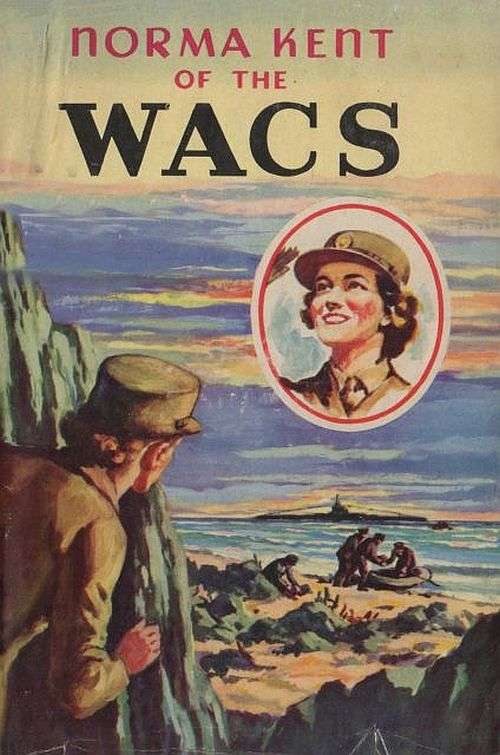
CHAPTER XV
SPOTTERS IN THE NIGHT
“That’s spooky,” Norma whispered. “Your grandfather doesn’t by any chance happen to be in Heaven?”
“Yes, he is.” Beth laughed. “His kind of Heaven. He’s over on Black Knob.”
“Black Knob? What’s that?”
“It’s an island ten miles off shore. Grandfather calls it his retreat. He’s a writer on technical subjects, and an inventor.”
“He has plenty of money,” put in Bess, “so he just writes and invents.”
“And by and by someone gives him money for an invention so he can invent some more,” Beth finished.
“Sounds wonderful!” said Norma. “But what about this thing?” She pointed to the square of light where that expressive hand was opening and closing, pointing and writhing again.
Beth was writing down letters rapidly, so it was Bess who replied in a whisper:
“It’s a great secret. Only Beth, grandfather, and I know about it. Shall I tell her?” She turned to her sister. Beth nodded.
“Cross your heart and hope to die,” Bess whispered impressively. “You won’t tell a soul?”
“Not a soul—cross my heart and hope to die.”
“Well then—it’s television,” Bess confided. “Only there’s no sound. Words without sound. It’s a perfectly secret way of communication, as long as no one knows about it.”
“But I don’t see—” The hand was still going through its weird motions.
“It’s very simple,” said Bess. “Grandfather has two moving picture cameras trained on his hand over there on Black Knob.”
“I guessed that much.”
“The rest is deaf and dumb alphabet, that’s all. A is a clenched fist with the thumb turned in, and C—”
“How stupid I am!” Norma exclaimed. “I should have guessed it at once!”
“Oh, no!” Bess laughed. “Strange things always stick us. We want a weird explanation, when it is something just as simple as that.”
“It’s quite wonderful,” Norma exclaimed. “I shouldn’t wonder if something tremendously important would come out of it.” She was not wrong in this prediction.
“Black Knob is an important point,” said Bess. “It’s so far off shore.”
“It must be,” was the quick reply. “Particularly for enemy submarines. I’m going to tell Lieutenant Warren about it.”
“But not about television,” Bess warned. “At least, not without grandfather’s consent.”
“Not about television,” Norma agreed.
Once again the hand had vanished from the square of light. This time Beth pushed the apparatus into a corner and threw a cloth over it.
“He reports once each hour until midnight,” she explained. “If anything really startling comes up, he gives us a buzz on a short-wave radio and we turn on television for a special report.”
“After midnight?” Norma asked.
“Two elderly ladies take over until morning. They use short wave entirely. During the day fishermen who live there keep a sharp watch.”
“It’s not much of a setup for so important a spot,” Bess said. “One old man, two women and some fishermen. But it’s all there is there in winter.”
“It might be improved upon,” Norma agreed.
“Well,” said Bess, drawing on a heavy coat, “I’ll get out on the listening platform. It’s all ears from now till morning.”
“Unless they show a light,” Norma suggested.
“No enemy would show a light,” was the reply.
As Bess left her comfortable place by the fire Norma noticed that outside the wind was picking up and snow beginning to fall.
“Not going to be a nice night,” was her comment.
“Winter’s almost gone,” was Beth’s reply. “We’ve had some really bad nights, I can tell you.”
“What’s the payoff?” Norma asked without thinking.
“This is our country!” Beth drew herself up proudly. “No enemy planes have ever got past us—I mean all of us—not just Bess and me. And they never will! There are hundreds of watchers all along the coast.”
“And if you hadn’t been here they would have tried?” Norma suggested.
“Absolutely!”
“It’s grand work! We’re going to help you all we can.”
“That’s not all there is to it.” Beth leaned forward. “We saved two lives. Fighting men they were, too. They gave us the credit, just Bess, grandfather, and me. See?” She held out a medal that read FOR VALIANT SERVICE.
“That’s wonderful!” Norma exclaimed. “I hope I can do as much.”
“Oh! You will! And a lot more. You’re a WAC—you are really in the Army. I wish I could be a WAC.” There was intense longing in the younger girl’s voice.
“Perhaps they’ll lower the age limit.”
“Here’s hoping!”
“Want to tell me about this rescue?” Norma asked.
“Oh! Sure! It wasn’t much,” was the modest reply. “Just our good luck, that’s all.
“It was grandfather who spotted the plane first, just before midnight. He gave us the radio buzz, then started talking fast with his hands—television, you know. This plane had just passed over Black Knob. There was a fog. He heard it, that’s all. It was going north slowly. We thought—”
Beth stopped short. Bess thrust her head in at the door.
“One single, going south fast, about five miles off shore,” she announced. Instantly Beth was on the phone saving in a clearcut voice:
“One single going south, fast. About five miles off shore. Granite Head speaking.”
She kept a head-set over one ear, but went on with her story.
“Bess reported that plane over Black Knob at once. The Army, Navy, and Civil Air Patrol had no such plane out that they knew of.
“That made it exciting, I can tell you. Might have been an enemy plane scouting. And there were too many lights burning in Portland that night.”
“What happened?” Norma demanded eagerly.
“Grandfather kept hearing them and reporting for half an hour. Then a fighter plane went out, but couldn’t find them in the fog.
“They came in quite close to Black Knob. Then the motor went off. Grandfather was outside. He was sure they went into the sea—thought he heard a splash. They—”
Bess broke off suddenly to press the head-set to her ear. She listened intently for a moment, then murmured into her speaker:
“Okay.”
Stepping to the door she said to her sister:
“Just another Navy plane off its course. Pilot called for directions and got them.”
“See? That’s the way it is.” she said to Norma.
“I see,” said Norma. “Disappointing?”
“Yes. Every time but one out of a hundred, or a thousand, I guess, and then—”
“Tell the rest,” Norma urged.
“Oh, about those two fliers? That was exciting, I can tell you. Grandfather gave us the word that the plane was down.
“Then he got the fishermen out of bed. Three boats went out. Grandfather’s boat spotted them, just in time. Their plane sank ten minutes later.
“They were Army fliers—a trainer and a student. Umm! That student was handsome!”
“And he would have drowned if it hadn’t been for you spotters,” Norma said.
“Absolutely.”
“That,” said Norma, “was wonderful!”
As she stepped out of the comfortable room into the night, Norma saw a white-robed figure—Bess, covered with snow.
“Spotters,” she whispered as she went down the stairs. “Spotters in the night.”
CHAPTER XVI
THE VANISHING PRINT
Norma was up bright and early next morning. As she stepped out on the porch for a breath of air, her eyes were greeted by a scene of marvelous beauty. Back of a dark spot rising from the sea which must, she thought, be Black Knob, the sun was rising.
“What a picture!” She knew just how it should be taken.
Racing into the house she put her hand on the mantel at the spot where she had left her camera.
“Gone,” she murmured. “It’s gone!”
Well, after all, she might be mistaken. Perhaps she had taken it to her room. Rushing upstairs, she began a hurried search.
“What’s up?” Betty demanded. “House on fire?”
“No, a gorgeous picture to be taken and I’ve misplaced my camera.”
“Here. Take mine!” Betty took her camera from the shelf.
Without a word Norma grabbed the camera and raced down the stairs to take three exposures before the sun was too high.
“I can’t imagine what could have happened to my camera,” she exclaimed, after a thorough search. “I’m sure I left it on the mantel downstairs. I took two shots of the fishermen’s boats coming in yesterday, then put it on the mantel and forgot it.”
“Oh! it will show up.” Betty was a cheerful soul.
At breakfast that morning, Norma sat by Lieutenant Warren and told her all about Bess, Beth, their grandfather, and Black Knob.
“That seems an admirable spot for a spotter shed,” said Miss Warren.
“It must be,” Norma agreed. “Of course it has its watching post but it seems undermanned—a grandfather and two old ladies for the night and fishermen keeping an eye out during the day. Doesn’t sound very good.”
“No, it doesn’t. We may want to lend them a helping hand. I’ve asked for six more auxiliaries for just such emergencies.”
“I’m glad of that,” Norma said. “We may need them more than you think before a month has passed.”
“Why? What do you mean by that?” The Lieutenant gave her a sharp look.
“Just a hunch, I guess,” Norma evaded. She wasn’t going to tell of the photographer with bristly white hair, of the voices behind scenes at the studio, the black pigeons, or the missing camera until she had more to tell.
Late that afternoon she picked up another shred of evidence. When the day’s work was done, she got out one of the motorcycles and rode back to the photography studio. Carl Langer had promised that the pictures for their identification cards would be done. Then, too, she was wondering about the three films she had left on his table.
By the time she arrived fog had driven in from the sea, making everything look dark and gloomy. The studio seemed darkest, most gloomy of all. Only a faint light showed through the window. The three black pigeons sat silently along the ridge of the roof.
As if her arrival had disturbed them, they took off with noisy flapping of wings to soar away and lose themselves in the fog out over the sea.
Norma tried the door. It was locked. She rang the bell. No response. A second ring failed. A third long one brought an angry response.
The door flew open and Langer’s white hair seemed to give off sparks as he stormed angrily:
“Why do you ring now? You know my hours. Everybody knows. You—”
He broke off short. At last he had taken time to look at his caller.
“Oh, it is you.” His voice changed. “You are Miss Kent, one of those lady soldiers.” He laughed hoarsely. “Come in. The pictures are done. They are not beautiful, but natural.” He laughed again.
He did not turn on more light. A small lamp on a table gave out a feeble glow.
“See,” he said, shuffling a pack of prints as if they were playing cards, “Here they are, all of them.”
Yes, there they all were and Lena’s picture was on top. “Really the best of the lot,” Norma thought. She was not surprised.
“About my films?” She hesitated.
“Oh, yes! I have done these, too,” he exclaimed with sudden enthusiasm. “They’re very good. You really understand timing, light, grouping, and all that. Some of these village pictures, they are excellent. With your permission I shall retain three films for a short time only, that I may make enlargements.”
“That—that’s all right,” Norma replied. She was looking at the pictures one by one and at the same time counting them.
In the end, she drew in a deep breath. There should have been twenty-four. One was missing. “And that one,” she thought with a start, “is the one I took of the Spanish hairdresser at Fort Des Moines.
“What a fool I was to let this man do them!” she told herself.
“There are only twenty-three prints here,” she suggested, trying to keep her voice on an even scale.
“Twenty-three good pictures out of twenty-four!” he exclaimed. “This is remarkable for an amateur, my dear. What should one expect?”
She wanted to say, “You are telling a lie. That was a good picture. Taken in bright light, time—one twenty-fifth of a second and shutter half open, I couldn’t have failed.”
She said nothing of the sort. Instead she said:
“You’ll make the some enlargements of the films you are keeping?”
“To be sure.” He rubbed his hands together. “Very fine ones. And, my dear, they shall cost you absolutely nothing. I shall charge you nothing for these. You are almost a genius at light, shadows, and grouping. Such a choice of subjects! Such placing, to bring out the angles, and the contrasts. Please allow me to do all your films.”
“Where have I heard all that before?” the girl asked herself as she left the place. The answer, she felt sure, was, “Never anywhere before.” It was strange.
As she mounted her motorcycle and set it pop-popping, the three black pigeons, who had returned, once more went flapping out to sea.
“Pointing the way to Black Knob,” she told herself. “I wonder if they ever go all the way?”
Days glided by. There was study and work, hours on end. At last more work and less study.
They studied types of airplanes and subs until they were fairly sure of recognizing them in daylight. Learning them by sound would be quite another matter. For some enemy planes they had sound recordings. Norma, who had quite a remarkable ear for sound variations, spent hours on end listening first to the American fighter planes that every day zoomed overhead, and then to the recordings of Zeros and Messerschmitts.
The day after her camera disappeared, she found it just where she had left it. Had someone taken it by mistake and returned it? Did Mr. Sperry or someone else suspect her of taking forbidden snapshots? This seemed improbable for she had taken two pictures and the spot still showed number three. What was more, the shutter was just as she had left it and the time, still set at one-twenty-fifth of a second.
“It can’t have been someone who wished to use it for taking forbidden pictures either,” Betty assured her. “No pictures have been taken.”
To her great surprise, when at last the film was used up and she had it developed, she was told that the first two pictures had turned out as blanks. Carl Langer showed her the blanks as proof positive.
Yet, to Norma this was not absolute proof. “For,” she told herself, “those were very ordinary snapshots. The other pictures were taken under the same circumstances, nothing had been done to the camera, and yet they came out very well.”
Her curiosity was aroused. After two days had elapsed, she again left her camera lying about. Once again it vanished. In two days it was back. This time she had left number four showing. Hastily using up the film, she hurried to the studio and had the film developed.
“Some of your pictures are quite wonderful,” Carl Langer commented. “but the first three—”
“I know. They are blank.” Norma thought this, but didn’t say it. She was wrong. The first three were quite black. Very much overexposed. They showed nothing.
“Perhaps,” said Langer, “you were a bit careless putting in that film. It looks light-struck at the beginning.”
She had not been careless. The film was not light-struck, yet she said never a word. She would get to the bottom of this yet.
The next day Norma forgot her photographic problems for at last a visit to Black Knob was on the calendar. Norma had made two more visits to the spotter shed at Granite Point. With ever-increasing interest she had watched the talking hands from the island and had listened to weird and interesting tales told of the great rock called Black Knob by those fascinating twins, Beth and Bess.
At first it was planned that only Norma and Betty should accompany Lieutenant Warren on the trip to Black Knob but at the last moment Lena asked permission to go.
Perhaps Miss Warren knew some things about this tall, strong girl that Norma had never learned. Certain it is that, had it been left to her, she would have said, “No, let’s not take her.”
Lena went along. The journey out was uneventful. Norma and Betty took turns at the wheel. Their experience piloting boats at summer camps stood them in good stead.
As Black Knob loomed up larger, they made out trees growing like bushy hair on its crest and, close beside a small harbor formed by an outcropping of rocks, a group of fishermen’s cottages and summer tourist cabins.
A small, bright-eyed man with a full gray beard took their line at the narrow dock.
“Lieutenant Warren!” he exclaimed. “I am glad to see you. The girls have been telling me on short wave radio about you and one of your workers. They call her Norma.”
“This is Norma,” said Miss Warren, helping Norma out of the boat.
“Ah,” said the little man. “I am indeed glad to meet you. As you must have guessed, I am the grandfather of Bess and Beth. Dudley Norton is the name I drew when I was born.” He laughed in a friendly, cackling way. “And here,” he added, as a nine-year-old girl came dancing down the path, “is my chief assistant, Patsy. Her principal task is keeping the bad Gremlins away.”
“Gremlins,” said Norma. “What are Gremlins?”
“Oh! They are little people,” the girl, who was the living picture of Bess and Beth, explained. “The bad ones put ice on your airplane’s wings and stop up your guns when you want to shoot. But the good ones get out, hundreds and hundreds of them, and blow on the sea to make a big storm when the enemy subs are about.”
“Oh! That’s the way it is,” Lieutenant Warren said. “But aren’t you afraid to live way out here when so many Gremlins are about?”
“No!” said the girl. “I’m not afraid.” She took her grandfather’s hand. “Besides I’m not allowed to be afraid. Grandfather and I have a big job to do over here on Black Knob—and we’re in for the duration, aren’t we, Grandpa?”
“That we are!” The little, gray-haired man agreed heartily.
“That’s the spirit!” Lieutenant Warren exclaimed. “We’ll win now for sure!”
After Betty and Lena had been introduced, they all took the winding path that led to Grandfather Norton’s “House of Magic,” as Norma had named it, long before she saw it.
CHAPTER XVII
THOSE BAD GREMLINS
This House of Magic she discovered was really a home and a spotter shed combined. Originally it had been a well-built summer home made of pine logs that had broken from a jam and drifted to the rocky shore of Black Knob. Since this cabin had been built on a high point, overlooking the sea, it was necessary to erect only a twenty-foot tower with a winding stairway. This led up from the front porch. Atop this tower was a room eight feet square with windows on every side. Outside was a two foot walk, railed in, which gave the watcher a view of every spot on the island and, on a clear day, many square miles of sea.
“It’s an admirable spot for a lookout,” Lieutenant Warren exclaimed. “But what about your force? Have you enough to do a really good job?”
“No-o,” the little old man hesitated. “The Misses Morrison, Jane and Mildred, retired school teachers of uncertain age, who like myself have come to love the privacy of this rock, do their best to aid me, but Jane, I fear, is becoming hard of hearing.”
“Not so good for night watching,” the Lieutenant smiled.
“Oh! I have a way of—” The old man paused, studied the circle of eyes about him, then ended lamely, “a way, er—of using the help that is at hand.”
“He doesn’t trust us,” Norma whispered to Betty. “At least not all of us.” She glanced at Lena who was all eyes and ears.
“He was going to tell us of some secret hearing device,” Betty agreed.
“There are other and more interesting secrets,” Norma half confided. She had never told Betty of the talking hands.
“If there are,” Betty whispered, “we’ll have to wait for another time to learn about them.”
At that moment the little girl came dancing up. Pulling Norma’s head low, she whispered:
“My name’s Patsy. I’d like to take you around the island and show you where I saw the sub.”
“Oh! A sub!” Norma whispered. “I guess you must have imagined that!”
“No, a really, truly sub.” The girl pulled at her hand.
“Patsy and I are going exploring,” Norma explained to her commander.
“Quite all right,” was the smiling reply. “If you sight an enemy plane, let us know.”
Norma and Patsy were away.
“It’s an awful little island,” Patsy said as they marched along. “I can walk clear to the end of it in ten minutes.”
“Then it won’t take us long,” Norma said. “But don’t you get lonesome here?” she asked.
“Oh, no! There are three fishermen and two Miss Morrisons without any husbands, and Grandfather, and all the good Gremlins. Oh! there are a lot of us—
“Besides,” she added a moment later, “I’d have to stay here anyway. Daddy’s an officer in the Navy. And Momsie’s helping make machine guns in a big factory. She makes good machine guns, good, good ones. No bad Gremlin can keep the bullets from coming out of her machine guns.”
“I’ll bet they can’t,” Norma said seriously.
“Grandfather says we couldn’t beat our enemies at all if it wasn’t for the women of America.”
“I’m sure of that,” Norma agreed again.
They were passing through a grove of pines that whispered over their heads.
“That’s the bad Gremlins whispering.” A note of mystery crept into Patsy’s voice. “They’re fixing up a storm, a really bad storm. They always whisper like that before a storm.”
“Oh! then we had better hurry,” Norma exclaimed. “My chum, Betty, and I piloted the boat. It’s neither fast nor large. We don’t know much about boats so we wouldn’t like to get caught in a storm.”
“Oh, we’ll get back before they are through talking,” was the quick reply. “We’ll hurry. You just must see Black Head, Gray Head, and Bald Head.”
“Oh, We’ll Get Back Before They Are Through Talking.”
“Who are they? People?”
“No, they’re huge rocks that slant away into the sea. When there’s a bad storm it’s just terrible to see the way the waves come roaring in.
“When that sub came up out of the water,” the child’s voice dropped to a whisper, “I laid right down on Black Head and—and hid my face behind a little bush.”
“That was a wise thing to do.” Had this child really seen a German submarine rise close to this island? Norma wondered. “It makes it all seem so close and so real,” she whispered to herself.
“There they are!” the child cried as they emerged from the pines. “That’s Black Head.” She pointed. “That’s Gray Head—”
“And the other must be Bald Head,” Norma laughed.
“Yes, and right out there was where the sub came up.” Again the girl pointed. “Come on!” Seizing her companion’s hand, she dragged her along at a furious pace.
“Right here,” she said, vastly excited. “I was just sitting here watching for planes, when I looked down—”
Suddenly she broke off. There came the whir of wings and then, just before them in the water at the foot of Black Head, two beautiful eider ducks came to rest.
“Going north,” Patsy whispered. “The first ones I’ve seen this year.”
In her excitement she allowed her voice to rise and suddenly the ducks were gone.
“Did you see that?” Patsy exclaimed. “They crash dived, just the way the sub did, only it didn’t crash dive right away. Oh, no! You can’t think how scared I was. Three men came up from the conning tower. They had a rubber boat and were blowing it up.”
“Coming ashore,” Norma whispered.
“Yes, that’s what I thought. And was I scared! If they had seen me they would have shot me. Grandfather would have heard and there would have been a battle.”
“A battle?”
“Oh, sure! We can fight a battle, a real battle. Grandfather has two tommy-guns. You ought to see him shoot them. Even Miss Jane Morrison can shoot them, and so can I.”
How strange all this seemed to Norma as she sat there in the glorious sunshine watching the eider ducks who had come up again some distance away.
“Why did they crash dive?” she asked at last.
“Because they heard a plane. I heard it, too. It was coming from the land, an American fighter plane. I can tell them when I hear them, yes, and when I see them, too.
“You should have heard those men on the sub,” Patsy laughed. “How they jabbered! They went down below, then they crash dived.”
“What did you do?”
“I jumped up and told Grandfather, and he told Beth and Bess and they told the fort. Pretty soon there were just lots and lots of planes, but just no sub at all.”
“Too bad,” said Norma, “but how did your grandfather tell Beth and Bess?”
“Shish!” Patsy put a finger to her lips. “That’s a military secret.”
“Not bad for a nine-year-old,” Norma thought. “She’ll be a lady soldier some day.”
Of a sudden the calm sea appeared to have been lashed by ten thousand tiny whips. Then there came a race of a million tiny waves.
“That’s the bad Gremlins,” Patsy sprang to her feet. “They are whipping the sea. Soon the sea will be very, very angry and then—”
“Yes—yes, let’s go. I’ll race you back!” Norma exclaimed. “Now get set. One! Two! Three! Go!”
They were away like a flash.
Because she knew a short cut, Patsy was first in.
“Oh, good! Here you are!” Lieutenant Warren exclaimed. “We’ve been thinking of starting back.”
“Yes, yes!” Norma panted. “We must go at once. The Gremlins are whipping the water and—” she broke off short. “What nonsense!” she thought.
“So she’s got you believing in the Gremlins!” the gray-haired man of magic chuckled. “She’s got all of us here on the island converted to belief in those little people.”
There was little enough to make anyone believe in the bad Gremlins as they took off from the small dock. Now and then little flurries of wind rose and raced across the sea. That was all. Betty was at the wheel.
“I’m going to send three of you over there to help out, at least for a while,” Miss Warren confided to Norma.
“Oh! I’m glad!” Norma exclaimed. “It’s really not safe for them there, three old fishermen, an aged inventor, two spinsters, and a child.”
“And if you were there, you would protect them!” the Lieutenant laughed. “However, I wasn’t thinking of safety, but of the rare opportunity they have for airplane spotting.
“Of course,” she added after a moment, “it will, at best, be only an outpost. Our main station will always be at Indian Harbor.”
If her superior was not, at that moment, thinking of the possible dangers of life on Black Knob, Norma most surely was. After recalling Patsy’s words, she thought, “Spies have been landed on American shores from submarines and may try again. Black Knob would make a marvelous hideout if only—”
At that moment she was seeing a picture of herself and the aged inventor standing at the log cabin’s windows that were like loop-holes, and firing tommy-guns while Patsy dragged up fresh belts of ammunition.
Real danger replaced her dreams and that in a very short time for, as if by magic, the sea began rolling in a most alarming manner and the wind began to tear at them like mad.
“I—I can’t hold her on her course,” Betty panted. “It’s a quar—quartering wind and every wave thro—throws—”
At that a wave, larger than the rest, came splashing across the deck.
Half drowned Norma sprung to her feet, but Lena was before her. Crowding Betty aside, she seized the wheel and, bracing herself like a veteran, she brought the boat about to head it squarely into the storm.
She held it to this course until there came a brief lull. Then again she took up a direct course toward the shore.
The lull was short-lived. Soon the wind was once again cracking about their ears and the boat was bouncing like a cork.
With lips set in a straight line and every muscle drawn tight as a bow string, Lena braced herself for the task that lay before her.
Dark clouds engulfed them like a shroud. Waves, reaching for the boat and missing, gave forth serpent-like hisses as they broke into foam.
Suddenly Norma’s lips parted for a scream of warning. The scream failed. A fierce gust of wind drove it down her throat. Before them, so close it seemed they could not miss, were two jagged piles of gray rock.
“Like the jaws of a giant sea serpent,” she told herself with a shudder.
She stole a look at Lena. She was like a statue. Her strong arms were rigid. One moment they raced toward one reef, the next they had whirled half about and were racing for the other. Then, as a great wave, white with foam, hit them, they were lifted high to be shot forward in a mass of foam.
“Made it,” Norma heard the astonishing Lena murmur.
It became apparent at once that this reef formed a barrier that held the water back for, once across it, they found themselves in calmer waters.
Lena’s answer to this was full speed ahead and not one of them dared cry:
“Lena! You are wrong!”
All too well Lieutenant Warren, who had spent many months on the New England coast, knew that they had been caught in one of those brief but terrific storms that from time to time ravage the coast.
A quarter hour passed, then again they were in the midst of the storm.
For a full hour after that, never flinching, nor asking for quarter, the stout Lena held to her post until with a deep breath that was half groan and half a sigh of relief she slid the small boat into the narrow slip by the dock. Here, behind the breakwater, they were safe.
Sergeant Tom, who had been anxiously awaiting word from them, caught the line. Lena leaped to the dock, then, drenched as she was by cold salt water spray, went racing for Harbor Bells.
At that moment words were running through Norma’s mind, the words of a child:
“The bad Gremlins do that.”
As she trudged up the hill toward the spot where dry clothes, a roaring, open fire, and steaming coffee awaited them, Norma said to her Lieutenant:
“Lena was magnificent!”
“Yes,” was the quiet reply. “We all have our big moments. Your big moment too will arrive, perhaps sooner than you think.”
“Will it?” Norma asked herself. There was no answer.
CHAPTER XVIII
SUDDEN PANIC
When Norma awoke, a half hour before her regular time, next morning, it was with the feeling of one who has had her little world of thought turned topsy-turvy.
“It is Lena who has done it,” she told herself.
Yet she could not hate Lena for that. It is not easy to hate any person who in the past twenty-four hours has saved your life. Lena, she was sure, had done just that. Neither she nor Betty could have brought the boat safely home through that storm.
And yet, when she had seen Lena in the big living room the night before, after dinner, and had tried to thank her, Lena had shrugged, mumbling something about, “All in a day’s work,” and “Handled a boat before,” then had walked away.
“You’d think she was a man,” Norma had said to Betty later. “That’s the way men talk.”
“We’ve given her rather a cold shoulder,” was Betty’s quiet comment. “It wouldn’t be surprising if she paid us back in cold shoulders.”
“Well,” Norma had started to reply, “perhaps we had reasons. We—” She had gone no farther and, appearing to understand, Betty had not encouraged her to continue.
“But life with Lena has been strange,” she told herself now.
Yes, there had been the whispered words on that first night at Fort Des Moines, Lena’s apparent friendship with the Spanish hairdresser and that startling affair of the self-locking door at night in a Des Moines repair shop.
Then, too, she had quite recently heard a man at the back of the photographer’s studio say, “You must!” and had heard a voice, which she was sure must be Lena’s say, “I will not!” That Lena was there at the photographer’s studio at one time or another was certain, for a picture had been taken there for her identification card.
“But why not?” Norma whispered now, almost fiercely. What did she, Norma, have against that photographer. He was undoubtedly a German, yet there were hundreds of thousands of loyal German-Americans. He looked like her mental picture of a spy she had heard Lieutenant Warren tell about, yet her mental picture of that spy of India might be all wrong. She had never seen him. Both these men were photographers, yet there were many like them in the world. Both kept black pigeons. She didn’t know a great deal about pigeons so, for all she knew, there might be a million black ones in America.
Even the Spanish hairdresser had not been convicted of espionage. She had disappeared from Fort Des Moines, that was all. Some woman, with a Spanish look, had showed up at night at the Sea Tower with a faked identification card and dressed in a WAC uniform. But was this the Spanish hairdresser? Who could answer that question?
This brought her around to the missing picture from her film developed by Carl Langer.
“That was a picture of the Spanish hairdresser,” she assured herself. “The film for it is still in his studio and I am going to have it even if I have to break in and steal it.” At that she sprang out of bed and raced for the showers.
This, she recalled with sudden thrill, was their last day of training and probation. Today for the last time she would sit for eight hours with Sergeant Tom McCarthy at her elbow making sure that she marked on her chart the exact spot where an airplane had been spotted and seeing to it that she checked correctly with the representative of the Army, Navy, and Civil Aeronautics Authority to make sure that the plane really belonged where it had been spotted.
“Tomorrow,” she told herself, “I’ll be there all alone, doing my bit.”
Ah, yes, and that was not all. Rosa, Betty, Millie, Lena, and all the rest would be there at their appointed hours. And ten sturdy young men would oil up their guns and go marching off.
Did these boys like it? Some, she knew, were raring to go and some would have been glad to stay for they were, after all, very human.
“What they want doesn’t matter now,” she thought grimly.
At the Major’s dance held in the big dining hall at Harbor Bells, she had enjoyed their lively fun. Working shoulder to shoulder with them in the Sea Tower, she had come to know them better than she knew her fellow WACs.
Yes, she would miss them. One consolation was that Sergeant Tom McCarthy was not leaving. He had serious work to do here for, in the narrow harbor, between docks, was a seaplane called “Seagull.” In this plane Sergeant Tom did patrol duty, and, if occasion demanded, could do his bit at hunting out an enemy plane, to shower its pilot with machine-gun fire, or drop a bomb on a prowling sub.
Today, however, since it was Saturday and she had an afternoon off, she was planning a land adventure, none other than obtaining by hook, crook, or downright house-breaking, the film showing the Spanish hairdresser. Little wonder then that, try as she might, she missed the exact spot in her chart for a reported plane and got her ears not too playfully boxed by Sergeant Tom.
In the end, however, Tom gave her an A rating and she was all ready for the big step forward, a WAC in the active service of her country.
It was a bright, brisk day. An inch of snow had fallen the day before. Cars had swept the snow from the roads. The night before it had frozen hard. In the bright sunlight the valleys, hills, trees, and forests were all aglitter.
“A grand day for taking pictures,” Norma exclaimed as she and Betty hurried home for lunch. “I’m going for a long, long bike ride.”
“Wish I could go with you,” Betty sighed, “but I just must catch up with my letter writing. I have a hunch that I’m going to be sent over to Black Knob for a while. There, getting off letters won’t be so easy.”
“I’d be glad to have just such a hunch myself. I like that little girl and her grandfather,” was Norma’s reply. “And the bad Gremlins!”
“I have an idea that Lieutenant Warren has other plans for you,” Betty said slowly. “Something like making you second in command, a sergeant perhaps. Then there’ll be two sergeants,” she laughed. “Tom and Norma! That will be grand!”
“And will we tell you where to get off!” Norma’s eyes shone. “But just you wait a while for that!”
“It won’t be long now,” Betty chanted.
“Look!” Norma’s voice dropped. “That photographer over at Granite Head held out one of my pictures.”
“He did!”
“He certainly did! The one of that Spanish hairdresser at Fort Des Moines.”
“You don’t think—” Betty stared.
“No, I don’t think anything, but I’m going to have that picture if I have to lose an arm getting it.”
“Don’t be rash,” Betty warned. “It’s not worth it.”
“Who knows?” Norma murmured thoughtfully.
She was still weighing this question when she arrived at the studio at Granite Head.
As she entered the studio she found Carl Langer talking excitedly to an elderly fisherman’s wife. The woman’s face, bronzed by many winds and seamed by many a care, was, she thought, most attractive.
Carl Langer was saying in a harsh tone, “No, madam! I can not take your picture. I am too busy, and besides—just one print. Bah! That is not enough! I would lose money.”
“It is for my son.” The woman’s voice was low, pleading. “It is for my only son. He is a soldier fighting in Africa.”
“Soldier! Bah!” The photographer’s eyes bulged. “There are many million soldiers and most times they are drunk.”
This last Norma knew was not true. Her face flushed but she said never a word until the woman was gone. Then she said:
“You don’t know a picture when you see one!”
“How is that?” Carl Langer scowled.
“If you had seated that woman on a log, put a sea scene behind her, and given her a net to mend, you might have had a masterpiece.”
Carl Langer shot her a look but said never a word.
“Mr. Langer,” she said, after a moment, “a while back you kept some of my films.”
“To make some prints? They were very fine pictures. I gave you some enlargements.”
“Yes, that was generous of you.”
“That was nothing! Nothing!” The photographer’s chest swelled.
“You forgot to give me my films,” she suggested.
“That is true. Wait. I shall bring them.” He hurried to the back room.
“It’s no use trying to get the Spanish hairdresser’s picture today,” she told herself. “He’s in an explosive mood.”
The films she had asked for showed scenes—a cozy white, New England village, a boy bringing in wood, and a rare shot of a deer deep in the forest drinking from a pool at the foot of a tiny waterfall.
“Here they are.” He handed her an envelope.
“That’s fine. Now sell me three films and I’ll be off for another afternoon of shooting.”
“You lady soldiers,” he laughed, “you are the dead-sure shots.”
“Who knows?” she murmured. She was seeing a little gray-haired man and a girl standing at the window of a log cabin on Black Knob Island with tommy-guns on their knees.
“Here are the films. And good shooting to you,” he laughed.
“He wouldn’t say that if he could read my thoughts,” she told herself.
Having paid for her films, she stepped once more into the crisp air.
After wrapping her camera and new films in her utility coat and placing them in the bike basket, she paused to examine the old films he had given her.
“There are four instead of three,” she thought with a start. Then, without knowing why, she pocketed the films and rode rapidly away.
Did she hear a distant shout while only a quarter of a mile down the road? She did not look back. She peddled for a mile or more along the shore road and entered a small fishing village. She was just in time to see the fisherwoman turn up the path leading to her own door.
“Wait a minute,” she called. The woman waited.
“Will you allow me to take your picture?” she asked as she came close.
The woman looked at the girl’s uniform for a moment. Then, as a smile spread over her wrinkled face, she said:
“You are one of them WACs, a lady soldier. Yes, miss. Take as many as you like fer my son. He is a soldier, too.”
“I’ll take two for you and one for me,” Norma replied cheerily. “You must send one to your son in Africa.”
“He shall have them both,” said the woman tidying up her faded dress.
Norma posed her before her cottage, then down by the seashore.
“We’ll say a prayer tonight asking that your son may come back safely,” she said in a low, quiet tone.
“And may the good Lord bless you,” said the woman.
“See!” said Norma, taking the envelope of films from her pocket. “I can take as good pictures as Carl Langer ever made and they won’t cost you a cent.”
She very nearly dropped the first film she held to the light. It was a good, clear picture of the Spanish hairdresser standing by the gate at Fort Des Moines.
“Did Carl Langer mean to give me that film?” she asked herself as she left the fishing village. She doubted it. He probably had put the film in the envelope by mistake, or had forgotten it was there.
She took a long, long ride that day. She seemed to hear more than once, when she thought of turning back, the good Gremlins urging her to go on.
At last, having circled a row of hills, she turned once more toward the sea and there, just before her, nestling on a sloping hillside and half hidden by pines that stood out black against the snow, was the most charming colonial home she had ever seen.
It was a large house. Shapely white pillars adorned its broad porch. There were three great chimneys.
“A fireplace in every room,” she thought. “How old and perfectly charming it must be.”
Back of the house was a red barn with three white cupolas. On the roofs of the cupolas were many pigeons.
“All black pigeons,” she thought with a start.
Just then the bark of a dog startled her. The broad door to the house had opened. Three large dogs had come dashing out.
Their master called them back. She was glad. For a moment she had been terribly frightened.
She took one more look at the house, the barn, the dogs, and their master. Then, in sudden panic, she turned squarely about, leaped on her bicycle, and peddled back over the way she had come.
The man with the three dogs by the door of that lovely house was Carl Langer, the photographer. She still had that film he had tried to hide from her. But there were other causes for her sudden panic. Pictures were playing back and forth in her mind and she was hearing Lieutenant Warren telling of the man in India who had been shot as a spy.
“First it is Carl Langer who looks like that spy. Then he acts like that spy. He steals my film. He refuses to take honest people’s pictures. He keeps black pigeons. And now I find him at his own rich estate back in the hills. It’s too much, far too much.”