
WeRead Powered by ReaderPub
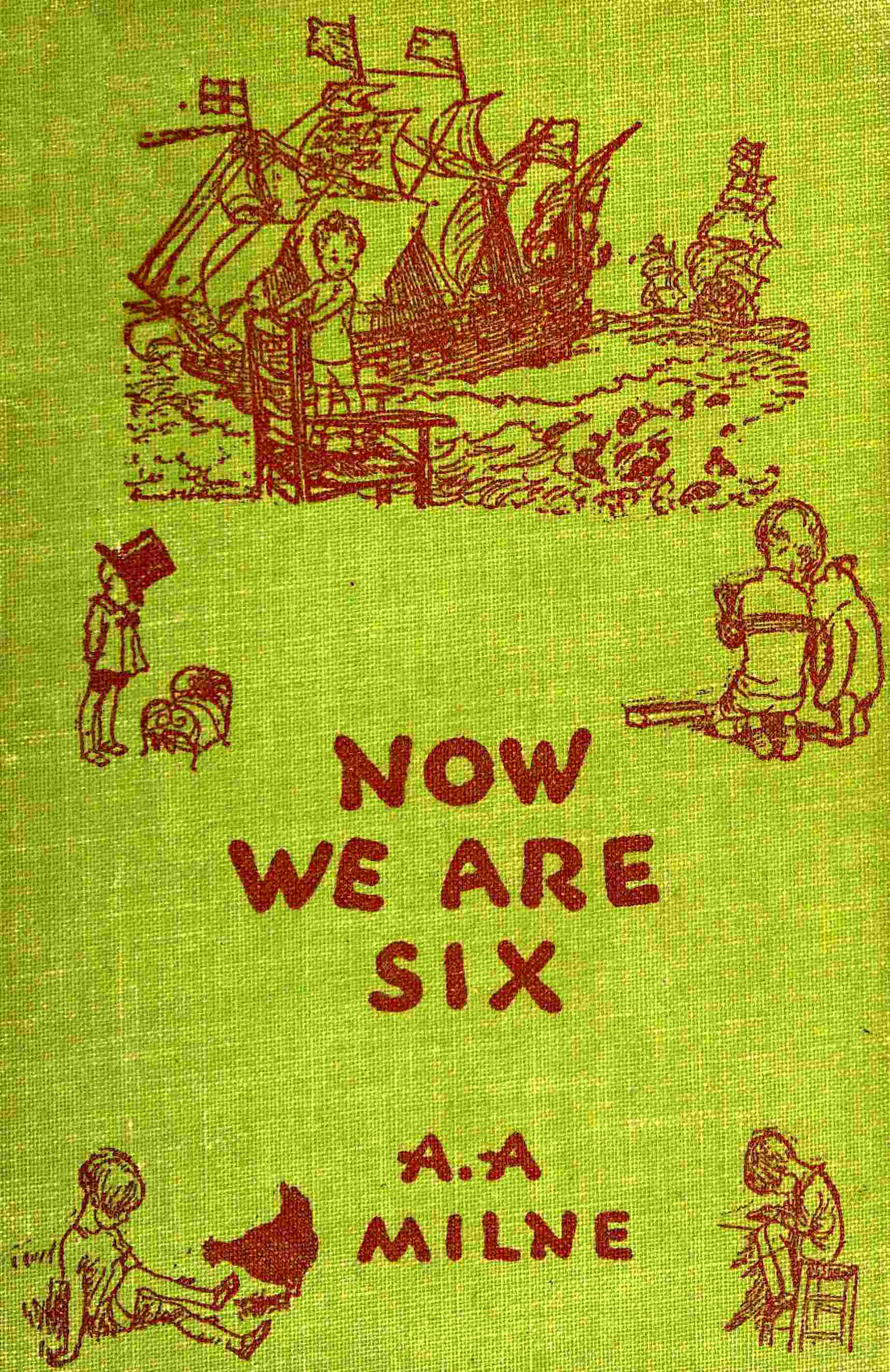
Now we are six cover

Now we are six

Chapter 2: INTRODUCTION
Open in WeRead

About This Book

A collection of playful, short poems that capture a child's viewpoint through gentle humor and occasional wistfulness. The verses range from nonsense and energetic play to quiet domestic scenes, exploring imagination, games, small anxieties, seasonal events, and simple moral observations. Many pieces use a conversational child narrator and recurring child-and-teddy characters, while others sketch oddball adults and fanciful incidents. Rhyme, repetition, and clear rhythmic lines lend musicality, and the sequence moves between buoyant exuberance and reflective tenderness suitable for young readers and listeners.

The Project Gutenberg eBook of Now we are six

This ebook is for the use of anyone anywhere in the United States and most other parts of the world at no cost and with almost no restrictions whatsoever. You may copy it, give it away or re-use it under the terms of the Project Gutenberg License included with this ebook or online at www.gutenberg.org. If you are not located in the United States, you will have to check the laws of the country where you are located before using this eBook.

Title: Now we are six

Author: A. A. Milne

Illustrator: Ernest H. Shepard

Release date: April 9, 2023 [eBook #70516]
Most recently updated: May 5, 2024

Language: English

Original publication: United States: E.P. Dutton & Co., Inc, 1927

Credits: Greg Weeks, Mary Meehan and the Online Distributed Proofreading Team at http://www.pgdp.net

*** START OF THE PROJECT GUTENBERG EBOOK NOW WE ARE SIX ***

NOW WE ARE SIX

BY A.A. MILNE WITH
DECORATIONS BY ERNEST H. SHEPARD

NEW YORK E. P. DUTTON & CO., INC.

NOW WE ARE SIX, COPYRIGHT, 1927,
BY E. P. DUTTON & CO., INC.
ALL RIGHTS RESERVED
PRINTED IN U.S.A.

First PrintingSept., 1927
Tenth Printing Sept., 1927
Twentieth Printing Sept., 1927
Thirtieth Printing Sept., 1927
Thirty-third Printing Sept., 1927
Thirty-fifth Printing Nov., 1927
Fortieth Printing Nov., 1927
Forty-fifth Printing Nov., 1927
Fiftieth Printing Nov., 1927
Fifty-fifth Printing Dec., 1927
Sixtieth Printing Dec., 1927
Sixty-fifth Printing Dec., 1927
Seventieth Printing Dec., 1927
Seventy-fourth Printing Dec., 1928
Seventy-eighth Printing Sept., 1929
Eightieth Printing May, 1930
Eighty-fourth Printing May, 1931
Eighty-sixth Printing July, 1932
Eighty-ninth Printing July, 1933
New Edition Aug., 1935
Ninety-first Printing Aug., 1935
Ninety-fourth Printing Aug., 1935

TO
ANNE DARLINGTON
NOW SHE IS SEVEN
AND
BECAUSE SHE IS
SO
SPESHAL


NOW WE ARE SIX


INTRODUCTION

When you are reciting poetry, which is a thing we never do, you find sometimes, just as you are beginning, that Uncle John is still telling Aunt Rose that if he can't find his spectacles he won't be able to hear properly, and does she know where they are; and by the time everybody has stopped looking for them, you are at the last verse, and in another minute they will be saying, "Thank-you, thank-you," without really knowing what it was all about. So, next time, you are more careful; and, just before you begin you say, "Er-h'r'm!" very loudly, which means, "Now then, here we are"; and everybody stops talking and looks at you: which is what you want. So then you get in the way of saying it whenever you are asked to recite ... and sometimes it is just as well, and sometimes it isn't.... And by and by you find yourself saying it without thinking. Well, this bit which I am writing now, called Introduction, is really the er-h'r'm of the book, and I have put it in, partly so as not to take you by surprise, and partly because I can't do without it now. There are some very clever writers who say that it is quite easy not to have an er-h'r'm, but I don't agree with them. I think it is much easier not to have all the rest of the book.

What I want to explain in the Introduction is this. We have been nearly three years writing this book. We began it when we were very young ... and now we are six. So, of course, bits of it seem rather baby-ish to us, almost as if they had slipped out of some other book by mistake. On page whatever-it-is there is a thing which is simply three-ish, and when we read it to ourselves just now we said, "Well, well, well," and turned over rather quickly. So we want you to know that the name of the book doesn't mean that this is us being six all the time, but that it is about as far as we've got at present, and we half think of stopping there.

A. A. M.

P.S.—Pooh wants us to say that he thought it was a different book; and he hopes you won't mind, but he walked through it one day, looking for his friend Piglet, and sat down on some of the pages by mistake.


CONTENTS

SOLITUDE
KING JOHN'S CHRISTMAS
BUSY
SNEEZLES
BINKER
CHERRY STONES
THE KNIGHT WHOSE ARMOUR DIDN'T SQUEAK
BUTTERCUP DAYS
THE CHARCOAL-BURNER
US TWO
THE OLD SAILOR
THE ENGINEER
JOURNEY'S END
FURRY BEAR
FORGIVEN
THE EMPEROR'S RHYME
KNIGHT-IN-ARMOUR
COME OUT WITH ME
DOWN BY THE POND
THE LITTLE BLACK HEN
THE FRIEND
THE GOOD LITTLE GIRL
A THOUGHT
KING HILARY AND THE BEGGERMAN
SWING SONG
EXPLAINED
TWICE TIMES
THE MORNING WALK
CRADLE SONG
WAITING AT THE WINDOW
PINKLE PURR
WIND ON THE HILL
FORGOTTEN
IN THE DARK
THE END

NOW WE ARE SIX


SOLITUDE

I have a house where I go
When there's too many people,
I have a house where I go
Where no one can be;
I have a house where I go,
Where nobody ever says "No";
Where no one says anything—so
There is no one but me.


KING JOHN'S CHRISTMAS

King John was not a good man—
He had his little ways.
And sometimes no one spoke to him
For days and days and days.
And men who came across him,
When walking in the town,
Gave him a supercilious stare,
Or passed with noses in the air—
And bad King John stood dumbly there,
Blushing beneath his crown.
King John was not a good man,
And no good friends had he.
He stayed in every afternoon...
But no one came to tea.
And, round about December,
The cards upon his shelf
Which wished him lots of Christmas cheer,
And fortune in the coming year,
Were never from his near and dear,
But only from himself.
King John was not a good man,
Yet had his hopes and fears.
They'd given him no present now
For years and years and years.
But every year at Christmas,
While minstrels stood about,
Collecting tribute from the young
For all the songs they might have sung,
He stole away upstairs and hung
A hopeful stocking out.
King John was not a good man,
He lived his life aloof;
Alone he thought a message out
While climbing up the roof.
He wrote it down and propped it
Against the chimney stack:
"TO ALL AND SUNDRY—NEAR AND FAR—
F. CHRISTMAS IN PARTICULAR."
And signed it not "Johannes R."
But very humbly, "JACK."
"I want some crackers,
And I want some candy;
I think a box of chocolates
Would come in handy;
I don't mind oranges,
I do like nuts!
And I SHOULD like a pocket-knife
That really cuts.
And, oh! Father Christmas, if you love me at all,
Bring me a big, red india-rubber ball!"
King John was not a good man—
He wrote this message out,
And gat him to his room again,
Descending by the spout.
And all that night he lay there,
A prey to hopes and fears.
"I think that's him a-coming now,"
(Anxiety bedewed his brow.)
"He'll bring one present, anyhow—
The first I've had for years."
"Forget about the crackers,
And forget about the candy;
I'm sure a box of chocolates
Would never come in handy;
I don't like oranges,
I don't want nuts,
And I HAVE got a pocket-knife
That almost cuts.
But, oh! Father Christmas, if you love me at all,
Bring me a big, red india-rubber ball!"
King John was not a good man—
Next morning when the sun
Rose up to tell a waiting world
That Christmas had begun,
And people seized their stockings,
And opened them with glee,
And crackers, toys and games appeared,
And lips with sticky sweets were smeared,
King John said grimly: "As I feared,
Nothing again for me!"
"I did want crackers,
And I did want candy;
I know a box of chocolates
Would come in handy;
I do love oranges,
I did want nuts.
I haven't got a pocket-knife—
Not one that cuts.
And, oh! if Father Christmas had loved me at all,
He would have brought a big, red india-rubber ball!"
King John stood by the window,
And frowned to see below
The happy bands of boys and girls
All playing in the snow.
A while he stood there watching,
And envying them all...
When through the window big and red
There hurtled by his royal head,
And bounced and fell upon the bed,
An india-rubber ball!
AND OH, FATHER CHRISTMAS,
MY BLESSINGS ON YOU FALL
FOR BRINGING HIM
A BIG, RED,
INDIA-RUBBER
BALL!


BUSY

I think I am a Muffin Man. I haven't got a bell,
I haven't got the muffin things that muffin people sell.
Perhaps I am a Postman. No, I think I am a Tram.
I'm feeling rather funny and I don't know what I am—
BUT
Round about
And round about
And round about I go—
All round the table,
The table in the nursery—
Round about
And round about
And round about I go;
I think I am a Traveller escaping from a Bear;
I think I am an Elephant,
Behind another Elephant
Behind another Elephant who isn't really there....
SO
Round about
And round about
And round about and round about
And round about
And round about
I go.
I think I am a Ticket Man who's selling tickets—please,
I think I am a Doctor who is visiting a Sneeze;
Perhaps I'm just a Nanny who is walking with a pram
I'm feeling rather funny and I don't know what I am—
BUT
Round about
And round about
And round about I go—
All around the table,
The table in the nursery—
Round about
And round about
And round about I go;
I think I am a Puppy, so I'm hanging out my tongue;
I think I am a Camel who
Is looking for a Camel who
Is looking for a Camel who is looking for its Young....
SO
Round about
And round about
And round about and round about
And round about
And round about
I go.


SNEEZLES

Christopher Robin
Had wheezles
And sneezles,
They bundled him
Into
His bed.
They gave him what goes
With a cold in the nose,
And some more for a cold
In the head.
They wondered
If wheezles
Could turn
Into measles,
If sneezles
Would turn
Into mumps;
They examined his chest
For a rash,
And the rest
Of his body for swellings and lumps.
They sent for some doctors
In sneezles
And wheezles
To tell them what ought
To be done.
All sorts and conditions
Of famous physicians
Came hurrying round
At a run.
They all made a note
Of the state of his throat,
They asked if he suffered from thirst;
They asked if the sneezles
Came after the wheezles,
Or if the first sneezle
Came first.
They said, "If you teazle
A sneezle
Or wheezle,
A measle
May easily grow.
But humour or pleazle
The wheezle
Or sneezle,
The measle
Will certainly go."
They expounded the reazles
For sneezles
And wheezles,
The manner of measles
When new.
They said "If he freezles
In draughts and in breezles,
Then PHTHEEZLES
May even ensue."
*   *   *
Christopher Robin
Got up in the morning,
The sneezles had vanished away.
And the look in his eye
Seemed to say to the sky,
"Now, how to amuse them to-day?"


BINKER

Binker—what I call him—is a secret of my own,
And Binker is the reason why I never feel alone.
Playing in the nursery, sitting on the stair,
Whatever I am busy at, Binker will be there.
Oh, Daddy is clever, he's a clever sort of man,
And Mummy is the best since the world began,
And Nanny is Nanny, and I call her Nan—
But they can't
See
Binker.
Binker's always talking, 'cos I'm teaching him to speak:
He sometimes likes to do it in a funny sort of squeak,
And he sometimes likes to do it in a hoodling sort of roar ...
And I have to do it for him 'cos his throat is rather sore.
Oh, Daddy is clever, he's a clever sort of man,
And Mummy knows all that anybody can,
And Nanny is Nanny, and I call her Nan—
But they don't
Know
Binker.
Binker's brave as lions when we're running in the park;
Binker's brave as tigers when we're lying in the dark;
Binker's brave as elephants. He never, never cries ...
Except (like other people) when the soap gets in his eyes.
Oh, Daddy is Daddy, he's a Daddy sort of man,
And Mummy is as Mummy as anybody can,
And Nanny is Nanny, and I call her Nan ...
But they're not
Like
Binker.
Binker isn't greedy, but he does like things to eat,
So I have to say to people when they're giving me a sweet,
"Oh, Binker wants a chocolate, so could you give me two?"
And then I eat it for him, 'cos his teeth are rather new.
Well, I'm very fond of Daddy, but he hasn't time to play,
And I'm very fond of Mummy, but she sometimes goes away,
And I'm often cross with Nanny when she wants to brush my hair ...
But Binker's always Binker, and is certain to be there.


CHERRY STONES

Tinker, Tailor,
Soldier, Sailor,
Rich Man, Poor Man,
Ploughboy, Thief
And what about a Cowboy,
Policeman, Jailer,
Engine-driver,
Or Pirate Chief?
What about a Postman—or a Keeper at the Zoo?
What about the Circus Man who lets the people through?
And the man who takes the pennies for the roundabouts and swings,
Or the man who plays the organ, and the other man who sings?
What about a Conjuror with rabbits in his pockets?
What about a Rocket Man who's always making rockets?
Oh, there's such a lot of things to do and such a lot to be
That there's always lots of cherries on my little cherry tree!


THE KNIGHT WHOSE ARMOUR DIDN'T SQUEAK

Of all the Knights in Appledore
The wisest was Sir Thomas Tom.
He multiplied as far as four,
And knew what nine was taken from
To make eleven. He could write
A letter to another Knight.
No other Knight in all the land
Could do the things which he could do.
Not only did he understand
The way to polish swords, but knew
What remedy a Knight should seek
Whose armour had begun to squeak.
And, if he didn't fight too much,
It wasn't that he did not care
For blips and buffetings and such,
But felt that it was hardly fair
To risk, by frequent injuries,
A brain as delicate as his.
His castle (Castle Tom) was set
Conveniently on a hill;
And daily, when it wasn't wet,
He paced the battlements until
Some smaller Knight who couldn't swim
Should reach the moat and challenge him.
Or sometimes, feeling full of fight,
He hurried out to scour the plain;
And, seeing some approaching Knight,
He either hurried home again,
Or hid; and, when the foe was past,
Blew a triumphant trumpet-blast.
One day when good Sir Thomas Tom
Was resting in a handy ditch,
The noises he was hiding from,
Though very much the noises which
He'd always hidden from before,
Seemed somehow less.... Or was it more?
The trotting horse, the trumpet's blast,
The whistling sword, the armour's squeak,
These, and especially the last,
Had clattered by him all the week.
Was this the same, or was it not?
Something was different. But what?
Sir Thomas raised a cautious ear
And listened as Sir Hugh went by,
And suddenly he seemed to hear
(Or not to hear) the reason why
This stranger made a nicer sound
Than other Knights who lived around.
Sir Thomas watched the way he went—
His rage was such he couldn't speak,
For years they'd called him down in Kent
The Knight Whose Armour Didn't Squeak!
Yet here and now he looked upon
Another Knight whose squeak had gone.
He rushed to where his horse was tied;
He spurred it to a rapid trot.
The only fear he felt inside
About his enemy was not
"How sharp his sword?" "How stout his heart?"
But "Has he got too long a start?"
Sir Hugh was singing, hand on hip,
When something sudden came along,
And caught him a terrific blip
Right in the middle of his song.
"A thunderstorm!" he thought. "Of course!"
And toppled gently off his horse.
Then said the good Sir Thomas Tom,
Dismounting with a friendly air,
"Allow me to extract you from
The heavy armour that you wear.
At times like these the bravest Knight
May find his armour much too tight."
A hundred yards or so beyond
The scene of brave Sir Hugh's defeat
Sir Thomas found a useful pond,
And, careful not to wet his feet,
He brought the armour to the brink,
And flung it in ... and watched it sink.
So ever after, more and more,
The men of Kent would proudly speak
Of Thomas Tom of Appledore,
"The Knight Whose Armour Didn't Squeak"
Whilst Hugh, the Knight who gave him best,
Squeaks just as badly as the rest.


BUTTERCUP DAYS

Where is Anne?
Head above the buttercups,
Walking by the stream,
Down among the buttercups.
Where is Anne?
Walking with her man,
Lost in a dream,
Lost among the buttercups.
What has she got in that little brown head?
Wonderful thoughts which can never be said.
What has she got in that firm little fist of hers?
Somebody's thumb, and it feels like Christopher's.
Where is Anne?
Close to her man.
Brown head, gold head,
In and out the buttercups.


THE CHARCOAL-BURNER

The charcoal-burner has tales to tell.
He lives in the Forest,
Alone in the Forest;
He sits in the Forest,
Alone in the Forest.
And the sun comes slanting between the trees,
And rabbits come up, and they give him good-morning,
And rabbits come up and say, "Beautiful morning"....
And the moon swings clear of the tall black trees,
And owls fly over and wish him good-night,
Quietly over to wish him good-night....
And he sits and thinks of the things they know,
He and the Forest, alone together—
The springs that come and the summers that go,
Autumn dew on bracken and heather,
The drip of the Forest beneath the snow....
All the things they have seen,
All the things they have heard:
An April sky swept clean and the song of a bird....
Oh, the charcoal-burner has tales to tell!
And he lives in the Forest and knows us well.