
WeRead Powered by ReaderPub
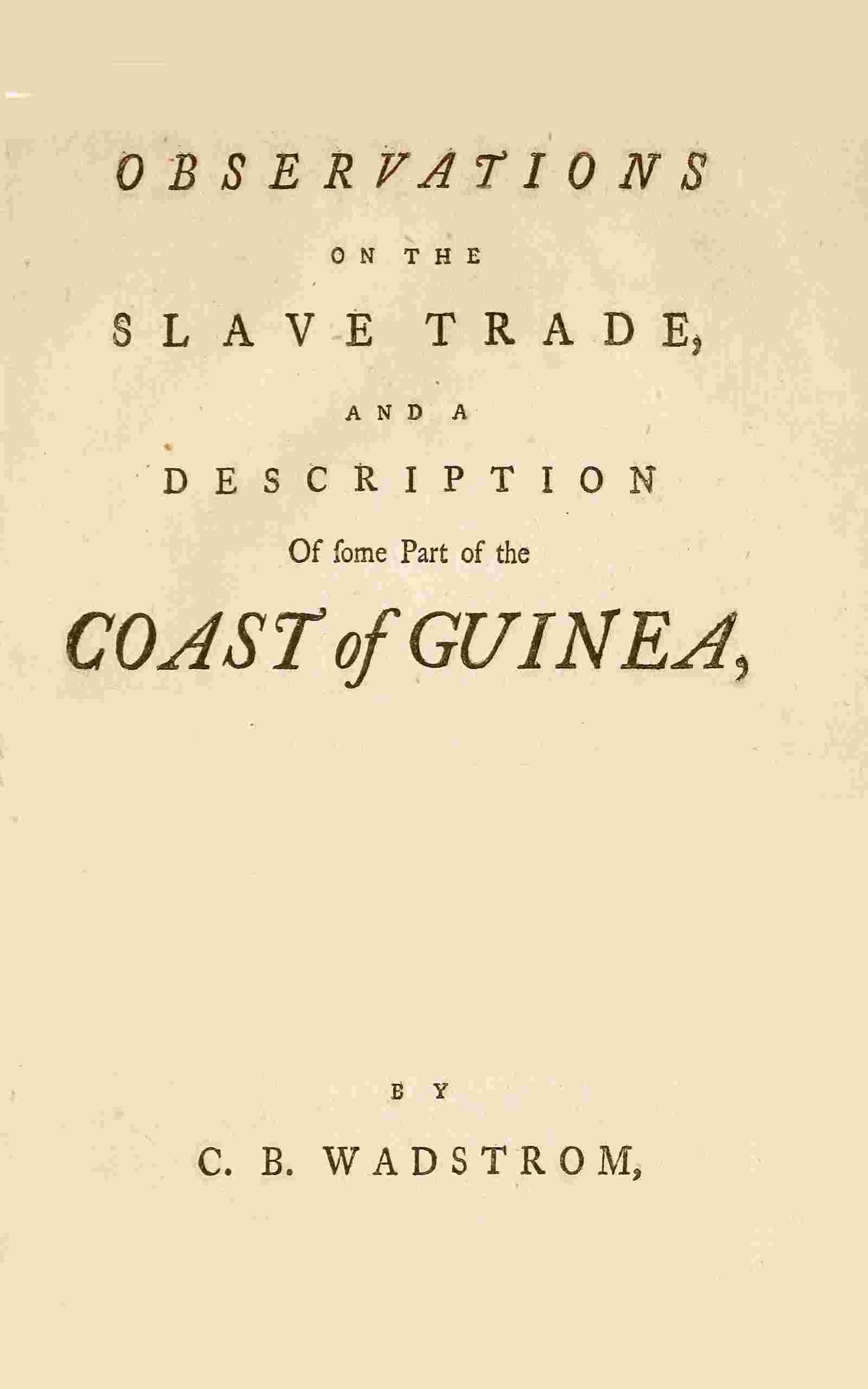
Observations on the slave trade and a description of some part of the coast of Guinea, during a voyage, made in 1787, and 1788, in company with Doctor A. Sparrman and Captain Arrehenius cover

Observations on the slave trade and a description of some part of the coast of Guinea, during a voyage, made in 1787, and 1788, in company with Doctor A. Sparrman and Captain Arrehenius

Chapter 16: CHAP. II. Of the Soil.
Open in WeRead

Explore more books like this:

About This Book

This work presents observations made during a voyage to the Coast of Guinea, focusing on the slave trade and the treatment of Africans by Europeans. It discusses various methods of procuring slaves, including war, pillage, and treachery, while also examining the conditions under which enslaved individuals are treated. The author explores the potential for agricultural development in Africa and assesses the natural resources of the region, including its climate and soil. The text aims to contribute to the discourse on human rights and the improvement of conditions for Africans, reflecting on the broader implications of European settlements in the area.

CHAP.  II.
Of the Soil.

The soil all along the coast is very unequal. From Cape Blanco down the coast, to the River Gambia, it is in general very sandy, but as the sand consists of broken shells, covered in many places with a rich black mould, it must be favourable to vegetation. The most barren places of this part of the country, except just on the sea shore, are covered with grass and bushes; and where the black mould is found, the vegetation is luxuriant, and the trees of vast dimensions. I have remarked, that the mountains are generally composed more or less of regular basaltes, exhibiting remains of most prodigious volcanoes, the eruptions of which greatly improve the soil around them. Hence the mountains and high grounds at Cape Emanuel, Goree, Cape Rouge, and other places lower down, are commonly very fertile. Where rice thrives best, the ground in general is low, marshy, and unhealthy.