
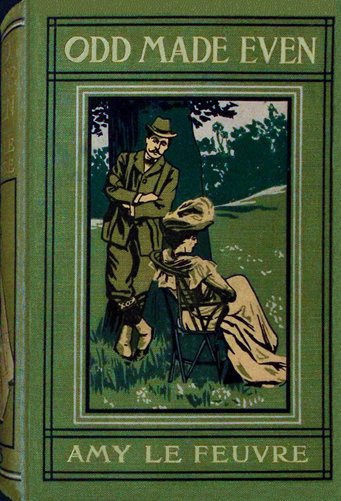
"I'D THANK THE KING O' LOVE'S MESSENGER FOR WHAT HER
HATH BROUGHT ME."
CHAPTER XI
In Town Again
Experience, like a pale musician, holds
A dulcimer of patience in his hand;
Whence harmonies we cannot understand,
Of God's will in His worlds, the strain unfolds
In sad perplexed minors. Deathly colds
Fall on us while we hear, and countermand
Our sanguine heart back from the fancy-land,
With nightingales in visionary wolds.
We murmur—"Where is any certain tune
Or measured music in such notes as these?"
But angels, leaning from the golden seat,
Are not so minded! their fine ear hath won
The issue of completed cadences;
And smiling down the stars, they whisper—"Sweet."
ELIZABETH BARRETT BROWNING.
THE month that Betty and her mother were together without Molly was beneficial to them both.
Betty set her mind and body to fulfil her different duties cheerfully, but her heedless, impulsive ways were a sad trial to her mother. If Betty had to bear with an invalid's exactness and irritability, Mrs. Stuart also needed her share of patience for her youngest daughter's incompetence.
"It is no good, mother," was Betty's despondent complaint one foggy morning in November, as she sat at her mother's writing-desk, and for the third time tore up a letter she was writing at Mrs. Stuart's dictation. "You will never make a satisfactory secretary of me. I think I was born to be an out-of-door person, not an indoor one. I'm trying my very best this morning, but the first sheet blotted itself, and the second I misspelt, and now this sheet I have upset a vase of flowers over! Things will go wrong when I mean them to go right with all my heart and soul."
"If you were a little quieter, and not quite so emphatic, you would do better," remarked Mrs. Stuart drily.
"I thought I had been as quiet as a lamb this morning," Betty rejoined; "at least, until this last half an hour, when I got the fidgets. Perhaps if I went to the pantry and got a duster to wipe up the water here, I should do better. A run will calm my fidgets."
She quitted the room as she spoke, and went singing down the passage at the top of her fresh young voice,—
"Yet when a tale comes i' my head,
Or lasses gie my heart a screed,
As whyles they're like to be my deed,
Oh, sad disease;
I kittle up my rustic reed,
It gies me ease!"
Mrs. Stuart gave a sigh.
"Molly will be back next week. Betty means well, but she is so undisciplined."
Yet Betty was learning lessons in God's own school, and He Himself was her Teacher.
"Patience, long-suffering, with joyfulness," she kept repeating to herself, and she chased away the shadows, and basked in the sun whenever she got the chance. On this particular morning she had just reseated herself at her desk, when the door suddenly opened, and a tall figure wrapped in a thick ulster appeared.
"Harry!" exclaimed Mrs. Stuart, in astonishment.
"Uncle Harry! Where have you come from? We thought you were at Gibraltar."
"Home on sick leave. Don't I look the invalid?"
Major Stuart's tones certainly did not sound like those of one; they were as full and hearty as ever. He threw off his coat and sat down by his sister-in-law, stretching out his long legs with infinite satisfaction towards the ruddy blaze of the fire.
"I've been pretty nearly choked by this fog. We ought to have got in last night. I landed at the Victoria Docks, and came straight here. Where is Madam Molly?"
"Down in the country. You can have had no breakfast."
"No; I am starving, but I would rather wait till luncheon. That must be pretty near—isn't it?"
"Oh, you must have something at once. I will go and see about it."
Betty tripped out of the room, delighted at the interruption to the writing. Her uncle looked after her.
"Is Molly still the beauty?" he asked. "I haven't seen any of you for three years."
"Is it really so long? I think Molly is still the most admired; Betty is too variable. Now tell me about yourself. Have you been ill?"
"Nothing to speak of. A touch of fever again. Can you take me in for a short time?"
"You know I shall be delighted."
Major Stuart brought a good deal of life into the house. He chaffed Betty a good bit, and uncle and niece grew almost uproarious at times; but they were firm friends notwithstanding, for Betty had always occupied a big corner in her uncle's heart.
"Now, Betty, what is your present fad?" he asked her one afternoon, as they were walking in the Park together.
"I haven't any," was the prompt reply.
"Rubbish! When you were eight, it was angels, when you were eighteen it was dancing, now I suppose it is lovers!"
"Indeed it is not!"
Betty's cheeks grew hot at such an accusation.
"Well, upon what are you expending your superfluous energy?"
"On learning to sit still," Betty said, laughing, though there was a little wistfulness in her tone.
Major Stuart gave a low whistle.
"And who has set you such a cruel and superhuman task as that?"
"It is time I learnt it," Betty said, gravity stealing into her sunny eyes. "I have been taking Molly's place while she has been away. I wanted work to do, so mother has been giving me plenty of it."
"And why did a young thing like you want work? You talk as if you were a char-woman. Isn't that the name of the good lady who is always looking out for jobs of work?"
"I had nothing to do," Betty said earnestly. "I wanted to go right away from home, only mother wouldn't let me. When Molly comes back, I shall fare badly. I bungle so that mother will thankfully dismiss me. It isn't the kind of work I am fit for—writing and reading and planning societies, but it seems the only thing that mother likes for me."
"I see, I see. I might have known that the dancing fervour would not last. Work, with a big W, is now the cry. My dear child, we must get you married, or there is no saying what you will not develop into."
Betty turned upon him indignantly.
"You are a man, and talk such stuff! As if girls cannot do something with their lives as well as men."
"Well, what do you want to do? Go into the Army or Navy, study law and buy a flaxen wig, or walk a hospital, and dissect cats and dogs and human beings? Perhaps you would prefer the Church? In your young days, I remember, you were much given to churches and graves."
"You never will be serious, Uncle Harry. I thought you might help me, but you only laugh at me."
Major Stuart dropped his banter.
"My dear Betty, girls are needed at home, especially when their mothers are delicate. You would repent it all your life if you left your mother now."
Betty looked up alarmed.
"Uncle Harry, you don't think mother is really ill?"
Major Stuart was silent. He knew what his young nieces did not know—that Mrs. Stuart's days were numbered.
"Tell me," Betty urged. "Why do you think I ought not to leave mother?"
"Because she is an invalid," Major Stuart said, trying to speak lightly; "and invalids want cheery companionship. You can give her that even better than Molly can."
"No," said Betty, shaking her head; "I am not quiet enough. I bang doors, and I let things tumble, and I sing when I ought to be silent. Molly suits mother perfectly. I never did."
"Your mother told me you had cheered her a good deal lately," said Major Stuart.
"Did she really?" Betty exclaimed, whilst a flush of pleasure came to her cheeks. "I have tried hard to supply Molly's place, but I did not know I had been at all successful."
A few days later, and Molly returned. Betty welcomed her gladly. Everything concerning the Red Manor and its neighbourhood interested her, and the sisters had much to tell each other. They sat over their sitting-room fire the day after Molly's return. Mrs. Stuart was resting in her room, and they hoped they would be undisturbed.
Molly puzzled Betty by her manner; she seemed reticent and self-absorbed, but it did not last long. She placed a cushion behind her head, leant back in her easy-chair, and, gazing dreamily into the fire, announced,—
"Something happened to me at the Dormers, Betty."
"What?" asked Betty, eyeing her curiously.
"Well, Frank made a stupid of himself."
"Oh, Molly, not Frank? I should have thought he was the last person to do it. He is just like Douglas. Do you mean to say he proposed to you?"
"I'll tell you how he did it, and then you can say if you would have liked it."
Molly roused herself to poke the fire viciously.
"Of course, we were always about together, and one day Ella had a headache, and Frank drove me out in his trap to see an old ruin about eight miles off. It was coming home—he asked me how my story was getting on, and then he said, 'How do your heroes make love, Molly?' I said, 'Different ways.' 'But,' he said, 'how do you think it ought to be done to ensure success?' Of course, I hadn't a notion of what was coming, so I considered, and I said I preferred one who did it in a masterly way, and not in agitation. 'My hero,' I said, 'generally clasps the heroine in his arms, before she knows what he is about.'
"'And does the heroine always like that?'
"'If he is the right man she does.'
"'And if he isn't?'
"'Oh, then he wouldn't have the cheek to do it,' I said.
"Frank seemed to think that over. 'He might be in a position where such a proceeding would be risky,' he said. 'For instance, if he was driving like I am, and the horse wanted a bit of holding in like Boy does, while he is clasping his lady-love to his heart, the horse would bolt, and the result would be a catastrophe!' 'Yes,' I said; 'but I have never made any one propose when driving. It would want a good deal of thought and care.' 'Thought and care be hanged!' Frank said quickly. 'I'm going to do it, Molly, so now you'll see how it can be done.'"
Molly paused.
"Well," said Betty eagerly. "This is very exciting. How did he go on? I wish it had been any one but Frank."
"Oh, I can't remember all he said. He talked a lot of nonsense. He said he was perfectly certain we should suit each other down to the ground, and he said he had always liked me, and he was really in dead earnest, and I would break his heart if I didn't say 'Yes.' At first I thought he was chaffing me, but I soon saw he wasn't, and he kept twitching Boy's mouth till I thought the creature would rear and fall back on the top of us! It wasn't a pleasant proposal at all, Betty."
"What did you say?"
"I told him it was absurd, that he was like a brother, and nothing else. And then he was furious, and said I hadn't any heart, and wasted all my best feelings on paper men and women. That was when I told him I had no desire to marry; I only wanted to write a book. He was very rude, but he begged my pardon before the end of the drive, and besought me to give him another answer."
"I expect," Betty said soberly, "he will make some one a good husband. He is a very steady fellow, and every one likes him. He isn't a bit conceited, and he has plenty of fun in him."
"Yes," assented Molly dreamily, her eyes trying to read her future in the glowing coals in front of her. "But he is not my ideal, Betty. I know him too well. I think, if I ever marry, I shall like my husband to be a dark stern man, with a mystery about him—one who will give me little shivers of delight and awe, and who will be a surprise to me even after I marry him. A man who will overwhelm me with love and tenderness when we are alone together, but who will be cold and unapproachable to any one else."
"Yes, that sounds nice in—in a book," said Betty thoughtfully; "but I would like to be quite sure of a man before I married him."
There was a little silence. The girls were following out their youthful fancies; then. Molly said abruptly,—
"Anyhow, Frank is too—commonplace and unromantic for me. I would rather not be married at all than to him."
"If you would marry him, I suppose by-and-bye the Red Manor would be your home."
"But you forget, Betty," said Molly, who was singularly unworldly, "that I want to arrange a match between Ella and Mr. Arundel; and I want Ella to inherit the Red Manor, not Frank, only I don't quite know how it is to be done. I was a little disappointed when they met the other day."
"When was that?" asked Betty quietly, but her heart began fluttering in a most uncomfortable way.
"We were riding out—Frank and Ella and I—and we met Mr. Arundel on the way to his farm. He was going to pass us, but I would not let him, and I introduced him to Ella, and then I asked him if we might see his farm. He did not seem to mind a bit, and I tried to make Ella ride behind with him, while I went on with Frank, but she wouldn't. I asked her afterwards what she thought of him, and she said he was rather grave and uninteresting, but she liked his farmhouse."
"What is it like?" asked Betty.
"It has a thatched roof and casement windows, and some late roses were still climbing up it. I shouldn't mind living in it a bit, but, of course, after the Manor it must be dreadfully cramped, and he hasn't got it very tidy. It looks like a man's house. It is rather pretty when you go in, or it might easily be made so. You step into what was the old farmhouse kitchen, and a broad wooden staircase goes up from the middle of it, so it really is the hall. I think he smokes there. The fire was burning, and a chair was by it, with a book and a pipe on it, and his coats and hats were lying about anywhere. One door to the left led into the kitchen and dairy; the other into the dining-room, and then there was another door which he never opened; he said it was the best parlour, and had at present no furniture in it. The garden is sweet, old-fashioned, and quaint, and there is a nice walled kitchen garden. Ella asked him if he felt lonely, and he smiled, but it was a sad smile. It made me feel quite unhappy to see him there. He has a woman to cook and look after him; the rest of them there are farm men and lads."
"Where is his mother's organ?" asked Betty.
"I never asked him. I forgot all about it. In the best parlour, I expect, if the room is high enough to take it. We didn't go upstairs."
"I think it was intruding as it was," Betty said, with hot cheeks. "I can't think how you could do it."
"You see, I was so anxious for him to know Ella. And I'm afraid I did myself harm," Molly added, with a little sigh, "for Frank got it into his head that I wanted to be with him. Stupid fellow! It was only to give the others a chance, that I took him away."
"How long did you stay?"
"Not very long. He offered us a cup of tea, but I thought he wouldn't be able to manage it very well. It looked so funny to see him there doing everything himself. He went out into the yard, and brought some logs to put on the fire. Of course, Floy was there. He lay on the rug and looked just as comfortable as he did at the Manor. I told Ella how dreadfully Mr. Arundel was to be pitied, and she made me angry by saying it would have been much better if he had left the neighbourhood altogether. She said it would be so awkward meeting him, though of course she was very sorry for him."
"I am sure he doesn't need 'her' pity!"
Betty's tone was so emphatic that Molly looked up surprised.
"Well, of course, everybody is sorry for him, aren't you?"
"Not a bit," said Betty passionately, rising from her seat as she spoke. "He has done nothing to be sorry for. He is not a poor weak ailing creature that needs a girl's pity. He is one that is to be envied, and people who talk about being sorry for him are fools!"
With which hasty, incoherent statement Betty left the room, shutting the door behind her more quickly than quietly.
Molly shrugged her shoulders.
"Betty is so contradictious! I thought she quite felt for him in his misfortunes. Now she doesn't seem to care a bit. I believe I am the only one that really sympathises with him."
For the rest of the day Betty went about in a dream. One picture was in her mind's eye.
The old hall, with a blazing log fire, and the staircase leading up out of it. In a chair, leaning his head on his hand, the master of the house. Stretched at his feet his faithful hound. A book open on his knee, but unread. Where are his thoughts?
"Alone and silent, only his dog left, all his friends giving him the cold shoulder. And yet I can see him smiling, and his eyes clear and untroubled. Oh, God will 'restore comforts unto him.' I must not think of him. It will make me miserable."
But thoughts are difficult to control, and Betty found them so. She comforted herself by praying for him.
"I am sure it isn't wrong to do that," she said to herself, a little defiantly. "And I shall pray that he may be made happy, and if he marries Ella and goes back to the Red Manor, I shall be glad—yes, really glad! I hope I shall be!"
Poor little Betty! She was very courageous in these days, very earnest and conscientious in all she said and did, but her heart was in the old thatched farmhouse, and there it remained, day after day, much as she strove to tear it thence.
CHAPTER XII
A Thunderbolt
We scarce breathed anything but grief,
We almost held our breath:
We were inwardly unmanned and numbed
With the looking out for death.
FABER.
"Now, girls, what are you doing? I am to take you for a constitutional in the Park—act nursemaid, in fact—your mother says so! What! Betty deep with ink and paper! Heaven forbid that you should follow in your sister's steps!"
"It is only a letter," said Betty, looking up with flushed face and tearful eyes. "I am writing to Mrs. Fairfax. I heard such dreadful news from Mrs. St. Clair this morning. And Molly and I have decided not to tell mother. It is one of her bad days."
"I see it is; but I heard from St. Clair last mail, and they were all first-rate."
"He is dead," said Betty softly; "haven't you heard?"
"Good heavens! No! You don't mean it?"
Major Stuart sat down heavily on a chair. Colonel St. Clair was an old friend of his, and they corresponded as frequently as two men do who have perfect confidence in each other.
"His horse bolted with him on parade, and threw him on a heap of stones. He only lived four hours. He had concussion of the brain, and never recovered."
"And his wife?"
"She is coming home at once. She has been very ill, and is still quite an invalid."
"I wish he hadn't gone out to India," said Major Stuart slowly. "I always told him it was a mistake—seconding from his battalion. It has ruined his wife's health, and now killed him."
"But the accident might have happened anywhere," said Molly.
Major Stuart was silent. Then he asked,—
"May I see Mrs. St. Clair's letter, Betty? We were like brothers—he and I. What steamer does she return in?"
"The 'Arethusa,' I think. She will be here in another week. Do advise us, Uncle Harry. You know, Mrs. Fairfax is still in the south of France. She has been there since Miss Grace's death. Mrs. St. Clair wants to go to their old home. It was let to some friends of theirs, but they left at the same time we left the vicarage. Some one ought to go down and make it ready for her. Do you think Molly or I could?"
"That is a question your mother must settle. She ought to know—"
"I am writing to Mrs. Fairfax," said Betty, "to ask her if she is coming over. But she was ill when we last heard from her. It seems nothing but trouble."
"Your mother will ask Mrs. St. Clair here, perhaps?"
"I don't think so," Molly said decidedly. "Mother refused to have Aunt Dora, who wanted to come last week. She seems to get so worried if people are staying in the house."
"But she lets me come in and out."
"Yes, but you are at your club. That is different."
"Well, I shall be in town for some time longer, so I can easily offer my services to Mrs. St. Clair on arrival. She can put up at an hotel for the time being. Now get your hats, and come along. If we have had bad news, we can bear it in the open air as well as in a stuffy house."
"I'm sure Betty inherits her love of being out of doors from you, Uncle Harry," said Molly, as she left the room in obedience to her uncle's wish. "You and she ought to have been born tramps."
Neither Major Stuart nor Betty replied; they were both absorbed in their thoughts.
Betty had not seen Nesta St. Clair for seven years. She had as a child worshipped her with a loving adoration, and though as she grew up she had only seen her at rare intervals, her love had not lessened with time. Nesta had never forgotten her little friend, and had corresponded with her regularly from the time she went out to India. She had not been without her own troubles, for she had lost three of her children out there, and now had only her youngest boy left, who was about eight years old.
Mrs. Stuart was told the news the following day; but she negatived the idea of either of her girls going down to Holly Grange.
So when Nesta arrived in town, about a week later, she went with her boy to a quiet private hotel, and there it was that Major Stuart took Betty to see her one foggy afternoon.
Betty had been beside herself with excitement all the morning. When Molly remonstrated with her, and begged her not to greet Nesta with such abundant cheerfulness, Betty turned upon her,—
"Be quiet, Molly. How should you know my feelings? I am not going to pretend I am sorry to see her, when in reality I am wild with joy. Of course, I am sorry about her husband, but she is the only real woman friend that I have got, and I love her!"
When Betty found herself face to face with Mrs. St. Clair she was tongue-tied. Was this gentle fragile-looking woman in her widow weeds, with her white, worn face and large sad eyes, the same as the bonny young wife and mother that Betty had seen seven years previously? She could hardly believe it, but when Nesta spoke, her low mellow voice awoke a thousand memories in Betty's mind.
"Is this tall, fashionable young lady indeed my little Betty?"
Betty rushed at her impulsively.
"Oh, I hope I shall be your Betty still. I have wanted you so sometimes, and now this is such a sad home-coming."
Tears were in her eyes as she kissed her friend, but Nesta was strangely calm and collected. The time of tears for her was past; only the dull constant ache of loneliness and bereavement remained.
"Dear child, I am so pleased to see you. Now let me introduce my boy to you. He is your godson, remember."
She drew her boy forward. He was a white-faced, delicate-looking child, but upright as a dart, and with a vigour and a briskness in his tone that was a great contrast to his mother's sweet languor.
"How do you do, godmother? I want mother to come out of doors with me and show me England, but it is full of dirty smoke this morning. Would you like to see my parrot? Her name is Tittle-tattle. The captain on the ship gave her that name, and when I grow up I'm going to have a ship of my own, and a coat with 'very' big pockets, and I'm going to walk up and down the bridge with my spyglass, and always keep my hands in my pockets."
"What is your name?" asked Betty, smiling down upon the eager little face. "Jocelyn, isn't it?"
"Jossy, I'm called. Will you come and see Tittle-tattle?"
"Not just now, dear," said his mother. "I want to talk to her first."
"Here, young shaver, we'll go off together, and give your mother a little quiet."
Major Stuart took him off, and Betty sat with her friend. Nesta, with her usual unselfishness, did not touch much upon her own sorrow. She was full of interest in Betty and her surroundings.
"I did so enjoy your letters about Tiverstoke, Betty; it brought up so many happy memories! I hope my mother may like to come back to Holly Grange, and live with me there. I am sure Jossy will brighten her up. I have found a letter from her waiting for me here. Her doctor will not let her return to England just yet. Do you think your mother would let you come and stay with me till she can join me?"
A rush of colour swept into Betty's face. Mrs. St. Clair wondered a little at the brilliant light in her eyes. She thought that she was growing into a beautiful woman.
"It would be heavenly!" was Betty's earnest ejaculation.
Nesta smiled.
"You are the same earnest little soul, Betty. What have you been doing with your life since you left school?"
"Not much," said Betty, shaking her head and a shadow creeping across her eyes. "I have been wasting a good part of it in discontent and restlessness."
"Have you passed that stage now?" asked Nesta sympathetically.
"I am trying hard to," said Betty gravely. "I have longed to go out in the world and work, Mrs. St. Clair. I felt I 'must' a little time ago, but mother would not let me, and so I'm trying to do my best at home. Mr. Russell helped me so when we were at Tiverstoke."
"You were very happy there?"
Betty did not answer. She looked dreamily into the blazing fire in front of her; then she turned her speaking eyes upon her friend, and there were truth and candour in her glance.
"I was very happy, and very miserable, and now, I think, I am content."
Nesta leant forward and kissed her.
"You have been learning in a great school, dear, if you have learnt that lesson."
"I haven't learnt it yet—not perfectly," said Betty wistfully. "I get such sudden overpowering longings, that they almost run away with me. But I do want to do what is right. Mr. Russell gave me such a beautiful text to practise. Three things to think of every day, when worries come,—'Patience, long-suffering, with joyfulness!'"
As Nesta looked into the sweet girlish face by her side, she could almost see the impress of those three virtues stamped upon it. But she wondered dimly what trouble had crept into Betty's life at Tiverstoke, and being a woman she nearly understood.
When Betty left her that morning, she said enthusiastically to her uncle,—
"Isn't she perfectly charming? Do you think mother would let me go to Holly Grange? I think I should be doing some good if I went. Do persuade her, Uncle Harry."
"I think," said Major Stuart gravely, "that you and Molly should stay with your mother this winter. Do not urge her to send you away from her."
Betty's face fell. She could not understand her uncle's wish to keep them both in attendance on their mother; and when he insisted upon taking them out in turn, and in persuading Mrs. Stuart to let them each spend an equal time in her sick-room, Betty thought he was very lacking in discernment.
"Every one can see how much rather mother would have Molly than me. She looks quite plaintive when the door opens, and it is only I."
Nesta came the next day, and had a long interview with Mrs. Stuart. Betty was summoned to her mother's room before she went away.
"Come here, Betty. Mrs. St. Clair has been telling me that she would like to take you to Holly Grange with her. Do you wish to go?"
Betty looked at her mother, then at Nesta. She felt tongue-tied. Her uncle's words rang in her ears.
"Can you spare me, mother?" she asked.
"Your mother is willing to spare you," said Nesta, a little hastily; "but I have told her that I would not have asked you, had I known—had I known she was such an invalid!"
"Am I of any use to you, mother?" Betty asked appealingly. She longed for some assurance that her mother would miss her.
Mrs. Stuart did not reply for a moment. She shaded her eyes with her hand; then she said quietly,—
"If you are away, Molly will be tied a great deal to the house. Of course, she never complains, but—"
"I will not go, mother. I will stay with you."
Her decision made, she left the room; but there was a little bitter feeling in her heart.
"Mother only thinks of Molly. It is only to ease her that she wants me. Oh, it is a disappointment!"
She crept to her room, then took herself to task for such feelings.
"And it is quite right I should not go to Holly Grange. It would be much better not. It would only bring up a lot of things that I ought not to think about. I should be too near. Oh, but I did want just to see if he was looking happy! I would not wish to meet him or speak to him, but if I could have seen him going by without being seen, I think it would have made me happy for a twelvemonth!"
Nesta did not stay very long in town. The time flew by too swiftly for Betty. When she went to Paddington Station to see her off, she had much difficulty in keeping the tears out of her eyes.
"I have only just met you to lose you," she said mournfully. "Do write to me often. I wish mother would take the vicarage again next spring."
"We are nearer each other now," Nesta said brightly. "We have no ocean between us, remember. And, Betty dear, I think you will be happy in London this winter. Be good to your mother. She wants all the love of her daughters just now."
"Sometimes," said Betty, looking at Mrs. St. Clair strangely, "you speak as if mother is very ill. I suppose we have got accustomed to her being an invalid. But you know it is nothing serious. The doctor told us ages ago she only needed care and nursing."
Nesta did not answer for a minute; then she said,—
"You must give it to her, Betty—care, nursing—and love."
Betty sighed. She looked after the departing train with earnest longing, then brought down her little foot with a resolute stamp on the platform, and arrived home with a bright and smiling face. Molly wondered at her, but wisely said nothing.
A few days after, when Betty came to summon her sister to their mother, Molly looked up from her manuscript with a flushed and eager face.
"Oh, Betty, I have been weaving his history into my story, and I have quite changed my plans for him. You know that Uncle Harry said the other day that Mrs. St. Clair was very well off?"
"What of that?" asked Betty shortly.
She had not much patience with many of Molly's dreams and fancies.
"Why, of course, she will meet Mr. Arundel down there, and she will be sorry for him and be kind to him, and ask him to her house. She is so sweet, and sad and lonely, that he will try to comfort her, and she will try to comfort him. And then General Dormer's bank will fail, or his dividends, or whatever his money is in, and then Mrs. St. Clair will buy the Red Manor from him, and they will marry, and live happy ever after. I am sure they are just suited to each other, and it will be trouble that will bring them together and bind them in the unbreakable bond."
Betty turned upon her sister, with hot cheeks and angry eyes.
"I do wish you wouldn't talk such utter nonsense, Molly! Make up what you like about your imaginary men and women, but not about real people in real life. Mrs. St. Clair has only just lost her husband, whom she idolised. She will never think of marrying again, and it is wicked of you to think she will. I am sick of all your talk about people marrying each other. Things like that don't happen in real life, and the world would go on just as well without any love-making or marriages!"
With which very startling and sweeping assertion Betty sent her sister off to the sick-room, and took her place by the fire.
The winter passed very quietly, and then one day came into Betty's life that stood out sharply and darkly, as a black cloud against a sunset sky. Major Stuart's battalion was now stationed in London, so that he was in and out a good deal. He had come in to visit his sister-in-law one morning, and now, with a very grave, set face, entered the girls' sitting-room and called them to him.
"Your mother has asked me to tell you something," he said. "She does not feel strong enough to tell you herself, and she would rather you made no allusion to it when you see her next. I suppose you have both seen that she is not gaining strength?"
Molly looked up with frightened eyes. "It is the winter, Uncle Harry," she gasped. "Mother will be better when the spring comes."
"She was much better in the country," said Betty breathlessly; "it was coming back to London made her worse. But we will take her away in the spring."
"Some One Else is going to take her away first," Major Stuart said very quietly, staring hard out of the window as he spoke.
There was dead silence. The girls looked into each other's eyes for hope that they did not find there. Then Betty stepped forward and seized her uncle's arm.
"Uncle Harry, don't hint! Tell us straight out what you mean. Mother is not dangerously ill? She is not—oh, you don't mean that she is going to die?"
"Your mother is very, very ill, Betty—I wonder you have not seen it—and the end is very near."
Molly burst into a passion of tears. Betty surprised him by her calmness.
"Who says so? The doctors? They are often mistaken."
"Not in this case. Your mother has known all the winter that she would never see another spring."
Then, after a pause, he said,—
"You and Molly will have to exercise all your fortitude and cheerfulness now. A scene would be most dangerous to your mother. Be her careful and cheerful little nurses, as you have been. But your labours will be shared by another. That is why I have spoken to you to-day. The doctor is sending a trained nurse into the house to-night."
Neither of the girls spoke. Molly sobbed as if her heart would break; Betty looked into the fire with a white, stunned face.
Their uncle left them. He felt powerless to comfort, and was relieved that his sad business of opening their eyes was over.
Molly looked up at last.
"Oh, Betty, what shall we do? How cruel it seems to be!"
Betty did not answer. In her heart she was saying,—
"O God! Come close to us now, for no one can help us but Thee!"
CHAPTER XIII
Motherless
Thou art beyond the shadow;
Why should we weep for thee,
That thou from care and pain and death
Art set for ever free?
Well may we cease to sorrow;
Or if we weep at all,
Not for thy fate, but for our own,
Our bitter tears shall fall.
G. WILSON.
"MOLLY, one of us must go to mother."
"You must. How can I?"
And Molly raised her red and swollen eyes, with another deep sob.
Betty stood irresolutely in the middle of the room.
"I am sure mother will expect to see you first."
"I can't go, Betty. I can't! I don't believe you feel it like I do. Oh, mother! Mother!"
Down went her head into her arms. She was crying as if her heart would break. Betty walked out of the room and upstairs, wondering if she were in a dream. Surely such an awful trouble as this would be averted even yet!
She stole into her mother's room, hardly daring to look at her as she lay on her couch. The room was darkened. Mrs. Stuart was lying with closed eyes, and did not open them.
"Is that Molly?"
"No, mother, it is I. Can I do anything for you?"
Betty's voice sounded strange to herself. It was almost stony in its quietness.
"Is Molly in?"
"Yes; she—she will come up soon."
Mrs. Stuart was silent. Betty nervously began to move a tray with a cup of beef-tea upon it from the side of the couch. Then her mother said quietly,—
"I suppose your uncle told you that Dr. Forsyth wishes me to have a night nurse? She will come at five o'clock, and will want some tea. She had better have the dressing-room on the other side of the passage. You must see about it being got ready for her."
A great lump rose in Betty's throat; her mother's care and thought for the nurse who was going to see her die seemed infinitely pathetic. She wished her uncle had not told them that no allusion must be made to their mother's danger in her presence, for she felt tongue-tied now; afraid to offer the slightest remark, for fear of breaking down. She walked to the window, and, in her desperation, began humming a little air to herself. Then, in surprisingly cheerful tones, she said,—
"I will see that she has everything she wants, mother. It is such a lovely day. Would you like me to draw up the blind a little? Fancy! I heard from Lottie Ward this morning, and she is going to be married to Martin Yates!"
She was talking at random. The lump in her throat seemed almost to choke her. What could she say to her mother? What could she do at a crisis like this?
Mrs. Stuart, as usual, misunderstood her. Though it had been her own wish that her girls should not recognise the truth of her state to herself, she was taken aback by Betty's apparent indifference.
"I need not have feared she would make a scene," she thought, a little bitterly, to herself. "It is only from compulsion that she is staying at home this winter. She will be free to do and go where she likes soon. I dare say she will be glad. My poor little Molly has quite broken down, evidently. Well, it is all for the best! One of my daughters will be able to attend on me, without any violation of her feelings. There will be no fear of Betty's breaking down. I wonder if she has any love for me at all?"
"You can read the articles in the 'Times' to me as usual," Mrs. Stuart said presently. "Sit by the window and draw up part of the blind."
Betty got the paper, and read it in a monotonous level tone. How could her mother care for the newspapers? she wondered. What was the good of anything, when her life was gradually ebbing away? Now and again a little choke came into her voice, but she conquered it.
The hour that she was with her mother seemed almost twenty-four hours in length. She was released at last, for her mother's maid came in. Just for a minute before she went, Betty stood looking down at the invalid.
"Is there nothing I can do for you, mother?"
There was wistful longing in her tone, but Mrs. Stuart's matter-of-fact reply sent her from the room with mingled feelings of despair and astonishment.
"Nothing, thank you. Send Molly to me soon. The reports of the S.P.S.H. have just arrived, and I want them sent off as soon as possible."
Betty went down to Molly, with eyes full of consternation and dismay. She found her, poker in hand, kneeling by the fire, and a strong smell of burning filled the room.
"Molly, how soon can you go to mother? She wants you."
Molly stood up and faced her sister. She was red-eyed still, but her face was white and set, and there was a look of determined resolve on it that Betty had never seen before.
"What have you been doing?" faltered Betty.
"I have been burning my manuscripts," said Molly. Her voice was almost stern in tone. "I can't play with life any longer, Betty. I shall never forgive myself, that I have been so absorbed in fictitious tragedies, that a tragedy taking place under our own roof has been unnoticed by us. Oh, Betty! Why have they kept us in ignorance of it? All this year mother has been slowly dying. Think of it! And she has known it, and borne the burden of it all alone!"
"It is awful!" cried Betty. "Why doesn't everything stop, Molly? What is the good of eating, and drinking, and reading the newspapers, when death is coming nearer every day?"
She shuddered as she spoke; then added quickly,—
"Mother gives me such a shock. She is just the same as she was yesterday. I have been reading the newspaper to her, and she talks so calmly of everything. Do you think Uncle Harry may have been mistaken? I can't believe it."
"The nurse!" Molly said. "How could you read, Betty? How can you keep so calm? You are generally so much more excited than I am. Yes, the nurse must mean that there is danger."
She began to cry again. Betty kissed her with quivering lips.
"Oh, Molly, you mustn't! Mother is wanting you so! Do get calm, and go into her room, as if nothing had happened. Don't cry any more. Mother is wanting you to send off some reports!"
Betty finished by a little hysterical laugh. Molly dried her eyes, and looked at her in wonder.
"Reports? What do they matter? I shall burn them all. Oh, Betty, Douglas ought to know, and Bobby and Billy! How can we get them here?"
"I will write at once. Go upstairs and brush your hair. Oh, don't begin to cry again, for pity's sake! Do go to mother. It is you that she wants!"
In the days that followed it was Betty that took the lead. Molly was beside herself with terror and anxiety. It was some time before Mrs. Stuart mentioned her state to her daughters. She had always been a reserved woman in matters that belonged to herself, and though she grew rapidly weaker, she insisted upon continuing her large correspondence. The day came, however, when she said to Molly,—
"There, dear, that is my last letter. You must attend to everything now without reference to me."
Once Betty entered the room, and found her mother with an open Bible by her side. She longed to say something, but felt paralysed. Mrs. Stuart had never talked with her children upon religious subjects. She rarely allowed religious discussions; but now, seeing Betty's earnest eyes, she spoke,—
"I have had Mr. Fosberry here; he has been reading to me."
Mr. Fosberry was their clergyman.
"I am so glad, mother." Then with an effort she added, "It is the only Book that comforts, because it is true."
Mrs. Stuart smiled, and her smiles were so rare that Betty's heart was warmed and quickened.
Very shyly she laid her hand on her mother's thin, wasted one.
"You will be happy," she said. "It is we who shall be miserable."
"A sick bed is not a happy place, Betty," Mrs. Stuart said sorrowfully, and with strange gentleness. "You see your past, with all its failures, and mistakes, with such distinctness."
"But your past, mother, has been a life lived for others, and not for yourself. You can have nothing to regret."
And Betty thought of the avalanche of sympathetic letters that came pouring in day by day by post, letters from all quarters of the globe, in which the writers, one and all, agreed in lamenting that such a valuable and useful life was about to be taken away.
"Betty," said Mrs. Stuart slowly, "listen to me, and profit by my experience. You are longing to take up work, and when I am gone, of course, you will be a free agent. I would warn you not to fill your life with work to the exclusion of the One who should come first. I may have lived for others; I have failed to live for Him. Take up the Bible and read me that verse which is marked in it."
Betty obeyed, but her voice trembled as she read,—
"'Except the Lord build the house, they labour in vain that build it.'"
"That will do. Now leave me. I want to be alone."
And this was the only talk that Betty had with her mother concerning her state.
Not one of their brothers could come home. Major Stuart did all he could, and his nieces felt that without him they could not have lived through that trying time. When the first lilac buds were bursting forth in the London parks, Mrs. Stuart died, reserved and silent until the last. She had no farewell with her daughters. She gave them no parting wishes. Major Stuart was the only one with whom she consulted, and so, as the faint spring sunshine streamed into the rooms that were open once more to its rays, it fell on the white, anxious faces of the two motherless girls, as together they turned to their uncle,—
"And now, Uncle Harry, what are we to do?"
Major Stuart looked at them and sighed. He wished they were a little older, a little less pretty; and then he wished he were a married man, with a home to offer them. He dared not utter his next thought, "They must get married."
"Your Aunt Dora has offered one of you a home," he said slowly.
"Only one of us?" gasped Molly. "Well we shall have money enough to be independent, shall we not? We need not separate. We shall keep a home together for the boys. Neither of us will need to go to Aunt Dora."
Mrs. Eagleton was not a favourite with her nieces. She and her husband lived in Yorkshire. They had no children, and were rather fidgety and particular in their ways. Their house was a dull one, and hardly an attractive place for a young girl.
"You two girls cannot live alone. It is out of the question. Betty, would Mrs. St. Clair still like to have you?"
Betty flushed. She felt ashamed of the throb of pleasure that her uncle's words gave her.
"Yes, I believe she would. She wrote again yesterday about it, but I couldn't leave Molly."
"And I cannot go to Aunt Dora's," said Molly, sitting down on a chair and beginning to cry. "I really cannot, Uncle Harry. I shall go mad if I do! She will grind me down, and refuse to let me move my little finger without her permission. She will starve me in soul and body. She and Uncle Tom are on vegetarian diet at present. I would rather take poison at once than be slowly killed by her. I couldn't live with her! Oh, do have pity, and don't suggest such a thing!"
"Did mother say nothing about us to you?" asked Betty.
"Yes," replied her uncle, hesitating; "she did. She thought you, Betty, might like to go to Holly Grange for a time, and then, if you liked to take up work of any kind, you could do so—that is, provided Mrs. St. Clair and I approved. I am your guardian, remember."
"And me?" Molly asked breathlessly.
"Well—er—we did not arrive at any conclusion about you. I think it would be well to go to Mrs. Eagleton for a time, and then you might pay a few visits from her. You have plenty of friends. What about the Dormers?"
"Oh," said Molly, with a rising blush, "I shall never go and see them again—never!"
Her uncle looked curiously at her.
"I thought Ella was such a friend of yours —and Frank?"
"Uncle Harry," said Betty, trying to cover her sister's confusion, "why cannot Molly and I stay on in this house? You say it is ours to do what we like with."
Major Stuart shrugged his shoulders.
"Because of Mrs. Grundy. I might look out for some matron or elderly spinster to come and look after you, but I fancy the best plan would be to shut it up at present. Perhaps Mrs. St. Clair will take you both for a time. We will see."