
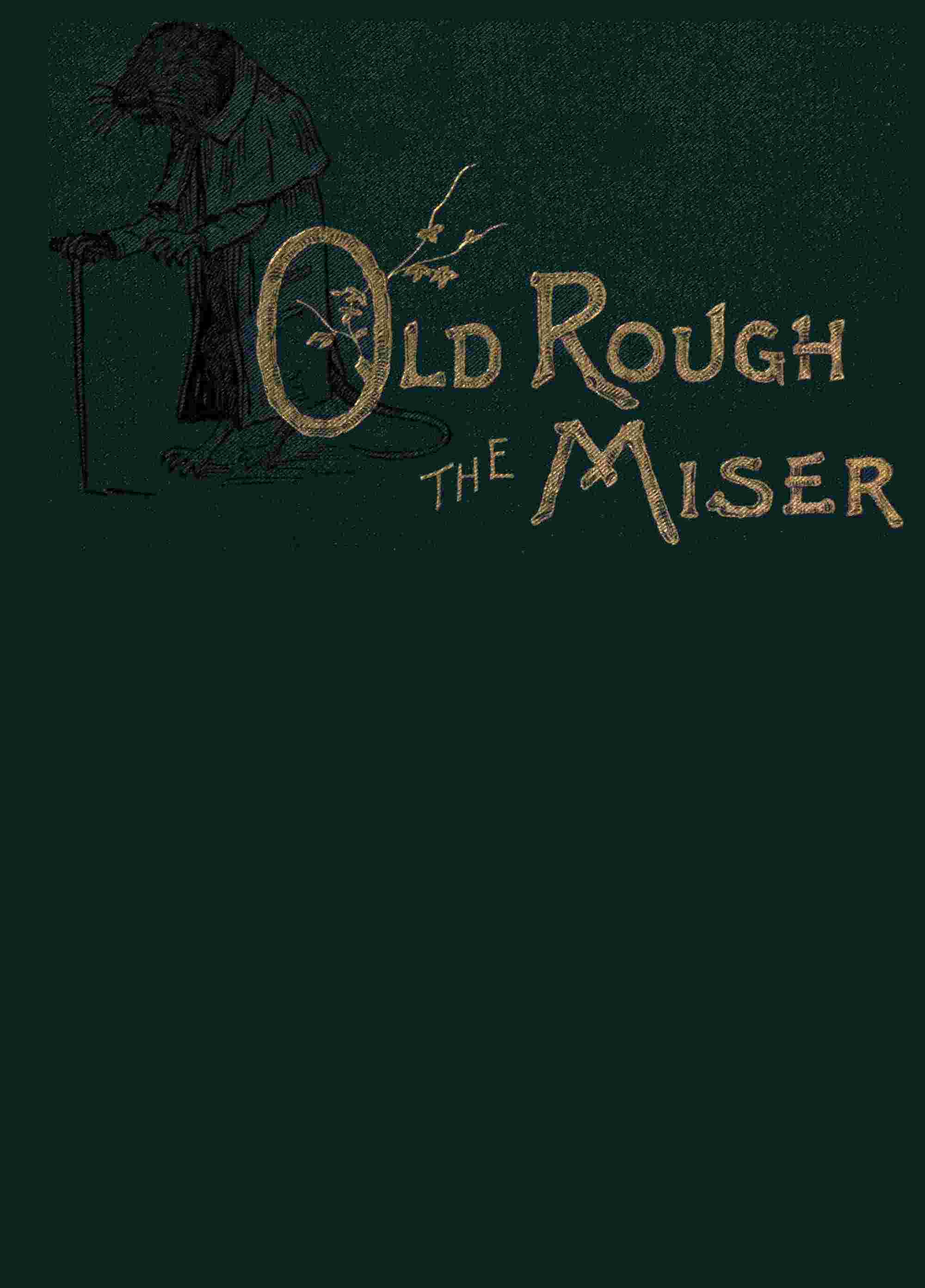
“At last, bleeding and maimed, they agreed to lay the case before the owl.”
CHAPTER I.
THE BEGINNING OF THE FEUD.
Once upon a time there lived on a large farm a crow, a water-rat, an owl, a frog, and a weasel. Large as the farm was, with its meadows, its fields, and many acres of woodland, it would seem as if these little animals might have lived in harmony, without encroaching on one another’s domains. Such was not the case, however; and indeed it is a well-known fact that the more one has the more one wants, and that there are some who wish to possess the earth.
This is how the quarrel began. The water-rat, who lived on the edge of the brook, claimed the right to a cornfield near by, which the crow had always considered his own. The quarrel ended in a fierce fight which lasted many hours, neither being able to conquer the other. At last, bleeding and maimed, they agreed to lay the case before the owl and abide by his decision, for he had the reputation of being very wise.
One moonlight night, the owl repaired to a large oak-tree on the edge of the wood; and about him assembled the crow and the water-rat, with various friends whom they had brought as witnesses, besides many other interested parties.
Very solemn did Judge Owl look, as he sat with his great yellow eyes wide open and staring straight before him. The trial was conducted with great formality, each party stating his own case.
First the crow called up his witnesses, field-mice and squirrels. All expressed the opinion that the cornfield belonged by right to the crow, because they had been told by their fathers and grandfathers that the crows had always held possession of it.
After this testimony, the water-rat stated his case, and summoned his witnesses the frogs. They were of opinion that the water-rat should have the cornfield because he had always had it, and because he couldn’t live on the food the brook afforded him. Much bickering went on between the witnesses of both parties, until Judge Owl interposed thus,—
“Come to order, and pay attention to what I say. I have heard both sides, and my mind is made up. The cornfield belongs to the crow.”
Angry squeals were heard from the water-rat, and loud croaks of disapproval from his witnesses the frogs, who sided with him,—not from a conviction that he was right, but because he held control of the brook and threatened to keep them out of it unless they testified in his favor.
“Silence!” commanded the judge, with an angry hoot. “The cornfield, I say, belongs to the crow, for corn is his natural food. What business has a water-rat with corn? None at all. I am told it is indigestible for him; and all I can say is, that if it does agree with him it ought not to, and that it is a mistake. The brook is the place for the water-rat: let him stay there, and live on what he can find in it. If he can’t find anything, let him go without it,—that is his look out. Can crows live in the water? No. Consequently the cornfield belongs by right to the crow.
“Another argument in favor of the crow is that he can fly off when anybody comes. Can a water-rat fly? Not that I ever heard of. There is still another argument, and one that is indisputable. Was there ever a cornfield that didn’t have a scare-crow in it? Did anybody ever hear of a scare-rat? General opinion carries the day,—the cornfield belongs to the crow.
“Now I command you to keep the peace. As long as the water-rat persists in his absurd claims, there will be bloodshed and strife. I will repeat to you a verse from ‘The Laws of the Woods,’ that states the case as clearly as daylight—I should say moonlight.
“Now the matter is settled, and I must be off, as I have another case to decide on the farther side of the wood;” and away flew Judge Owl.
Exulting caws from the victorious crow and triumphant squeaks from the mice followed; but with an angry squeal the water-rat announced his determination to keep possession of the cornfield. The verse from the “Laws of the Woods” that the judge had read, had no meaning for the assembled party; nor indeed had it for the judge himself, who had pondered long over it, and perhaps this had something to do with his hasty departure.
Consequently, the decision of the owl did not change matters in the least,—both the crow and the water-rat claimed the cornfield as before. The mice and squirrels sided with the crow, and the frogs with the water-rat; and the water-rat hated the crow even more than before, and vowed vengeance on the mice and squirrels for taking part against him.
The weasel, like the owl, had no especial interest in the matter at stake, but kept by himself, living under stone walls or in the neighborhood of hen-roosts and barns,—a deadly enemy of rats and mice, and consequently carefully avoided by them.
In this manner things went on until our story opens, several generations later. The scene of action is the same farm, but the originators of the quarrel have been long dead and forgotten, having transmitted the feud to their descendants.