
WeRead Powered by ReaderPub
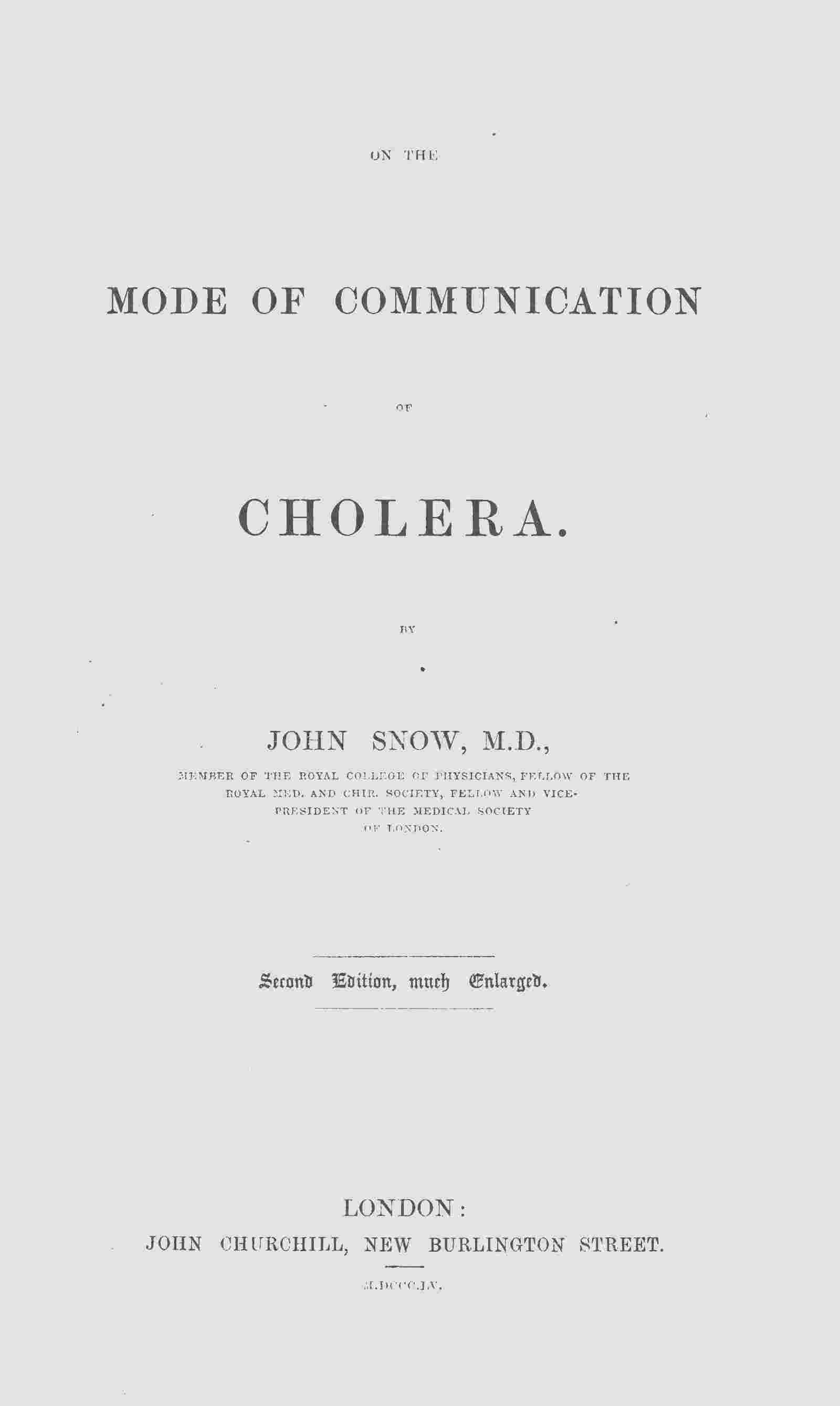
On the mode of communication of cholera cover

On the mode of communication of cholera

Chapter 2: PREFACE TO THE SECOND EDITION.
Open in WeRead

About This Book

The author reviews the spread of cholera and compiles clinical and epidemiological evidence to explain its transmission. He presents case studies documenting person-to-person spread and argues against airborne effluvia, using pathological and fluid analyses to show the morbid agent enters the alimentary canal. Multiple outbreak investigations link localized epidemics to polluted water sources, supported by maps, tables, and comparative mortality data across different water supplies, institutions, and neighborhoods. The work assesses environmental and infrastructural factors such as water-company networks, river contamination, elevation, and dry weather that alter exposure risk.

PREFACE TO THE SECOND EDITION.

The first edition of this work, which was published in August 1849, was only a slender pamphlet. I have, since that time, written various papers on the same subject, which have been read at the Medical Societies, and published in the medical journals. The present edition contains the substance of all these articles, together with much new matter, the greater part of which is derived from my own recent inquiries.

I take this opportunity of expressing my thanks to the Registrar-General for the facilities afforded me in making these inquiries.

I feel every confidence that my present labours will receive the same kind consideration from the Medical Profession which has been accorded to my former endeavours to ascertain the causes of cholera.

Sackville Street, Piccadilly,
11 December, 1854.