
WeRead Powered by ReaderPub
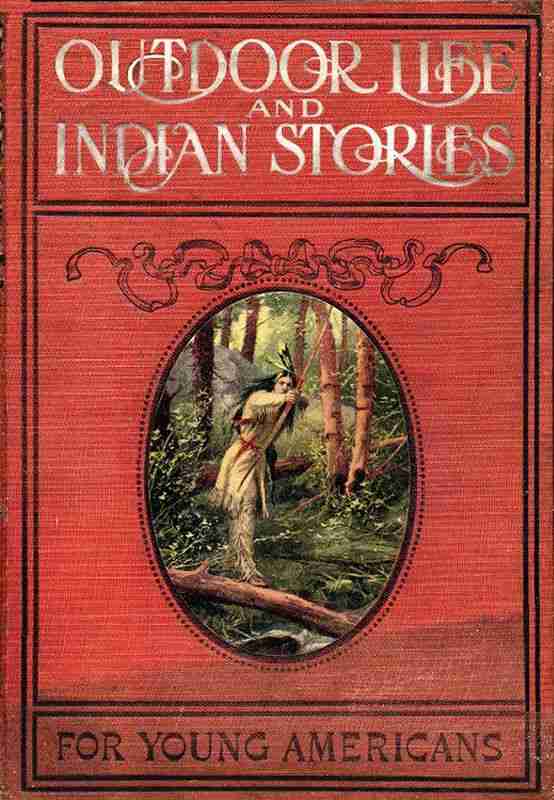
Outdoor Life and Indian Stories / Making open air life attractive to young Americans by telling them all about woodcraft, signs and signaling, the stars, fishing, camping, camp cooking, how to tie knots and how to make fire without matches, and many other fascinating open air pursuits. Also, stories of noted hunters and scouts, great indians and warriors, including Daniel Boone, Kit Carson, General Custer, Pontiac, Tecumseh, King Philip, Black Hawk, Brandt, Sitting Bull, and a host of others whose names are famous; all of them true and interesting cover

Outdoor Life and Indian Stories / Making open air life attractive to young Americans by telling them all about woodcraft, signs and signaling, the stars, fishing, camping, camp cooking, how to tie knots and how to make fire without matches, and many other fascinating open air pursuits. Also, stories of noted hunters and scouts, great indians and warriors, including Daniel Boone, Kit Carson, General Custer, Pontiac, Tecumseh, King Philip, Black Hawk, Brandt, Sitting Bull, and a host of others whose names are famous; all of them true and interesting

Chapter 10: How to Find Your Way by the Stars
Open in WeRead

About This Book

A combined how-to guide and popular history that offers practical, step-by-step outdoor instruction for young readers alongside illustrated accounts of frontier hunters, scouts, and prominent Indigenous chiefs and warriors. The instructional portion explains campcraft, lean-to construction, making fire without matches, water purification, camp cooking, bow‑and‑arrow making, knotwork, trailside signs and signaling, celestial navigation, and basic first aid. The narrative sections present concise biographical sketches and episodic tales that portray encounters, campaigns, and resistance on the frontier, linking woodcraft skills to the lives and legends of notable frontier figures.

How to Find Your Way by the Stars

It is very important that those who frequent the forest should be sufficiently familiar with the stars to be able to tell their way by them. Often a compass is lost or damaged or there is not enough light to see the landmarks. At such a time a knowledge of how to find the Pole star is invaluable for, to the experienced woodsman, a glimpse of this star is equivalent to consulting a compass. It is really the most important of the stars we see, although not a very bright one, because it marks the North at all times and is fixed in its place, while all the other stars seem to swing around it once in each twenty-four hours, which makes it impracticable to use them for guidance. The Dipper or Great Bear is well known to all American boys on account of the size, peculiar shape and brilliancy of this group, and the fact that it never sets in this latitude. This group always points out the Pole star or Polaris, which is about in a line with the stars (Alpha and Beta) which form the outside of the Dipper at a distance about three and a half times as great as the space separating these two stars. This star always points out the North. If the imaginary line between Alpha and Beta and Polaris is continued about the same distance beyond Polaris it will meet Cassiopeia, five stars in the shape of a W, which, like the Great Bear, is always seen in our latitude. With these directions it should be always easy to locate Polaris.

THE CIRCUMPOLAR CIRCLE