
WeRead Powered by ReaderPub
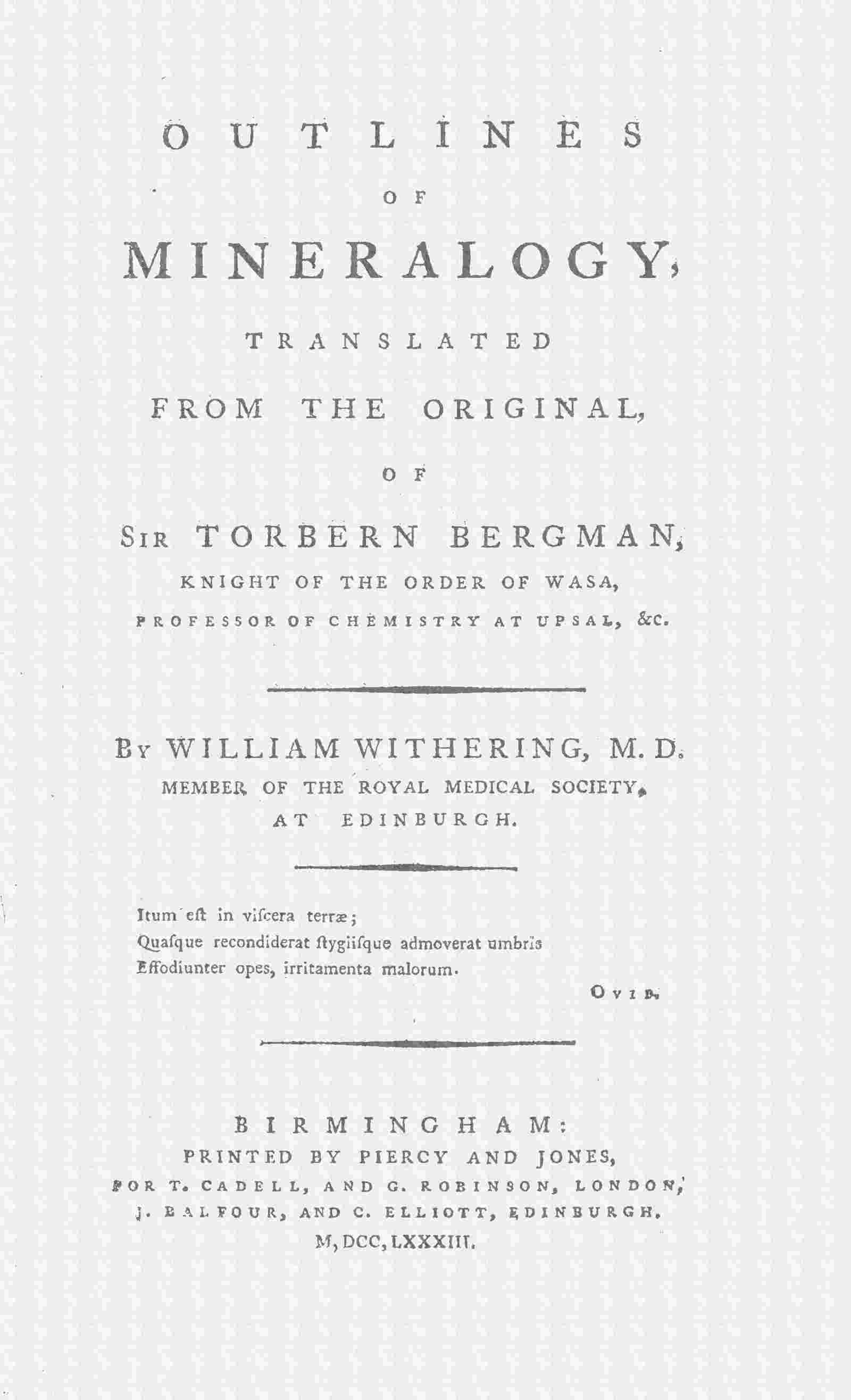
Outlines of mineralogy cover

Outlines of mineralogy

Chapter 34: ANTIMONIUM OR ANTIMONY.
Open in WeRead

About This Book

A concise scientific treatise that organizes fossil and inorganic substances by their constituent chemical components, advocating composition-based genera and species rather than superficial traits. It defines mineralogy, explains a natural system founded on prevalent parts and variations in mixture, and critiques reliance on color, hardness, and texture because these features often vary independently of composition. The work describes analytical approaches and difficult cases, offers supplemental genera in appendices, and supplies practical aids such as tables and an index to assist identification and application of mineral substances.

ANTIMONIUM
OR
ANTIMONY.

Its ſpecific gravity is 6,860. Aqua regia diſſolves it well; vitriolic acid requires boiling; muriatic and acetous acids act hardly at all upon it, unleſs previouſly calcined. The nitrous acid corrodes it ſo as to prevent the ſolution. The phlogiſton it loſes in ſolution is expreſſed by 120, and with reſpect to the force wherewith it retains this, it ſtands in the ſixth place. It melts at a heat of 809 degrees.

ANTIMONIUM nativum (antimony). Native.

Cronstedt Min. § 238.

ANTIMONIUM (antimony), mineralized by ſulphur. Sulphurated.

Cronstedt Min. § 234.

ANTIMONIUM (antimony) mineralized by ſulphur and arſenic. Red.

Cronstedt Min. § 235.