

Paris under the Commune / The Seventy-Three Days of the Second Siege; with Numerous Illustrations, Sketches Taken on the Spot, and Portraits (from the Original Photographs)
Explore more books like this:
About This Book
An eyewitness chronicle recounts an urban insurrection and the seventy-three-day siege, pairing on-the-spot sketches, portraits, and reportage with a day-by-day narrative of occupations, clashes, bombardments, and the shifting authorities. It traces political maneuvers, municipal decrees, and factional tensions alongside accounts of public life under siege, requisitions, refugee movements, and the relations between fighters and civilians. The book records the destruction of monuments and buildings, fires, reprisals, mass arrests and executions, and improvised measures such as makeshift tribunals and military fortifications. Appendices collect chronological notes, memoirs, proclamations, casualty and damage lists, and illustrative plates that document both events and personalities.
About the Author

More Books by This Author
You May Also Like
 "1683-1920" / The Fourteen Points and What Became of Them—Foreign Propaganda in the Public Schools—Rewriting the History of the United States—The Espionage Act and How It Worked—"Illegal and Indefensible Blockade" of the Central Powers—1,000,000 Victims of Starvation—Our Debt to France and to Germany—The War Vote in Congress—Truth About the Belgian Atrocities—Our Treaty with Germany and How Observed—The Alien Property Custodianship—Secret Will of Cecil Rhodes—Racial Strains in American Life—Germantown Settlement of 1683 and a Thousand Other Topics
by Frederick Franklin Schrader
"1683-1920" / The Fourteen Points and What Became of Them—Foreign Propaganda in the Public Schools—Rewriting the History of the United States—The Espionage Act and How It Worked—"Illegal and Indefensible Blockade" of the Central Powers—1,000,000 Victims of Starvation—Our Debt to France and to Germany—The War Vote in Congress—Truth About the Belgian Atrocities—Our Treaty with Germany and How Observed—The Alien Property Custodianship—Secret Will of Cecil Rhodes—Racial Strains in American Life—Germantown Settlement of 1683 and a Thousand Other Topics
by Frederick Franklin Schrader
 "1812"
by Vasilïĭ Vasilʹevich Vereshchagin
"1812"
by Vasilïĭ Vasilʹevich Vereshchagin
 "Barbarous Soviet Russia"
by Isaac McBride
"Barbarous Soviet Russia"
by Isaac McBride
 "Brother Bosch", an Airman's Escape from Germany
by Gerald Featherstone Knight
"Brother Bosch", an Airman's Escape from Germany
by Gerald Featherstone Knight
 "Monsieur Henri": A Foot-Note to French History
by Louise Imogen Guiney
"Monsieur Henri": A Foot-Note to French History
by Louise Imogen Guiney
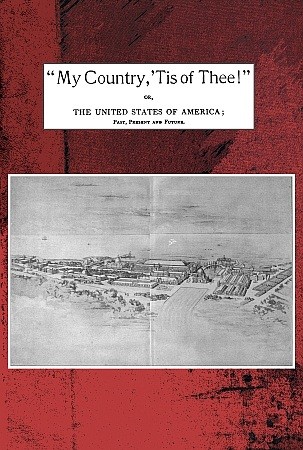 "My country, 'tis of thee!" / Or, the United States of America; past, present and future. A philosophic view of American history and of our present status, to be seen in the Columbian exhibition.
by Willis Fletcher Johnson
"My country, 'tis of thee!" / Or, the United States of America; past, present and future. A philosophic view of American history and of our present status, to be seen in the Columbian exhibition.
by Willis Fletcher Johnson