
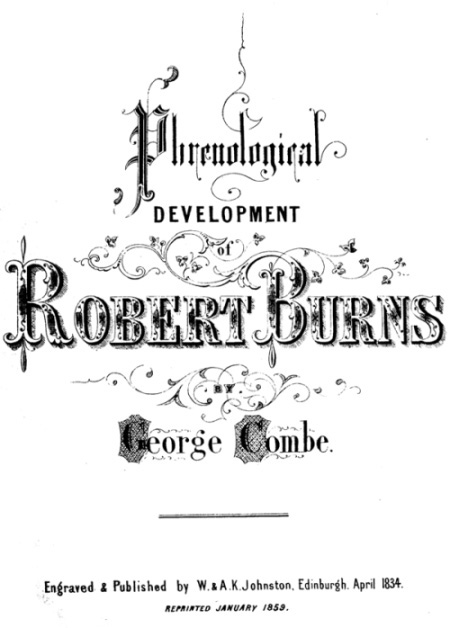
Phrenological Development of Robert Burns / From a Cast of His Skull Moulded at Dumfries, the 31st Day of March 1834
Explore more books like this:
About This Book
A phrenological analysis based on a posthumous cast of a poet’s skull, presenting measurements, anatomical observations, and a numbered scale for the phrenological organs. The author records the cast’s preservation and cranial dimensions, then interprets relative strengths among appetites, domestic affections, moral sentiments, and intellectual faculties. He concludes the brain was large and active, combining powerful animal propensities with strong benevolence and ideality, producing intense feeling, creative sensibility, and energetic temperament, while also creating internal conflicts that could lead to both notable virtue and serious moral difficulty.
About the Author
You May Also Like
6 picks
 "Billy" Sunday, the Man and His Message / With his own words which have won thousands for Christ
by William T. Ellis
"Billy" Sunday, the Man and His Message / With his own words which have won thousands for Christ
by William T. Ellis
 "Boots and Saddles"; Or, Life in Dakota with General Custer
by Elizabeth Bacon Custer
"Boots and Saddles"; Or, Life in Dakota with General Custer
by Elizabeth Bacon Custer
 "Born of the Spirit;" or, Gems from the Book of Life
by Zenas Osborne
"Born of the Spirit;" or, Gems from the Book of Life
by Zenas Osborne
 "Brother Bosch", an Airman's Escape from Germany
by Gerald Featherstone Knight
"Brother Bosch", an Airman's Escape from Germany
by Gerald Featherstone Knight
 "Buffalo Bill" from Prairie to Palace: An Authentic History of the Wild West
by John M. Burke
"Buffalo Bill" from Prairie to Palace: An Authentic History of the Wild West
by John M. Burke
 "Co. Aytch," Maury Grays, First Tennessee Regiment / Or, A Side Show of the Big Show
by Samuel R. Watkins
"Co. Aytch," Maury Grays, First Tennessee Regiment / Or, A Side Show of the Big Show
by Samuel R. Watkins