
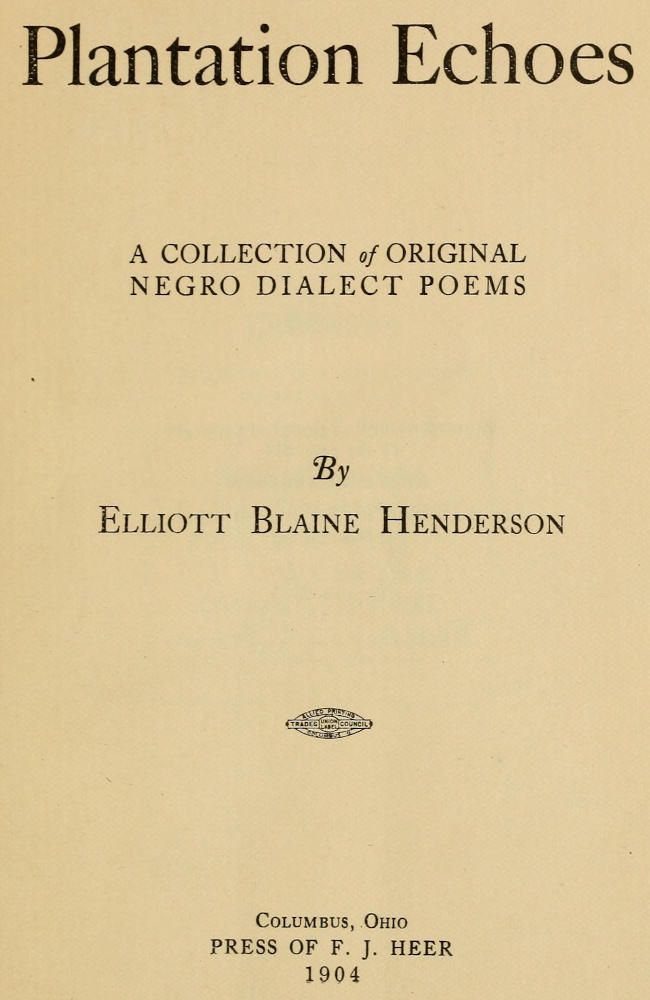
The music of the American negro, the fresh and spontaneous expression of a good and care-free heart, has long been one of the most pleasing features of American life. It is human nature in its first vocal garb—original and unique, often humorous and always true to the sentiment of the singer. If there ever was an illustration of the close relationship between language and thought, it is this.
What is true of the melodies of the negro as developed in the simple existence on the plantation is also true of that other form of singing, verse-making. Among the negroes there have sprung up a number of exponents of the wisdom, wit and humor of the race. They have caught the spirit of others—the humble philosophers of their kind—and they have employed the dialect to reproduce the thought in all its quaintness and originality. One of the most notable of these exponents or interpreters is an Ohio negro, Paul Lawrence Dunbar, who has taken high rank among the poets of the day. Another is Elliott Blaine Henderson, also a son of Ohio, whose first volume of verse is herewith presented.
In much that Mr. Henderson here presents, there is the rush of expression and the jingle of words that are so characteristic of the negro. There is also humor and there is sentiment, and always that other quality which makes verse in these days readable—good cheer.
He who correctly interprets the spirit of his race serves a good cause, and it is believed that Mr. Henderson will be found to have succeeded in his undertaking to make his people better and more widely understood.
E. G. Burkham,
Editor of the Columbus Dispatch, Columbus, Ohio.