
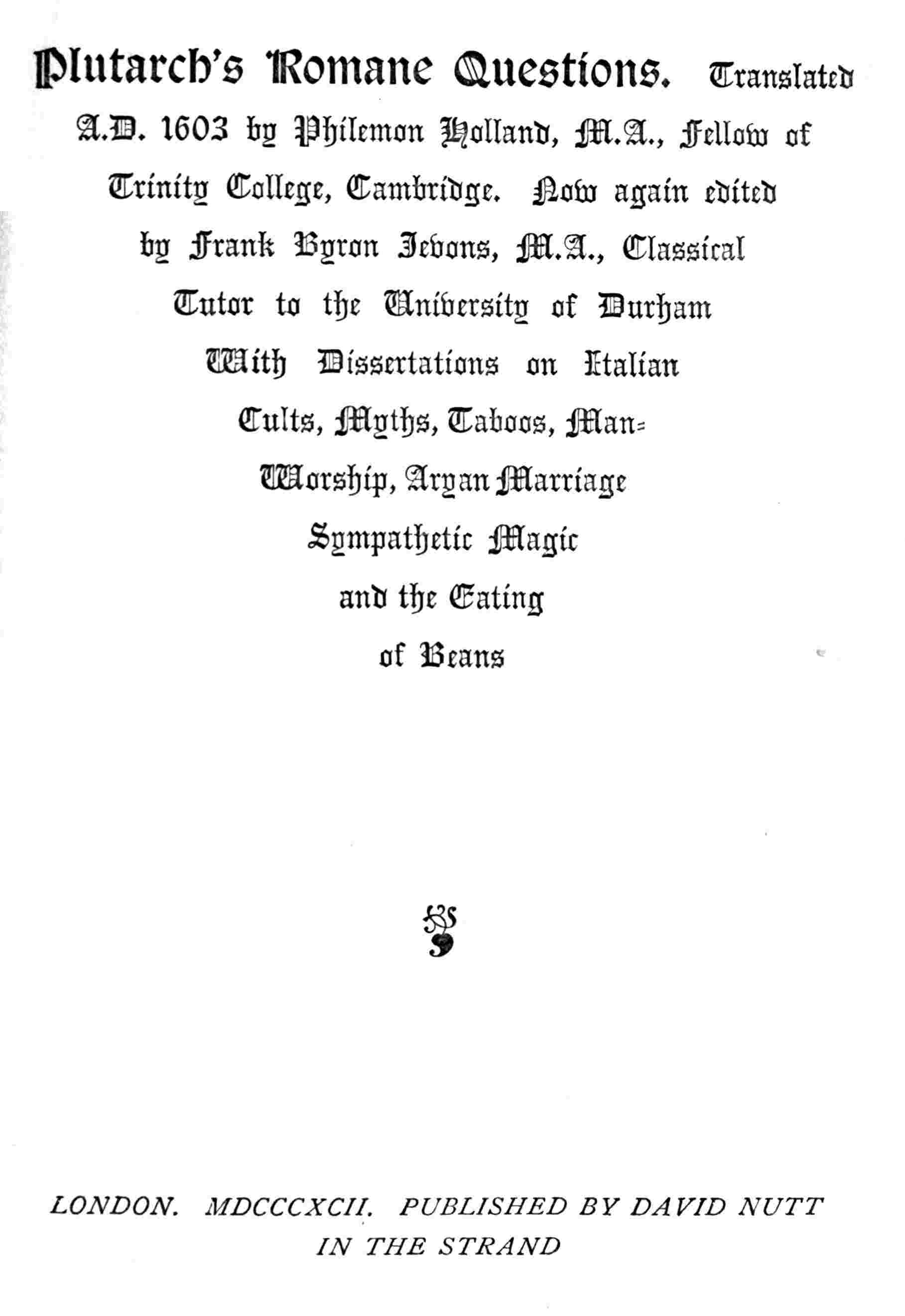
Plutarch's Romane Questions / With dissertations on Italian cults, myths, taboos, man-worship, aryan marriage, sympathetic magic and the eating of beans
Explore more books like this:
About This Book
The text compiles a series of questions about Roman rites, customs, superstitions, and linguistic usages, offering learned answers that mix historical inquiry, mythological comparison, etymology, and philosophical speculation. Each chapter poses a puzzling practice—marriage rituals, sacred taboos, festivals, omens, and culinary oddities—and traces possible origins by comparing Greek, Italian, and wider Indo-European traditions, folk beliefs, and linguistic conjectures. Explanations range from practical or ritual functions to symbolic or moral interpretations, with frequent digressions into related myths and antiquarian notes, producing a compact handbook of antiquities that treats customs as clues to social values, religious ideas, and collective memory.
About the Author

More Books by This Author
 Complete Works of Plutarch — Volume 3: Essays and Miscellanies
by Plutarch
Complete Works of Plutarch — Volume 3: Essays and Miscellanies
by Plutarch
 Plutarch on the Delay of the Divine Justice
by Plutarch
Plutarch on the Delay of the Divine Justice
by Plutarch
 Plutarch's Lives, Volume 1 (of 4)
by Plutarch
Plutarch's Lives, Volume 1 (of 4)
by Plutarch
 Plutarch's Lives, Volume 2 (of 4)
by Plutarch
Plutarch's Lives, Volume 2 (of 4)
by Plutarch
 Plutarch's Lives, Volume 3 (of 4)
by Plutarch
Plutarch's Lives, Volume 3 (of 4)
by Plutarch
 Plutarch's Lives, Volume 4 (of 4)
by Plutarch
Plutarch's Lives, Volume 4 (of 4)
by Plutarch
You May Also Like
 "De Bello Gallico" and Other Commentaries
by Julius Caesar
"De Bello Gallico" and Other Commentaries
by Julius Caesar
 A Beginner's History of Philosophy, Vol. 1: Ancient and Mediæval Philosophy
by Herbert Ernest Cushman
A Beginner's History of Philosophy, Vol. 1: Ancient and Mediæval Philosophy
by Herbert Ernest Cushman
 A Brief History of Element Discovery, Synthesis, and Analysis
by Glen W. Watson
A Brief History of Element Discovery, Synthesis, and Analysis
by Glen W. Watson
 A Burial Cave in Baja California / The Palmer Collection, 1887
by William C. Massey
A Burial Cave in Baja California / The Palmer Collection, 1887
by William C. Massey
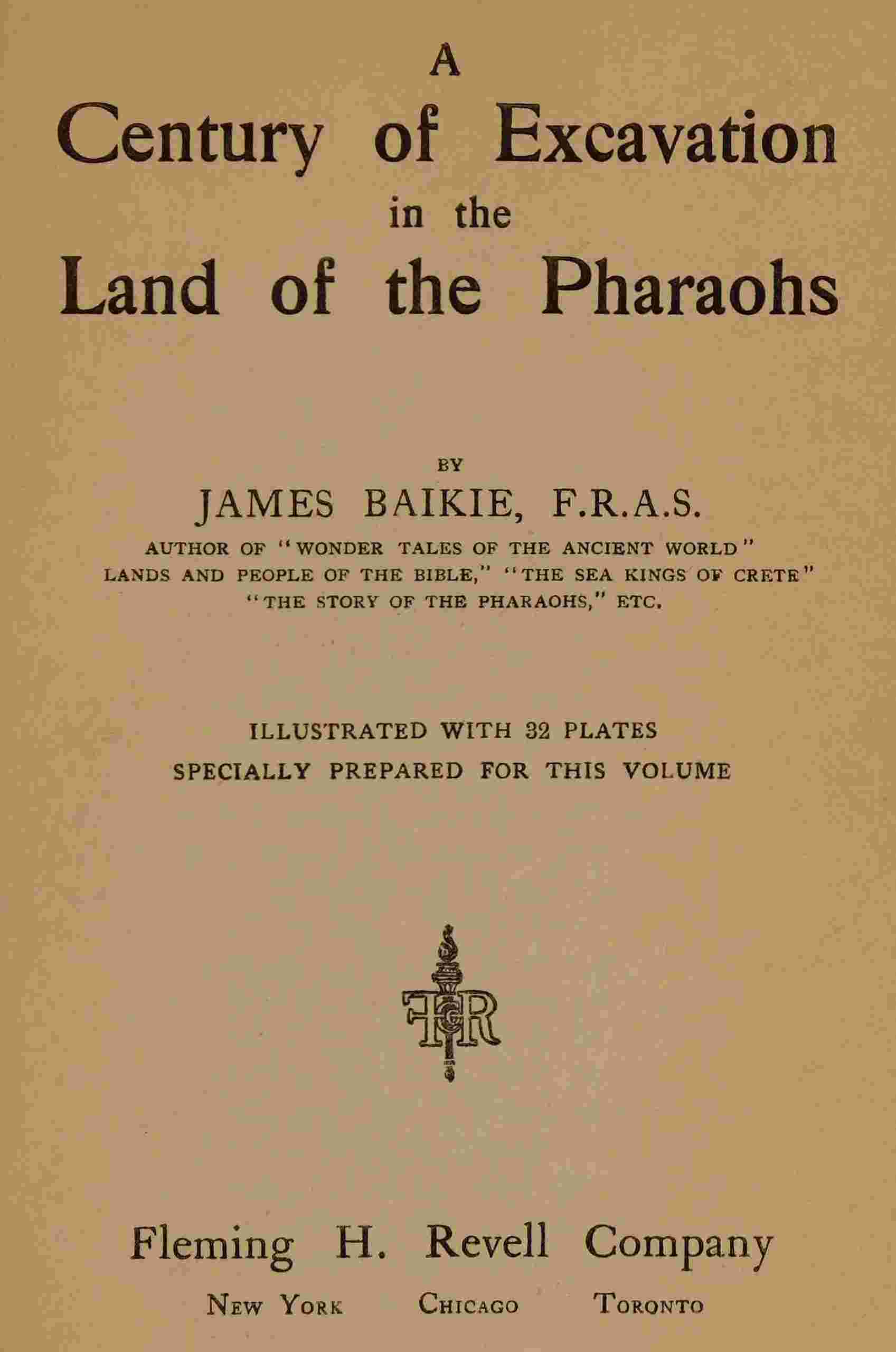 A century of excavation in the land of the Pharaohs
by James Baikie
A century of excavation in the land of the Pharaohs
by James Baikie
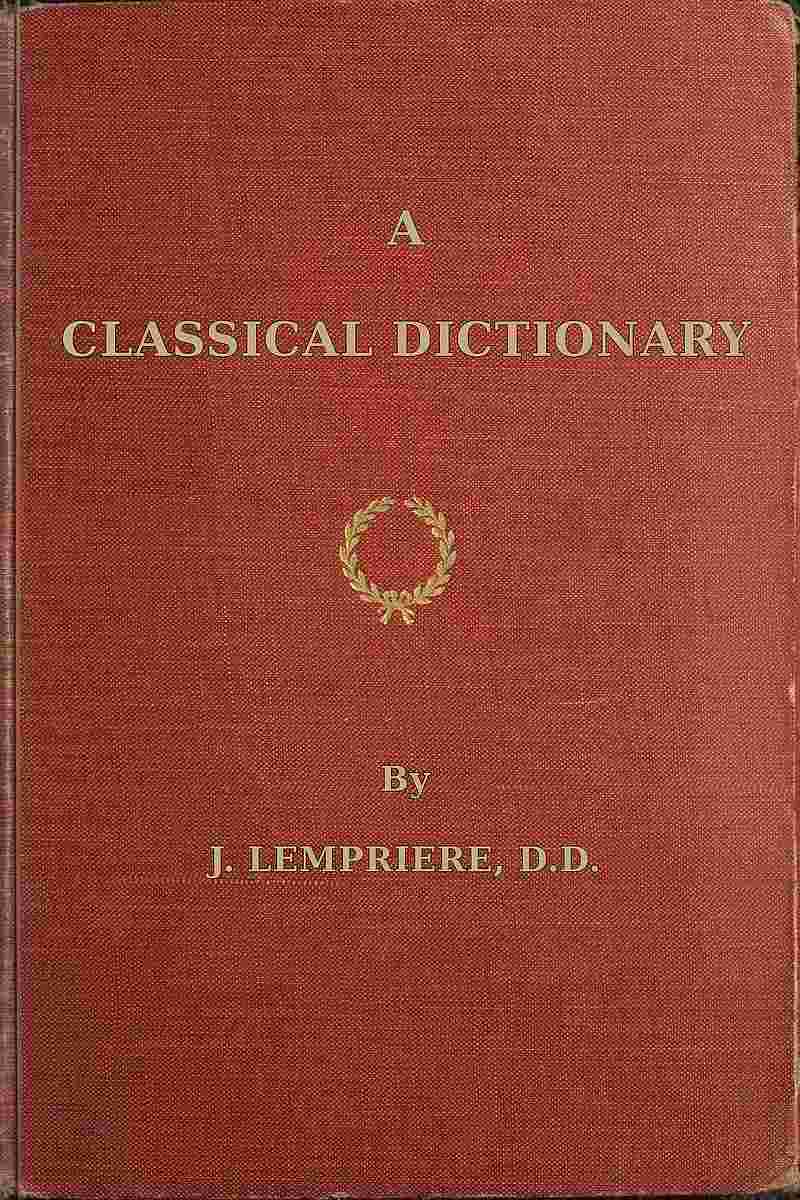 A classical dictionary / containing a copious account of all the proper names mentioned in ancient authors with tables of coins, weights, and measures used among the Greeks and Romans and a chronological table
by John Lemprière
A classical dictionary / containing a copious account of all the proper names mentioned in ancient authors with tables of coins, weights, and measures used among the Greeks and Romans and a chronological table
by John Lemprière