
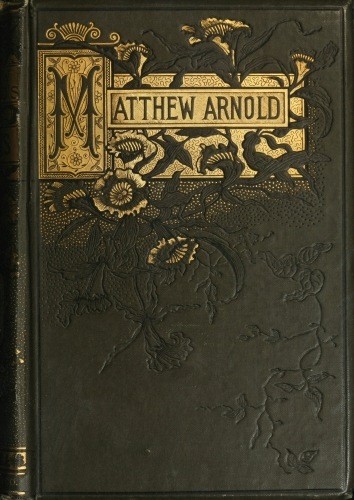
The Project Gutenberg eBook of Poems
This ebook is for the use of anyone anywhere in the United States and
most other parts of the world at no cost and with almost no restrictions
whatsoever. You may copy it, give it away or re-use it under the terms
of the Project Gutenberg License included with this ebook or online
at www.gutenberg.org. If you are not located in the United States,
you will have to check the laws of the country where you are located
before using this eBook.
Title: Poems
Author: Matthew Arnold
Release date: June 26, 2017 [eBook #54985]
Most recently updated: October 23, 2024
Language: English
Credits: Produced by Larry B. Harrison, Chuck Greif and the Online
Distributed Proofreading Team at http://www.pgdp.net (This
file was produced from images generously made available
by The Internet Archive)
*** START OF THE PROJECT GUTENBERG EBOOK POEMS ***
P O E M S
BY
MATTHEW ARNOLD.
NEW AND COMPLETE EDITION.
NEW YORK:
THOMAS Y. CROWELL & CO.,
No. 13 Astor Place.
CONTENTS.
EARLY POEMS.
SONNETS.
QUIET WORK.
One lesson, Nature, let me learn of thee,
One lesson which in every wind is blown,
One lesson of two duties kept at one
Though the loud world proclaim their enmity,—
One lesson which in every wind is blown,
One lesson of two duties kept at one
Though the loud world proclaim their enmity,—
Of toil unsevered from tranquillity;
Of labor, that in lasting fruit outgrows
Far noisier schemes, accomplished in repose,
Too great for haste, too high for rivalry.
Of labor, that in lasting fruit outgrows
Far noisier schemes, accomplished in repose,
Too great for haste, too high for rivalry.
Yes, while on earth a thousand discords ring,
Man’s senseless uproar mingling with his toil,
Still do thy quiet ministers move on,
Man’s senseless uproar mingling with his toil,
Still do thy quiet ministers move on,
Their glorious tasks in silence perfecting;
Still working, blaming still our vain turmoil,
Laborers that shall not fail, when man is gone.
Still working, blaming still our vain turmoil,
Laborers that shall not fail, when man is gone.
TO A FRIEND.
Who prop, thou ask’st, in these bad days, my mind?—
He much, the old man, who, clearest-souled of men,
Saw The Wide Prospect, and the Asian Fen,[1]
And Tmolus hill, and Smyrna bay, though blind.
He much, the old man, who, clearest-souled of men,
Saw The Wide Prospect, and the Asian Fen,[1]
And Tmolus hill, and Smyrna bay, though blind.
Much he, whose friendship I not long since won,
That halting slave, who in Nicopolis
Taught Arrian, when Vespasian’s brutal son
Cleared Rome of what most shamed him. But be his
That halting slave, who in Nicopolis
Taught Arrian, when Vespasian’s brutal son
Cleared Rome of what most shamed him. But be his
My special thanks, whose even-balanced soul,
From first youth tested up to extreme old age,
Business could not make dull, nor passion wild;
From first youth tested up to extreme old age,
Business could not make dull, nor passion wild;
Who saw life steadily, and saw it whole;
The mellow glory of the Attic stage,
Singer of sweet Colonus, and its child.
The mellow glory of the Attic stage,
Singer of sweet Colonus, and its child.
SHAKSPEARE.
Others abide our question. Thou art free.
We ask and ask. Thou smilest, and art still,
Out-topping knowledge. For the loftiest hill,
Who to the stars uncrowns his majesty,
We ask and ask. Thou smilest, and art still,
Out-topping knowledge. For the loftiest hill,
Who to the stars uncrowns his majesty,
Planting his steadfast footsteps in the sea,
Making the heaven of heavens his dwelling-place,
Spares but the cloudy border of his base
To the foiled searching of mortality;
Making the heaven of heavens his dwelling-place,
Spares but the cloudy border of his base
To the foiled searching of mortality;
And thou, who didst the stars and sunbeams know,
Self-schooled, self-scanned, self-honored, self-secure,
Didst tread on earth unguessed at.—Better so!
Self-schooled, self-scanned, self-honored, self-secure,
Didst tread on earth unguessed at.—Better so!
All pains the immortal spirit must endure,
All weakness which impairs, all griefs which bow,
Find their sole speech in that victorious brow.
All weakness which impairs, all griefs which bow,
Find their sole speech in that victorious brow.
WRITTEN IN EMERSON’S ESSAYS.
“O monstrous, dead, unprofitable world,
That thou canst hear, and hearing hold thy way!
A voice oracular hath pealed to-day,
To-day a hero’s banner is unfurled;
That thou canst hear, and hearing hold thy way!
A voice oracular hath pealed to-day,
To-day a hero’s banner is unfurled;
Hast thou no lip for welcome?”—So I said.
Man after man, the world smiled and passed by;
A smile of wistful incredulity,
As though one spake of life unto the dead,—
Man after man, the world smiled and passed by;
A smile of wistful incredulity,
As though one spake of life unto the dead,—
Scornful, and strange, and sorrowful, and full
Of bitter knowledge. Yet the will is free;
Strong is the soul, and wise, and beautiful;
Of bitter knowledge. Yet the will is free;
Strong is the soul, and wise, and beautiful;
The seeds of godlike power are in us still;
Gods are we, bards, saints, heroes, if we will!—
Dumb judges, answer, truth or mockery?
Gods are we, bards, saints, heroes, if we will!—
Dumb judges, answer, truth or mockery?
WRITTEN IN BUTLER’S SERMONS.
Affections, Instincts, Principles, and Powers,
Impulse and Reason, Freedom and Control,—
So men, unravelling God’s harmonious whole,
Rend in a thousand shreds this life of ours.
Impulse and Reason, Freedom and Control,—
So men, unravelling God’s harmonious whole,
Rend in a thousand shreds this life of ours.
Vain labor! Deep and broad, where none may see,
Spring the foundations of that shadowy throne
Where man’s one nature, queen-like, sits alone,
Centred in a majestic unity;
Spring the foundations of that shadowy throne
Where man’s one nature, queen-like, sits alone,
Centred in a majestic unity;
And rays her powers, like sister-islands seen
Linking their coral arms under the sea,
Or clustered peaks with plunging gulfs between,
Linking their coral arms under the sea,
Or clustered peaks with plunging gulfs between,
Spanned by aërial arches all of gold,
Whereo’er the chariot-wheels of life are rolled
In cloudy circles to eternity.
Whereo’er the chariot-wheels of life are rolled
In cloudy circles to eternity.