
WeRead Powered by ReaderPub
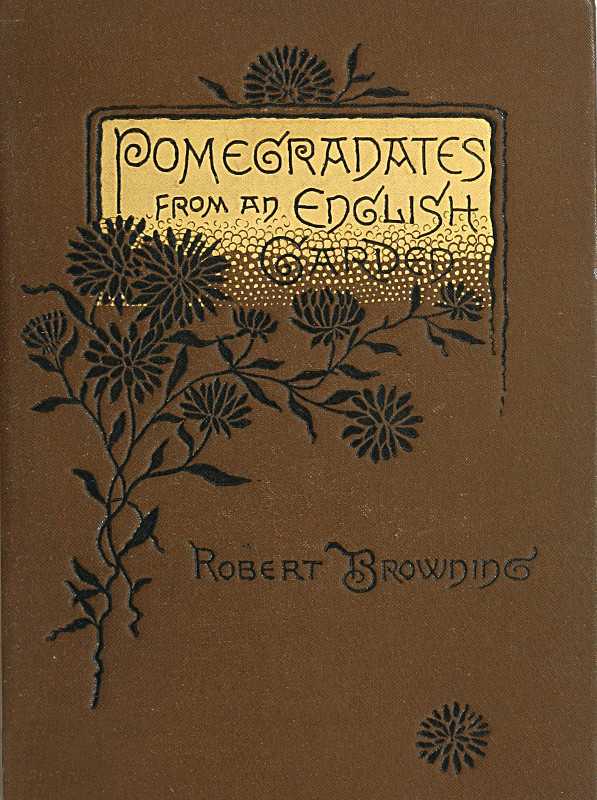
Pomegranates from an English Garden / A selection from the poems of Robert Browning cover

Pomegranates from an English Garden / A selection from the poems of Robert Browning

Chapter 10: THE PATRIOT.
Open in WeRead

Explore more books like this:

About This Book

A selection of poems by Robert Browning gathers lyrical and dramatic pieces that probe the inner life, moral choice, and imaginative response to love, loss, faith, and art. The poems alternate intimate domestic reveries, vivid narrative moments, and philosophical meditations, often voiced through distinctive dramatic speakers; they combine concise, sometimes rugged diction with dense allusion. Recurring concerns include the development of individual character, the presence of the divine in experience, encounters with mortality, and the duties of memory and courage. Varied meters and tonal shifts reward close reading and emphasize psychological intensity over neat resolution.

THE PATRIOT.

AN OLD STORY.
I.
It was roses, roses, all the way,
With myrtle mixed in my path like mad:
The house-roofs seemed to heave and sway,
The church-spires flamed, such flags they had,
A year ago on this very day.
II.
The air broke into a mist with bells,
The old walls rocked with the crowd and cries.
Had I said, “Good folk, mere noise repels—
“But give me your sun from yonder skies!”
They had answered “And afterward, what else?”
III.
Alack, it was I who leaped at the sun
To give it my loving friends to keep!
Nought man could do, have I left undone:
And you see my harvest, what I reap
This very day, now a year is run.
IV.
There’s nobody on the house-tops now—
Just a palsied few at the windows set;
For the best of the sight is, all allow,
At the Shambles’ Gate—or, better yet,
By the very scaffold’s foot, I trow.
V.
I go in the rain, and, more than needs,
A rope cuts both my wrists behind,
And I think, by the feel, my forehead bleeds,
For they fling, whoever has a mind,
Stones at me for my year’s misdeeds.
VI.
Thus I entered, and thus I go!
In triumphs, people have dropped down dead.
“Paid by the world, what dost thou owe
Me?”—God might question; now instead,
’Tis God shall repay: I am safer so.

The Patriot, on his way to the scaffold, surrounded by a hooting crowd, remembers how, just a year ago, the same people had been mad in their enthusiasm for him. Anything at all, however extravagant, would have been too little for them to do for him (stanza 2; cf. Gal. iv. 15, 16); but now——! The fourth stanza is very powerful. All have gone who can, to be ready to see the execution; only the “palsied few,” who cannot, are at the windows to see him pass. In the last stanza the thought of a more sudden contrast still is presented. A man may drop dead in the midst of a triumph, to find that in its brief plaudits he has his reward, while a vast account stands against him at the higher tribunal. Far better die amid the execrations of men and find the contrast reversed.

It is “an old story,” and therefore general; but one naturally thinks of such cases as Arnold of Brescia, or the tribune Rienzi. A higher Name than these need not be introduced here, in proof of the people’s fickleness!