
WeRead Powered by ReaderPub
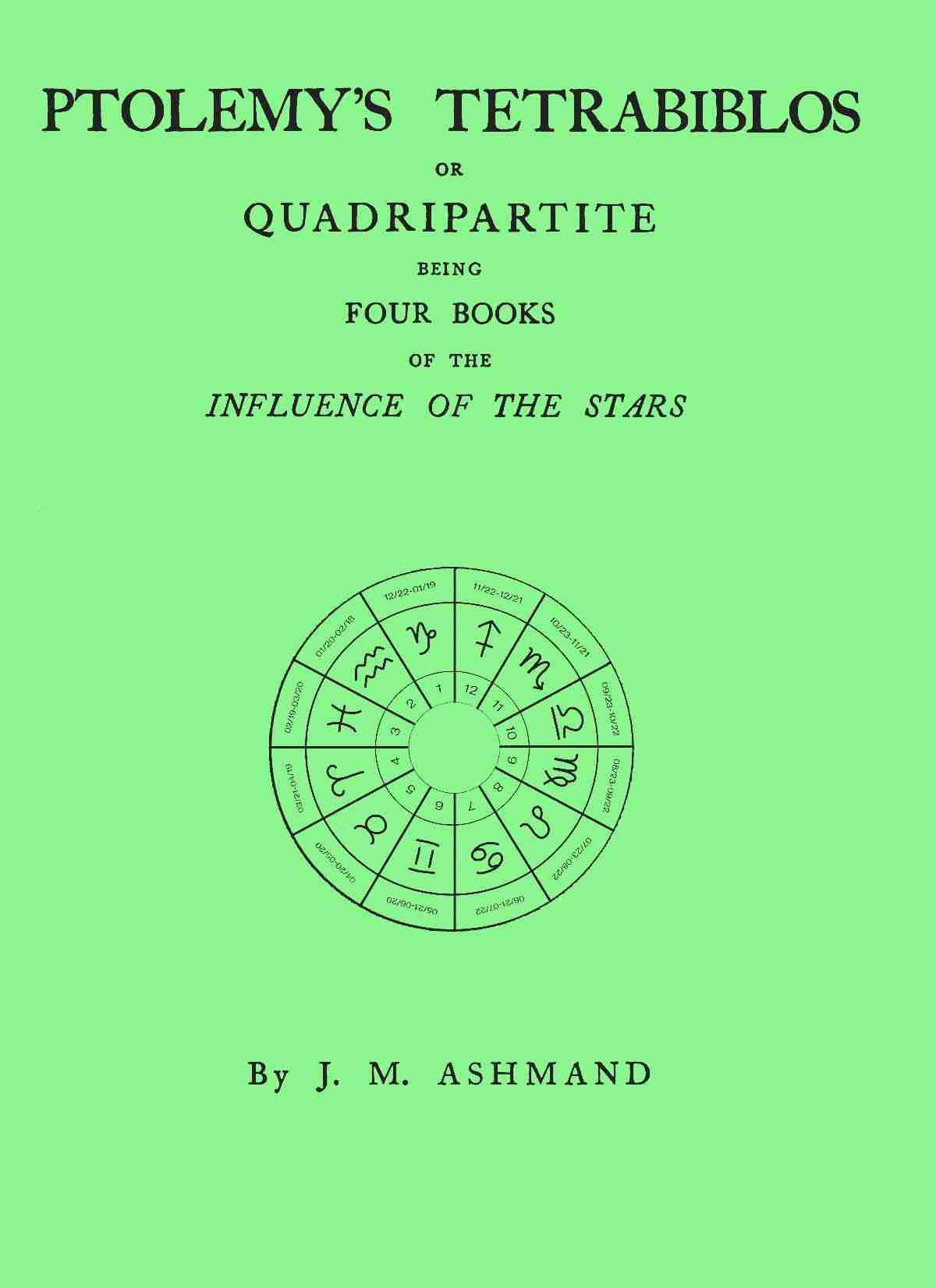
Ptolemy's Tetrabiblos cover

Ptolemy's Tetrabiblos

Chapter 20: CHAPTER XVII SIGNS COMMANDING AND OBEYING
Open in WeRead

Explore more books like this:

About This Book

A systematic astrological treatise that explains how the sun, moon, planets and fixed stars are understood to affect weather, geography and human affairs. It lays out technical vocabulary and procedures—signs, houses, aspects, triplicities, exaltations and terms—then applies them across four parts: foundational principles and methods; climatic and regional forecasts including eclipses and atmospheric phenomena; rules for casting nativities and interpreting birth, temperament, health and longevity; and worked examples with tables and commentary. The work emphasizes a disciplined, observational approach to linking astronomical positions with types and timings of terrestrial events.

CHAPTER XVII
SIGNS COMMANDING AND OBEYING

Any two signs configurated with each other at an equal distance from the same, or from either equinoctial point, are termed commanding and obeying, because the ascensional and descensional times of the one are equal to those of the other, and both describe equal parallels.

The signs in the summer semicircle are commanding; those in the winter semicircle, obeying: for, when the Sun is present in the former, he makes the day longer than the night; and, when in the latter, he produces the contrary effect.