WeRead Powered by ReaderPub
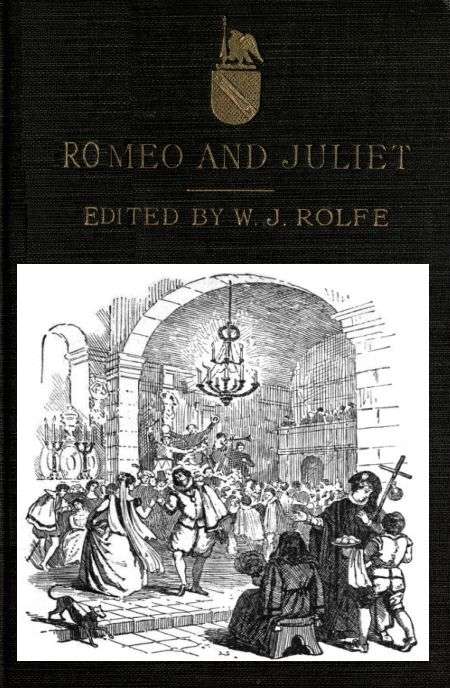
Romeo and Juliet cover

Romeo and Juliet

Chapter 14: Scene IV.
Open in WeRead

About This Book

Set in an Italian city, the drama follows two young people whose secret attachment collides with a longstanding feud between their families. Rapid courtship and a clandestine vow lead to a chain of retaliations, miscommunications, and urgent plans that culminate in unintended tragedy. The work contrasts lyrical poetry with everyday speech and comic interludes, examines themes of passionate love, honor, fate versus choice, and the consequences of youthful haste, and unfolds through tightly staged scenes that escalate private emotion into public catastrophe.

Enter Benvolio
Benvolio. Part, fools!
Put up your swords; you know not what you do. [Beats down their swords.
Enter Tybalt
Tybalt. What, art thou drawn among these heartless hinds?
Turn thee, Benvolio, look upon thy death.
Benvolio. I do but keep the peace; put up thy sword,
Or manage it to part these men with me.
Tybalt. What, drawn and talk of peace! I hate the word,
As I hate hell, all Montagues, and thee;
Have at thee, coward! [They fight.
Enter several of both houses who join the fray; then enter Citizens, with clubs
70
First Citizen. Clubs, bills, and partisans! strike! beat them down!
Down with the Capulets! down with the Montagues!
Capulet. What noise is this? Give me my long sword, ho!
Lady Capulet. A crutch, a crutch! why call you for a sword?
Capulet. My sword, I say! Old Montague is come,
And flourishes his blade in spite of me.
Enter Montague and Lady Montague
Montague. Thou villain Capulet!—Hold me not, let me go.
Lady Montague. Thou shalt not stir a foot to seek a foe.
Enter Prince, with his train
Prince. Rebellious subjects, enemies to peace,
Profaners of this neighbour-stained steel,—
80
Will they not hear? What, ho! you men, you beasts,
That quench the fire of your pernicious rage
With purple fountains issuing from your veins,
On pain of torture, from those bloody hands
Throw your mistemper'd weapons to the ground,
And hear the sentence of your moved prince.—
Three civil brawls, bred of an airy word,
By thee, old Capulet, and Montague,
Have thrice disturb'd the quiet of our streets,
And made Verona's ancient citizens
90
Cast by their grave beseeming ornaments,
To wield old partisans, in hands as old,
Canker'd with peace, to part your canker'd hate.
If ever you disturb our streets again,
Your lives shall pay the forfeit of the peace.—
For this time, all the rest depart away.—
You, Capulet, shall go along with me;—
And, Montague, come you this afternoon,
To know our further pleasure in this case,
To old Freetown, our common judgment-place.—
100
Once more, on pain of death, all men depart.
[Exeunt all but Montague, Lady Montague, and Benvolio.
Montague. Who set this ancient quarrel new abroach?
Speak, nephew, were you by when it began?
Benvolio. Here were the servants of your adversary
And yours close fighting ere I did approach.
I drew to part them; in the instant came
The fiery Tybalt with his sword prepar'd,
Which, as he breath'd defiance to my ears,
He swung about his head and cut the winds,
Who, nothing hurt withal, hiss'd him in scorn.
110
While we were interchanging thrusts and blows,
Came more and more, and fought on part and part,
Till the prince came, who parted either part.
Lady Montague. O, where is Romeo? saw you him to-day?
Right glad I am he was not at this fray.
Benvolio. Madam, an hour before the worshipp'd sun
Peer'd forth the golden window of the east,
A troubled mind drave me to walk abroad;
Where, underneath the grove of sycamore
That westward rooteth from the city's side,
120
So early walking did I see your son.
Towards him I made, but he was ware of me
And stole into the covert of the wood;
I, measuring his affections by my own,
Which then most sought where most might not be found,
Being one too many by my weary self,
Pursued my humour, not pursuing his,
And gladly shunn'd who gladly fled from me.
Montague. Many a morning hath he there been seen,
With tears augmenting the fresh morning's dew,
130
Adding to clouds more clouds with his deep sighs;
But all so soon as the all-cheering sun
Should in the farthest east begin to draw
The shady curtains from Aurora's bed,
Away from light steals home my heavy son,
And private in his chamber pens himself,
Shuts up his windows, locks fair daylight out,
And makes himself an artificial night.
Black and portentous must this humour prove,
139
Unless good counsel may the cause remove.
Benvolio. My noble uncle, do you know the cause?
Montague. I neither know it nor can learn of him.
Benvolio. Have you importun'd him by any means?
Montague. Both by myself and many other friends;
But he, his own affections' counsellor,
Is to himself—I will not say how true—
But to himself so secret and so close,
So far from sounding and discovery,
As is the bud bit with an envious worm
Ere he can spread his sweet leaves to the air
150
Or dedicate his beauty to the sun.
Could we but learn from whence his sorrows grow,
We would as willingly give cure as know.
Enter Romeo
Benvolio. See, where he comes! So please you, step aside;
I'll know his grievance or be much denied.
Montague. I would thou wert so happy by thy stay
To hear true shrift.—Come, madam, let's away.
[Exeunt Montague and Lady.
Benvolio. Good morrow, cousin.
Benvolio. But new struck nine.
Romeo. Ay me! sad hours seem long.
Was that my father that went hence so fast?
160
Benvolio. It was. What sadness lengthens Romeo's hours?
Romeo. Not having that which, having, makes them short.
Benvolio. In love?
Romeo. Out—
Benvolio. Of love?
Romeo. Out of her favour where I am in love.
Benvolio. Alas, that love, so gentle in his view,
Should be so tyrannous and rough in proof!
Romeo. Alas, that love, whose view is muffled still,
Should without eyes see pathways to his will!
Where shall we dine?—O me! What fray was here?
171
Yet tell me not, for I have heard it all.
Here's much to do with hate, but more with love.
Why, then, O brawling love! O loving hate!
O any thing, of nothing first created!
O heavy lightness! serious vanity!
Misshapen chaos of well-seeming forms!
Feather of lead, bright smoke, cold fire, sick health!
Still-waking sleep, that is not what it is!
This love feel I that feel no love in this.
Dost thou not laugh?
180
Benvolio. No, coz, I rather weep.
Romeo. Good heart, at what?
Benvolio. At thy good heart's oppression.
Romeo. Why, such is love's transgression.
Griefs of mine own lie heavy in my breast,
Which thou wilt propagate, to have it prest
With more of thine; this love that thou hast shown
Doth add more grief to too much of mine own.
Love is a smoke rais'd with the fume of sighs;
Being purg'd, a fire sparkling in lovers' eyes;
Being vex'd, a sea nourish'd with lovers' tears.
190
What is it else? a madness most discreet,
A choking gall, and a preserving sweet.
Farewell, my coz.
Benvolio. Soft! I will go along;
An if you leave me so, you do me wrong.
Romeo. Tut, I have lost myself, I am not here;
This is not Romeo, he's some other where.
Benvolio. Tell me in sadness who is that you love.
Romeo. What, shall I groan and tell thee?
Benvolio. Groan! why, no,
But sadly tell me who.
Romeo. Bid a sick man in sadness make his will;
200
Ah, word ill urg'd to one that is so ill!
In sadness, cousin, I do love a woman.
Benvolio. I aim'd so near when I suppos'd you lov'd.
Romeo. A right good mark-man! And she's fair I love.
Benvolio. A right fair mark, fair coz, is soonest hit.
Romeo. Well, in that hit you miss. She'll not be hit
With Cupid's arrow; she hath Dian's wit,
And, in strong proof of chastity well arm'd,
From Love's weak childish bow she lives unharm'd.
She will not stay the siege of loving terms,
210
Nor bide the encounter of assailing eyes,
Nor ope her lap to saint-seducing gold.
O, she is rich in beauty! only poor
That, when she dies, with beauty dies her store.
Benvolio. Then she hath sworn that she will still live chaste?
For beauty starv'd with her severity
Cuts beauty off from all posterity.
She is too fair, too wise, wisely too fair,
To merit bliss by making me despair;
220
She hath forsworn to love, and in that vow
Do I live dead that live to tell it now.
Benvolio. Be rul'd by me, forget to think of her.
Romeo. O, teach me how I should forget to think.
Benvolio. By giving liberty unto thine eyes;
Examine other beauties.
Romeo. 'Tis the way
To call hers, exquisite, in question more.
These happy masks that kiss fair ladies' brows,
Being black, put us in mind they hide the fair.
He that is strucken blind cannot forget
230
The precious treasure of his eyesight lost.
Show me a mistress that is passing fair,
What doth her beauty serve but as a note
Where I may read who pass'd that passing fair?
Farewell; thou canst not teach me to forget.

Benvolio. I'll pay that doctrine or else die in debt. Exeunt.


Scene II.

A Street

Enter Capulet, Paris, and Servant

Capulet. But Montague is bound as well as I,
In penalty alike; and 'tis not hard, I think,
For men so old as we to keep the peace.
Paris. Of honourable reckoning are you both,
And pity 'tis you liv'd at odds so long.
But now, my lord, what say you to my suit?
Capulet. But saying o'er what I have said before.
My child is yet a stranger in the world;
She hath not seen the change of fourteen years.
10
Let two more summers wither in their pride
Ere we may think her ripe to be a bride.
Paris. Younger than she are happy mothers made.
Capulet. And too soon marr'd are those so early made.
The earth hath swallow'd all my hopes but she,
She is the hopeful lady of my earth.
But woo her, gentle Paris, get her heart,
My will to her consent is but a part;
An she agree, within her scope of choice
Lies my consent and fair according voice.
20
This night I hold an old accustom'd feast,
Whereto I have invited many a guest,
Such as I love; and you, among the store,
One more, most welcome, makes my number more.
At my poor house look to behold this night
Earth-treading stars that make dark heaven light.
Such comfort as do lusty young men feel
When well-apparell'd April on the heel
Of limping winter treads, even such delight
Among fresh female buds shall you this night
30
Inherit at my house. Hear all, all see,
And like her most whose merit most shall be;
Which on more view of many, mine being one
May stand in number, though in reckoning none.
Come, go with me.—[To Servant, giving a paper] Go, sirrah, trudge about
Through fair Verona; find those persons out
Whose names are written there, and to them say,
My house and welcome on their pleasure stay. [Exeunt Capulet and Paris.

Servant. Find them out whose names are written
here! It is written that the shoemaker should meddle
with his yard and the tailor with his last, the 40
fisher with his pencil and the painter with his nets;
but I am sent to find those persons whose names are
here writ, and can never find what names the writing
person hath here writ. I must to the learned.—In
good time.

Enter Benvolio and Romeo

Benvolio. Tut, man, one fire burns out another's burning,
One pain is lessen'd by another's anguish;
Turn giddy, and be holp by backward turning;
One desperate grief cures with another's languish.
50
Take thou some new infection to thy eye,
And the rank poison of the old will die.
Romeo. Your plantain-leaf is excellent for that.
Benvolio. For what, I pray thee?
Romeo. For your broken shin.
Benvolio. Why, Romeo, art thou mad?
Romeo. Not mad, but bound more than a madman is;
Shut up in prison, kept without my food,
Whipp'd and tormented and—Good-den, good fellow.

Servant. God gi' good-den.—I pray, sir, can you
read?

Romeo. Ay, mine own fortune in my misery. 60

Servant. Perhaps you have learned it without book;
but, I pray, can you read any thing you see?

Romeo. Ay, if I know the letters and the language.

Servant. Ye say honestly; rest you merry!

Romeo. Stay, fellow; I can read.

[Reads] 'Signior Martino and his wife and daughters;
County Anselme and his beauteous sisters; the
lady widow of Vitruvio; Signior Placentio and his
lovely nieces; Mercutio and his brother Valentine;
mine uncle Capulet, his wife and daughters; my fair 70
niece Rosaline; Livia; Signior Valentio and his
cousin Tybalt; Lucio and the lively Helena?'
A fair assembly; whither should they come?

Servant. Up.

Romeo. Whither?

Servant. To supper; to our house.

Romeo. Whose house?

Servant. My master's.

Romeo. Indeed, I should have ask'd you that before.

Servant. Now I'll tell you without asking. My 80
master is the great rich Capulet; and if you be not
of the house of Montagues, I pray, come and crush
a cup of wine. Rest you merry! [Exit.

Benvolio. At this same ancient feast of Capulet's
Sups the fair Rosaline whom thou so lov'st,
With all the admired beauties of Verona.
Go thither, and with unattainted eye
Compare her face with some that I shall show,
And I will make thee think thy swan a crow.
90
Romeo. When the devout religion of mine eye
Maintains such falsehood then turn tears to fires;
And these, who often drown'd could never die,
Transparent heretics, be burnt for liars!
One fairer than my love! the all-seeing sun
Ne'er saw her match since first the world begun.
Benvolio. Tut! you saw her fair, none else being by,
Herself pois'd with herself in either eye;
But in that crystal scales let there be weigh'd
Your lady's love against some other maid
100
That I will show you shining at this feast,
And she shall scant show well that now shows best.
Romeo. I'll go along, no such sight to be shown,
But to rejoice in splendour of mine own. [Exeunt.


Scene III.

A Room in Capulet's House

Enter Lady Capulet and Nurse

Lady Capulet. Nurse, where's my daughter? call her forth to me.
Nurse. Now, by my maidenhead at twelve year old,
I bade her come.—What, lamb! what, lady-bird!—
God forbid!—Where's this girl?—What, Juliet!
Enter Juliet
Juliet. How now! who calls?
Nurse. Your mother.
Juliet. Madam, I am here.
What is your will?
Lady Capulet. This is the matter:—Nurse, give leave awhile,
We must talk in secret.—Nurse, come back again;
10
Thou know'st my daughter's of a pretty age.
Nurse. Faith, I can tell her age unto an hour.
Lady Capulet. She's not fourteen.
Nurse. I'll lay fourteen of my teeth,—
And yet, to my teen be it spoken, I have but four,—
She is not fourteen. How long is it now
Lady Capulet. A fortnight and odd days.
Nurse. Even or odd, of all days in the year,
Come Lammas-eve at night shall she be fourteen.
Susan and she—God rest all Christian souls!—
Were of an age; well, Susan is with God,
20
She was too good for me; but, as I said,
On Lammas-eve at night shall she be fourteen;
That shall she, marry; I remember it well.
'Tis since the earthquake now eleven years;
And she was wean'd,—I never shall forget it,—
Of all the days of the year, upon that day,
For I had then laid wormwood to my dug,
Sitting in the sun under the dove-house wall;
My lord and you were then at Mantua,—
Nay, I do bear a brain;—but, as I said,
30
When it did taste the wormwood on the nipple
Of my dug, and felt it bitter, pretty fool,
To see it tetchy and fall out with the dug!
Shake, quoth the dove-house; 'twas no need, I trow,
To bid me trudge.
And since that time it is eleven years,
For then she could stand alone; nay, by the rood,
She could have run and waddled all about.—
God mark thee to his grace!
Thou wast the prettiest babe that e'er I nurs'd;
40
An I might live to see thee married once,
I have my wish.
Lady Capulet. Marry, that 'marry' is the very theme
I came to talk of.—Tell me, daughter Juliet,
How stands your disposition to be married?
Juliet. It is an honour that I dream not of.
Nurse. An honour! were not I thine only nurse,
I would say thou hadst suck'd wisdom from thy teat.
Lady Capulet. Well, think of marriage now; younger than you
Here in Verona, ladies of esteem,
50
Are made already mothers. By my count,
I was your mother much upon these years
That you are now a maid. Thus then in brief:
The valiant Paris seeks you for his love.
Nurse. A man, young lady! lady, such a man
As all the world—why, he's a man of wax.
Lady Capulet. Verona's summer hath not such a flower.
Nurse. Nay, he's a flower; in faith, a very flower.
Lady Capulet. What say you? can you love the gentleman?
This night you shall behold him at our feast;
60
Read o'er the volume of young Paris' face,
And find delight writ there with beauty's pen.
Examine every married lineament
And see how one another lends content;
And what obscur'd in this fair volume lies
Find written in the margent of his eyes.
This precious book of love, this unbound lover,
To beautify him, only lacks a cover;
The fish lives in the sea, and 'tis much pride
For fair without the fair within to hide.
70
That book in many's eyes doth share the glory,
That in gold clasps locks in the golden story;
So shall you share all that he doth possess,
By having him making yourself no less.
Speak briefly, can you like of Paris' love?
Juliet. I'll look to like, if looking liking move;
But no more deep will I endart mine eye
Than your consent gives strength to make it fly.
Enter a Servant
Servant. Madam, the guests are come, supper
served up, you called, my young lady asked for,
80
the nurse cursed in the pantry, and every thing in
extremity. I must hence to wait; I beseech you,
follow straight.
Lady Capulet. We follow thee.—[Exit Servant.] Juliet, the county stays.
Nurse. Go, girl, seek happy nights to happy days. [Exeunt.

Scene IV.

A Street

Enter Romeo, Mercutio, Benvolio, with five or six Maskers, Torch-bearers, and others