
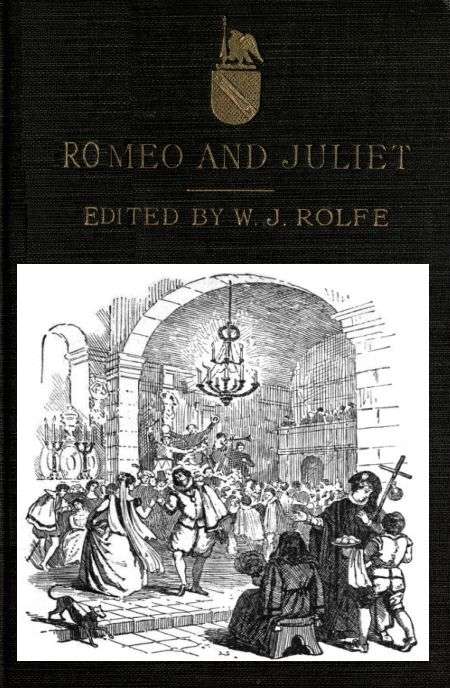
See also W.T. v. 2. 60.
129-136. Evermore ... body. This long-drawn "conceit" is evidently from the first draught of the play.
134. Who. See on i. 1. 109 above.
138. She will none. Cf. M.N.D. iii. 2. 169: "Lysander, keep thy Hermia; I will none," etc.
140. Take me with you. Let me understand you. Cf. 1 Hen. IV. ii. 4. 506: "I would your grace would take me with you; whom means your grace?"
143. Wrought. "Not = induced, prevailed upon, but brought about, effected" (Schmidt). Cf. Henry VIII. iii. 2. 311: "You wrought to be a delegate;" Cor. ii. 3. 254: "wrought To be set high in place," etc.
144. Bridegroom. The 2d quarto has "Bride." This was used of both sexes in the fifteenth and sixteenth centuries, but S. never makes it masculine. The New Eng. Dict. quotes Sylvester, Du Bartas (1598): "Daughter dear ... Isis bless thee and thy Bride," etc.
148. Chop-logic. Sophist; used by S. only here.
150. Minion. Originally = favourite, darling (as in Temp. iv. 1. 98, Macb. i. 2. 19, etc.), then a spoiled favourite, and hence a pert or saucy person.
151. Thank me no thankings, etc. Cf. Rich. II. ii. 3. 87: "Grace me no grace, nor uncle me no uncle," etc.
152. Fettle. Prepare, make ready. It is the reading of the quartos and 1st folio; the later folios have "settle," which may be what S. wrote. He does not use fettle elsewhere, and the long s and f were easily confounded in printing.
155. Out, etc. "Such was the indelicacy of the age of S. that authors were not contented only to employ these terms of abuse in their own original performances, but even felt no reluctance to introduce them in their versions of the most chaste and elegant of the Greek or Roman poets. Stanyhurst, the translator of Virgil, in 1582, makes Dido call Æneas hedge-brat, cullion, and tar-breech in the course of one speech. Nay, in the interlude of The Repentance of Mary Magdalene, 1567, Mary Magdalene says to one of her attendants, 'Horeson, I beshrowe your heart, are you here?'" (Steevens).
164. Lent. The 1st quarto has "sent," which some editors adopt. Clarke thinks it may be a misprint for "left," as Capulet (i. 2. 14) speaks as if he had had other children; but S. is careless in these minor matters. See on i. 5. 30 and v. 3. 207.
167. Hilding. See on ii. 4. 43 above.
171. God ye god-den. See on i. 2. 57 above.
172. Peace. Theobald repeated the word for the sake of the measure. Peace may perhaps be metrically a dissyllable, as in A.Y.L. ii. 4. 70.
175-177. God's bread! etc. The text of the early eds. is evidently corrupt here. The reading in the text is Malone's, and perhaps gives very nearly what S. wrote on the revision of the play.
181. Stuff'd, etc. Cf. Much Ado, i. 1. 56: "stuffed with all honourable virtues," etc. For parts, cf. iii. 3. 2 above.
184. Mammet. Puppet, doll. Cf. 1 Hen. IV. ii. 3. 95: "To play with mammets." The word is also written mawmet, and is a contraction of Mahomet. In her fortune's tender = when good fortune presents itself. Cf. iii. 4. 12 above.
189. Use. See on ii. chor. 10 above.
190. Lay hand on heart, advise. Consider it seriously. Cf. Brooke's poem:—
198. Sweet my mother. Cf. iii. 2. 98: "Ah, poor my lord," etc.
209. Should practise stratagems, etc. Should, as it were, entrap me into so painful and perplexing a situation. Schmidt makes stratagem sometimes = "anything amazing and appalling," and cites this passage as an instance.
212. Faith, here 'tis, etc. S. here follows Brooke:—
Mrs. Jameson remarks: "The old woman, true to her vocation, and fearful lest her share in these events should be discovered, counsels her to forget Romeo and marry Paris; and the moment which unveils to Juliet the weakness and baseness of her confidante is the moment which reveals her to herself. She does not break into upbraidings; it is no moment for anger; it is incredulous amazement, succeeded by the extremity of scorn and abhorrence, which takes possession of her mind. She assumes at once and asserts all her own superiority, and rises to majesty in the strength of her despair."
220. Green. We have green eyes again in M.N.D. v. 1. 342: "His eyes were green as leeks." Cf. The Two Noble Kinsmen, v. 1: "With that rare green eye." Clarke remarks: "The brilliant touch of green visible in very light hazel eyes, and which gives wonderful clearness and animation to their look, has been admiringly denoted by various poets from time immemorial." In a sonnet by Drummond of Hawthornden, the gods are represented as debating of what colour a beauty's eyes shall be. Mars and Apollo vote for black:—
Cf. Longfellow, The Spanish Student: "Ay, soft emerald eyes;" and again:—
In a note on the former passage, the poet says: "The Spaniards, with good reason, consider this colour of the eyes as beautiful, and celebrate it in song.... Dante speaks of Beatrice's eyes as emeralds (Purgat. xxxi. 116). Lami says in his Annotazioni, 'Erano i suoi occhi d' un turchino verdiccio, simile a quel del mare.'"
221. Beshrew. See on ii. 5. 52 above.
225. Here. Not referring to Verona, but = "in this world" (Johnson).
233. Ancient damnation. The abstract for the concrete, explained by what follows. Steevens cites The Malcontent, 1604: "out, you ancient damnation!"
234. Is it more sin, etc. Mrs. Jameson remarks: "It appears to me an admirable touch of nature, considering the master-passion which, at this moment, rules in Juliet's soul, that she is as much shocked by the nurse's dispraise of her lover as by her wicked, time-serving advice. This scene is the crisis in the character; and henceforth we see Juliet assume a new aspect. The fond, impatient, timid girl puts on the wife and the woman: she has learned heroism from suffering, and subtlety from oppression. It is idle to criticise her dissembling submission to her father and mother; a higher duty has taken place of that which she owed to them; a more sacred tie has severed all others. Her parents are pictured as they are, that no feeling for them may interfere in the slightest degree with our sympathy for the lovers. In the mind of Juliet there is no struggle between her filial and her conjugal duties, and there ought to be none."
236. Compare. See on ii. 5. 43 above.
ACT IV
Scene I.—
3. And I am nothing slow to slack his haste. Paris here seems to say the opposite of what he evidently means, and various attempts have been made to explain away the inconsistency. It appears to be one of the peculiar cases of "double negative" discussed by Schmidt in his Appendix, p. 1420, though he does not give it there. "The idea of negation was so strong in the poet's mind that he expressed it in more than one place, unmindful of his canon that 'your four negatives make your two affirmatives.'" Cf. Lear, ii. 4. 142:—
that is, you are more inclined to depreciate her than she to scant her duty.
5. Uneven. Indirect. Cf. the use of even in Ham. ii. 2. 298: "be even and direct with me," etc. Sometimes the word is = perplexing, embarrassing; as in 1 Hen. IV. i. 1. 50: "uneven and unwelcome news," etc.
11. Marriage. A trisyllable here; as in M. of V. ii. 9. 13, etc. So also in the quotation from Brooke in note on iii. 5. 212 above.
13. Alone. When alone; opposed to society below.
16. Slow'd. The only instance of the verb in S.
18-36. This part of the scene evidently came from the first draft of the play.
20. That may be must be. That may be of yours must be.
29. Abus'd. Marred, disfigured.
31. Spite. Cf. i. 5. 64 above.
38. Evening mass. Ritson and others say that Juliet means vespers, as there is no such thing as evening mass; and Staunton expresses surprise that S. has fallen into this error, since he elsewhere shows a familiarity with the usages of the Roman Catholic Church. It is the critics who are in error, not S. Walafrid Strabo (De Rebus Eccles. xxiii.) says that, while the time for mass is regularly before noon, it is sometimes celebrated in the evening ("aliquando ad vesperam"). Amalarius, Bishop of Trèves (De Eccles. Off. iv. 40), specifies Lent as the season for this hour. The Generales Rubricæ allow this at other times in the year. In Winkles's French Cathedrals, we are told that, on the occasion of the marriage of Henrietta of France, daughter of Henry IV., with the Duke of Chevreuse, as proxy for Charles I. of England, celebrated in Notre Dame at Paris, May 11, 1625, "mass was celebrated in the evening." See Notes and Queries for April 29 and June 3, 1876; also M'Clintock and Strong's Biblical Cyclopædia, under Mass.
40. We must entreat, etc. We must beg you to leave us to ourselves. Cf. Hen. VIII. i. 4. 71:—
41. God shield. God forbid. Cf. A.W. i. 3. 74: "God shield you mean it not." So "Heaven shield," in M. for M. iii. 1. 141, etc. Devotion is here a quadrisyllable.
45. Past cure, etc. Cf. L. L. L. v. 2. 28: "past cure is still past care."
48. Prorogue. See on ii. 2. 78 above.
54. This knife. It was the custom of the time in Italy as in Spain for ladies to wear daggers at their girdles.
57. The label. The seal appended by a slip to a deed, according to the custom of the day. In Rich. II. v. 2. 56, the Duke of York discovers, by the depending seal, a covenant which his son has made with the conspirators. In Cymb. v. 5. 430, label is used for the deed itself.
62. Extremes. Extremities, sufferings. Cf. R. of L. 969:—
The meaning of the passage is, "This knife shall decide the struggle between me and my distresses" (Johnson).
64. Commission. Warrant, authority. Cf. A.W. ii. 3. 279: "you are more saucy with lords and honourable personages than the commission of your birth and virtue gives you heraldry."
66. Be not so long to speak. So slow to speak. Clarke remarks here: "The constraint, with sparing speech, visible in Juliet when with her parents, as contrasted with her free outpouring flow of words when she is with her lover, her father confessor, or her nurse—when, in short, she is her natural self and at perfect ease—is true to characteristic delineation. The young girl, the very young girl, the girl brought up as Juliet has been reared, the youthful Southern maiden, lives and breathes in every line by which S. has set her before us."
78. Yonder. Ulrici "cannot perceive why Juliet must designate a particular, actual tower, since all that follows is purely imaginary;" but to me the reference to a tower in sight seems both forcible and natural, and the transition to imaginary ordeals is equally natural.
83. Reeky. Reeking with foul vapours, or simply = foul, as if soiled with smoke or reek. Cf. reechy (another form of the same word) in Much Ado, iii. 3. 143, Ham. iii. 4. 184, etc.
93. Take thou this vial, etc. Cf. Brooke's poem:—
97. Surcease. Cf. R. of L. 1766: "If they surcease to be that should survive;" and Cor. iii. 2. 121: "Lest I surcease to honour mine own truth." For the noun, see Macb. i. 7. 74.
100. Paly. Cf. Hen. V. iv. chor. 8: "paly flames;" and 2 Hen. VI. iii. 2. 141: "his paly lips."
105. Two and forty hours. It is difficult to make this period agree with the time of the events that follow. Maginn would read "two and fifty hours;" and "two and thirty" has been suggested, which is more in accordance with the dates given in the play. In iv. 1. 90 the Friar says to Juliet:—
This agrees with the preceding dates. The conversation in iii. 4 is late on Monday evening (cf. lines 5 and 18), and Lady Capulet's talk with Juliet about marrying Paris (iii. 5. 67 fol.) is early the next (Tuesday) morning. The visit to the Friar is evidently on the same day; and the next scene (iv. 2) is in the evening of that day. Juliet comes home and tells her father that she has been to the Friar's, and is ready to marry Paris. The old man at once decides to have the wedding "to-morrow morning" (that is, Wednesday) instead of Thursday. Lady Capulet objects, but finally yields to her husband's persistency; and so Juliet goes to her chamber, and drinks the potion on Tuesday evening, or twenty-four hours earlier than the Friar had directed. He of course is notified of the change in the time for the wedding, as he is to perform the ceremony, and will understand that Juliet has anticipated the time of taking the potion, and that she will wake on Thursday morning instead of Friday. If so, instead of extending the "two and forty hours," as Maginn does, we need rather to shorten the interval. We may suppose the time of v. 3 to be as early as three o'clock in the morning. It is summer, and before daylight. Paris and Romeo come with torches, and the Friar with a lantern. Romeo tells his servant to deliver the letter to his father "early in the morning." The night watchmen are still on duty. Since we can hardly send Juliet to bed before nine in the evening on Tuesday, thirty hours is the most that can be allowed for the interval, unless we add another day and accept the fifty-two of Maginn. But this does not seem required by anything in act v.—not even by the "two days buried" of v. 3. 176, for Thursday would be the second day that she had lain in the tomb. The marriage was to be early on Wednesday morning, and the funeral took its place. Balthasar "presently took post" (v. 1. 21) to tell the news to Romeo at Mantua, less than twenty-five miles distant. He arrives before evening (cf. v. 1. 4: "all this day," which indicates the time), and Romeo at once says, "I will hence to-night." He has ample time to make his preparations and to reach Verona before two o'clock the next morning. He has been at the tomb only half an hour or so (v. 3. 130) before the Friar comes. It must have been near midnight (see v. 2. 23) when Friar John returned to Laurence's cell; so that, even if he had not been despatched to Mantua until that morning, he would have had time to go and return, but for his unexpected detention. I see no difficulty, therefore, in assuming that the drama closes on Thursday morning; the difficulty would be in prolonging the time to the next morning without making the action drag.
110. In thy best robes, etc. The Italian custom here alluded to, of carrying the dead body to the grave richly dressed and with the face uncovered (which is not mentioned by Paynter), S. found particularly described in Romeus and Juliet:—
Cf. Ham. iv. 5. 164: "They bore him barefac'd on the bier." Knight remarks that thus the maids and matrons of Italy are still carried to the tomb; and he quotes Rogers, Italy:—
114. Drift. Scheme. Cf. ii. 3. 55 above.
119. Inconstant toy. Fickle freak or caprice. Cf. Ham. i. 3. 5: "a fashion and a toy in blood;" Id. 1. 4. 75: "toys of desperation;" Oth. iii. 4. 156: "no jealous toy," etc. Inconstant toy and womanish fear are both from Brooke's poem:—
121. Give me, give me! Cf. Macb. i. 3. 5: "'Give me,' quoth I."
Scene II.—
2. Twenty cunning cooks. Ritson says: "Twenty cooks for half a dozen guests! Either Capulet has altered his mind strangely, or S. forgot what he had just made him tell us" (iii. 4. 27). But, as Knight remarks, "Capulet is evidently a man of ostentation; but his ostentation, as is most generally the case, is covered with a thin veil of indifference." Cf. i. 5. 124: "We have a trifling foolish banquet towards."
According to an entry in the books of the Stationers' Company for 1560, the preacher was paid six shillings and twopence for his labour; the minstrel, twelve shillings; and the cook, fifteen shillings. But, as Ben Jonson tells us, a master cook is—
6. 'Tis an ill cook, etc. Cf. Puttenham, Arte of English Poesie, 1589:—
14. Harlotry. S. uses the noun only in this concrete sense: literally in Oth. iv. 2. 239; and in a loose contemptuous way, as here (= silly wench), in 1 Hen. IV. iii. 1. 198: "a peevish, self-willed harlotry, one that no persuasion can do good upon." For peevish = foolish, childish, cf. A.Y.L. iii. 5. 110, M.W. i. 4. 14, etc.
17. Learn'd me. Taught myself, learned; not elsewhere used reflexively by S. Cf. iii. 2. 12 above.
18. In disobedient opposition. This line has but two regular accents, the others being metrical. See p. 159 above. Opposition has five syllables.
26. Becomed. Becoming. Cf. "lean-look'd" = lean-looking in Rich. II. ii. 4. 11, "well-spoken" in Rich. III. i. 3. 348, etc. We still say "well-behaved."
33. Closet. Chamber; as in Ham. ii. 1. 77, iii. 2. 344, iii. 3. 27, etc. Cf. Matthew, vi. 6.
34. Sort. Select. Cf. iii. 5. 108 above.
38. Short in our provision. Very feminine and housewifely! Cf. Lear, ii. 4. 208:—
41. Deck up her. Such transpositions are not rare in S. The 1st quarto has "prepare up him" in 45 just below.
Scene III.—
5. Cross. Perverse. Cf. Hen. VIII. iii. 2. 214:—
8. Behoveful. Befitting; used by S. nowhere else.
15. Thrills. The ellipsis is somewhat peculiar from the fact that the relative is expressed in the next line. We should expect "thrilling" or "And almost."
23. Lie thou there. See on iv. 1. 54 above. Moreover, as Steevens notes, knives, or daggers, were part of the accoutrements of a bride. Cf. Dekker, Match me in London: "See at my girdle hang my wedding knives!" and King Edward III., 1599: "Here by my side do hang my wedding knives," etc. Dyce remarks that the omission of the word knife "is peculiarly awkward, as Juliet has been addressing the vial just before;" but S. wrote for the stage, where the action would make the reference perfectly clear.
27. Because he married me, etc. A "female" line with two extra syllables; like v. 3. 256 below. See p. 158 above.
29. Tried. Proved; as in J.C. iv. 1. 28, Ham. i. 3. 62, etc.
34. Healthsome. Wholesome; used by S. only here.
36. Like. Likely; as often.
39. As in a vault, etc. As is here = to wit, namely. Cf. Ham. i. 4. 25, etc.
Steevens thinks that this passage may have been suggested to S. by the ancient charnel-house (now removed) adjoining the chancel of Stratford church; but that was merely a receptacle for bones from old graves and disused tombs, while the reference here is to a family tomb still in regular use, where the body of Tybalt has just been deposited, and as Juliet knows that she also will be when supposed to be dead. S. was of course familiar with such tombs or vaults.
Receptacle. For the accent on the first syllable, cf. T.A. i. 1. 92: "O sacred receptacle of my joys!" So also in Per. iv. 6. 186; the only other instance of the word in S.
42. Green. Fresh, recent; as in Ham. i. 2. 2, etc.
43. Festering. Corrupting; as in Hen. V. iv. 3. 88 and Sonn. 94. 14.
47. Mandrakes'. The plant Atropa mandragora (cf. Oth. iii. 3. 130 and A. and C. i. 5. 4, where it is called "mandragora"), the root of which was thought to resemble the human figure, and when torn from the earth to utter shrieks which drove those mad who heard them. Cf. 2 Hen. VI. iii. 2. 310: "Would curses kill, as doth the mandrake's groans," etc. Coles, in his Art of Simpling, says that witches "take likewise the roots of mandrake, ... and make thereof an ugly image, by which they represent the person on whom they intend to exercise their witchcraft." The plant was of repute also in medicine, as a soporific (see the passages noted above in which it is called mandragora) and for sundry other purposes. Sir Thomas More observes that "Mandragora is an herbe, as phisycions saye, that causeth folke to slepe, and therein to have many mad fantastical dreames." How the root could be got without danger is explained by Bullein, in his Bulwark of Defence against Sicknesse, 1575: "Therefore they did tye some dogge or other lyving beast unto the roote thereof wythe a corde, and digged the earth in compasse round about, and in the meane tyme stopped their own eares for feare of the terreble shriek and cry of this Mandrack. In whych cry it doth not only dye it selfe, but the feare thereof kylleth the dogge or beast which pulleth it out of the earth."
49. Distraught. Distracted. S. uses the word again in Rich. III. iii. 5. 4: "distraught and mad with terror." Elsewhere he has distracted (as in Temp. $1.$2. 12, Macb. ii. 3. 110, etc.) or distract (as in J.C. iv. 3. 155, Ham. iv. 5. 2, etc.). Spenser has distraught often; as in F.Q. iv. 3. 48: "Thus whilest their minds were doubtfully distraught;" Id. iv. 7. 31: "His greedy throte, therewith in two distraught" (where it is = drawn apart, its original sense), etc.
58. Romeo, I come, etc. The 1st quarto has here the stage-direction, "She fals vpon her bed within the Curtaines." The ancient stage was divided by curtains, called traverses, which were a substitute for sliding scenes. Juliet's bed was behind these curtains, and when they were closed in front of the bed the stage was supposed to represent the hall in Capulet's house for the next scene. When he summons the Nurse to call forth Juliet, she opens the curtains and the scene again becomes Juliet's chamber, where she is discovered apparently dead. After the lamentations over her, the 1st quarto gives the direction, "They all but the Nurse goe foorth, casting Rosemary on her and shutting the Curtens;" and then follows the scene with Peter and the Musicians. The stage had no movable painted scenery.
Scene IV.—
2. Pastry. That is, the room where pastry was made. Cf. pantry (Fr. paneterie, from pain), the place where bread is kept, etc. Staunton quotes A Floorish upon Fancie, 1582:—