
WeRead Powered by ReaderPub
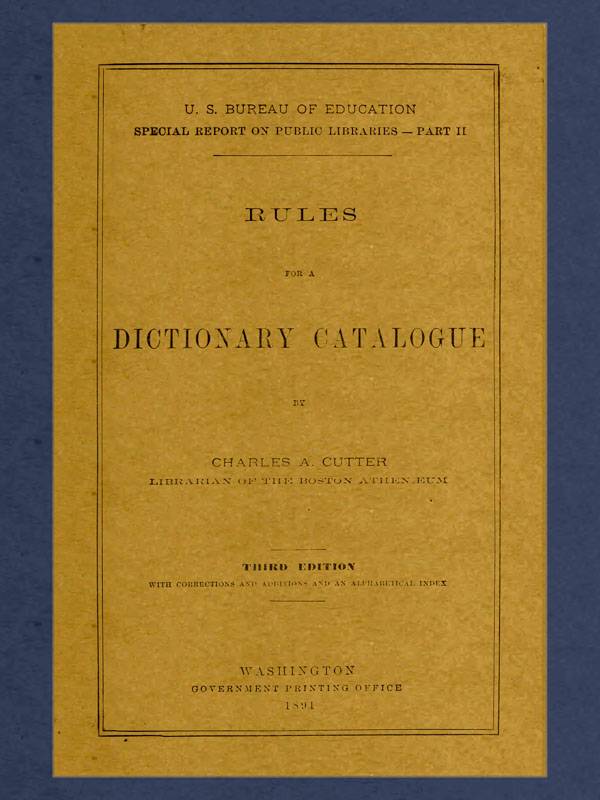
Rules for a Dictionary Catalogue / U. S. Bureau of Education Special Report on Public Libraries—Part II, Third Edition cover

Rules for a Dictionary Catalogue / U. S. Bureau of Education Special Report on Public Libraries—Part II, Third Edition

Chapter 33: ENTRY.
Open in WeRead

About This Book

This work presents a comprehensive guide to the principles and practices of creating a dictionary catalogue for libraries. It discusses various entry methods, including author, title, and subject entries, and emphasizes the importance of systematic organization and clarity in cataloguing. The text outlines different types of catalogues, such as short, medium, and full-title catalogues, and provides detailed rules for each category. It also addresses the need for flexibility in cataloguing practices to accommodate different library types and user needs. The author encourages feedback from librarians to improve future editions, highlighting the evolving nature of cataloguing standards.

ENTRY.

I. AUTHOR-ENTRY.

CATALOGUE.

  • A. AUTHORS.
    • (a.) PERSONAL.
      • (i.) Under whom as author.
        • Author, 1. Anonymous, 2. Joint authors, 3, 4. Theses, 5. Pseudonyms, 6. Illustrators, 7. Designer, Cartographer, Engraver, 8. Musical works, 9. Booksellers and auctioneers, 10, 11. Commentaries, 12. Continuations and indexes, 13. Epitomes, 14. Revisions, 15. Excerpts and chrestomathies, 16. Concordances, 17. Reporters, translators, and editors, 18. {16}
      • (ii.) Under what part of the name.
        • Christian name, 19. Surname, 20. Title, 21. Changed names, 22. Compound names, 23. Prefixes, 24. Latin names, 25. Capes, lakes, etc., 26.
      • (iii.) Under what form of the name.
        • Vernacular, 27. Several languages, 28. Masculine and feminine, 29. Various spellings, 30, 31. Forenames, 32. Places, 33–35. Transliteration, 36–38.
    • (b.) CORPORATE.
      • General principle, 39. Places, 40. Governmental bodies, 41. Laws, 42. Calendars, 43. Works written officially, 44–46. Articles to be inquired after, 47. Reports, 48. Congresses, 49. Treaties, 50. Parties, denominations, orders, 51. Their conventions, conferences, etc., 52. Ecclesiastical councils, 53. Reports of committees, 54. Classes of citizens, 55. Societies, 56.
  • B. SUBSTITUTES.
    • Parts of the author’s name, 57. Pseudonyms, 58. Collectors, 59.
  • C. REFERENCES, 60, 61.
  • D. ECONOMIES, 62–67.