
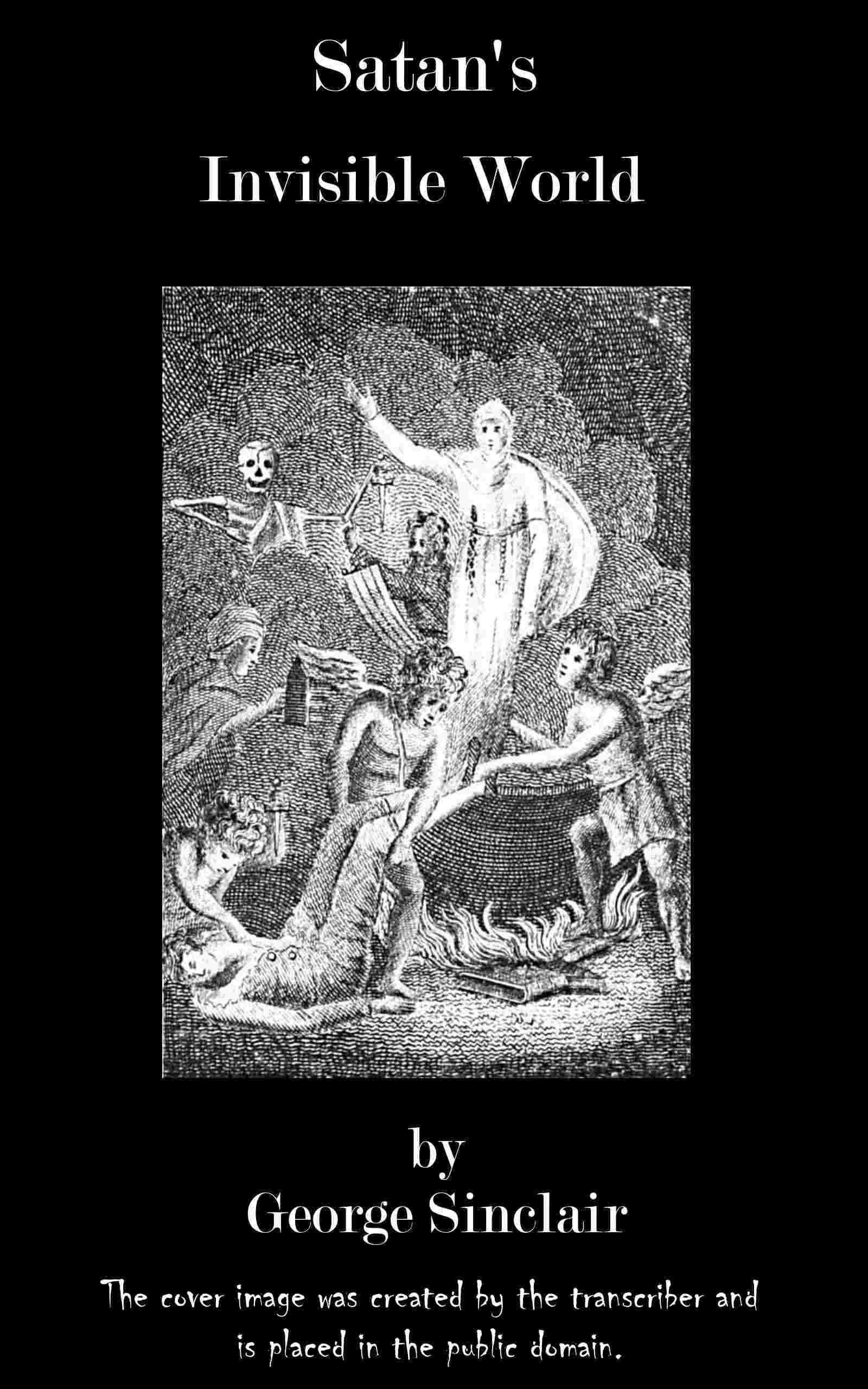
XVII.—Anent Hattaraick, an old Warlock.
This man’s name was Sandie Hunter, who called himself Sandie Hamilton; and it seems was called Hattaraick by the devil, and so by others, as a nick-name. He was first a nolt-herd in East Lothian to a gentleman there. He was much given to charming and curing of men and beasts by words and spells. His charms sometimes succeeded, sometimes not. On a day herding his kine upon a hill-side in the summer-time, the devil came to him in the form of a mediciner, and said, “Sandie, you have too long followed my trade, and never acknowledged me for your master; you must now take on with me, and be my servant, and I will make you more perfect in your calling.” Whereupon the man gave up himself to the devil, and received his mark, with this new name. After this he grew very famous through the country, for his charming and curing of diseases in men and beasts, and turned a vagrant fellow, like a jockie, gaining meal and flesh, and money by his charms; such was the ignorance of many at that time. Whatever house he came to, none durst refuse Hattaraick an alms, rather for his ill than his good. One day he came to the yait of Samuelston, when some friends after dinner were going to horse. A young gentleman, brother to the lady, seeing him, switched him about the ears, saying, “You warlock carle, what have you to do here?” Whereupon the fellow goes away grumbling, and was overheard say, “You shall dear buy this ere it be long.” This was damnum minatum. The young gentleman conveyed his friends a far way off, and came home that way again, where he supped. After supper, taking his horse, and crossing Tyne water to go home, he rides through a shadow piece of a haugh, commonly called Allers, and the evening being somewhat dark, he met with some persons there that begat a dreadful consternation in him, which, for the most part, he would never reveal. This was malum secutum. When he came home, the servants observed terror and fear in his countenance. The next day he became distracted, and was bound for several days. His sister the Lady Samuelston hearing of it, was heard say, “Surely that knave Hattaraick is the cause of this trouble, call for him in all haste.” When he had come to her, “Sandie,” says she, “what is this you have done to my brother William?” “I told him,” says he, “I should make him repent his striking of me at the yait lately.” She giving the rogue fair words, and promising him his pock full of meal, with beef and cheese, persuaded the fellow to cure him again. He understood the business, “But I must first,” says he, “have one of his sarks.” Which was soon gotten. What pranks he played with it cannot be known. But within a short while the gentleman recovered his health. When Hattaraick came to receive his wages, he told the Lady, “Your brother William shall quickly go off the country, but shall never return.” She knowing the fellow’s prophecies to hold true, caused her brother to make a disposition to her of all his patrimony, to the defrauding of his young brother George. After that this warlock had abused the country for a long time, he was at last apprehended at Dunbar, and brought into Edinburgh, and burnt upon the Castle hill.——I have inserted this story, which I had from the gentleman’s own brother, a thing well known at that time through the country, not so much for any matter in it, as that it may be an occasion to me to speak a little of charms. The word charm or incantation comes from the Latin word carmen, signifying a verse, because the Roman soothsayers gave their charms in verse. It is only a strange composure of words to blind the understanding of people, pretending, by virtue of words, great matters may be brought to pass. But words of themselves, either spoken or written, (as these charms) have no force to bring any thing to pass. It is only the power of the almighty God. Charming is much practised by the Pope and the Romish church. Their whole forms of religion, both in private and in public, consisting of charms of all sorts. Pope Leo had a charm, which he said he had from an angel, who taught him, that whosoever carried that charm in write about him, and said every day three Pater Nosters, three Aves, and one Creed, shall not that day be conquered of his enemies, nor be in other danger, ghostly or bodily, but shall be protected by these holy names of Jesus Christ, written with the four Evangelists, and crosses between them, as † Jesus, † Christus, † Messias, † Sotar, † Emmanuel, &c. It is still a common practice among the Papists to carry charms about them to make them shot-free when they go to war; as also hath been found by experience in the late Irish wars, many of the idolatrous Irish being found with charms in their pockets, composed by the Popish clergy. They make their holy water by a charm or conjuration, thus: “I conjure thee, thou creator of water, in the name of the Father, Son, and Holy Ghost, that thou drive the devil out of every corner of this church and altar, so that he remain not within our precincts, which are just and holy.” This is used in the dedication of their churches. Thus, by holy water, they not only conjure the devil from their churches, but from dwelling houses, from meat and drink, from salt upon the table. They dedicate their bells in steeples, which have power to clear the air from devils. It is likewise a sort of charm which many witches have, namely, to cut the rowan tree between the two Beltan days. If any man or woman, horse, or cow, shall have a piece thereof upon them, no devils or fairy shall have power to meddle with them. An old woman whom I read of, used this charm when she went to bed,
And another old woman taught her neighbour this charm, when the butter would not churn,