
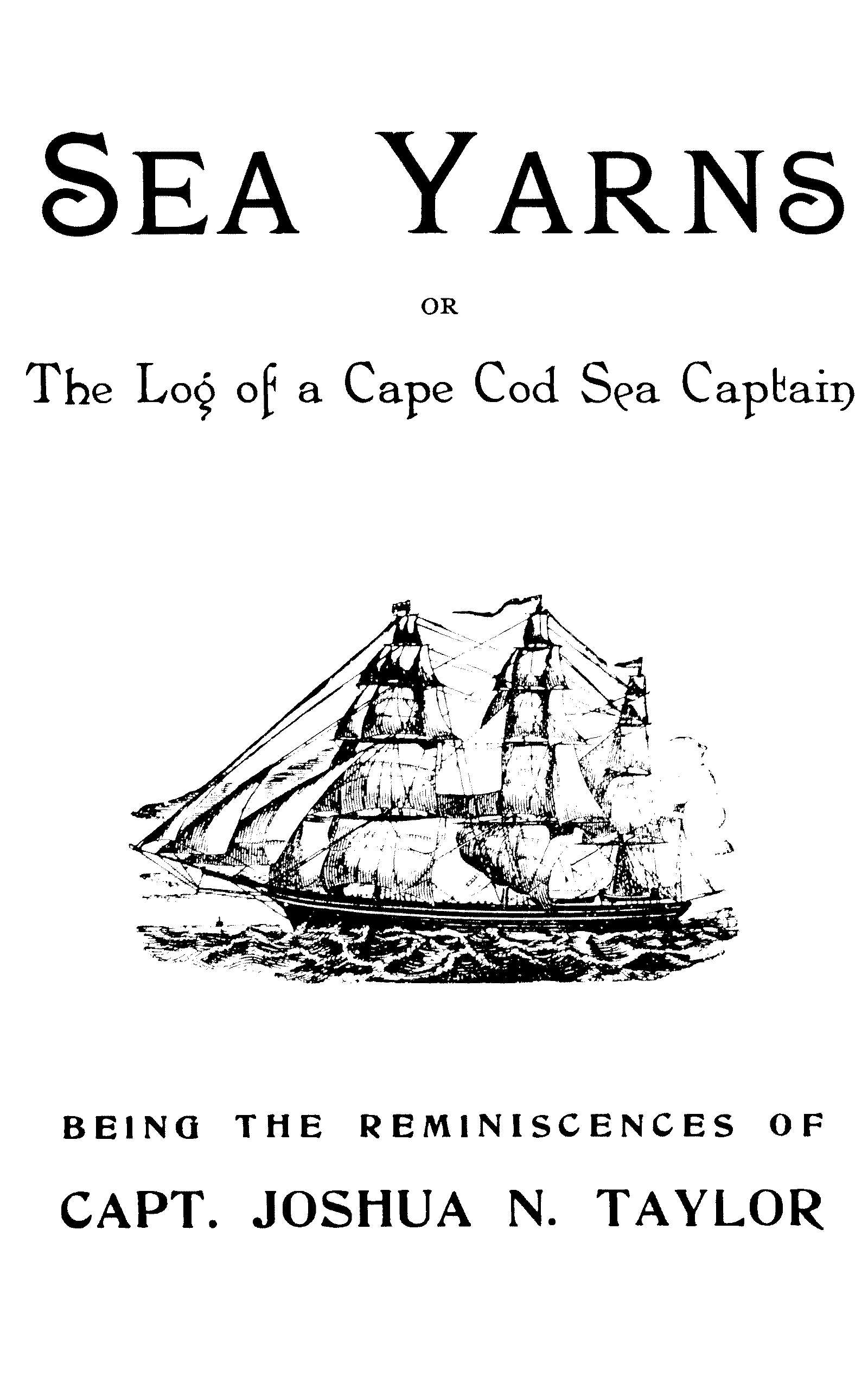
The golden age of the American Merchant Marine has gone and the old-time ships have passed away. Their bones lie on the oceans bottom, on foreign reefs of islands far away, on the rocky ledges off Cape Horn, or are serving an inglorious fate as coal barges. In our great Civil War many were destroyed by the “Alabama” or other privateers. Their old-time commanders and owners are also gone from the stage of action. But if you will travel down to old Cape Cod you will still find a few of them left, the neat, clean, white houses, giving proof of the fact that they are yet “on deck,” and keeping things “shipshape.” The early training of these men was, for the most part, received on the fishermen that went to the Grand Banks, from which they “graduated” into the service of the Merchant Marine.
These little “Sea Yarns” are true stories from chapters in my own life, given to my readers as little experiences of a sailor of the old school. The old-time “Yankee” skipper was an important factor in placing the American Flag in every known port of the world and in proving the commercial superiority of its men and ships. Those times are now long past, and remain in our minds as remembrances only, of a day when American ships and American men were supreme in the maritime world.