
WeRead Powered by ReaderPub
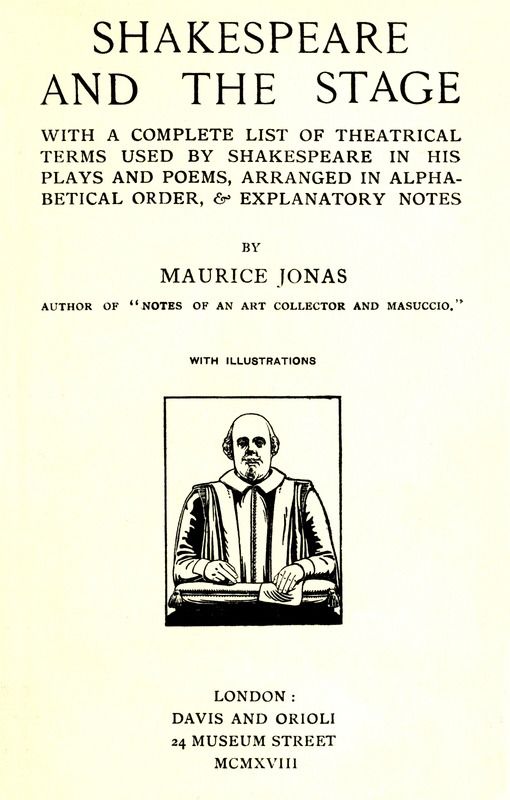
Shakespeare and the Stage / With a Complete List of Theatrical Terms Used by Shakespeare in His Plays and Poems, Arranged in Alphabetical Order, & Explanatory Notes cover

Shakespeare and the Stage / With a Complete List of Theatrical Terms Used by Shakespeare in His Plays and Poems, Arranged in Alphabetical Order, & Explanatory Notes

Chapter 57: CYMBELINE
Open in WeRead

About This Book

A historical and practical study of dramatic performance and stagecraft that traces how medieval religious spectacles gave way to secular comedy and tragedy, examines inn-yard presentations and purpose-built playhouses, and surveys company organization, acting practice, court performances, and theatrical allusions. The work describes theatre architecture, audience arrangements, production practices, and contemporary documents and illustrations, and concludes with an alphabetically arranged glossary of stage terms associated with Shakespeare, each entry supplied with explanatory notes to clarify period usage and theatrical meaning.

CYMBELINE

ACT.

What, makest thou me a dullard in this act?

V, 5, 265.

PLAY. PART.

Shall’s have a play of this?
Thou scornful page.
There lie thy part. Striking her, she falls.

V, 5, 228.

“Shall’s” in Elizabethan drama is equivalent to our modern “shall we.” “There lie thy part,” refers to the part the page shall play by lying down.

PART. ACT.

That part thou, Pisanio, must act for me.

III, 4, 26.