
WeRead Powered by ReaderPub
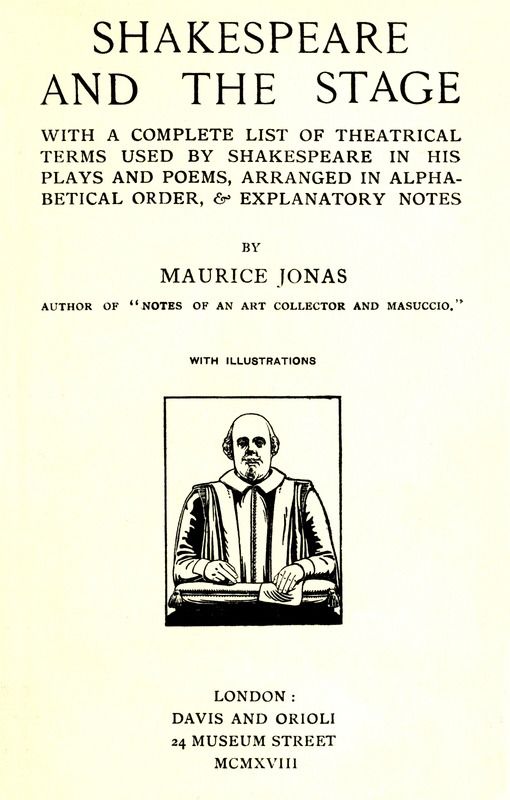
Shakespeare and the Stage / With a Complete List of Theatrical Terms Used by Shakespeare in His Plays and Poems, Arranged in Alphabetical Order, & Explanatory Notes cover

Shakespeare and the Stage / With a Complete List of Theatrical Terms Used by Shakespeare in His Plays and Poems, Arranged in Alphabetical Order, & Explanatory Notes

Chapter 58: COMEDY OF ERRORS
Open in WeRead

About This Book

A historical and practical study of dramatic performance and stagecraft that traces how medieval religious spectacles gave way to secular comedy and tragedy, examines inn-yard presentations and purpose-built playhouses, and surveys company organization, acting practice, court performances, and theatrical allusions. The work describes theatre architecture, audience arrangements, production practices, and contemporary documents and illustrations, and concludes with an alphabetically arranged glossary of stage terms associated with Shakespeare, each entry supplied with explanatory notes to clarify period usage and theatrical meaning.

COMEDY OF ERRORS

JUGGLERS.

They say this town is full of cozenage;
As nimble jugglers that deceive the eye.

I, 2, 98.

In mediæval times Jugglers were frequently to be met with at the Court, being well received by an admiring audience. Their entertainment consisted of catching knives, tossing balls and feats of balancing. Such diversions even at the present day evoke unstinted applause, especially if practised by a Cinquevalli. The word is derived from the Latin joculare, to jest; the early meaning, which is now obsolete, denoted one who entertains or amuses people by shows, songs, buffoonery and tricks. It also bore the meaning of magician, wizard, or sorcerer.

MOUNTEBANK.

A mere anatomy, a mountebank, A threadbare juggler.

V, 1, 239.

A well known character in Shakespeare’s time. This entertainer performed at street corners, who, from an elevated position, addressed and amused his audience by means of stories, tricks, juggling and all forms of quackery, in which he was generally assisted by a professional clown or fool. Derived from the Italian Montebanchi, to mount a bench.